Leggy Growth on Pilea Peperomioides: Causes, Checks & Fixes
Quick answer
Leggy Pilea peperomioides grows as a tall bare central stem with coin leaves clustered at the crown-usually from past low light or shop-to-home stretch. First step: move to bright indirect light and rotate weekly; once new compact leaves appear, shorten the stretched top above a node in spring or summer.
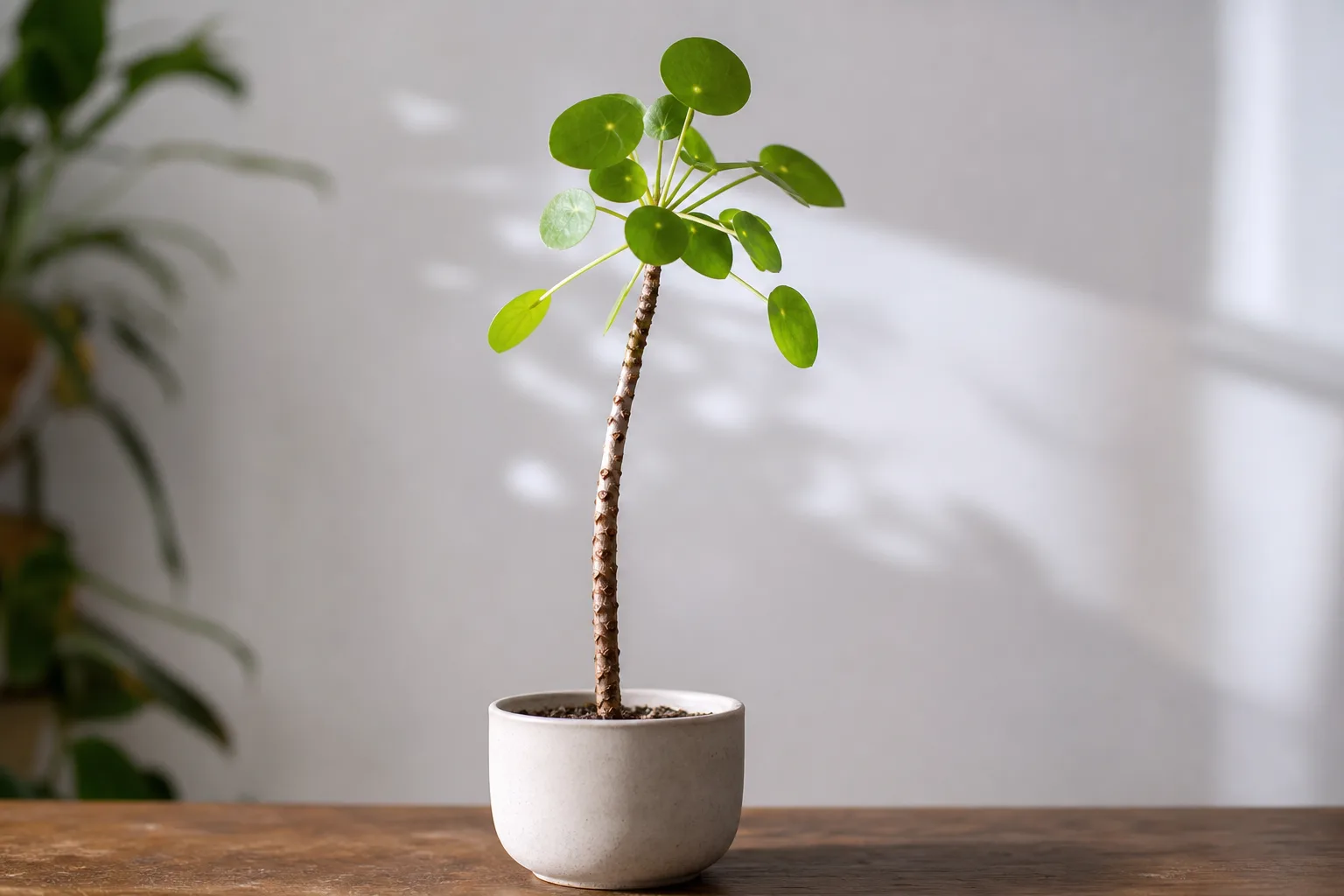
Leggy Growth on Pilea Peperomioides: Causes, Checks & Fixes
This guide covers leggy growth on Pilea Peperomioides. See also the general Leggy Growth guide, watering, and light pages for this plant.
Leggy Growth on Pilea Peperomioides: Causes, Checks & Fixes
Quick answer
Leggy Pilea peperomioides is a structural shape problem: a long bare central stem with round coin leaves crowded at the top, often leaning toward the brightest window. The plant looked compact at the shop because grow lights kept internodes short; on a distant shelf at home, the same plant stretches within weeks.
First step: move to bright indirect light and rotate the pot a quarter turn at each watering. Wait four weeks and judge only the newest coin leaves-tighter spacing and larger diameter mean light is working. Old bare stem sections will not shrink; once compact new growth appears, you can shorten the stretched top in spring or summer.
This page covers reactive leggy-form recovery-bare stems, top-heavy crowns, pruning timing, and what old tissue cannot fix. If your main symptoms are pale yellow-green foliage, strong window lean, and a dim-room placement without much bare stem yet, start with not enough light on Pilea peperomioides instead. For window targets and grow-light setup, see the Pilea light guide. For cut placement and the one-third rule, see the Pilea pruning guide.
What leggy growth looks like on Pilea peperomioides
Leggy pilea is easy to spot once you look at stem architecture, not a single yellow leaf.
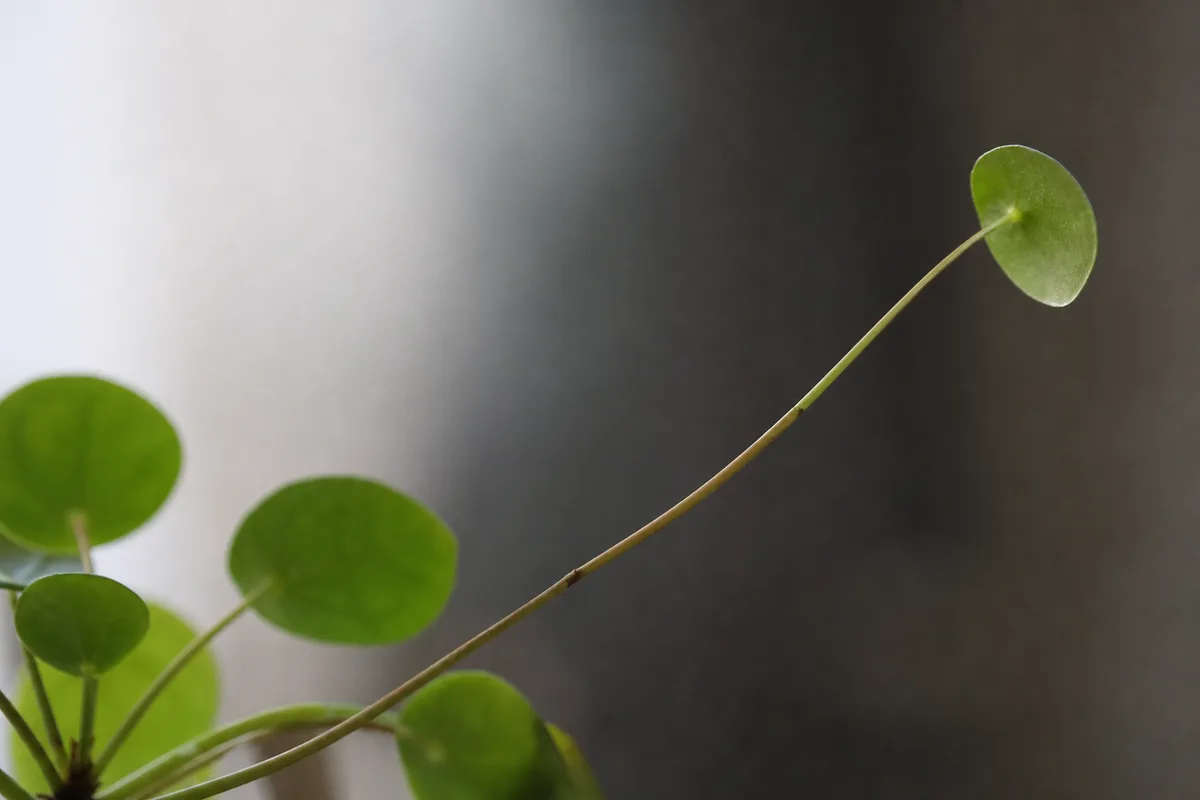
Leggy Growth symptoms on Pilea Peperomioides - compare with healthy tissue on the same plant.
Typical leggy-growth signs:
- Long bare internodes on the central stem-gaps of 3–8 cm or more between coin-leaf petioles where leaves once attached
- Top-heavy silhouette with most round peltate leaves clustered at the crown and little foliage below
- Smaller new coin leaves at the tip compared with older compact growth lower on the stem (if any leaves remain mid-stem)
- Lean or twist toward the brightest window as the stem reaches for light
- Structural wobble-a thin upper stem that needs staking or risks toppling
- Stalled pups at the base while the main stem races upward in dim conditions
- Shop-to-home contrast-compact at purchase, stretched within four to eight weeks on a décor shelf
Compare with not enough light on Pilea: that guide focuses on light deficit signals-pale foliage, pronounced lean, and window-distance placement-often before the stem goes fully bare. Leggy growth on this page assumes stretch has already happened and you need a recovery and reshaping plan.
Leggy form is also different from slow growth on Pilea: a stalled plant produces almost no new tissue. A leggy pilea may still push new coin leaves at the tip-they are just small and far apart.
Why Pilea peperomioides gets leggy growth
Past or ongoing low light (underlying cause)
NC State Extension notes that leggy growth results from inadequate light on Pilea peperomioides. In dim conditions the plant etiolates-stem and petioles elongate so existing leaves reach toward any light source. RHS pilea guidance recommends bright but indirect light near north-, east-, or west-facing windows; without it, the upright central stem stretches instead of staying compact at 8–12 inches tall indoors.
On this page, low light is the usual root cause, but the reader’s job is recovery after stretch, not first-time window shopping. Fix light first; reshape second.
Instagram-shelf and shop-to-home stretch
Pileas are often sold under intense nursery or shop lighting. Move the same plant to an interior bookshelf three metres from glass and internodes lengthen within weeks-even if you water correctly. The stretch is not random; it is the plant’s response to a sharp light drop.
Missing rotation and one-sided lean
Pilea leaves face the light source. RHS recommends turning the pot by a quarter at each watering so the plant does not become lop-sided. Without rotation, one side develops large coin leaves while the shaded side stays sparse-adding to a leggy, unbalanced look even when average light is borderline adequate.
Winter daylight without repositioning
Shorter days and a lower sun angle reduce usable light at the same window seat from November through February in many homes. A pilea that was compact in summer can stretch over winter if it is not moved closer to glass or supplemented with a grow light-see the Pilea light guide for seasonal placement.
Light-water coupling in dim corners
A dim pilea uses less water. Soil that stays wet for many days while the stem still stretches can point to low light slowing dry-down, not necessarily a Pilea Peperomioides watering guide error-though chronic wet mix in shade raises overwatering and root rot risk. Firm roots and normal dry-down support a light-and-prune recovery path.
Leggy growth vs not enough light - which guide to read
| What you see most | Start here | Why |
|---|---|---|
| Long bare stem, top-heavy crown, bare internodes | This page (leggy growth) | Structural recovery and pruning timing |
| Pale foliage, strong lean, dim room, window distance | Not enough light | Light placement is the primary fix |
| Almost no new growth for weeks | Slow growth | Stall, not just shape |
| Node placement, topping, pup detachment | Pilea pruning | Full shaping workflow |
| Window targets, grow lights, acclimation | Pilea light guide | Proactive placement |
Both pages can apply to the same plant. Work through not enough light when color fade and placement dominate; return here once light is adequate but the bare stem remains.
How to confirm the cause
Run this pilea-specific checklist before you repot, fertilize, or hard-prune:
- Internode pattern - Measure gaps between the newest coin-leaf petioles on the central stem. Gaps longer than older compact sections confirm leggy etiolation.
- Crown weight - Does the top leaf cluster outweigh the bare lower stem? Gentle pressure at mid-stem should not bend it more than a few degrees; excessive wobble means structural risk.
- Light sanity check - Can you read comfortably at the plant at midday without a lamp? If not, confirm light using the not-enough-light guide before expecting pruning alone to fix form.
- Lean direction - Leaves and stem tip point toward the brightest source; note which window or lamp before you move the pot.
- Coin-leaf size trend - Newest leaves smaller than older ones near the crown signal ongoing stretch or recent light deficit.
- Pup development - Basal offsets stalled while the main stem elongates often accompany chronic low light.
- Soil moisture in dim spots - Lift the pot. Wet mix for a week or more while stems stretch suggests slow water use in low light; sniff for sour soil and check stem firmness at the base to rule out rot.
- Season - Compare current stretch with autumn/winter placement; daylight drop alone can explain new legginess on an otherwise stable plant.
Four-week confirmation test: Move to the brightest indirect spot available (east or west window, or filtered south set back from glass). Rotate a quarter turn at each watering. After four weeks, new coin leaves should be larger and closer together than the set before the move. If spacing stays wide and leaves stay pale, upgrade light further-grow lights per the light guide-before topping the stem.
First fix: brighter indirect light and weekly rotation
Move the plant to bright indirect light and rotate the pot a quarter turn at each watering. That single correction addresses the underlying etiolation driver and is the correct first response before any stem cut.
RHS pilea guidance positions pileas near north-, east-, or west-facing windows in a warm room above 10°C (50°F). Acclimate gradually if the plant lived in deep shade for months-shift closer to the window over one to two weeks rather than jumping to harsh direct south sun, which can flush leaves red-brown.
After repositioning:
- Wipe dust from coin leaves so lower surfaces can photosynthesize efficiently.
- Adjust watering-brighter light increases dry-down; dim corners that stayed wet need less water once light improves.
- Hold fertilizer for two weeks; overfeeding without adequate light does more harm than good.
- Stake very thin stems temporarily if the crown topples before new growth stiffens the plant.
Do not top the stem on day one. Light must prove itself through compact new coin leaves before you remove the stretched crown.
Step-by-step recovery
Once light and rotation are in place:
- Wait four weeks and compare internode spacing on the newest leaves only.
- Shorten the stretched top in spring or summer when new growth is compact-cut the central stem 6–10 mm (about ¼ inch) above a node on the bare section, not through healthy coin-leaf petioles. RHS notes tall upright pilea stems can be cut back in spring or summer to stimulate new growth from the base.
- Propagate the removed top in water if it has several healthy leaves; NC State Extension lists stem cuttings in spring or early summer as a recommended propagation method.
- Limit each session to one-third of total foliage if you also remove yellow lower leaves-see the pruning guide for the full one-third rule.
- Detach pups in spring if you want a fuller pot or backup plants once the mother stem is stable.
- Add grow lights if natural light cannot tighten internodes after four weeks-the light guide covers supplemental setup.
Make one major change at a time. Move the pot first; prune once compact new growth proves the brighter spot works.
Recovery timeline
Expect larger, closer-spaced coin leaves within two to four weeks after a successful light upgrade during active growth. That is your proof the fix is working-judge by new tissue, not old bare stem.
Old elongated internodes never shorten. A stem section that stretched last winter stays long even when summer light returns. Success means a compact new crown and optionally a shorter overall silhouette after a well-timed top cut-not bare wood filling with leaves.
If new leaves stay small and widely spaced after four weeks in your brightest indirect spot, revisit the not-enough-light guide and consider grow lights before pruning again.
Bud break below a stem cut often appears within two to four weeks in spring or summer; winter cuts may sit idle until daylight lengthens.
Lookalike symptoms to rule out
Not enough light (primary placement issue) - Pale yellow-green foliage, strong lean, and a pot far from windows without much bare stem yet. Fix placement first via not enough light on Pilea.
Overwatering in a dim corner - Yellow lower leaves, soggy mix, soft stem base. Stretch can coexist; treat moisture and inspect roots if decline continues. See overwatering and root rot.
Slow growth - Little or no new coin leaves for weeks in warm weather. Different from active upward stretch with small tip leaves. See slow growth.
Too much direct sun after shade - Red-brown scorched patches on coin leaves, not bare internodes. Pull back from harsh exposure and acclimate slowly per RHS guidance.
Winter slowdown only - Growth pauses but stem does not add bare length; resume normal rotation in spring without pruning.
What not to do
Do not top the stem before light produces compact new coin leaves-cutting in deep shade yields weak, spaced regrowth.
Do not expect old bare internodes to fill with leaves; only new sections compact after light improves.
Do not jump from a dim shelf to unfiltered south-window midsummer sun the same week you prune-acclimate over one to two weeks.
Do not fertilize a stressed pilea to “push bushiness”-overfeed can harm the plant without adequate light.
Do not stack Pilea Peperomioides repotting guide, hard pruning, and pesticide on the same day. One stress at a time.
Do not bury the stem deeper to correct lean-improve light, rotate, and stake briefly instead.
How to prevent leggy growth on Pilea peperomioides
Place for bright indirect light from day one-east or west window, bright north exposure, or filtered south set back from glass. See the Pilea light guide for full placement detail.
Rotate a quarter turn at each watering so the central stem stays upright and symmetrical.
Move closer in winter or add grow lights when daylight drops-do not wait for bare stems to appear.
Inspect pups-healthy basal offsets often resume once light improves; a single bare stem with no pups may need topping after compact growth returns.
Avoid interior décor shelves more than one to two metres from usable window light unless you run supplemental lighting.
Re-read the not-enough-light guide each autumn when stretch and pale color often combine.
When to worry
Pure legginess is a cosmetic and structural issue-your pilea is not dying because the stem went bare.
Escalate when:
- The plant topples or the stem snaps under crown weight
- Wet soil, yellow leaves, and soft stem bases on Pilea Peperomioides suggest root rot layered on stretch
- No improvement in coin-leaf spacing after four weeks in your brightest indirect spot-light is still insufficient
- Very thin leaning stems need staking immediately to prevent breakage before you can prune
Gradual stretch over weeks is fixable with light, rotation, and optional topping-no panic, but do not wait until the stem cannot support its own crown.
Practical checks
Urgency check
Stake and relocate before a top-heavy pilea topples. Soft stem bases on wet soil need root inspection-not just a brighter window.
Best inspection order
Internode length on newest growth, lean direction, coin-leaf size trend, pup status, pot weight and soil smell, then roots only if stems soften.
Pilea care cross-check
Pilea peperomioides is considered safe for pets and children per NC State Extension-still avoid letting pets chew houseplants routinely. Keep humidity and airflow realistic; monitor for spider mites on stressed indoor foliage.
Conclusion
Leggy Pilea peperomioides means the central stem stretched-usually after low light-and old bare sections will not compact on their own. Move to bright indirect light, rotate weekly, and wait for larger closer-spaced coin leaves before you top the stem in spring or summer. When pale color and window distance dominate, pair this workflow with the not-enough-light guide; when you need cut placement detail, use the Pilea pruning guide.
Related Pilea problems: not enough light, slow growth, overwatering, root rot. Care guides: Pilea light, Pilea pruning.
When to use this page vs other Pilea Peperomioides guides
- Pilea Peperomioides watering guide - Use for routine moisture checks before assuming leggy growth is the main issue.
- Pilea Peperomioides problems hub - Browse all 17 common issues on this species.
- Not Enough Light on Pilea Peperomioides - Different entry point when symptoms overlap with leggy growth.
- Slow Growth on Pilea Peperomioides - Different entry point when symptoms overlap with leggy growth.
- Yellow Leaves on Pilea Peperomioides - Different entry point when symptoms overlap with leggy growth.