Not Enough Light on Pilea Peperomioides: Causes, Checks &
Quick answer
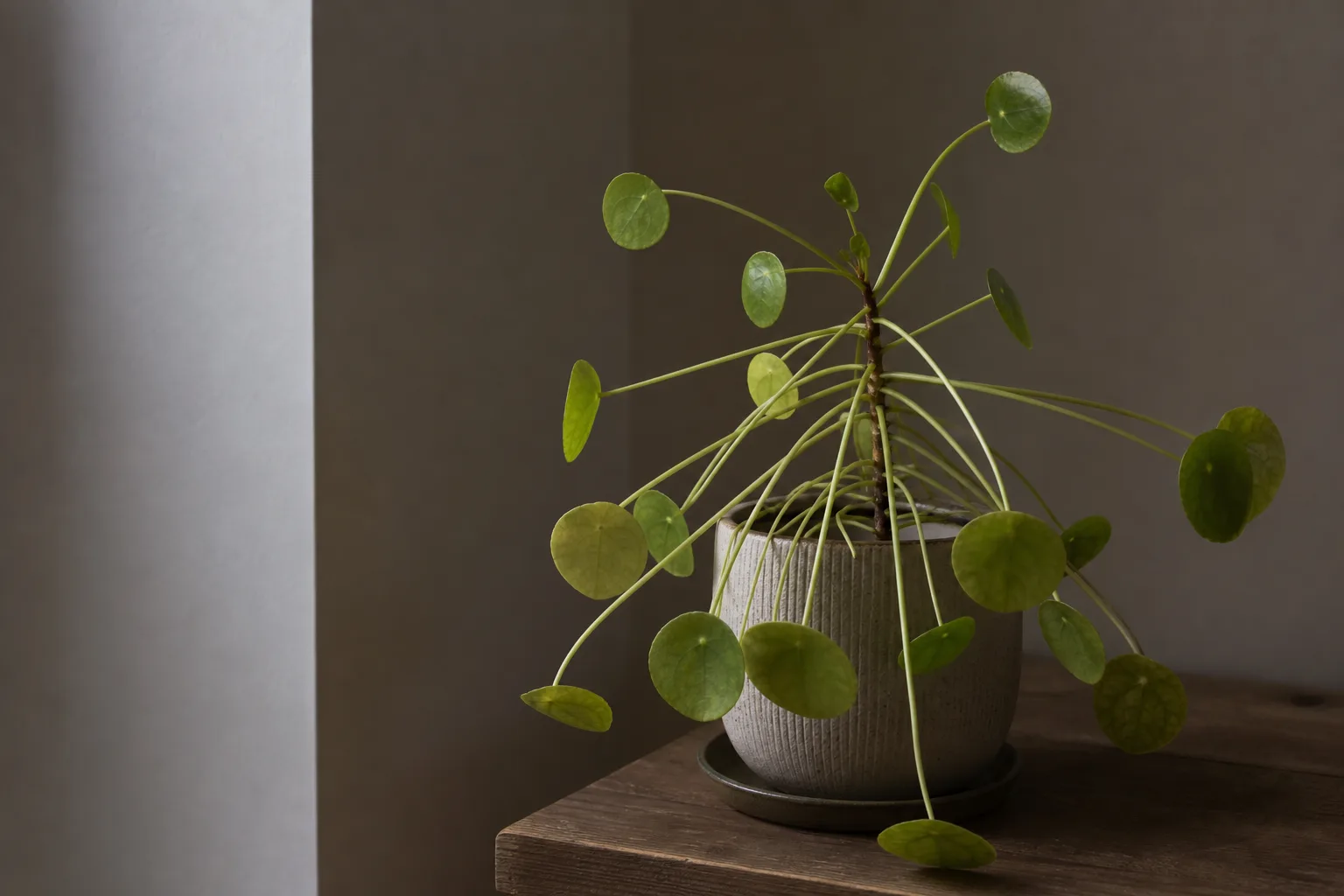
Not enough light on Pilea peperomioides shows as pale small coin leaves, long internodes, and a sharp lean toward windows. First step: move to bright indirect light within 0.5–1 m of east or filtered west glass, rotate a quarter turn at each watering, and judge only new leaves after four weeks.
Not Enough Light on Pilea Peperomioides: Causes, Checks & Fixes
This guide covers not enough light on Pilea Peperomioides. See also the general Not Enough Light guide, watering, and light pages for this plant.
Not Enough Light on Pilea Peperomioides: Causes, Checks & Fixes
Quick answer
Not enough light on Pilea peperomioides shows as pale small coin leaves, long gaps between new leaves on the central stem, and a sharp lean toward the brightest window or lamp. The Chinese money plant is not a low-light foliage species-it evolved on shaded moist rocks in forests at elevation in southwestern China, where sky brightness is filtered but steady, not the dim centre of a living room.
First step: move to bright indirect light within 0.5–1 m (about 1.5–3 ft) of an east window or filtered west glass, and rotate the pot a quarter turn at each watering. Wait four weeks and judge only the newest coin leaves-larger diameter and shorter internode gaps mean the fix is working. Old stretched stem sections do not compact on their own; if bare wood is already severe, see leggy growth on Pilea for pruning timing after light improves.
This page is the diagnostic and placement fix for insufficient light-pale color, lean, pup stall, and window-distance mistakes. For proactive window-by-window targets, acclimation detail, and grow-light numbers, use the Pilea light guide. For cut placement after stretch, use the Pilea pruning guide.
What insufficient light looks like on Pilea peperomioides
Low light on pilea is a growth-pattern problem before it becomes a bare-stem emergency. Read the newest tissue, not a single yellow lower leaf.
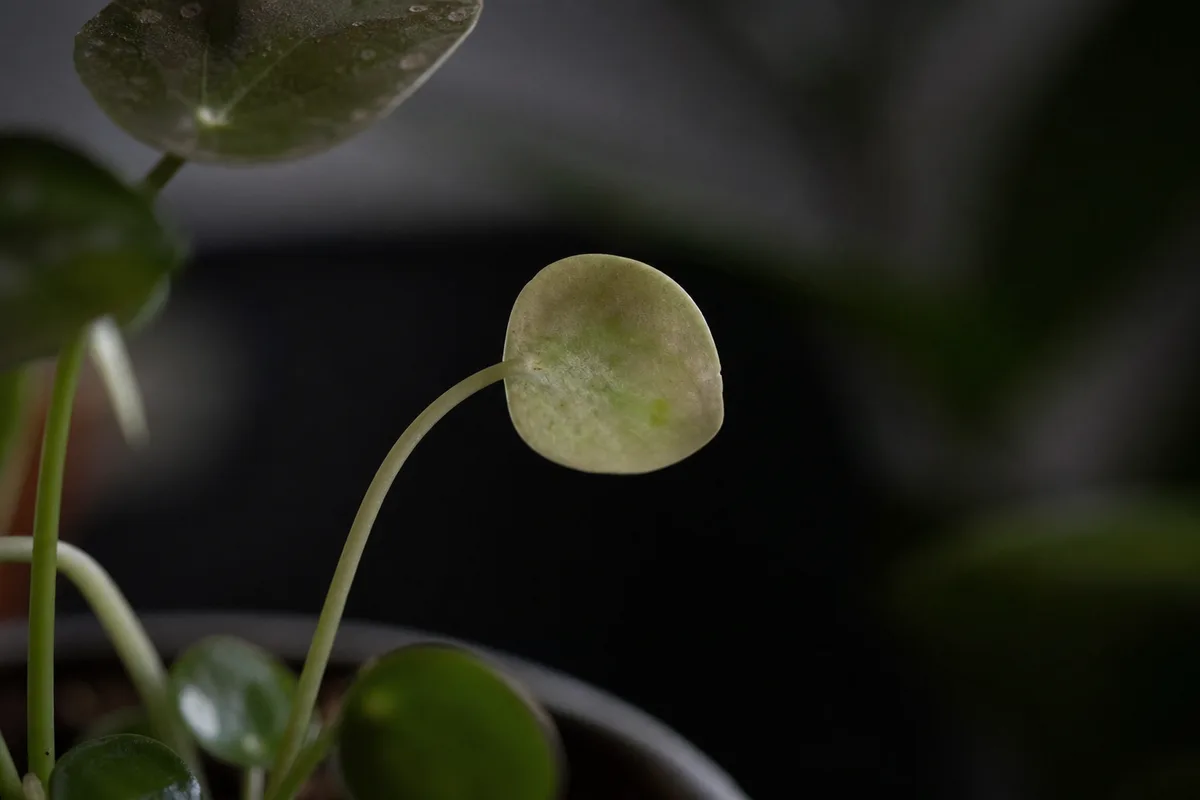
Not Enough Light symptoms on Pilea Peperomioides - compare with healthy tissue on the same plant.
Typical low-light signs:
- Smaller new coin leaves at the stem tip compared with older compact growth-diameter shrinkage is often the earliest signal
- Long internodes between coin-leaf petioles on the central stem-gaps wider than 2–3 cm on fresh growth suggest etiolation
- Strong lean or twist toward the brightest window, skylight, or desk lamp
- Pale yellow-green foliage on new blades while older leaves still look acceptable green
- Stalled pup development at the base while the main stem races upward or sits static
- Soil that stays wet too long in a dim corner because photosynthesis slowed-often misread as overwatering alone
- Shop-to-home fade-compact at purchase under nursery lights, stretched or pale within four to eight weeks on a décor shelf
Compare with leggy growth on Pilea: that guide covers recovery after bare stem is already obvious. Use this page when pale color, lean, and placement are the main limits-or when stretch is early and you want to fix light before structure fails.
Editorial observation (March 2026, temperate indoor grow): A pilea moved from an interior bookshelf roughly 2.5 m from a west window to an east sill at 40 cm produced a second new coin leaf roughly 1.5× the diameter of the prior tip leaf, with the internode gap between them about halved, after 21 days of weekly quarter-turn rotation. Old lower leaves did not change color; only new tissue showed the upgrade.
Why Pilea peperomioides lacks enough light
Décor-shelf placement and the room-brightness illusion
Pileas photograph beautifully on bookshelves and side tables-spots where human eyes adapt to dim ambient light but coin leaves cannot. The plant’s peltate leaves face the strongest light vector; leave the pot still in a north-corner room and the entire crown orients toward the one bright pane, thinning the back side. That is phototropism, not random bad luck.
Interior placement for décor puts the pot far from window paths. Winter daylight drop without moving closer compounds the problem from November through February in many homes. Neighbouring furniture, monitors, and tall neighbours block side light even when the room feels “bright enough” to you.
Native habitat vs. living-room corners
GRIN-Global and the Flora of China describe P. peperomioides on shaded moist rocks in forests at roughly 1500–3000 m in SW Sichuan and W Yunnan. That is not cave darkness-it is filtered sky brightness with short canopy-gap sun periods. A dim hallway shelf delivers far less plant-facing light than a rock face at forest edge.
Missing rotation and one-sided lean
Pilea peperomioides prefers bright, indirect sunlight indoors, per NC State Extension. Without turning the pot by a quarter at each watering as RHS pilea guidance recommends, one side develops large coin leaves while the shaded side stays sparse-mimicking uneven stress even when average brightness is borderline.
Light–water coupling in dim corners
A dim pilea transpires less. Soil that stays wet for many days while new leaves shrink often means low light slowed dry-down, not necessarily a broken watering calendar-though chronic wet mix in shade still raises overwatering and root rot risk. Pair any light upgrade with the Pilea watering guide: water when the top inch of mix is dry, not on a fixed schedule.
How to confirm the cause (step-by-step checks)
Run this six-step pilea workflow before you repot, fertilize, or hard-prune. The title promises checks-work through them in order.
- New coin-leaf size trend - Compare the diameter of the topmost coin leaf with the one below it and with a leaf from four to six weeks ago. Shrinkage plus wider spacing confirms light limitation better than a generic “can you read here?” room test.
- Internode gap on newest growth - Measure petiole-to-petiole distance on the last two stem sections. Gaps lengthening on fresh growth point to ongoing etiolation; stable compact gaps after a move mean light is adequate.
- Lean direction and window distance - Note which pane or lamp the stem and leaves face. Measure canopy-to-glass distance; interior spots more than 1.5–2 m from usable window light rarely sustain compact pilea without a grow lamp.
- Pup status - Healthy mature mothers in adequate light produce basal offsets; stalled pups with a stretching or static main stem often accompany chronic low light.
- Soil moisture and stem firmness - Lift the pot. Wet mix for a week or more with pale new leaves suggests slow water use in dim conditions. Soft stem bases and sour soil mean rule out rot before blaming light alone-see lookalikes below.
- Season and recent moves - Autumn daylight drop or a post-move shelf placement explains new symptoms on an otherwise stable plant without any pest or disease change.
Four-week confirmation test: After moving to the brightest indirect spot available, rotate weekly and wipe dust from coin leaves. Success means the next one to two coin leaves are larger and closer spaced than the set before the move. If spacing stays wide and color stays pale, add grow lights per the light guide before expecting fertilizer or repotting to help.
Window orientation quick reference
Use compass direction as a starting point; distance and outdoor shade matter more than labels alone.
| Window | Typical pilea risk in low light | Practical starting placement |
|---|---|---|
| East | Low leggy risk if close to glass | Default sweet spot - 0.5–1 m from pane |
| West | Moderate; afternoon heat if too close unfiltered | 0.5–1 m with sheer in summer |
| South | Low leggy risk if bright enough; scorch if too close | 1–1.5 m back or filtered; not a dim-room fix |
| North | High leggy risk long-term | Only in bright rooms; plan grow-light supplement |
RHS pilea guidance places pileas near north-, east-, or west-facing windows in bright indirect light, keeping south-facing specimens set back from glass especially in summer.
Low light vs. lookalike problems
| Pattern you see most | Likely cause | What to do first |
|---|---|---|
| Pale small new coin leaves, lean, dim room | Not enough light (this page) | Move to bright indirect light; rotate weekly |
| Long bare stem, top-heavy crown | Leggy growth after past stretch | Fix light, then prune top after compact new growth |
| Yellow lower leaves, wet soil, soft stem base | Overwatering / root rot in dim corner | Inspect roots; reduce water; improve light if plant survives |
| Almost no new leaves for weeks in warm weather | Slow growth | Broader stall-not just pale stretch |
| Bleached or crisp coin patches after window move | Too much direct sun | Pull back; acclimate per light guide |
| Pause only in winter, no new bare internodes | Seasonal slowdown | Move slightly closer or add lamp; no emergency prune |
Yellow lower leaves from reduced photosynthesis in dim light can overlap with overwatering-they do not by themselves prove rot. Firm roots, normal dry-down after you adjust water, and improvement in new coin-leaf color after a light upgrade support a light-first diagnosis.
First fix for Pilea peperomioides
Move the plant to the brightest indirect spot available-typically within 0.5–1 m of an east window or filtered west glass-and rotate a quarter turn at each watering. That single correction is the correct first response before fertilizer, repotting, or stem cuts.
NC State Extension lists bright, indirect sunlight as the preferred indoor condition, with partial shade (2–6 hours of direct sun) acceptable when exposure is gentle. RHS recommends a warm room above 10°C (50°F) with bright but indirect light near appropriate windows.
After repositioning:
- Wipe dust from coin leaves so lower surfaces photosynthesize efficiently.
- Acclimate over 7–14 days if the plant lived in deep shade for months-start 1–2 m back from the target sill for three days, move halfway for three to four days, then settle at final distance. Do not jump to unfiltered south midsummer sun the same week.
- Adjust watering-brighter light speeds dry-down; see the watering guide.
- Hold fertilizer for two weeks; overfeeding without adequate light does more harm than good.
Grow-light fallback when windows are not enough
When north rooms, winter day-length drop, or layout block usable glass, add a full-spectrum LED grow light 12–18 inches (30–45 cm) above the tallest coin leaf. The University of Minnesota Extension recommends 12 to 14 hours per day for foliage houseplants under supplemental light, with fixtures typically 12 to 24 inches above the canopy as a starting distance.
Practical totals for pilea:
- Bright east window plus winter top-up: 4–6 supplemental hours on a timer.
- Medium north window: 8–10 hours combined natural plus lamp, or 10–12 hours lamp-heavy in deepest winter.
- No usable window path: 12–14 hours daily on a full-spectrum LED as a last resort-still water carefully because total daily light drives transpiration.
Full fixture and spectrum detail lives in the Pilea light guide.
Recovery timeline and shape correction
Expect larger, closer-spaced coin leaves within two to four weeks after a successful light upgrade during active growth. Judge by new tissue only-old pale blades and old internode length do not repair.
Old stretched stem sections never shorten. Recovery means compact new crown growth, not bare wood filling with leaves. If internodes are already long and the plant is top-heavy, wait until compact new leaves prove light is adequate, then shorten the stretched top in spring or summer per the pruning guide-or propagate the removed crown in water. NC State Extension recommends stem cuttings in spring or early summer for propagation.
Pups often accelerate once light improves on mature specimens. If bare stem is advanced, pair this page with leggy growth on Pilea for structural recovery timing.
Signs the problem is worsening: internode gaps keep lengthening after four weeks in your brightest spot, stem thickness at the top drops while the crown heavy, or the plant topples without staking. Upgrade light further or inspect roots if wet soil and soft bases accompany decline.
What not to do
Do not compensate with extra fertilizer-overfeed can harm pileas without adequate light to use nutrients.
Do not jump from a dim shelf to unfiltered south-window midsummer sun the same week-leaves flushed red-brown or bleached coin patches mean too much direct exposure. Acclimate over 7–14 days.
Do not repot a stressed dim-corner plant on day one unless roots are clearly failing-light correction comes first.
Do not bury a leaning stem deeper at repotting to straighten the plant; improve light and rotation, and stake briefly if the crown topples.
Do not expect rotation alone to fix a dim plant-spinning the pot does not create photons.
How to prevent low light problems on Pilea peperomioides
Place for bright indirect light from day one-east or filtered west within 0.5–1 m of glass, or filtered south set back per the light guide.
Rotate a quarter turn at each watering so phototropism does not permanently arc the stem.
Move slightly closer in winter when sun angle drops, while avoiding coin leaves pressed against frozen or overheated glass.
Add a grow light in north climates or dark offices before stretch appears-not after bare stem is obvious.
Reassess each autumn when daylight shortens; a perfect July east sill may be merely adequate in January.
Avoid interior décor shelves far from window paths unless you run supplemental lighting.
Pilea peperomioides is considered safe for pets and children per NC State Extension-still place bright-window plants where pets cannot knock pots while you relocate for light.
Practical checks
Urgency check
Very thin leaning stems with few top leaves need staking and relocation before snapping or toppling-structurally unstable pileas are not dying, but they are one bump away from stem loss. Soft stem bases on wet soil need root inspection, not just a brighter window.
Best inspection order
New coin-leaf diameter and internode gap, lean direction and window distance, pup status, pot weight and soil smell, then stem firmness at the base only if decline continues.
Related Pilea Peperomioides guides
- Pilea overview - full care cluster
- Pilea light guide - window placement, acclimation, grow lights
- Pilea watering - dry-down rhythm after light changes
- Pilea pruning - topping after compact new growth returns
- Leggy growth on Pilea - bare-stem recovery when stretch is already severe
Conclusion
Not enough light on Pilea peperomioides is fixed by brighter indirect exposure and weekly rotation-not by fertilizer or repotting alone. Move within 0.5–1 m of east or filtered west glass, acclimate from deep shade over 7–14 days, and read the topmost coin leaf after four weeks. Old stretch does not reverse; if bare stem is already severe, continue to the leggy growth guide and pruning guide once compact new growth proves placement works. For window targets and grow-light setup, start with the Pilea light guide and the pilea overview.