Aphids on Pilea Peperomioides: Causes, Checks & Fixes
Quick answer
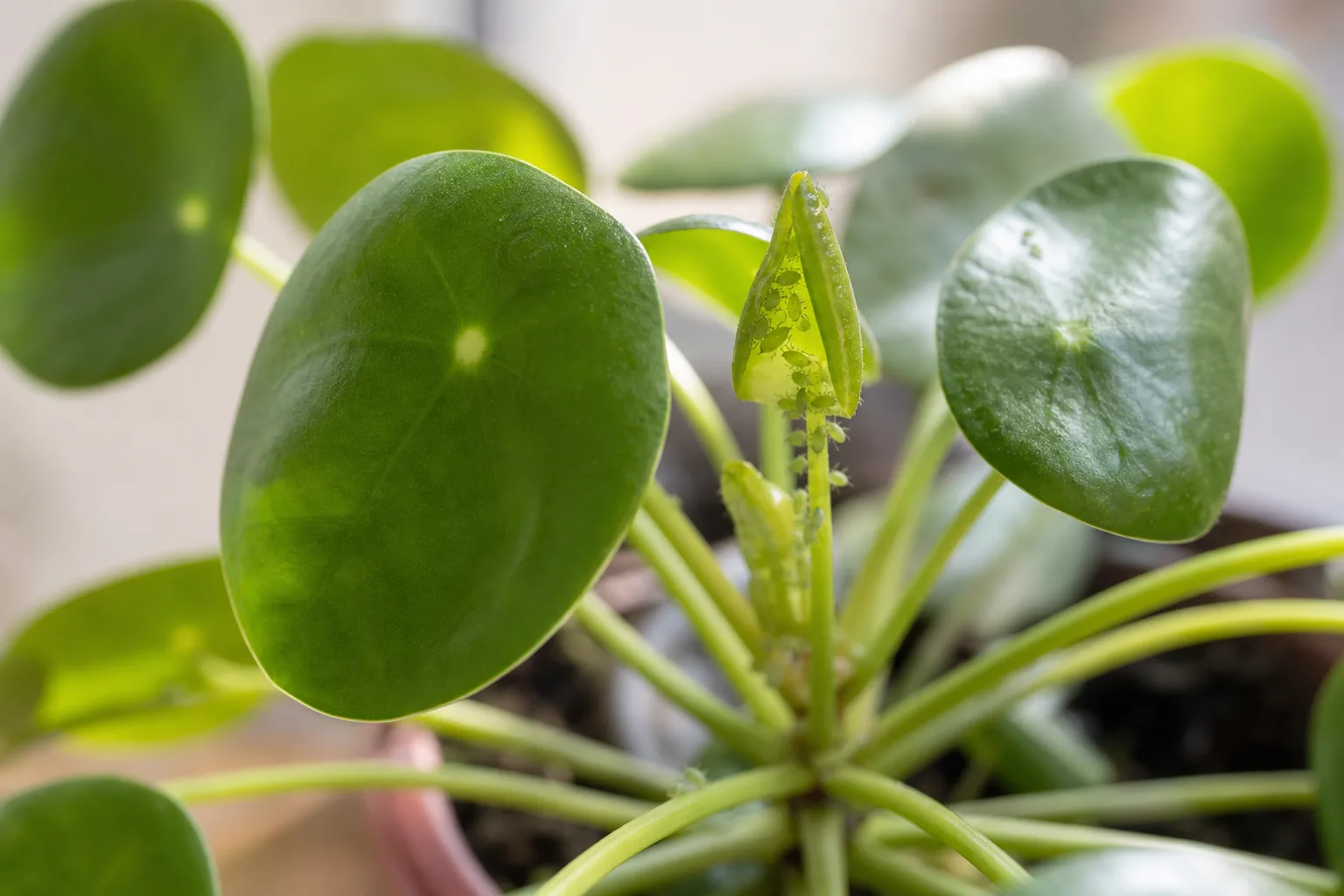
Aphids on Pilea peperomioides cluster on soft new coin leaves, pup shoots, and stem tips, leaving sticky honeydew on flat discs. First step: isolate the plant and rinse every coin leaf and pup shoot with lukewarm water before treating new growth.
Aphids on Pilea Peperomioides: Causes, Checks & Fixes
This guide covers aphids on Pilea Peperomioides. See also the general Aphids guide, watering, and light pages for this plant.
Aphids on Pilea Peperomioides: Causes, Checks & Fixes
Quick answer
Aphids on Pilea peperomioides (Chinese money plant) cluster on soft new coin leaves, pup shoots, and stem tips, leaving sticky honeydew on flat discs. First step: isolate the plant and rinse every coin leaf and pup shoot with lukewarm water before treating tender new growth with insecticidal soap if insects return.
This page is for confirmed aphids-visible soft-bodied clusters plus honeydew. Sticky residue with white cottony wax at petiole joints points to mealybugs. Fine stippling and webbing on coin undersides without heavy stickiness suggests spider mites. Water-soaked blisters on tender tips with wet soil may be edema from overwatering, not insects.
Indoor pilea is usually pest-free, but aphids hitchhike on nursery plants, plant-swap pups, summer patio placements, and open windows. They target the same tender shoots pilea produces in bright, indirect light-the soft tissue where new coin leaves unfurl along an upright stem and at basal offsets.
Why pilea gets aphids
Pilea peperomioides is an upright herb with peltate coin leaves on long petioles and a clumping habit from basal pups. That architecture matters for aphids: they prefer the softest new tissue, and pilea constantly produces it on the main stem tip and on every pup at the soil line.
Common entry routes on pilea:
- Nursery quarantine failures - Aphids hide on undersides of newest coin leaves and on pups tucked below the main stem where shelves block your view.
- Plant swaps and gifted pups - Basal offsets root quickly but often arrive with hitchhikers on tender shoot tips.
- Outdoor summer return - Pilea moved to shaded patios can pick up aphids from garden plants; winged forms disperse when colonies crowd.
- Open windows and crowded trays - Aphids walk between pots on the same shelf; pilea’s multiple offsets on one tray give pests short distances to travel.
- Nitrogen-rich soft growth - Over-fertilized pilea pushes tender pup shoots that aphids colonize faster than mature coin discs.
NC State Extension lists spider mites, mealybugs, fungus gnats, and scale as pilea pests to monitor-but aphids follow the same honeydew pattern whenever a contaminated plant enters the home.
Ants complicate control. Ants harvest honeydew and protect aphid colonies from lady beetles and other natural enemies. Ant trails on pot rims or shelf surfaces often appear before you spot the aphids themselves. Flat coin discs collect honeydew in visible shiny patches that can support sooty mold growth if feeding continues.
What aphids look like on Pilea Peperomioides
Aphids are small, soft-bodied insects with pear-shaped bodies and long legs. Most species on houseplants appear green, yellow, brown, or black. A pair of tubelike cornicles projecting from the hind end helps distinguish aphids from other tiny pests.
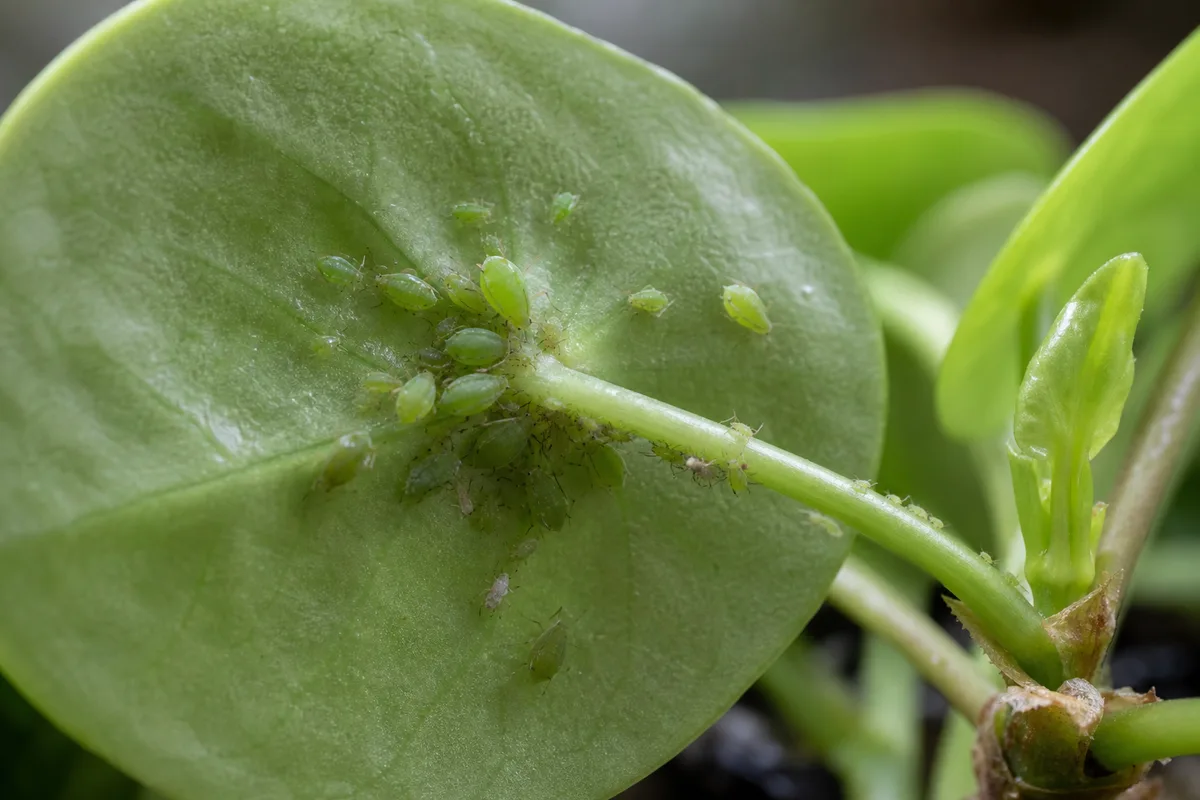
Aphids symptoms on Pilea Peperomioides - compare with healthy tissue on the same plant.
Typical signs on pilea:
- Clusters on unfurling coin leaves, main stem tips, and basal pup shoots
- Sticky, shiny honeydew on flat leaf discs, pot edges, or shelves below
- Curled or stunted young pancakes when feeding is heavy
- Black sooty mold growing on honeydew deposits
- Ant activity on the pot rim, saucer, or nearby surfaces
- Slowed new leaf production when tips and pups are heavily colonized
Pups at the soil line often show pests before the main stem because their shoots are youngest and softest. Mature lower coin leaves are less attractive unless the infestation is severe.
Unlike spider mites, aphids are visible without magnification on moderate infestations-you can see individual insects moving slowly when disturbed. Unlike mealybugs, aphids lack white cottony wax; unlike scale, they have no hard shell attached to the petiole.
How to confirm the cause
Work through these checks before spraying anything:
- Pups at soil line first - Lift basal offsets and examine shoot tips and the backs of newest coin leaves. Pups often carry pests before the main stem shows symptoms.
- Growing tips second - Check the main stem tip where the next pancake unfurls. Aphids feed where tissue is softest.
- Crush test - Press one insect between fingers. Aphids leave a green or black smear. Mealybugs smear pink or orange waxy residue.
- Honeydew check - Rub a sticky coin leaf with a damp cloth. Honeydew wipes off; mineral deposits or normal glossy leaf texture do not.
- Ant trails - Follow ants upward from the shelf or pot base toward aphid clusters.
- Speed test - Aphids move slowly when disturbed. Spider mites are nearly microscopic and associated with fine stippling, not loose clusters on tips.
- Recent history - Note new purchases, plant swaps, outdoor time, or fertilizer spikes in the past month.
If you find pear-shaped insects with cornicles plus honeydew on pilea new growth, aphids are confirmed. Yellowing lower leaves alone, without insects or stickiness, points to watering or light stress-not aphids.
First fix for Pilea Peperomioides
Move the pilea away from other plants, then rinse every coin leaf and pup shoot with a firm stream of lukewarm water-especially leaf undersides, petiole joints, and basal offsets at the soil line.
Pilea coin leaves are thin but generally tolerate sink-level rinsing. Hold the pot at an angle so water runs through foliage without saturating the soil for days. Let leaves dry in Pilea Peperomioides light guide the same day.
This single step knocks off most soft-bodied aphids, washes fresh honeydew before ants arrive, and lets you confirm how heavy the infestation is after the plant dries. Do not reach for insecticide before rinsing-you may be treating a handful of insects that water alone removes.
Do not fertilize a pest-hit pilea hoping to push replacement growth. Tender new shoots attract aphids faster. Do not compost pruned infested pups indoors where winged aphids can disperse.
Step-by-step recovery
After the initial rinse:
- Repeat water sprays every two to three days until live aphids are gone on inspection. Check every pup at the soil line and unfurling coin leaves each time.
- Apply insecticidal soap if colonies persist after several rinses. Coat coin-leaf tops, undersides, petioles, main stem, and pup shoots thoroughly. Repeat every five to seven days through at least two aphid generations-nymphs hide in curled leaves and escape contact sprays.
- Manage ants if they protect colonies. Ant stakes or barriers on shelf legs help natural predators reach aphids indoors; UC IPM notes ant control is critical when managing sap-sucking pests on houseplants.
- Remove a heavily infested pup only after insects are controlled on the mother plant, or sooner if one pup is the sole infestation source. Cut at the soil line and propagate from a clean offset per the propagation guide.
- Wash sooty mold off coin discs with plain water once honeydew production stops. Heavy coating on old leaves can be wiped away; mold does not infect pilea tissue directly.
- Inspect neighboring pileas on the same tray. Pups touching each other let aphids walk between pots in hours.
- Hold isolation until you see no live aphids for at least two weeks. Populations rebound quickly indoors where natural enemies are scarce.
For severe infestations coating every pup on a small starter plant, starting fresh from one clean offset may be faster than fighting entrenched colonies on the mother stem.
Recovery timeline
Water knockdown shows results within two to three days on moderate infestations. A full soap treatment course typically takes one to two weeks with label-interval repeats. Curled young coin leaves may stay misshapen permanently; judge recovery by clean new pancakes emerging from the main tip and pups, not by old damaged discs.
Pilea in bright indirect light often outpaces light aphid damage once insects are gone. Stalled tips that resume unfurling within one to three weeks signal success.
Lookalike symptoms to rule out
| What you see | Likely cause | Where to go |
|---|---|---|
| Pear-shaped clusters + sticky honeydew on new coin leaves | Aphids (this page) | Rinse, isolate, repeat soap |
| White cottony wax at petiole joints and stem nodes | Mealybugs | Alcohol dab + soap repeats |
| Fine stippling, webbing, no heavy stickiness | Spider mites | Rinse + humidity + miticide path |
| Immobile brown or tan bumps on petioles | Scale insects | Scrape + horticultural oil |
| Water-soaked blisters on tips; wet sour soil | Overwatering / edema | Dry-down first, not pest spray |
Mealybugs form white cottony clusters in leaf axils and along petioles, not loose pear-shaped groups on coin tips. Honeydew is similar, but the wax texture is distinct.
Spider mites cause fine stippling and webbing in dry conditions, not heavy stickiness on flat discs. Mites are nearly microscopic; confirm with a hand lens on coin undersides.
Edema from overwatering produces water-soaked blisters on tender pilea tips without insect clusters-check soil moisture before spraying.
Mistakes to avoid
Do not treat once and assume aphids are gone-indoor populations rebound in days because females birth live nymphs without mating.
Do not spray only the tops of coin leaves; colonies hide on undersides and in pup axils at the soil line.
Do not use homemade dish soap sprays on pilea; commercial insecticidal soaps are formulated and tested to reduce leaf burn risk on tender foliage.
Do not ignore ants. Controlling aphids alone is harder while ants defend colonies from predators.
Do not fertilize heavily while aphids feed-soft growth fuels more pests.
Do not return a treated pilea to a crowded shelf before the two-week aphid-free confirmation window ends.
Pilea care cross-check while treating
While fighting aphids, keep baseline care steady so the plant can push clean replacement growth:
- Light - Bright, indirect light supports recovery without the weak stretch that invites more pests. See the overview for placement guidance.
- Watering - Follow the watering guide dry-down checks; do not overwater a stressed pilea hoping to compensate for lost leaves.
- Feeding - Hold fertilizer until aphids are gone for two weeks, then resume half-strength feeding from April to September-not more.
Avoid Pilea Peperomioides repotting guide during active infestation unless soil pests are also suspected. Focus on foliage treatment first.
How to prevent aphids on Pilea Peperomioides
- Quarantine new plants and pups for at least two weeks before placing them near existing pileas. Inspect every pup at the soil line on day one and day fourteen.
- Inspect coin tips weekly during active growth-spring and summer indoors, or whenever you fertilize.
- Rinse foliage after outdoor summer placement before returning the pot to an indoor shelf.
- Space crowded plant trays so aphids cannot walk between pilea offsets on the same surface.
- Limit nitrogen spikes during aphid season; steady, moderate feeding produces less aphid-friendly soft tissue.
- Check swap-day pups separately before adding them to a mother pot or shared tray.
Healthy pilea in bright indirect light with consistent watering outgrows minor pest hits faster than stressed plants in dim corners.
When to worry - remove pup or propagate?
Escalate treatment when:
- Colonies cover most pup shoots and the main stem tip
- Sooty mold blocks light on more than a few coin discs
- Ants swarm the pot rim despite rinsing
- New pancakes stop unfurling for two or more weeks
- Aphids reappear within days after three soap cycles
A few aphids on one new coin leaf after quarantine failure is not a lost cause-prompt isolation and rinsing usually resolves it. When a single basal pup carries the entire infestation while the main stem stays clean, removing that pup and propagating from a clean offset is often faster than repeated whole-plant sprays. Discard only when every pup, the main stem, and nearby tray-mates are encrusted and you lack patience for repeated treatment.
Practical checks
Urgency check
New growth fully coated with aphids, ant trails on the pot rim, or sooty mold spreading across coin discs needs same-day isolation and rinsing.
Best inspection order
Basal pups at soil line, main stem tip, coin-leaf undersides, ants on pot rim and saucer, neighboring pots on the same tray.
Conclusion
Aphids on Pilea peperomioides are manageable when caught on new coin leaves and pup shoots before colonies spread across a crowded tray. Isolate, rinse every basal offset and stem tip, then treat persistently if insects return. Pilea recovers quickly from light damage; focus on clean new pancakes, quarantine discipline, and weekly pup inspection to keep aphids from becoming a collection-wide problem.
When to use this page vs other Pilea Peperomioides guides
- Pilea Peperomioides watering guide - Use for routine moisture checks before assuming aphids is the main issue.
- Pilea Peperomioides problems hub - Browse all 17 common issues on this species.
- Curling Leaves on Pilea Peperomioides - Different entry point when symptoms overlap with aphids.
- Mealybugs on Pilea Peperomioides - Different entry point when symptoms overlap with aphids.
- Spider Mites on Pilea Peperomioides - Different entry point when symptoms overlap with aphids.