Curling Leaves on Pilea Peperomioides: Causes, Checks &
Quick answer
Curling on Pilea Peperomioides usually means water or light stress-upward cup on the window side from direct sun, inward curl on a light dry pot from thirst, or limp curl on wet soil from failing roots. First step: check pot weight and top-inch moisture before watering or moving.
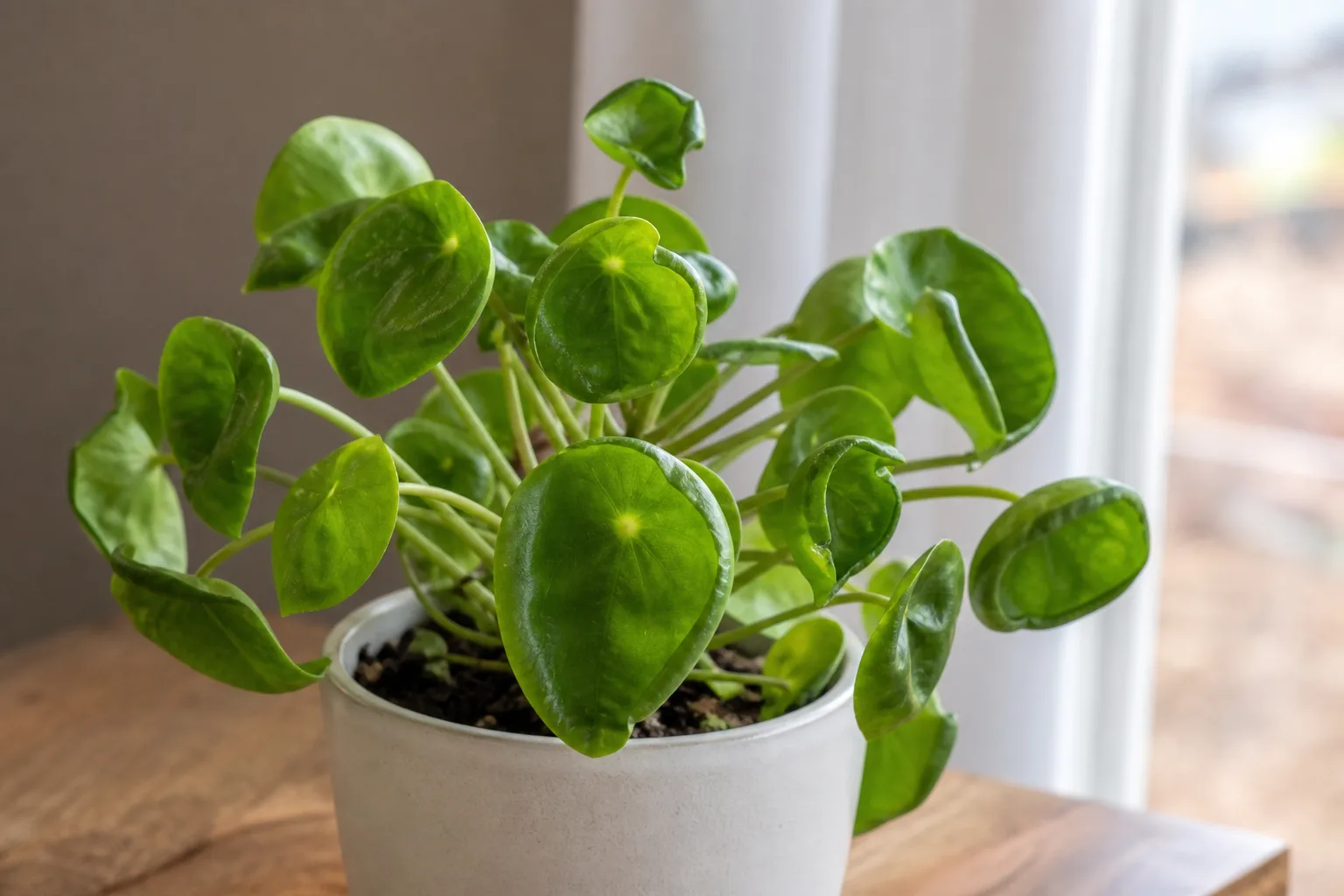
Curling Leaves on Pilea Peperomioides: Causes, Checks & Fixes
This guide covers curling leaves on Pilea Peperomioides. See also the general Curling Leaves guide, watering, and light pages for this plant.
Curling Leaves on Pilea Peperomioides: Causes, Checks & Fixes
Quick answer
Curling leaves on Pilea Peperomioides (Pilea peperomioides) are a turgor and light signal first-not a missing fertilizer problem. Healthy coin leaves are firm, slightly domed, and circular on long petioles. Stress changes that shape before the whole plant collapses.
First step: lift the pot and stick your finger into the top inch of mix. A light, dry pot with inward cupping usually means underwatering. A heavy, wet pot with limp curl means stop watering and check roots-not another drink. Upward cup on leaves facing the window only points to direct sun or heat, even if soil moisture looks fine.
What curling leaves look like on Pilea Peperomioides
Healthy pilea leaves lie domed like shallow saucers-springy when you press the blade, evenly green, spaced along an upright central stem. Curling breaks that baseline in recognizable patterns:
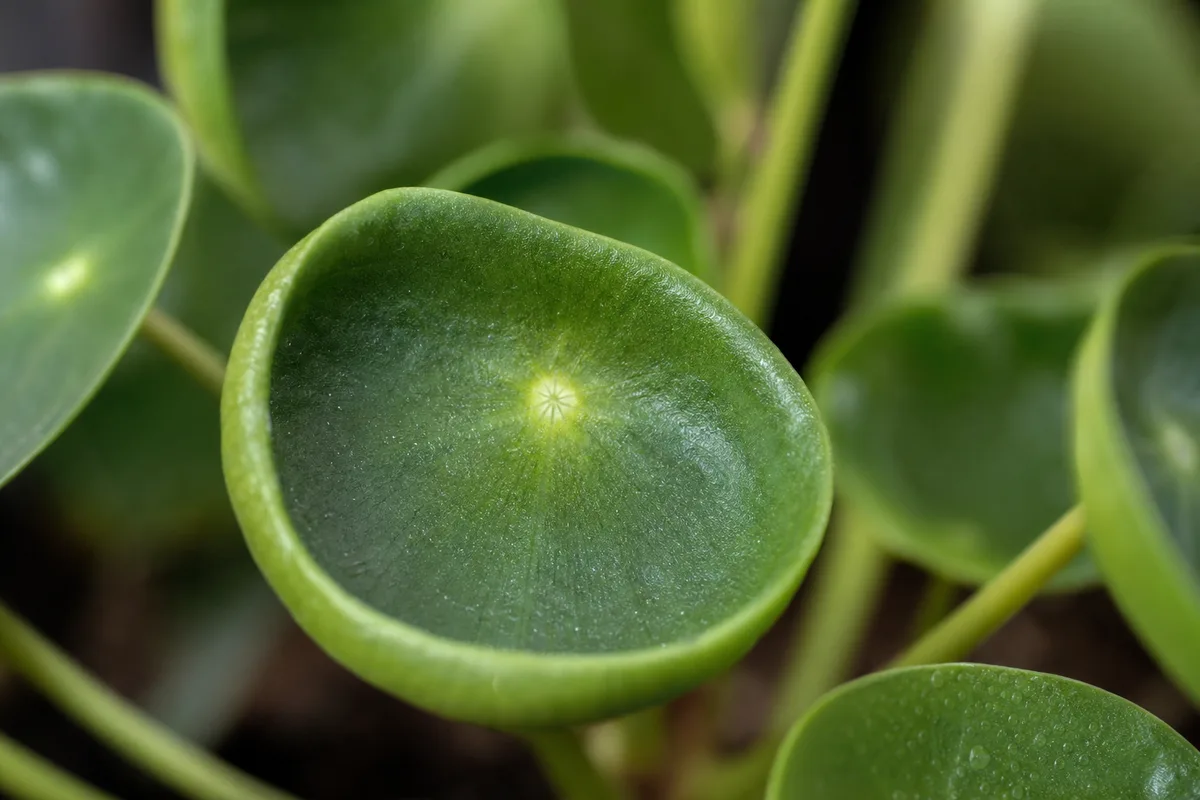
Curling Leaves symptoms on Pilea Peperomioides - compare with healthy tissue on the same plant.
- Upward cupping on the window-facing side, sometimes with pale or bleached patches-classic self-shading from harsh direct sun
- Inward roll on scattered leaves when the pot feels light and the top inch is dusty-dry
- Limp downward curl paired with yellow lower leaves while soil stays damp for days-root stress mimic, not thirst
- Dull, stippled new coin leaves that fail to dome properly-often spider mites before widespread yellowing
- One-sided curl on leaves oriented toward glass while the shaded side stays flat-uneven light without weekly rotation
Normal new leaf unfurling can look briefly folded at the tip for a few days. Stress curl on established coins that have been flat for weeks is the pattern to diagnose.
Why Pilea Peperomioides gets curling leaves
Direct sun and heat stress
Pilea evolved on shaded moist rocks in southwestern China-not on hot windowsills. Harsh midday sun bleaches coin leaves, adds brown crispy spots, and triggers upward cupping as the plant reduces exposed surface area. NC State Extension lists partial shade (filtered sun, not blasting rays) as the indoor target.
Heat above 85°F (29°C) near a south window or sources of heat accelerates drying and can curl leaves even when you watered recently. The overview notes this combination pushes rapid moisture loss-check both light and temperature, not just the watering calendar.
Underwatering
Pilea has succulent-leaning leaves but still needs regular drinks. Water when the top inch (about 2.5 cm) of mix feels dry-the rhythm detailed in our watering guide. When that zone goes bone dry too long, cells lose turgor and leaves cup inward on a light pot. Thirst curl often hits older lower coins first while the stem stays firm.
Wet soil and root stress
Chronic overwatering-especially in dim corners where the plant uses little water-suffocates roots. Damaged roots cannot transport moisture, so leaves curl and yellow even though mix feels damp-a pattern common on overwatered houseplants and species susceptible to root rot. This is the same wet-vs-dry trap covered in wilting and overwatering guides: do not pour water on curl when the pot is heavy and sour-smelling.
Low light slowing water use
In very dim spots, leggy growth from inadequate light slows water use. Growers who keep a summer watering schedule through a dark winter leave mix cold and wet around roots-setting up curl from root stress, not from too little light alone. Pair brighter indirect light with longer dry-down intervals when days shorten.
Spider mites on flat coin leaves
Dry winter air and sunny window ledges favor spider mites on houseplants. On pilea, fine stippling across the coin surface, dull texture, and fine webbing at petiole joints distort new growth before older leaves yellow. Mites scatter across the plant; sun scorch usually hits the glass-facing side only. Full treatment steps live in spider mites on Pilea.
One-sided window exposure
Pilea is strongly phototropic-leaves and stems lean toward the brightest source. Leave the pot fixed for two weeks and only window-facing coins may cup from excess sun while the back stays flat. Rotate a quarter turn every one to two weeks once light is corrected so new growth balances.
How to confirm the cause
Work through these checks in order:
- Top-inch moisture and pot weight - Dry and light = thirst curl. Wet and heavy = root stress; hold water.
- Which leaves curl - Window-facing only = sun or heat. Scattered on dry soil = underwatering. Lower yellow leaves on wet mix = overwatering. Twisted new coins with stippling = pests.
- Stem firmness at the base - Firm stem with dry soil supports a soak. Soft stem on wet soil is urgent-inspect roots.
- Light and heat placement - Note distance from south or west glass, sheer curtains, and proximity to radiators or AC vents.
- Pest spot-check - Tap a suspect coin over white paper; moving specks confirm mites. Use a hand lens on new leaf undersides.
- Recovery test - If dry, water thoroughly once and recheck leaf turgor in 24 hours. If wet, do not water-slide the plant out only if curl spreads while soil stays damp more than a week.
First fix for Pilea Peperomioides
Make one correction on day one-nothing else stacked:
If leaves cup upward on the window side and soil moisture is normal: Move the pot back from hot glass or add a sheer curtain. Filtered bright indirect light is the fix-not more water.
If the top inch is dry and the pot is light: Water thoroughly until excess drains, empty the saucer within 30 minutes, and recheck tomorrow. Inward curl often relaxes within hours when roots are healthy.
If the mix is wet, heavy, or sour-smelling: Stop watering. Move to brighter indirect light so the pot can dry. If stems soften, unpot, trim mushy roots, and repot into fresh perlite-amended mix-see root rot if damage is advanced.
If stippling and webbing are confirmed: Isolate the plant, rinse both sides of every coin leaf, and apply insecticidal soap per label-details in the spider mites guide.
Do not fertilize curled leaves. Do not repot and prune every stem the same day unless rot is confirmed.
Step-by-step recovery
After the first targeted fix:
- Stabilize placement - Bright indirect light, away from hot glass and heat vents. Rotate the pot weekly.
- Reset watering - Water only when the top inch dries; pilea typically needs drinks every 7–10 days in active growth and longer in winter-always check the pot, not the calendar.
- Watch new coin leaves - Recovery shows in the next two to three domed coins, not in old warped blades.
- Treat pests on schedule - Mite rinses need weekly repeats for three weeks; one shower rarely finishes the job.
- Trim only when stable - Remove leaves that stay severely cupped or stippled after two weeks of corrected care; they rarely flatten fully.
Lookalike symptoms
| What you see | Often confused with | How to tell apart |
|---|---|---|
| Drooping petioles | Inward thirst curl | Drooping hangs the whole leaf flat; curl rolls the blade-check soil together |
| Leggy bare stem | Drought | Long gaps between small leaves mean low light; soil may stay wet because the plant uses little water |
| Yellow lower leaf | Normal aging | One or two bottom yellows on a firm stem is senescence; several yellows on wet soil is root stress |
| Half-unfurled new coin | Stress curl | New leaves can look folded for days while opening; established flat coins that suddenly cup are stress |
| Brown crispy window patch | Mite stippling | Sunburn is bleached or tan on the glass-facing side only; mites speckle across multiple leaves |
Recovery timeline
Thirst curl: Mild inward cup often improves within hours to one day after a proper soak when roots are firm.
Sun cup: After you filter light, new domed coins should look normal within one to two weeks. Old cupped tissue may stay slightly warped.
Wet-root stress: Recovery takes one to three weeks once roots dry and new growth resumes; badly rotted stems may not recover.
Pest distortion: Clean new leaves within two to three weeks of consistent rinsing and soap mean control is working; stippled old coins stay marked.
What not to do
- Water automatically when leaves curl-overwatering and underwatering need opposite fixes
- Move a wet plant to stronger sun without fixing drainage first
- Fertilize a stressed pilea before confirming roots and light
- Expect every curled coin to flatten-judge new growth instead
- Ignore pups at the base during mite treatment-offsets share the same infestation
How to prevent curling leaves on Pilea Peperomioides
Pair bright indirect light with partial shade and weekly rotation so no single side bakes against glass. Water when the top inch dries-our watering guide covers pot-weight cues. Avoid oversized pots that hold water too long. Scout new growth weekly in winter. Keep the plant away from heat vents when room temperatures climb above 85°F (29°C) .
When to worry
Escalate if curl spreads to every new coin within a week, the stem base softens while soil stays wet, or webbing covers multiple shoots despite rinsing. A few sun-cupped leaves on an otherwise firm plant after a heat wave is routine-not a crisis.
Practical checks
Urgency check
Treat as same-day urgent if stem bases soften, the plant wilts on wet sour soil, or mites web multiple stems while new growth deforms.
Best inspection order
Newest coin leaves → window-facing side pattern → top-inch moisture and pot weight → stem firmness → heat draft placement → mite stippling on undersides → roots only if wet curl persists past one week.
Pilea care cross-check
Pilea peperomioides is non-toxic to cats and dogs-still pick up fallen curled leaves if pets chew foliage. Average room humidity is fine; dry air stresses indoor foliage above heating vents and raises mite risk more than curl from humidity alone.
Related Pilea Peperomioides guides
- Pilea overview - healthy domed coin baseline and rotation habit
- Light needs - window placement and sun scorch prevention
- Watering - top-inch dry rule and pot-weight cues
- Underwatering - thirst curl on a light pot
- Overwatering - wet-soil root stress branch
- Wilting - dry vs. wet wilt framework
- Spider mites - stippling and webbing on coin leaves
Conclusion
Pilea curling leaves usually trace to sun, thirst, wet roots, heat, or mites-not a missing nutrient. Confirm with pot weight, which leaves cup, and whether the window-facing side alone is affected. Correct one cause first, then watch the next domed coin leaves for proof the fix worked.