Spider Mites on Pilea Peperomioides: Causes, Checks & Fixes
Quick answer
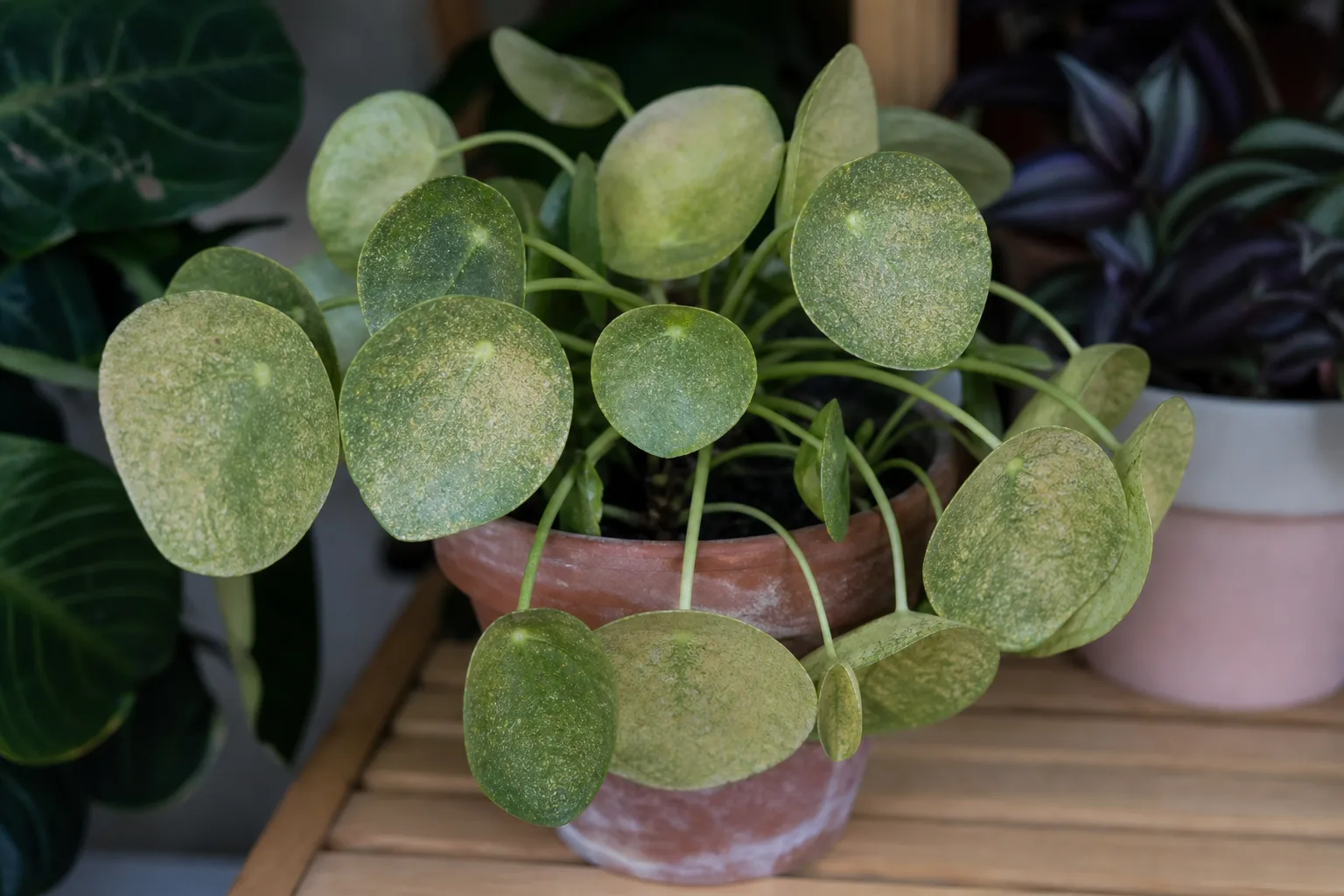
Spider mites on Pilea Peperomioides usually show as fine stippling and faint webbing around petiole joints. First step: isolate the plant and rinse leaf undersides thoroughly before any spray treatment.
Spider Mites on Pilea Peperomioides: Causes, Checks & Fixes
This guide covers spider mites on Pilea Peperomioides. See also the general Spider Mites guide, watering, and light pages for this plant.
Spider Mites on Pilea Peperomioides: Causes, Checks & Fixes
Quick answer
On Pilea peperomioides, spider mites usually start as very fine pale stippling on the flat coin leaves and then progress to faint webbing at leaf stalk joints. First action: isolate the plant and rinse both sides of every leaf, especially undersides, to knock down active mites before applying any treatment UMN Extension. If speckling is only on the window-facing side with no webbing or moving specks, rule out sun stress first RHS.
What spider mites look like on Pilea peperomioides
Spider mites are tiny arachnids, not insects, and feeding damage usually appears as light stippling before obvious webbing UC IPM. On this plant, the pattern is easiest to see on broad, smooth, horizontal coin leaves where surface contrast is high. As pressure increases, leaves can look dull, slightly bronzed, and less turgid.
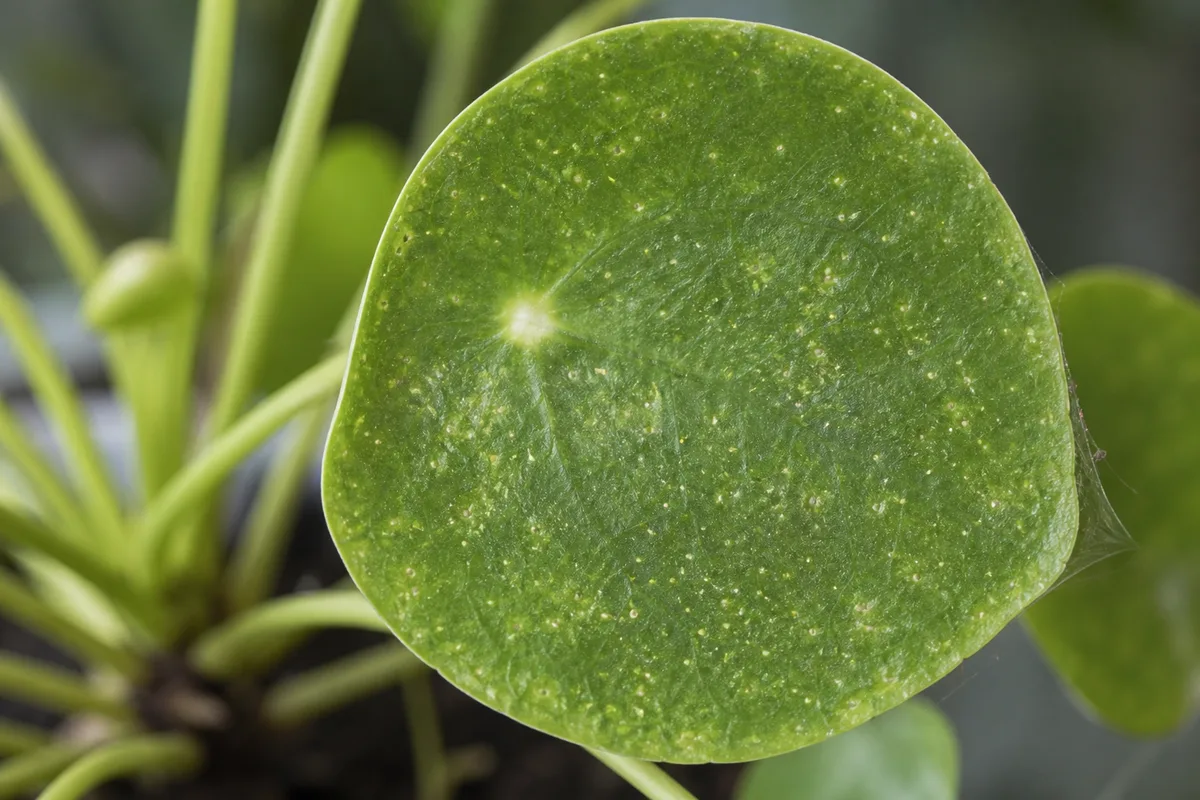
Spider Mites symptoms on Pilea Peperomioides - compare with healthy tissue on the same plant.
On heavier infestations, look for:
- Fine silk threads between leaf undersides and petiole bases
- Stippling scattered across multiple leaves, not just one sun-facing patch
- Progression from older leaves toward newer leaves and nearby pups
- Tiny moving dots after tapping a leaf over white paper
Silky webbing and stippling are classic indoor signs noted by extension resources Clemson HGIC.
Why Pilea Peperomioides gets spider mites
RHS lists red spider mites among common sap-sucking pests on pilea RHS. The usual trigger indoors is a warm, dry microclimate: bright window exposure, indoor heating, low humidity, and dusty foliage UMN Extension. Mite damage also tends to worsen when plants are already stressed by dry conditions UC IPM.
Pilea-specific risk pattern:
- Upright stems with dense petiole joints create sheltered inspection-blind spots
- Flat leaves collect dust quickly, reducing early visual detection
- Pups at soil line are easy to miss and can carry reinfestation back upward
- Winter indoor air favors faster population growth than humid summer rooms
How to confirm the cause (5-step check)
- Check leaf undersides first: use a phone light and inspect undersides of the oldest two to three leaves.
- Look for webbing at petiole joints: early webbing appears where stalks meet stems, not usually across the whole leaf.
- Run a paper-tap test: tap one suspect leaf over white paper; moving specks strongly support mite activity.
- Compare distribution pattern: mite stippling is scattered; sun scorch is usually strongest on the window-facing side only RHS.
- Inspect pups and nearby plants: mites spread easily across clustered houseplants, so check adjacent foliage too UMN Extension.
First fix to try
Isolate the plant and give a thorough lukewarm rinse that reaches the undersides of every leaf and the stem nodes. This mechanical knockdown reduces live mites and webbing immediately UMN Extension.
After rinsing, apply a labeled insecticidal soap to full coverage, including undersides and node areas. Soaps work on contact and have little residual effect, so complete coverage and repeat timing matter Colorado State Extension. Repeat every 4-7 days for several rounds as needed Colorado State Extension.
If using soap or oil products, avoid high-heat or direct-sun application windows to reduce leaf injury risk Clemson HGIC.
Step-by-step recovery by severity
Light infestation (early stippling, little webbing)
- Isolate and rinse
- Soap spray with full underside coverage
- Repeat every 4-7 days for 2-3 weeks
- Recheck two times weekly with paper-tap testing
Moderate infestation (multiple leaves and visible webbing)
- All light-step actions
- Remove the worst damaged leaves if they block spray coverage
- Treat pups and leaf undersides on every stem
- Temporarily increase ambient humidity around the plant (without keeping the potting mix constantly wet), since mites prefer drier indoor air UMN Extension
Heavy infestation (webbing on many stems/new growth affected)
- Isolate immediately from the collection
- Repeat contact treatments on schedule with full coverage
- Consider discarding severely affected plants if most tissue is colonized and control fails, to protect nearby plants UMN Extension
Recovery timeline and success signs
Existing stippling does not reverse, because damaged cells stay damaged. Judge recovery by new growth quality, not by trying to clear old marks. In many home conditions, clean new leaves and reduced tap-test counts are visible within 2-4 weeks when treatment timing is consistent.
Signs you are improving:
- Less or no fresh webbing at petiole joints
- Fewer moving specks on white paper tests
- New leaves emerging without new stippling
Signs you are not improving:
- Stippling continues on new leaves after 2-3 treatment cycles
- Webbing expands across stems and pups
- Nearby plants begin showing similar feeding marks
Lookalikes to rule out on pilea
- Sun scorch: often strongest on the most window-exposed side; may show flushed or discolored patches without mite webbing RHS.
- Mineral residue or guttation traces: can appear as white deposits under leaves and may be harmless RHS.
- Thrips or other sap-feeders: may cause discoloration but usually differ in visible pest signs and feeding pattern.
If you see webbing plus moving specks and widespread stippling, mites stay the top suspect.
Mistakes to avoid
- Treating once and stopping (eggs and survivors repopulate)
- Spraying in hot direct sun
- Ignoring pups and lower stems during treatment
- Leaving the plant in hot, dry airflow from vents
- Skipping checks on neighboring plants
How to prevent spider mites next time
Use prevention as a routine:
- Wipe or rinse leaves regularly to reduce dust and improve scouting
- Keep pilea away from direct heat vents and very dry hot corners
- Quarantine new plants before placing them near your collection UMN Extension
- Inspect undersides weekly in heating season
For broader pilea care context after recovery, review the main guide and related topics: Pilea peperomioides care, watering, and light. If symptoms do not match mites, compare with aphids and mealybugs.
When to escalate
Escalate quickly if:
- Webbing appears on multiple stems and pups at once
- New leaves keep emerging damaged after repeated treatments
- Several plants in the same area show active signs
At that point, stricter isolation, better spray coverage discipline, and culling non-recovering plants may be the fastest way to protect the rest of the collection.
How we verify this guide
This page is reviewed against extension and horticultural references, then updated with inline citations for key factual claims. For this topic, primary support includes UMN Extension spider-mite management, UC IPM spider-mite biology and control, Clemson HGIC soap-use guidance, and RHS pilea pest context.
When to use this page vs other Pilea Peperomioides guides
- Pilea Peperomioides watering guide - Use for routine moisture checks before assuming spider mites is the main issue.
- Pilea Peperomioides problems hub - Browse all 17 common issues on this species.
- Low Humidity on Pilea Peperomioides - Different entry point when symptoms overlap with spider mites.
- Curling Leaves on Pilea Peperomioides - Different entry point when symptoms overlap with spider mites.
- Slow Growth on Pilea Peperomioides - Different entry point when symptoms overlap with spider mites.