Mealybugs on Pilea Peperomioides: Causes, Checks & Fixes
Quick answer
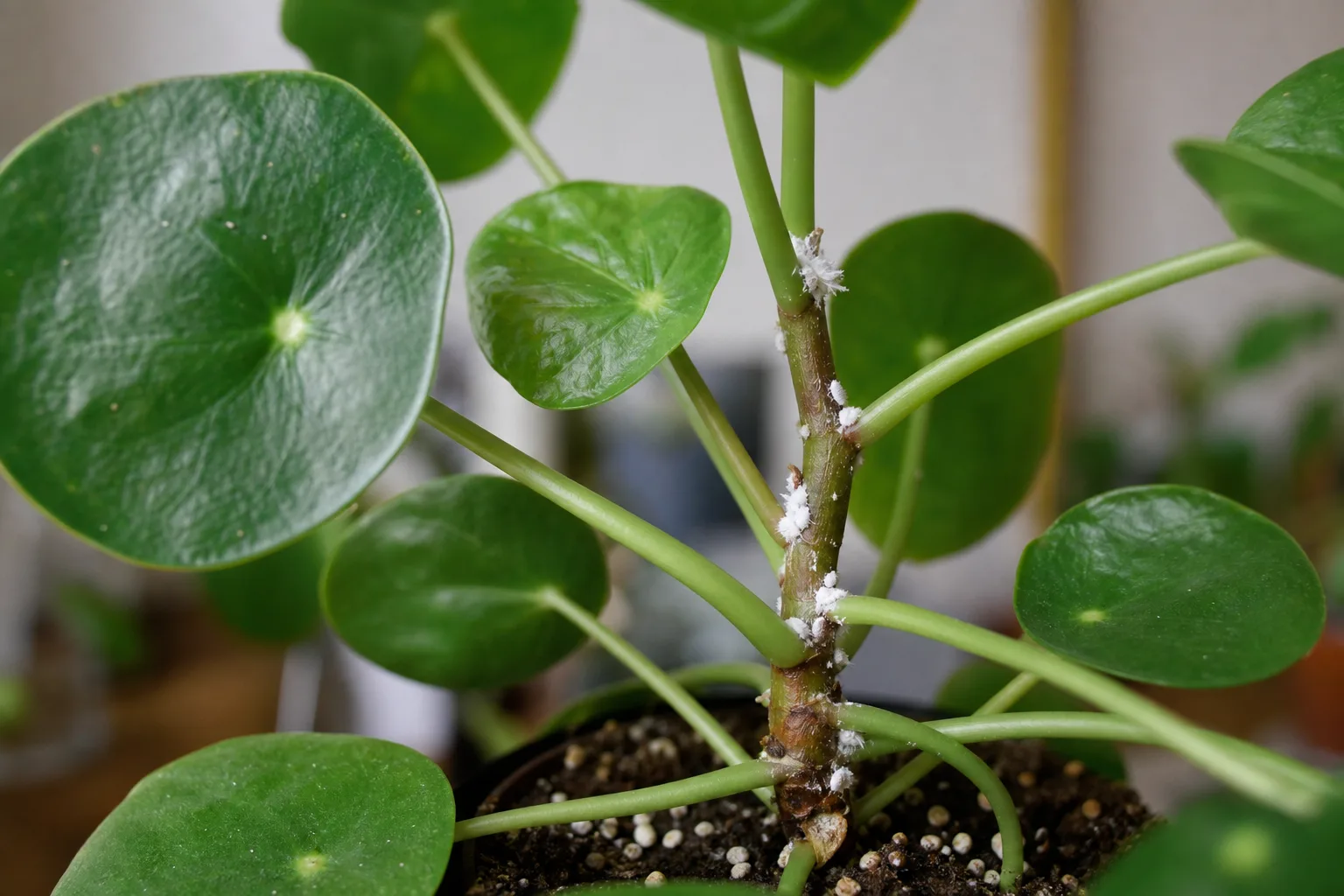
Mealybugs on Pilea Peperomioides show as white cottony clusters where coin-leaf petioles meet the upright central stem and at offset pup bases near the soil line. First step: isolate the plant, inspect every pup base, then dab visible insects with 70% isopropyl alcohol on a cotton swab.
Mealybugs on Pilea Peperomioides: Causes, Checks & Fixes
This guide covers mealybugs on Pilea Peperomioides. See also the general Mealybugs guide, watering, and light pages for this plant.
Mealybugs on Pilea Peperomioides: Causes, Checks & Fixes
Quick answer
Mealybugs on Pilea Peperomioides (Pilea peperomioides-Chinese money plant, UFO plant) look like tiny cotton balls tucked into the narrow angles where coin-leaf petioles meet the upright central stem and where offset pups emerge at the soil line. They suck sap, excrete sticky honeydew, and can weaken a plant that otherwise grows quickly in bright indoor light.
First step: move the plant away from other plants, inspect every pup base at the soil line, then dab every visible mealybug with 70% isopropyl alcohol on a cotton swab. Pilea’s upright architecture concentrates pests in petiole–stem joints you cannot see from a casual top-down glance. Missing pup bases is the most common reason a treated pilea reinfests within two weeks.
For watering rhythm during recovery, see the Pilea watering guide. For quarantine after treating pups, see Pilea propagation.
What mealybugs look like on Pilea Peperomioides
Pilea Peperomioides is an upright Urticaceae perennial with a single central stem, peltate coin leaves on long petioles, and offsets (pups) from the base. Mealybugs exploit that geometry rather than sitting on open leaf surfaces.
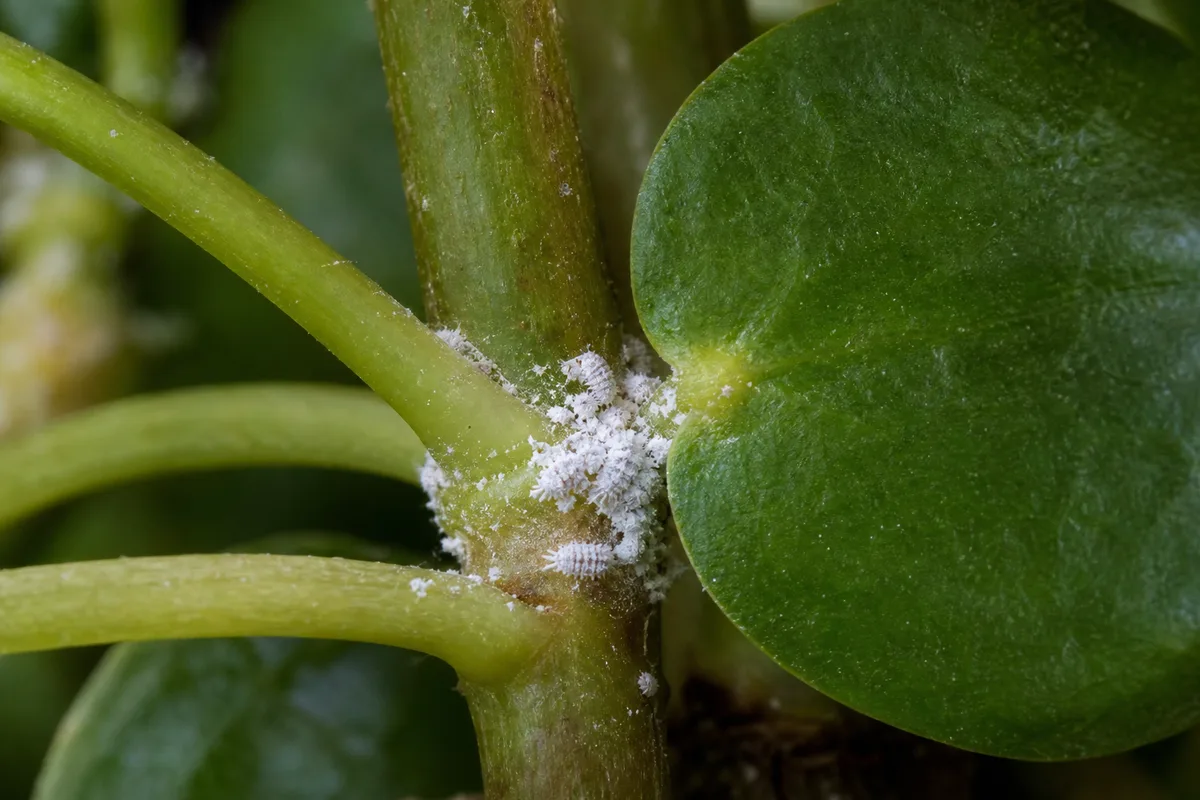
Mealybugs symptoms on Pilea Peperomioides - compare with healthy tissue on the same plant.
Typical signs on pilea:
- White, cottony wax masses where a coin-leaf petiole meets the central stem
- Clusters at pup bases, soil-line crevices, and undersides of lower coin leaves
- Flattened, waxy insects under the fluff; slow movement when you part the cotton with a toothpick
- Sticky honeydew on flat coin-leaf tops, pot rims, or windowsills below the plant
- Black sooty mold on dried honeydew
- Yellowing or stunted new “pancake” leaves when shoot tips and upper joints are colonized
- Ant trails on stems or saucers-ants protect mealybugs and harvest honeydew
Early infestations hide behind the disc-shaped leaves. A cluster in one petiole angle on a plant with four pups can seed every offset within a few weeks in warm indoor air where all mealybug life stages stay active year-round.
Why Pilea Peperomioides gets mealybugs
Mealybugs rarely appear from nowhere. On pilea they usually arrive on an infested nursery pot, a shared propagation tray, or a neighboring houseplant and spread when newly hatched crawlers walk to touching leaves-adult female mealybugs do not fly or crawl far.
Plant-specific risk factors:
- Upright stem joints. Unlike trailing pothos vines, pilea packs dozens of petiole–stem angles along one vertical column. Each angle is a sheltered feeding site-the exact crevices houseplant mealybugs favor.
- Active pup production. NC State Extension notes pilea readily produces offsets around its base. Warm months push new pups; each soil-line crevice is both an introduction point and a reservoir crawlers use to reach the mother stem.
- Year-round indoor warmth. Heated homes keep egg sacs hatching without a cold break, so weekly repeat treatments are required to break the life cycle.
- Crowded shelf culture. Pileas are often grouped on plant walls. Touching coin leaves and shared watering trays let crawlers walk between pots.
- Soft new growth. Fast spring and summer extension pushes tender coin leaves and pups. Over-fertilizing with nitrogen during active growth produces even softer tissue mealybugs prefer for egg laying.
Stressed plants attract pests faster. Chronic overwatering or weak light does not cause mealybugs directly, but a pilea pushing pale, soft pups in poor conditions is easier for an existing colony to overrun.
How to confirm the cause
Work through these checks before treating:
- Location pattern - Mealybugs cluster in petiole–stem joints and pup bases. Powdery mildew forms a flat white film across leaf blades, not raised cotton in crevices.
- Crush test - Touch a cotton swab to a white mass and press. Mealybugs leave pink or orange body fluid under the wax. Empty wax from molted skins may look similar but will not smear pink.
- Rinse test - Harmless white deposits on coin-leaf undersides from guttation or mineral buildup wipe off with plain water. Mealybugs return to the same joint within days and smear when crushed.
- Movement check - Part the cotton with a toothpick. Live nymphs and adults move slowly. Static white fluff with no insects underneath may be old egg sacs-still treat.
- Honeydew and mold - Sticky coin-leaf tops or black sooty coating confirm sap-feeding pests, not a watering issue alone.
- Propagation fuzz check - Fine hairs on water-rooted pup roots below the stem are normal. Wax clusters on the stem above the soil line are not.
- Root-zone check - Some mealybug species feed on roots. If stems look partly clean but the plant wilts despite appropriate watering, unpot and look for white wax on roots or the main stem below the soil line.
If you find cottony wax with pink smear and honeydew in petiole joints or pup bases, you have mealybugs-not dust, not guttation, and not aphids unless you also see soft-bodied green insects on tender growth.
First fix for Pilea Peperomioides
Move the plant away from other plants, inspect every pup base, then dab every visible mealybug with a cotton swab soaked in 70% isopropyl alcohol.
This single step kills adults and nymphs on contact and removes wax masses you can reach. Work methodically:
- Start at the soil line and inspect every pup base and soil crevice
- Follow the central stem upward, lifting each coin leaf to dab every petiole joint
- Run swabs along the stem below lower leaves and around any aerial offsets
- Wipe honeydew from coin-leaf surfaces with a damp cloth so sooty mold does not spread
- Check the pot rim, saucer, and neighboring plants on the same shelf
Test alcohol on one coin leaf and wait 24 hours before treating the whole plant-alcohol can burn foliage if applied heavily to sun-stressed leaves in a hot south window. Treat in morning indirect light per the Pilea light guide.
Do not shower the entire plant with undiluted alcohol on day one. Do not spray insecticide before you have physically reduced the population you can see.
Step-by-step recovery
After the first alcohol pass, continue in this order based on severity:
Light infestation (few isolated clusters on one stem)
- Repeat alcohol dabs weekly for at least three weeks to catch newly hatched crawlers
- Rinse coin leaves with a moderate water stream in the sink, angling spray at petiole joints-avoid soaking the pot if soil already holds moisture
- Monitor the same joints each time you water
Moderate infestation (multiple joints affected, honeydew on coin leaves)
- Complete two alcohol sessions three to four days apart on visible insects
- Then spray insecticidal soap or horticultural oil thoroughly into petiole angles, pup bases, and leaf undersides
- Repeat soap or oil every seven to ten days until no live insects appear for three to four weeks
- Trim only heavily coated pups you cannot clean-dispose in sealed bags, not open propagation jars
Heavy infestation (widespread wax, ants, multiple pups coated)
- After initial alcohol reduction, repot into fresh mix if white wax appears at the soil line or on roots
- Remove offsets that are more wax than plant if you cannot reach every crevice
- If more than half the stem joints are coated and new coin leaves have stopped for weeks, discarding the plant may be less risky than spreading crawlers across your collection
- Keep isolated until you see two full weeks with no new cottony masses
Throughout recovery, water pilea on its normal schedule-allow the top inch of mix to dry between waterings-and hold nitrogen fertilizer until new coin leaves look clean. Feeding a pest-stressed pilea pushes tender pups that attract another wave of insects.
Neem oil as an alternative
If soap is unavailable, neem oil can suppress younger nymphs after alcohol reduction. Dilute per label, spray into joints rather than flooding flat coin leaves, and spot-test one leaf first. Avoid applying on the same day the plant sits in harsh direct sun-oil plus heat causes phytotoxicity on thin pilea tissue faster than on thick succulent leaves.
Recovery timeline
Mealybugs do not disappear after one treatment because egg sacs hatch over several weeks. Expect visible cottony masses to decline within the first two alcohol passes when colonies are moderate. A full course with weekly repeats typically takes three to four weeks before you can call the plant clear.
Judge recovery by new growth, not old damaged leaves. A honeydew-stained or yellowed coin leaf will not revert to perfect green, but the next pancake should emerge clean and firm. Sooty mold stops spreading once honeydew production ends and can be wiped off with a damp cloth.
If live insects reappear at the same pup bases after four weeks of consistent treatment, check root crowns and neighboring plants-you may be reinfesting from a reservoir you missed.
Lookalike symptoms to rule out
| What you see | Likely cause | Quick check |
|---|---|---|
| White cotton in petiole–stem joints | Mealybugs | Pink smear crush test; sticky honeydew |
| Chalky film on coin-leaf underside | Guttation minerals or hard-water deposits | Wipes off dry; no insects underneath |
| Hard brown or tan bumps on stem | Scale insects | Shell does not smear pink like mealybugs |
| Flat white powder on leaf surface | Powdery mildew | No raised wax in joints; no honeydew |
| Fine fuzz on water-rooted pup roots only | Normal root hairs | Wax on stem above soil line = treat |
| White specks after perlite splash | Potting mix debris | Brush off; does not return to same joint |
Spider mites on pilea cause stippling and fine webbing, not cottony wax-see spider mites on Pilea if leaves look dusty with tiny moving dots instead of fluffy clusters.
Mistakes to avoid
Do not spray full-strength alcohol across every coin leaf without a leaf test-phytotoxicity shows as pale scorched patches on sun-stressed tissue.
Do not return an isolated pilea to a crowded shelf after one treatment. Crawlers you missed will walk to neighbors overnight.
Do not ignore ants. Controlling mealybugs alone is harder while ants defend colonies and move crawlers between pots.
Do not compost heavily infested pups or stem cuttings indoors where crawlers can spread to propagation trays.
Do not increase nitrogen feeding during an active infestation-that fuels soft new pups mealybugs prefer.
Do not assume a pilea is clean because the top coin leaves look fine-inspect every pup base and lower petiole joint along the full stem.
Do not apply horticultural oil in direct hot sun-the same warning applies to oil as to alcohol on pilea leaves in bright windows.
How to prevent mealybugs next time
Scout petiole joints and pup bases weekly when pilea is actively producing offsets-warm indoor months push constant new crevice habitat.
Quarantine new pileas and gifted pups for at least two weeks before placing them near other plants. Inspect the soil surface, drainage holes, and stem base before introduction.
Keep airflow between crowded shelf plants. Stagnant warm pockets behind stacked coin leaves favor mealybug buildup.
Wipe dust from flat coin leaves during regular care so white wax stands out against green discs.
Avoid excess nitrogen during spring and summer growth surges. Pair fertilizer with actual pup and leaf production, not calendar habit.
Because pilea is considered safe for pets and children per NC State Extension, windowsill treatment is less risky than on toxic species-but still let alcohol and soap sprays dry before pets brush the leaves.
When to worry
Treat as urgent when cottony masses spread across most stem joints within days, sooty mold coats upper coin leaves, new pancakes stay small while wax advances to every pup, or ants farm honeydew across the pot and surrounding shelf.
Replace severely declining plants rather than fighting endless reinfestation on a stressed specimen. A heavily coated pilea with no clean new growth after a month of consistent treatment is often cheaper to discard and replace than to risk your whole collection.
A few isolated clusters on one petiole joint are not an emergency-methodical alcohol dabs and weekly follow-up usually control them if you catch spread before it reaches every pup.
Related Pilea Peperomioides guides
- Pilea overview - full care cluster
- Pilea watering - dry-down rhythm during recovery
- Pilea light - stable bright indirect light after infestation
- Pilea propagation - quarantine pups post-treatment
- Aphids on Pilea - different honeydew producer on tender growth
- Spider mites on Pilea - stippling lookalike without cottony wax
Conclusion
Mealybugs on Pilea Peperomioides hide in the petiole–stem joints and pup bases that make the plant distinctive. Inspect those shelters before you treat, isolate before alcohol touches the first insect, and dab every visible cluster before reaching for sprays. Repeat weekly until new coin leaves emerge clean. That path stops a single cottony tuft on one offset from becoming a shelf-wide problem-without damaging the fast-growing Chinese money plant you brought home to enjoy.