How to Prune Philodendron Imperial Red: When, Where & What
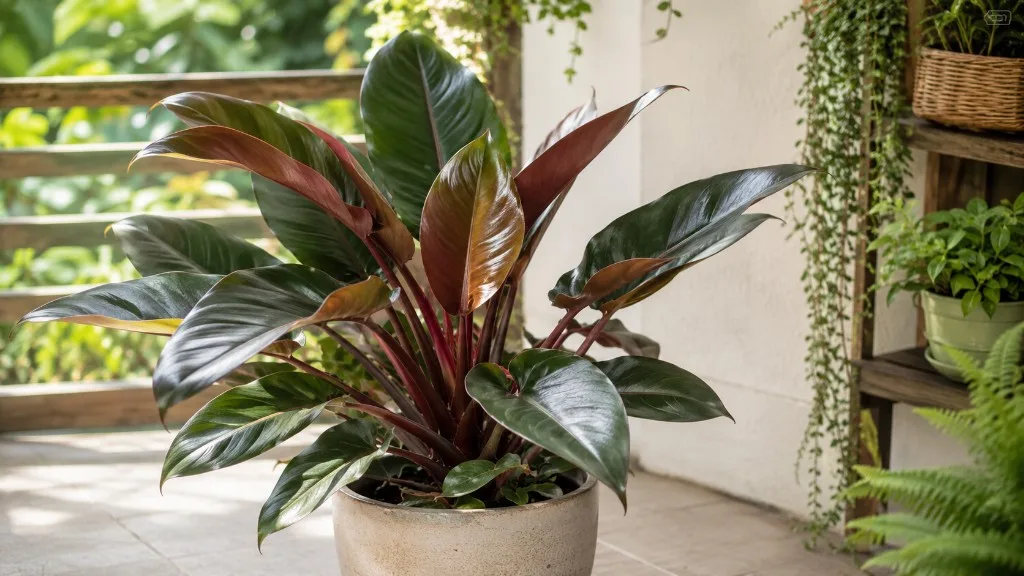
How to Prune Philodendron Imperial Red: When, Where & What to Cut
How to Prune Philodendron Imperial Red: When, Where & What to Cut
First, cut off any leaf that is fully yellow, brown, or soft - trace each petiole to the crown and snip flush at the base with clean bypass pruners. Philodendron Imperial Red (Philodendron erubescens ‘Imperial Red’) is a self-heading, color-forward rosette grown for warm bronze-red new leaves that mature darker. For full care context - light, watering, and common problems - see the Imperial Red overview.
Reviewed by LeafyPixels Review Board · Author: sai-ananth
Quick Answer
Most Imperial Red owners prune only for hygiene: remove senescent lower leaves at the crown, trim stable brown tips on otherwise firm blades, and shorten a stretched petiole in spring if the silhouette leans. NC State Extension describes P. erubescens as a tropical aroid with varied cultivated habits - Imperial Red’s cuts follow crown logic, not trailing vine rules. Scissors tidy dead tissue; brighter indirect light preserves the cultivar’s red-toned identity after any cut. When several leaves yellow while soil stays wet, fix watering and roots before structural pruning. For sibling cultivar differences, see Imperial Green pruning.
How Imperial Red Grows - and Why Pruning Differs from Vining Philodendrons
New leaves emerge from a single central crown. Lower blades senesce naturally - one yellow lower leaf on a firm plant is normal aging, not a signal to strip the base. Unlike climbers, Imperial Red needs no moss pole and rarely needs shaping cuts beyond hygiene, size control at repot, or correcting a stem that stretched toward weak light.
Self-Heading Rosette vs Vining Forms
Vining philodendrons like Micans or Brasil branch along long internodes; you can pin runners and cut above nodes to fill gaps. Imperial Red concentrates growth at one crown. Node cuts produce modest regrowth, not pothos-level side branching. You cannot rejuvenate a bare lower trunk with repeated node pruning the way you might on a heartleaf philodendron. For vining cut placement and moss-pole logic, see Micans pruning.
| Habit | Cut site | Expected regrowth | Support needed |
|---|---|---|---|
| Imperial Red (self-heading) | Crown petiole base; stem 5–8 mm above node | One modest tip or crown leaf; slow large-blade replacement | None - upright rosette |
| Vining P. erubescens (e.g., Micans) | Above nodes along runners | Multiple side shoots along internodes | Moss pole or trellis for display |
| Heartleaf-type trailers | Above nodes on long stems | Branching along vine; fills gaps faster | Optional pin-back |
If multiple leaves yellow while soil stays wet, suspect root stress before reaching for scissors. Soft, limp petioles usually mean overwatering, not a need to remove more healthy tissue.
Imperial Red vs Imperial Green Pruning Priorities
Both are self-heading P. erubescens cultivars with similar crown mechanics, but Imperial Red is bought for bronze-red new growth that dulls in dim rooms. Imperial Green tolerates slightly lower light before new leaves look washed out. On Imperial Red, a post-prune green replacement leaf usually means placement is too dim, not that you cut wrong - move the plant toward medium to bright indirect light per the light guide before judging the cut. Imperial Green pruning covers the sibling cultivar when you own both and want color-specific expectations side by side.
Which Pruning Path Fits Your Plant?
Use this decision flow before touching healthy tissue:
| Situation | Action | Season | Recovery expectation |
|---|---|---|---|
| One or two fully yellow lower leaves; firm crown | Dead-leaf removal at petiole base | Anytime | Often one new crown leaf within 2–4 weeks in spring active growth* |
| Elongated internodes, small pale new blades, crown leans | Stem shorten 5–8 mm above highest viable node after light improvement | Late spring–early summer | 4–8 weeks to firm new petioles* |
| Multiple rooted crowns; pot crowded; size management | Division at spring repot | Late spring–early summer | 4–8 weeks per section to stabilize* |
| Dull green new leaves, no dead tissue | No pruning - improve light first | N/A | Color returns on new unfurling leaves, not old blades |
*Recovery ranges below are practitioner observations from indoor Imperial Red care, not fixed extension mandates. Winter stalls and wet soil extend timelines.
What to Inspect Before You Cut
Walk through this checklist at the crown:
- Leaf color and firmness - fully yellow or brown only, unless disease spots are spreading. Compare patterns with yellow leaves on Imperial Red when several blades decline at once.
- New growth color - weak green new leaves mean light is too low; read not enough light before cosmetic trimming.
- Petiole base - mushy or black tissue at the crown needs gentle removal, not a tug that tears stem bark.
- Stem length - elongated internodes and smaller new blades suggest leggy growth toward a window.
- Pot and roots - sour smell, persistent wet mix, or weekly re-yellowing after cuts means fix moisture first.
The First Cut to Make
Remove fully yellow, brown, collapsed, or pest-heavy leaves before considering stem shortening or division. Trace each petiole to where it meets the main stem and cut at the base in one clean motion - roughly flush with the crown, without gouging into green stem tissue. Support the leaf weight so you do not twist neighboring petioles.
Brown tips only: if the blade is otherwise firm and mostly green, trim the dead edge with scissors rather than removing the whole leaf. Imperial Red leaves are large and energetically costly to replace. See brown tips when margins keep returning after edge trims.
Crown Petiole Placement
Imagine the petiole as a short stalk emerging from the rosette center. Your blade meets the petiole at its junction with the crown - not mid-blade, not through neighboring green tissue. On a healthy crown the scar is small and heals quickly during warm active growth.
        [ bronze-red new leaf unfurling ]
                    |
    ---- petiole ----●---- petiole ----  ← cut dead petioles here (flush at crown)
                    |
              [ firm crown stem ]
                    |
                 [ pot ]
When to Prune Imperial Red
Anytime Cleanup vs Seasonal Structural Work
Fully discolored or pest-damaged leaves: remove as soon as you see them. Leaving dead tissue invites moisture and pests at the crown.
Stem shortening or division: late spring through early summer when the plant is actively growing. RHS philodendron guidance recommends spring repotting and division for overcrowded specimens - the same window suits structural pruning on self-heading types.
When Not to Prune
Hold off on multi-leaf or stem cuts when:
- The plant was repotted within the last two to three weeks - see repotting timing
- You are recovering from root rot on Philodendron Imperial Red and leaves are still dropping
- Winter growth has slowed in a cool, dim room - dead leaves only until spring
- You want to fix dull new-leaf color - that is a light adjustment, not a pruning task
Tools, Sanitation, and Sap Safety
Use sharp bypass pruners or scissors. Wipe blades with 70% isopropyl alcohol between cuts, especially if removing spotted or soft tissue. Iowa State University Extension notes that alcohol sanitizes metal surfaces effectively for home pruning.
Wear gloves. ASPCA lists philodendron as toxic to cats and dogs because of calcium oxalate crystals in sap and tissue. RHS warns that Araceae sap can irritate skin. Bag trimmings and keep them away from pets. If a pet chews Imperial Red or pruning debris, contact your veterinarian or the ASPCA Animal Poison Control Center immediately - do not wait for severe symptoms.
Shortening a Stretched or One-Sided Stem
If internodes stretched and new leaves came in small and pale, move the plant gradually toward medium to bright indirect light before cutting. Pruning without brighter placement often yields a shorter plant that keeps stretching.
When height or lean must come down, cut the elongated stem 5–8 mm above the highest viable node - the raised ring where a leaf or bud attaches. Imperial Red may push one new tip from that node or continue from the crown; do not expect multiple side shoots. One stem cut per growing season is usually enough. Stage further shortening only after you see firm new growth.
How Much Foliage Is Safe to Remove
Cap healthy leaf removal at one-third of the plant per session. Lower leaves that are already fully yellow do not count toward that limit if the crown stays vigorous.
Defoliated plants in dim rooms often push weak green replacement leaves instead of the bronze-red tone that defines this cultivar. Preserve enough mature foliage to photosynthesize while the crown recovers.
Division at Spring Repotting
When the rosette outgrows its pot or you see multiple rooted crowns, unpot in spring and separate sections that each carry roots plus several leaves. Replant in well-draining mix with perlite. Clemson HGIC notes division as a standard propagation approach for clumping philodendron forms.
Division manages size more cleanly than repeated leaf stripping. It also beats trying to root tight crown cuttings - self-heading Imperial Red leaves sit close together, making stem cuttings awkward compared with vining relatives. Full medium-specific rooting steps live in the propagation guide.
What Pruning Cannot Fix on Imperial Red
Pruning does not restore red new growth when light is too low. Bronze-red color depends on medium to bright indirect light. Scissors cannot substitute for a brighter spot - see not enough light.
Pruning does not dry wet soil or cure root rot. If yellow leaves return weekly, check whether the top 3–5 cm of mix dries within your normal watering rhythm before removing more blades.
Pruning does not make Imperial Red climb or fill out like a vine. Expect crown-focused regrowth, not lateral runners.
Aftercare and Recovery Timeline
After any substantial cut:
- Keep medium to bright indirect light - avoid harsh direct sun that scorches or fades red tones
- Water when the top 3–5 cm of mix is dry; hold fertilizer briefly until new growth looks firm
- Maintain moderate humidity (50–60%) so new petioles do not crisp at the edges
Missouri Botanical Garden notes philodendrons prefer warm, humid indoor conditions. The table below summarizes typical indoor recovery - ranges reflect grower experience, not published extension schedules.
| Pruning type | Spring active growth | Cool dim winter |
|---|---|---|
| Single dead-leaf removal | New crown leaf often visible in 2–4 weeks | May stall until warmth returns |
| One stem shorten above node | Firm new petiole in 4–8 weeks | Often pauses; reassess in spring |
| Spring division (per section) | Stable new growth in 4–8 weeks | Hold division until active season |
Signs pruning worked: yellowing stops once watering is corrected, new leaves open with good structure, and the rosette sits balanced without lean.
Signs you cut too much or too early: prolonged stall, thin pale new blades, or continued leaf drop - pause further cuts and stabilize light and moisture.
A Documented Crown-Shortening Case
In late May 2025, a 30 cm-tall Imperial Red in a 15 cm pot showed one stretched petiole leaning east with pale green new leaves while older blades stayed dark. Soil dried on a normal seven-day rhythm; the crown was firm. After moving the pot 60 cm closer to an east window over ten days, the owner cut the elongated petiole 6 mm above the highest node. Three lower fully yellow leaves were removed at the crown the same day.
Outcome: one modest replacement crown leaf unfurled in 18 days with visible bronze-red tone on the youngest blade. A second crown leaf followed three weeks later. No side shoots appeared along the shortened stem - consistent with self-heading regrowth. The case supports pairing light improvement before structural cuts when dull new color was the warning sign, not crown rot.
Common Pruning Mistakes
Pruning to fix dull color - improve light instead.
Removing too many mature leaves for symmetry - weak green replacements and a thin crown.
Expecting vine-like branching from node cuts - self-heading habit limits side shoots.
Cutting during active overwatering stress - yellow leaves return until roots recover.
Skipping tool sanitation - sap and spores spread easily at the crown.
Trying to root awkward crown cuttings when division is the reliable multiply path.
Ignoring toxicity - sap and trimmings are hazardous to pets; use gloves and secure debris.
When to use this page vs other Philodendron Imperial Red guides
- Philodendron Imperial Red overview - Start here for whole-plant context before deep-diving this topic.
- Philodendron Imperial Red problems hub - Jump to symptom-specific fix guides when this care topic does not resolve the issue.
- Plant Leaning on Philodendron Imperial Red - Escalate here when pruning adjustments are not enough.
- Slow Growth on Philodendron Imperial Red - Escalate here when pruning adjustments are not enough.
- Brown Tips on Philodendron Imperial Red - Escalate here when pruning adjustments are not enough.
Related Philodendron Imperial Red guides
- Philodendron Imperial Red overview
- Philodendron Imperial Red watering
- Philodendron Imperial Red light
- Philodendron Imperial Red soil
- Philodendron Imperial Red propagation
- Philodendron Imperial Red fertilizer
- Plant Leaning on Philodendron Imperial Red
- Slow Growth on Philodendron Imperial Red
- Brown Tips on Philodendron Imperial Red
- Philodendron Imperial Red problems
Conclusion
Imperial Red pruning is crown-level maintenance for a color-forward self-heading specimen. Remove dead tissue first, shorten stretched stems only after light improves, divide when the pot is genuinely crowded, and let placement - not scissors - preserve bronze-red new growth. When symptoms point beyond trimming, use the related guides above rather than stacking cuts.