Philodendron Imperial Red Repotting: When, How
Philodendron Imperial Red Repotting: When, How, and Mistakes to Avoid
Philodendron Imperial Red Repotting: When, How, and Mistakes to Avoid
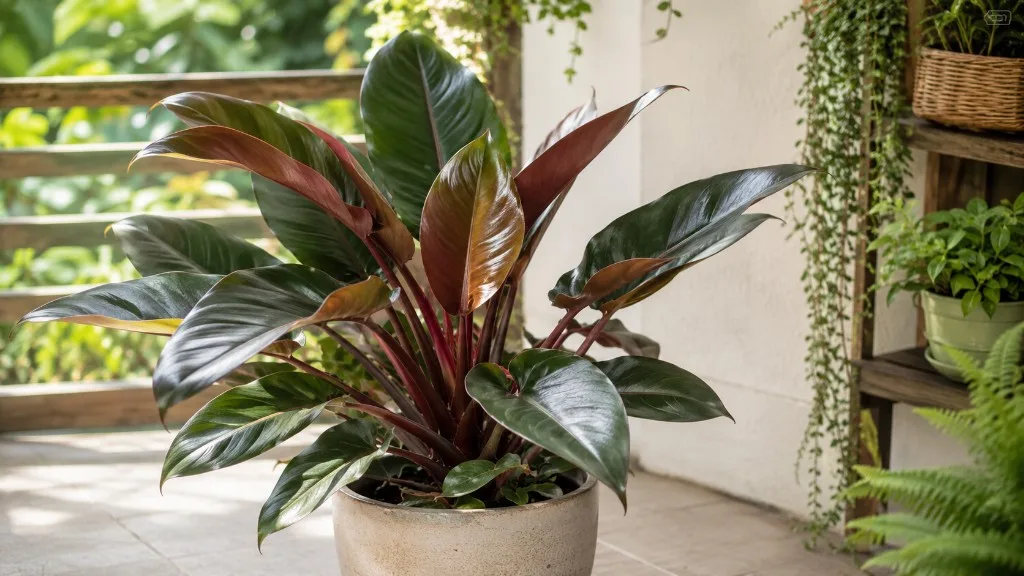
Philodendron Imperial Red repotting is a different job from refreshing a trailing heartleaf in a hanging basket. Imperial Red is a self-heading Philodendron erubescens ‘Imperial Red’ hybrid - a compact upright rosette with large copper-red to green leaves on a short crown, patented as USPP6337 for its rosette plant form, symmetrical internodes, and maroon-to-dark-green foliage. When roots outgrow the nursery pot, the challenge is not finding a moss pole; it is moving a top-heavy crown into fresh, airy mix without oversizing the container, washing away fine roots, or trapping moisture in a decorative cachepot that hides drainage problems until burgundy new growth stops and lower leaves yellow.
Most Imperial Red repotting failures trace back to three predictable errors: jumping two or three pot sizes because the plant looks impressive, bare-rooting or aggressively washing away the root ball, and watering on the old schedule while the new pot holds unused wet volume the compact root mass cannot yet colonize. Clemson HGIC notes that root rot on Philodendron Imperial Red usually results from a soil mix that does not drain quickly or overly frequent watering - and self-heading philodendrons in oversized pots are especially vulnerable in dim rooms where mix stays wet for weeks. This guide covers when a self-heading specimen actually needs repotting, the one pot size up rule, aroid mix recipes, a numbered step-by-step procedure, shock recovery judged by new red-bronze leaves, rot salvage with a live link to the root rot guide, and hub ties to overview, soil, light, watering, fertilizer, and pruning guides.
Quick Answer
Repot Philodendron Imperial Red when two or more signs appear together: roots circling drainage holes or the pot bottom, water running straight through without wetting the root ball, growth stalling despite adequate light and fertilizer, or the pot drying unnaturally fast because roots have consumed most of the mix. A practical rhythm is every 12–24 months indoors - a heuristic, not a calendar rule. Spring through early summer is safest when NC State Extension notes active growth resumes for P. erubescens. Go one pot size up only - roughly 2–5 cm (1–2 inches) wider in diameter - with fresh chunky aroid blend (see soil guide). Water lightly the first week, hold fertilizer four to six weeks, and judge success when new leaves unfurl with stable burgundy-red color, not when unchanged older foliage merely stays green.
Why Self-Heading Imperial Red Repotting Is Different
Trailing philodendrons show stress early: stems wilt, leaves curl, and growers notice dryness within days. Self-heading Imperial Red keeps a firm upright crown even when roots are circling tightly or sitting in stale mix below. Lower leaves may yellow while upper leaves still look glossy - a pattern that makes growers delay repotting until the problem is harder to reverse. Unlike vining P. erubescens forms such as ‘Red Emerald’, Imperial Red was selected for a compact rosette with rigid petioles and close internodes, reaching roughly 30–33 inches in spread in a 25 cm pot within about twelve months from a tissue-culture start under commercial greenhouse conditions - slower than many trailers but still filling pots on a predictable indoor rhythm.
NC State lists Philodendron erubescens as preferring moist, well-drained, high organic matter soil with good drainage and temperatures between 65 and 85 °F indoors. That combination - moisture retention plus oxygen at roots - is exactly what breaks down when peat collapses in a root-bound pot or when someone repots into a tub two sizes too large. Imperial Red does not need a moss pole at repot time; it is free-standing. If an older specimen leans, address stability with a wide-base pot or a loose stake tied at repot - never bury the crown to compensate for a weak root ball.
Compact Root Ball vs. Trailing Philodendrons
Imperial Red develops a dense, compact root ball under a short stem crown. Trailing types often tolerate more root disturbance because new adventitious roots form along stems; self-heading types rely on the existing root mass for water uptake until new white tips appear after repot. That is why gentle handling beats aggressive bare-rooting: tease circling roots at the bottom and sides, keep most of the old mix attached to fine roots, and trim only what is clearly dead or rotting. UF/IFAS recommends sliding the plant out, inspecting roots, and using your fingers to loosen tangled or circling roots before placing in fresh mix - not stripping the entire ball to bare wood.
When to Repot Philodendron Imperial Red
Treat repotting as a diagnosis-driven decision, not an annual ritual on a fixed date. Imperial Red tolerates moderate root confinement better than an oversized pot full of wet, unused mix - the more dangerous error for self-heading specimens in dim offices is almost always over-potting, not waiting one extra month while roots are merely snug. Clemson HGIC states you can repot overcrowded plants at any season using general-purpose potting soil, but spring remains the recovery sweet spot when days lengthen and roots colonize fresh mix faster.
Signs You Need a New Pot
Plan a full repot when two or more of these appear together:
- Roots circling the drainage holes, the pot bottom, or the surface - visible when you lift the nursery pot or slip it out of a cachepot
- Water runs straight through in seconds without evenly wetting the root ball - a sign of compacted peat, exhausted mix, or a root mat blocking absorption
- Growth stalls despite proper light and appropriate fertilizer - new leaves emerge small, spaced far apart, or stop entirely; red-bronze color on new growth weakens to plain green
- Dry-down accelerates - the pot feels light again in one to two days when it used to take a week, because roots have consumed most of the soil volume
- Mix has collapsed and shrunk from pot walls, leaving a gap that water races down without contacting roots
- Active root rot requiring trim and fresh medium - see the dedicated root rot guide for rescue protocol
Not urgent: Slight root visibility at the surface with healthy burgundy new leaves and stable dry-down - can wait until spring unless you are already repotting a neighbor and have mix ready.
What Root-Bound Imperial Red Looks Like
At unpot time, a root-bound Imperial Red shows a solid root mat when you tap the nursery pot: white or tan roots spiral the outer edge, sometimes matted so thickly you see more root than mix in the bottom third. Drainage holes may push pale root tips through the plastic. The root ball holds its shape when you slide it out - a cylinder or bowl of roots with little loose mix in the center. Water behavior confirms it: pour slowly and watch the mix channel down the gap between root ball and pot wall without absorbing. After repotting into fresh chunky aroid blend, healthy roots should show firm white tips at the outer edge within two to three weeks in bright indirect light - that visual check matters as much as leaf color for judging whether the new mix is working. When you prepare mix, spread components on a tray before blending: perlite should look like white popcorn, bark like coarse chips - not fine dust. A properly chunked blend holds its shape when squeezed in your fist yet crumbles when you open your hand; that texture is what keeps oxygen at erubescens roots after the peat in old nursery mix has broken down.
Top-Dress Versus Full Upsize
Not every spring visit requires a larger pot. UF/IFAS notes plants that are not root-bound can still benefit from repotting into the same container with fresh potting media swapped in - a full refresh without upsizing. Use that approach when mix has collapsed or salts have built up but roots still fit comfortably with room to grow. Reserve the one-size-up move for true root-bound cases where circling roots consume most of the soil volume. Imperial Red is typically sold as a single self-heading specimen, not a multi-crown division plant like peace lilies - offsets at the base are uncommon, and propagation is usually stem cuttings with a node, not splitting at repot time.
Best Time of Year to Repot
Spring through early summer is the safest window. Penn State Extension notes spring is when houseplants naturally begin seasonal growth, so roots expand into fresh mix and foliage production resumes faster than in cool months. Longer days and warmer room temperatures help Imperial Red re-establish without the chronic wet-soil risk of winter.
Avoid winter repotting if the plant is only slightly tight and manageable. Repot in winter only when necessary - severe root-binding, active root rot, or a broken pot - then use a modest size increase, keep temperatures above 18°C (65°F), match watering to slower dry-down, and expect a longer shock window before burgundy new leaves return. Do not stack winter repot with a move to a darker corner or an immediate fertilizer dose.
Choosing the Right Pot Size
Increase diameter by only 2–5 cm (1–2 inches) - one standard nursery increment (for example, 6-inch to 8-inch, or 15 cm to 20 cm). Penn State Extension warns a container too large may look out of balance and, more importantly, holds excess mix that stays wet around a compact root ball the plant cannot yet use. Imperial Red’s self-heading habit does not need deep tubs - match depth roughly to the previous pot unless the specimen is top-heavy and needs a wider base for stability.
Drainage holes are mandatory. Self-heading philodendrons cannot sit in sealed containers. Heavy ceramic or stone is fine when sized correctly - weight helps top-heavy specimens that might otherwise tip in light plastic. Terracotta dries faster than glazed ceramic; adjust your post-repot watering rhythm accordingly using the watering guide.
Drainage Holes and Cachepot Workflow
If you display Imperial Red in a decorative outer pot, repot the inner nursery container with drainage, then return to the cachepot. Penn State Extension describes cachepots (potholders/overpots) as not suitable for direct planting - slip the drained grow pot inside and ensure space for water to exit the inner pot without pooling at the bottom of the outer shell. Never add mix directly into a sealed outer pot during “repotting.” After every water, empty standing water from the cachepot and saucer within thirty minutes.
Best Soil Mix for Imperial Red at Repotting
NC State specifies P. erubescens wants moist, well-drained, high organic matter soil - not straight peat, not cactus grit. At repot time, use fresh mix rather than topping up exhausted peat that has collapsed into a wet brick.
Chunky aroid blend by volume:
- 2 parts quality indoor potting mix
- 1 part perlite
- 1 part orchid bark or coarse coco chips
Target pH roughly 6.0–6.5 - moist but never waterlogged. NC State lists Acid (<6.0) and Neutral (6.0–8.0) as acceptable bands when drainage is good. For seasonal tweaks, alternate ratios, and the drainage test, see the Imperial Red soil guide. Do not reuse sour mix from a rot case - sterilize the pot with dilute bleach solution or replace it entirely before repotting trimmed roots. Penn State Extension recommends moistening potting mix before repotting so the blend absorbs water evenly on the first soak rather than floating dry perlite to the surface - pre-moisten until the batch feels like a wrung-out sponge, then fill around the root ball.
Step-by-Step Repotting Guide
Follow this sequence for a typical upsize repot in spring. Adjust only when rot salvage requires a smaller pot - covered in the next section.
- Water lightly one day before if soil is bone dry - slightly moist mix releases the root ball more cleanly than dust-dry peat that cracks away from roots.
- Prepare the new pot with drainage screen if needed, a thin layer of fresh mix at the base, and gloves within reach.
- Slide the plant out by tipping the pot and supporting the crown - never yank the stem. Inspect the root ball from bottom and sides.
- Tease circling roots at the bottom and outer edge with fingers or a chopstick. Trim black, mushy tissue with sterilized shears only - leave firm white and tan roots intact.
- Place the root ball so the soil line sits about 2.5 cm (1 inch) below the pot rim - UF/IFAS recommends positioning the plant so the soil line is one inch below the edge for watering headroom.
- Fill sides with fresh aroid blend, firming lightly to remove large air pockets without compacting into a wet brick.
- Water thoroughly until drain runs clear; empty the saucer and any cachepot reservoir.
- Place in bright indirect light - no direct scorch on stressed leaves - and hold fertilizer four to six weeks.
Safety - sap and pets: Wear gloves when handling cut stems or damaged tissue. Philodendron sap contains calcium oxalate crystals that irritate skin and cause oral burning, drooling, and vomiting if pets chew leaves or roots. The ASPCA lists philodendron species as toxic to cats and dogs. Keep repot debris, trimmings, and wet mix away from pets and children; wash hands after finishing. See the overview safety section for placement guidance.
Root Inspection and Trimming at Unpot
Healthy Imperial Red roots are firm, pale tan to white, and smell like damp soil - not sour vinegar. Rot shows as brown-black mush that strips away between your fingers; trim back to firm tissue with clean shears, optionally dust cuts with cinnamon if you already use it in your practice. If more than one-third of the root mass is mushy, treat as critical care: smaller pot, extra perlite, and the full root rot rescue protocol. Do not bare-root wash healthy erubescens balls “to inspect better” - stripping fine absorbing roots extends shock and often delays the next burgundy leaf by weeks.
Transplant Shock on Imperial Red
Expect one to two weeks of slowed growth, slight leaf droop, or a pause in new leaf production after repot. Older leaves may not change color; judge recovery on new growth size and burgundy-red tone, not on whether last month’s green leaves suddenly redden. Mild shock is normal. Do not compensate with extra water or fertilizer - both worsen root stress in fresh mix the plant has not colonized yet.
If all leaves wilt on wet soil after repot, suspect overwatering in an oversized pot, damaged roots left untrimmed, or a cachepot holding runoff. Let the top 3–5 cm dry, confirm drainage, and unpot only if petiole bases soften at the crown. Success looks like a firm crown, stable older foliage, and a new leaf unfurling with the characteristic red-bronze phase Imperial Red was bred for - compare with pruning timing if you planned to remove yellow lower leaves; wait until the plant proves new roots with one clean new leaf first.
Repotting After Root Rot
Unpot, remove all mushy roots, let the trimmed ball air briefly if rot was advanced, and repot into fresh airy mix in a pot smaller than the previous one if the root mass shrank significantly. Water once lightly, then let the top few centimeters dry before the next drink - often a full week in cool rooms. Hold fertilizer until new growth appears. Imperial Red can recover from moderate rot when the crown stays firm, but repeated rot in the same oversized wet pot will keep killing roots until you fix pot size, mix, and light together. Follow the step-by-step rescue checklist in the root rot on Imperial Red guide for confirmation signs, trim depth, and when to discard a plant with a collapsed crown.
Common Repotting Mistakes
- Jumping two pot sizes “so it grows bigger faster” - excess wet mix invites rot faster than underwatering stresses leaves in dim rooms
- Bare-root washing healthy erubescens root balls unnecessarily - strips fine roots self-heading types need for recovery
- Repotting into heavy unamended peat without perlite or bark - contradicts the airy mix P. erubescens needs
- Winter repot in cold dim rooms without adjusting water - mix stays dangerous longer while roots are idle
- Immediate full-strength fertilizer after repot - burns tender new root tips in fresh mix
- No drainage holes in decorative pots, or repotting directly into cachepots - Clemson HGIC links poor drainage to root rot on philodendrons
- Judging recovery on old leaves instead of new burgundy growth - stress-yellowed lower foliage may not revert even when roots are fine
- Repotting on day one after purchase - quarantine and learn dry-down speed first; see overview first-month guidance
Aftercare Checklist
- Bright indirect light - enough for photosynthesis during recovery without direct sun scorch on stressed leaves
- Water when top 3–5 cm dries - chunky aroid blend often dries faster than old peat-heavy mix; adjust rhythm, do not copy the old calendar
- Humidity 40–60% is acceptable; no humidity dome unless your home is extremely dry
- Resume fertilizer after four to six weeks when a new leaf appears - see fertilizer guide for dilute rates
- Wipe large leaves gently to remove dust - improves light capture while the root zone rebuilds
- Rotate a quarter turn weekly for the first month so new root growth stays balanced under a symmetrical crown
- Escalate if stems soften at the base on wet soil, leaves yellow progressively after two weeks, or drain smell turns sour - unpot, inspect, trim, repot smaller with link to root rot protocol
Labeling Pots After Repotting
Note repot date and mix recipe on a tag or phone reminder. Imperial Red in chunky aroid blend dries faster than old peat-heavy nursery mix, so your watering interval may shorten the first month even if the pot looks the same size from across the room. Recording the date also explains a sudden change in pot weight - growers often misread faster dry-down as “the plant is thirstier” and overwater into rot. Pair the label with a weekly finger check at 3–5 cm depth until the new rhythm stabilizes, then align with the watering guide long-term.
Conclusion
Philodendron Imperial Red repots best on a 12–24 month rhythm when roots or dry-down behavior demand it, in spring, one size up, into chunky aroid mix with patience through brief shock. Protect the compact self-heading root ball from oversized wet pots, wear gloves around sap, and hold feed until new burgundy-red leaves prove the root zone is working again. Link repot timing with your soil refresh plan, keep light steady through recovery, and use the live root rot guide if salvage becomes necessary - not a conditional footnote, but the same hub protocol every other Imperial Red care page uses.
When to use this page vs other Philodendron Imperial Red guides
- Philodendron Imperial Red overview - Start here for whole-plant context before deep-diving this topic.
- Philodendron Imperial Red problems hub - Jump to symptom-specific fix guides when this care topic does not resolve the issue.
- Root Rot on Philodendron Imperial Red - Escalate here when repotting adjustments are not enough.