Best Soil for Philodendron Imperial Red: Mix, Drainage &
Best Soil for Philodendron Imperial Red: Mix, Drainage & Repotting
Best Soil for Philodendron Imperial Red: Mix, Drainage & Repotting
Philodendron Imperial Red soil is the system that decides whether a self-heading rosette keeps pushing burgundy new leaves or slowly yellows from the crown down. Philodendron erubescens ‘Imperial Red’ is a patented, non-climbing hybrid with a single central crown - not a trailing vine. That shape concentrates roots in one dense ball that stays wet longer than you expect in a dim corner or oversized decorative pot. NC State lists P. erubescens as preferring moist, well-drained, high organic matter soil with good drainage - the phrase every aroid grower should memorize: moist, not soggy; open, not compact.
The baseline mix is standard indoor potting soil plus 20–25% perlite, in a pot with a drainage hole, refreshed before the peat collapses into a wet brick. This guide covers why self-heading Imperial Red dries differently from climbers, two DIY recipes, the 3–8 second drainage test, pot sizing, pH targets, cachepot traps, refresh vs full repot, mistakes, and pet safety.
Why Soil Matters for a Self-Heading Crown
Imperial Red grows as an upright rosette from one crown. All leaves emerge from the same base, and the dense foliage canopy shades the soil surface, slowing evaporation compared with a sparse trailing philodendron. Self-heading plants also fail systemically - if mix stays wet around the crown, you see soft petioles, yellow lower leaves, and stalled red new growth together, not just one bad leaf.
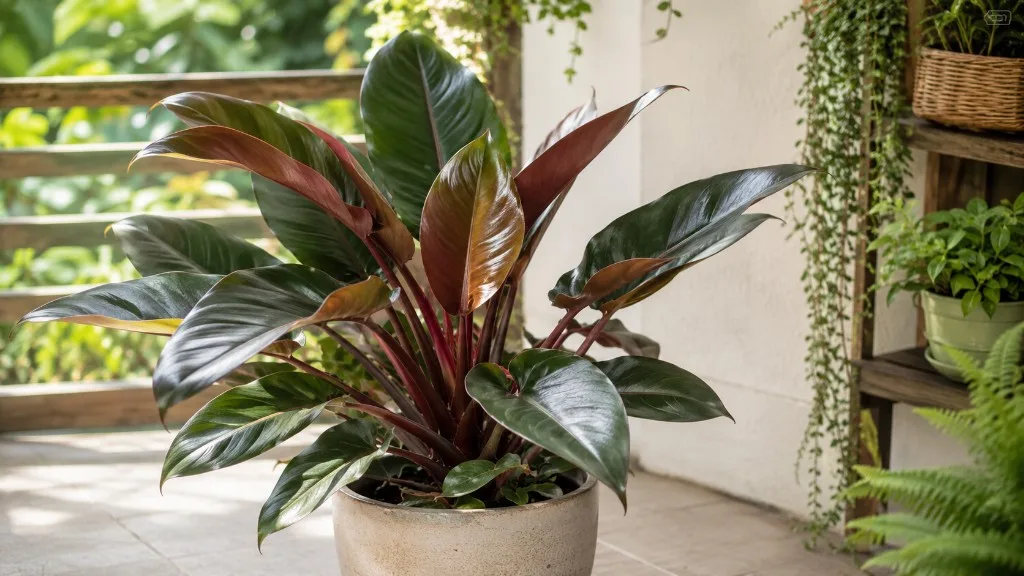
The patent describes Imperial Red as compact and symmetrical with brown-maroon immature leaves maturing to dark green-maroon. That color show depends on roots breathing between waterings. Heavy, compacted peat in an oversized ceramic pot is the fastest way to turn a burgundy crown into plain green decline.
Imperial Red vs Climbing Erubescens Root Habits
Climbing P. erubescens spreads roots along a long stem with more air exposure. Imperial Red’s root ball is deeper relative to spread in a standard round pot. The same 20–25% perlite recipe that works for a Brasil hanging basket may need extra perlite or bark in a statement floor pot that stays damp. Judge by drainage test and petiole firmness, not by copying a vine recipe unchanged.
Best Soil Mix for Philodendron Imperial Red
Standard Recipe (Most Indoor Pots)
- 70–75% quality all-purpose or peat-based indoor potting mix
- 20–25% perlite
- Optional: 5–10% orchid bark if your room runs cool or the pot is large
Mix dry in a tub until perlite is evenly distributed. The finished texture should feel crumbly, not sticky - you should see white perlite throughout, not a thin top dressing.
Fast-Drain Recipe (Cachepots, Low Light, or Chronic Wet Feet)
- 60% potting mix
- 25% perlite
- 15% orchid bark or coarse coconut husk
Use this when the standard recipe stays wet more than a week at 3–5 cm depth, or when Imperial Red sits in a decorative outer pot you cannot easily inspect.
| Ingredient | Role for Imperial Red |
|---|---|
| Peat or coir base | Holds moisture between waterings without staying waterlogged if amended |
| Perlite | Creates air pockets; prevents crown rot in self-heading root balls |
| Orchid bark | Extends dry-down; reduces compaction in large statement pots |
| Drainage hole | Non-negotiable - Clemson HGIC lists it as essential for long-term indoor aroids |
The Drainage Speed Test
After mixing, test before repotting:
- Fill a small cup with your blend and saturate it
- Let it drain 30 seconds
- Pour water again and time how long until water runs freely from the bottom
Target: 3–8 seconds for Imperial Red in a typical 15–20 cm pot. Faster than 3 seconds means very fast dry-down - fine for bright rooms, risky in dim corners. Slower than 8 seconds means add perlite or bark before planting.
At repot, water thoroughly once, then check whether excess exits within minutes. Soil that pools on the surface without penetrating has gone hydrophobic - break it up or replace the mix. A freshly repotted Imperial Red may stay wet longer for one to two weeks while roots explore new mix; check at 3–5 cm depth rather than assuming the old dry-down rhythm still applies.
Pot Choice and Sizing
Choose a pot only 2–5 cm wider than the root ball unless the plant is rootbound and actively growing in spring. Oversized pots hold wet mix around unused volume - especially dangerous for self-heading crowns where one soft petiole means systemic root stress.
Depth: Imperial Red roots downward from a compact ball; a pot as deep as it is wide suits most specimens better than a shallow bowl. Material: Unglazed terracotta dries faster; glazed ceramic and plastic retain moisture longer - adjust watering, not just mix, when you change pot type. Match material to your room: dry heated apartments often suit plastic or glazed pots with 25% perlite; humid rooms may benefit from terracotta with standard perlite ratios.
Cachepots: If you use a decorative outer container, remove the inner grow pot to water and drain. Never let Imperial Red sit in accumulated runoff - NC State notes good drainage is critical for erubescens health.
pH and Mineral Buildup
NC State lists P. erubescens soil pH preference as Acid (<6.0) and Neutral (6.0–8.0). In practice, most peat-based indoor mixes land around 5.5–6.5, which Imperial Red handles well when drainage is adequate. You rarely need to measure pH unless leaves show persistent tip burn with no fertilizer history - then salt crust, not acidity, is the usual culprit.
White crust on the soil surface or pot rim signals fertilizer salt accumulation. Flush the pot with plain water until it drains freely twice, or refresh the top third of mix at the next repot. See Imperial Red fertilizer for lean feeding that avoids salt buildup.
When to Refresh or Repot Soil
Refresh mix when:
- Water runs straight through without absorbing - peat has decomposed
- Soil smells sour or musty despite correct watering
- Fungus gnats persist because the surface never dries
- Imperial Red dries in 2–3 days in a formerly weekly pot - roots may have filled the container
- Salt crust appears on the surface after regular fertilizing - flush or refresh before root tips burn
Top-dressing - replacing the top 5 cm of mix - helps between full repots if drainage has slowed but roots are not circling heavily. Full repot - one size up, fresh mix, root tease if circling - belongs in spring when the plant is actively pushing red-toned new leaves. Step-by-step timing and aftercare live on the Imperial Red repotting guide.
Common Imperial Red Soil Mistakes
- Gravel layer at the pot bottom. Fix: perlite mixed through the whole column - gravel creates a perched water table.
- Oversized statement pot for a small root ball. Fix: size to roots, not leaf spread.
- 100% dense peat with no perlite. Fix: minimum 20% perlite for indoor self-heading aroids.
- Cachepot without drainage inspection. Fix: lift, water, drain, return.
- Repotting into wet, cold mix in winter. Fix: wait for spring active growth unless rot is urgent.
- Burying the crown below the old soil line. Fix: keep the crown at the same depth; burying invites stem rot.
Storing Extra Mix
Mix only what you need for one repot, or store surplus in a sealed bucket. Dry perlite and peat blends absorb garage humidity and become useless for drainage testing. Label the batch with date and perlite percentage so you do not confuse Imperial Red’s fast-drain recipe with a denser mix used for other plants.
Pet Safety
Philodendron erubescens causes low-severity poisoning and contact dermatitis from calcium oxalate crystals. The ASPCA lists philodendron as toxic to cats and dogs. Spilled mix and chewed leaves both pose risk - keep Imperial Red on stands pets cannot reach.
Cachepots: If Imperial Red sits in a decorative outer pot, lift the inner container after every watering and confirm no standing water remains. Self-heading crowns fail quickly when the bottom inch of mix stays saturated for days.
Ingredient Substitutions That Work Indoors
Coconut coir can replace part of the peat base if you prefer renewable media - keep the same perlite ratio because coir alone holds water longer than peat in some brands. Pine bark fines (not large orchid chunks) add structure in humid rooms where peat compacts over one season. Avoid garden soil or compost straight from the yard; they introduce pests and drain poorly in closed indoor pots. If you buy pre-mixed “aroid” or “philodendron” soil from a nursery, still verify perlite content - many commercial blends are denser than Imperial Red’s self-heading crown prefers without amendment.
When to use this page vs other Philodendron Imperial Red guides
- Philodendron Imperial Red overview - Start here for whole-plant context before deep-diving this topic.
- Philodendron Imperial Red problems hub - Jump to symptom-specific fix guides when this care topic does not resolve the issue.
- Root Rot on Philodendron Imperial Red - Escalate here when soil adjustments are not enough.
Related Philodendron Imperial Red guides
- Philodendron Imperial Red overview
- Philodendron Imperial Red watering
- Philodendron Imperial Red light
- Philodendron Imperial Red propagation
- Philodendron Imperial Red fertilizer
- Philodendron Imperial Red repotting
- Root Rot on Philodendron Imperial Red
- Philodendron Imperial Red problems
Conclusion
Philodendron Imperial Red soil succeeds when the mix is moisture-retentive but fast-draining, the pot has a real drainage hole, and volume matches the root ball - not the leaf display. Start with 70–75% potting mix and 20–25% perlite, run the 3–8 second drainage test, and add bark if your statement pot stays wet. Self-heading crowns punish compacted, oversized, cachepot-trapped mix with soft petioles and lost burgundy new growth. Refresh before peat collapses, repot in spring when roots demand it, and let firm petioles and red-toned unfurling leaves tell you the soil system works. When in doubt, a slightly too-open mix recovers with more frequent checks; a waterlogged mix kills roots before you notice the smell.