Philodendron Imperial Red Light Needs: Best Window, Sun &
Philodendron Imperial Red Light Needs: Best Window, Sun & Warning Signs
Philodendron Imperial Red Light Needs: Best Window, Sun & Warning Signs
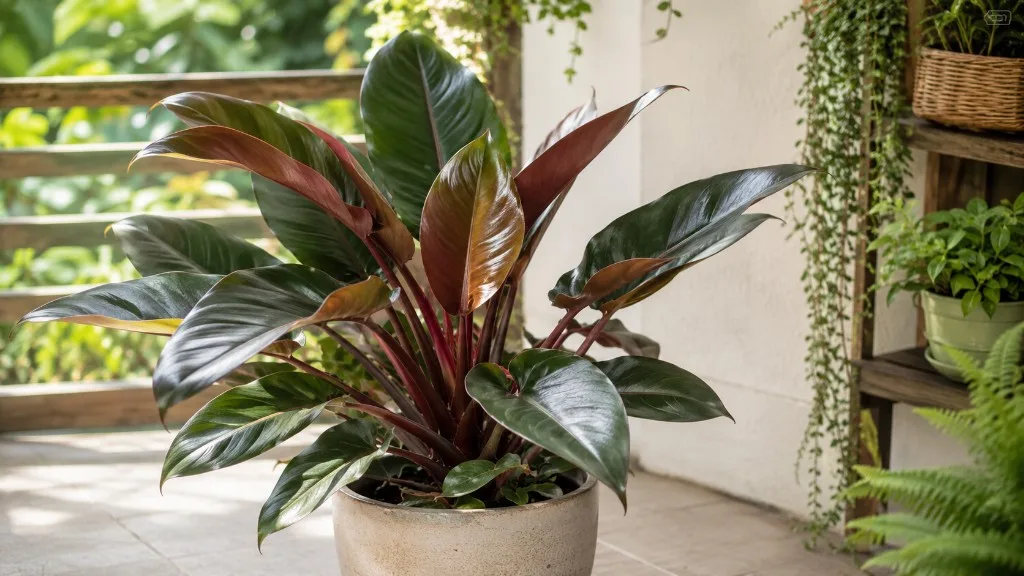
Philodendron Imperial Red light needs come down to one visible test most growers miss: the color of the newest unfurling leaf. Philodendron erubescens ‘Imperial Red’ was selected and patented (USPP6337) for warm red-bronze new foliage on thick burgundy petioles - anthocyanin pigment that costs the plant extra photosynthetic energy to produce. In bright filtered light, new leaves open firm and richly colored before maturing to darker green. In dim placement, the same plant prioritizes chlorophyll, stretches toward the brightest wall, and pushes out weak olive-green leaves that look like a mislabeled Imperial Green. Light is not a background detail on this cultivar; it is the display quality control.
The practical goal is not merely keeping Imperial Red alive. The goal is placing the pot where new crown growth proves the light works - compact spacing, firm petioles, red-bronze unfurling - without scorch from hot glass or the slow decline that happens when a self-heading rosette survives on stored reserves in a dim wet corner. NC State Extension lists Philodendron erubescens cultural conditions as partial shade and dappled sunlight - bright filtered light at the leaf surface, not ambient room brightness - and warns to avoid direct sunlight indoors. That combination tells you Imperial Red wants the brighter end of philodendron tolerance if burgundy color matters to you.
This guide is the proactive placement hub for Imperial Red. For step-by-step recovery when color has already faded, see the dedicated not enough light fix guide. Here you will find window direction, distance rules, direct sun limits, grow-light setup, warning signs, and how light couples to watering rhythm.
How Much Light Imperial Red Actually Needs
Indoors, Imperial Red performs best in medium to bright indirect light - strong plant-facing brightness without prolonged harsh direct beams on the crown. In measurable terms useful as a reference, not a requirement, healthy philodendron growth often falls around 200 to 400 foot-candles (roughly 2,000 to 4,000 lux) at the leaf surface. That is bright enough to read comfortably without a lamp, with a soft, readable shadow when you hold your hand at canopy level on a clear day. Low-light survival begins closer to 50 to 100 foot-candles, where Imperial Red may maintain existing leaves but typically produces pale green new growth and widens spacing between crown leaves.
The honest summary: give Imperial Red as much bright filtered light as your room allows, pull back only when you see bleach or heat stress, and treat dim corners as temporary holding zones - not long-term homes for a cultivar you bought for color. RHS guidance for philodendrons recommends bright but indirect light out of direct summer sun. Penn State Extension groups philodendrons among plants that thrive in indirect high, medium, and low light - Imperial Red sits at the brighter end if you want burgundy new leaves, not merely upright survival.
Judge light by new growth, not by whether old mature leaves stay dark green. Mature Imperial Red foliage naturally shifts from burgundy toward darker green as leaves age - that expected ontogeny is normal on firm petioles with steady red-toned new growth above. Low light shows weak pigment on the newest leaves first and slowed overall crown expansion.
Why Burgundy New Growth Demands Brighter Light
Anthocyanin-rich new leaves are a light-quality indicator unique to Imperial-group cultivars. The plant can survive with less energy than it takes to synthesize red pigment; in dim conditions it defaults to green tissue and longer petiole gaps as it reaches toward windows. That is not a nutrient problem fertilizer can fix - Clemson HGIC notes that excess fertilizer damages roots and cannot replace insufficient light.
Self-heading Imperial Red also signals low light differently from trailing philodendrons. Instead of long internodes along a vine, the upright rosette leans toward the brightest wall and produces smaller crown leaves with dull color. A hand-shadow test at the canopy - soft diffuse shadow for several hours means usable indirect light; faint or absent shadow means too far from glass - gives a faster answer than guessing from room brightness. University of Maryland Extension explains that light intensity drops rapidly as you move away from windows; what feels like a bright living room may be low light at the leaf surface where Imperial Red actually photosynthesizes.
Imperial Red vs Imperial Green Light Requirements
Both cultivars share the same parent species - Philodendron erubescens, native to Colombia - and both are self-heading hybrids, not vines. Imperial Green tolerates moderate indirect light and still looks acceptable with plain green new growth. Imperial Red needs brighter filtered light to hold the red-bronze unfurling color that defines the cultivar. Same window that keeps Imperial Green looking fine may produce weak green new leaves on Imperial Red within two to three leaf cycles.
| Signal | Imperial Red in adequate light | Imperial Red in too little light | Imperial Green in same dim spot |
|---|---|---|---|
| New leaf color | Red-bronze at unfurling | Weak green or olive | Green (normal) |
| Crown spacing | Compact | Wider petiole gaps | Moderate stretch |
| Growth pace | Steady in active season | Stalled or slow | Slow but acceptable |
| Rosette posture | Upright, even with rotation | Leans toward window | May lean slightly |
Do not keep both cultivars in the same dim corner and expect equal display value. Treat Imperial Red as the brighter-light plant in the Imperial group.
Quick-Reference Light Checklist
Before Philodendron Imperial Red repotting guide, fertilizing, or pruning for color problems, run this three-rule check:
- Shadow at the canopy - On a clear day, hold your hand where the top leaves sit. Soft, readable shadow for much of the day = usable indirect light. Faint or no shadow = move closer or add a grow light.
- New-leaf pigment - The newest spear should show red-bronze as it unfurls. Plain green on fresh growth confirms light limitation on this cultivar.
- Distance from glass - Keep the rosette within 60 to 120 cm (2 to 4 feet) of the brightest window in most homes. Maryland Extension recommends evaluating actual light at the plant, not assumed room brightness.
If all three pass and color still fades, cross-check soil drainage and root health before assuming the plant is mislabeled.
Best Window Placement for Imperial Red
Window direction is a starting point, not the whole answer. Obstructions, tree shade outside, glass tint, and pot distance all change the light reaching the crown. Still, compass orientation gives a reliable first guess in the northern hemisphere.
Place Imperial Red where it receives strong plant-facing light for most of the day, not where the room looks bright to your eyes. Human vision adapts to dim interiors; plants do not. A pot on a bookshelf across from a window is decorative. A pot within a few feet of appropriate glass on an east or filtered south exposure is horticulture. Rotate the container a quarter turn weekly if the rosette leans - leaning is normal directional growth, but rotation keeps the crown symmetrical.
East, North, West, and South Windows Compared
An east-facing window is the default sweet spot for many Imperial Red plants indoors. Morning sun tends to be bright but cooler than late-day sun. 45 to 90 cm (18 to 36 inches) from an unobstructed east pane often delivers the bright indirect range where red-bronze new growth stays consistent without frequent scorch scares. This matches the patent description of Imperial Red as a compact self-heading specimen suited to bright filtered indoor culture.
A south-facing window delivers the highest total daily light, especially in winter at mid and high latitudes. That intensity is an asset with distance or diffusion. Place the pot roughly 90 to 150 cm (3 to 5 feet) back from the glass, or use a sheer curtain to soften direct beams. In summer, watch for bleached or crisp patches on leaves facing the glass - a sign to pull back or filter afternoon heat load.
A west-facing window can work in spring and fall and become risky in midsummer when late-afternoon sun carries heat through the pane. Treat west like south with extra caution: filtered light or additional distance, not unprotected sill placement on hot afternoons.
A north-facing window provides gentle indirect light all day but often lands in the low to moderate range, especially in winter. Imperial Red survives north windows more reliably than many tropicals, but burgundy new growth typically dulls unless you supplement with grow lights or accept slower green-leaning crown growth.
How Far From the Glass Matters
Direction labels fail when distance is wrong. A south window two meters away on an open floor may deliver less usable light at the crown than an east window 60 cm away with a light-colored wall reflecting brightness behind the plant.
Use distance as a dimmer switch. Closer increases intensity and heat; farther softens direct sun but may drop below the color-retention threshold. Practical starting points for average home windows: 60 to 90 cm from east or filtered west panes; 90 to 150 cm from unobstructed south panes; as close as possible to north panes if that is your only option, with expectations adjusted for green-leaning new growth.
Seasonal adjustment beats permanent guessing. Move the pot closer in winter when sun angle drops and slightly back in midsummer if leaf surfaces heat up. UF/IFAS notes that short winter days reduce houseplant growth even when the plant never moved - a spot that barely worked in June may fail in December without supplementation. One foot of movement can matter more than switching from east to west.
Direct Sun Tolerance and Acclimation
Imperial Red can handle some direct sun when acclimated and when exposure matches NC State’s partial shade guidance - direct sunlight only part of the day, roughly 2 to 6 hours, typically gentle morning rays rather than all-afternoon baking. Problems start when intensity jumps faster than the plant can adjust. A nursery-grown Imperial Red moved straight onto a south sill in July may develop permanent bleached or crisp patches within days. Direct sun through glass also concentrates heat at the glossy burgundy leaf surface.
Treat direct sun as a tool, not a default. Use it when acclimated plants show compact growth and rich new color. Remove it when sun-facing leaves develop bleach, brown crisp zones, or sudden collapse after a move. RHS warns that direct sunlight can scorch philodendron leaves and fade vibrant coloration.
Morning Sun vs Harsh Afternoon Rays
Morning direct sun differs from afternoon direct sun in both intensity and heat load. East exposure gives Imperial Red a manageable direct period followed by bright indirect day length. Afternoon sun through west or south glass can exceed what burgundy new leaves tolerate, especially when outdoor temperatures are high and the pot sits on a heat-radiating sill.
If you want direct sun benefits - slightly faster crown fill on some specimens - east morning sun is the safest entry point. South and west direct sun can work for established plants with diffusion from curtains or blinds. Never assume that because philodendrons are “forgiving,” Imperial Red cannot burn. Sunburn on affected tissue is permanent; damaged areas do not re-green.
Acclimate over two to three weeks when upgrading light: week one, place the pot in the target room but farther back from the window; week two, move halfway to the final distance; week three, settle at the intended spot unless you see bleach or curling during brightest hours. Store-bought plants often arrive from low-light retail displays - give them a week in moderate indirect light before pushing toward your brightest window.
Low-Light Limits and Burgundy Color Fade
Imperial Red can tolerate lower light longer than many showy tropicals, but tolerance is not preference. In insufficient light, growth slows, crown spacing widens, and new leaves emerge green or olive instead of red-bronze. RHS states that without enough light, philodendrons become leggy and produce fewer, smaller leaves - on Imperial Red, “leggy” shows as a leaning rosette and dull crown color rather than long vine internodes.
Low light also slows transpiration, so the same watering rhythm keeps mix wet longer and invites yellow lower leaves in dim wet corners - a pattern that looks like root disease when light is the upstream cause. Penn State recommends watering philodendrons when the top inch or so of soil is dry; in dim placement the top 3–5 cm may stay wet for weeks.
Old leaves will not regain burgundy pigment after you improve light. Recovery means the next one or two new leaves unfurl with red-bronze color, normal size, and shorter crown spacing. Judge progress over four to eight weeks during active season, not by waiting for mature foliage to redden again.
Signs Your Imperial Red Is in Survival Mode
Survival mode has a symptom profile distinct from healthy slow growth. In survival mode, existing leaves stay firm but new growth is absent or pale green, crown spacing widens, and the rosette leans toward the brightest wall. Soil may stay heavy and wet for weeks because transpiration dropped. Fungus gnats and surface mold become more common when root zones stay moist in dim, cool conditions - light and moisture interact.
How dim is too dim for a plant you bought for color? If two consecutive new leaves emerge weak green in spring or summer despite adequate watering, you are below the display threshold. If the pot takes more than three weeks to dry in normal indoor temperatures, light is likely too low for safe watering rhythms. Short-term dim placement during a room renovation is reasonable; multi-year hallway storage is not - commit to a grow light instead.
Grow Lights When Windows Fall Short
When windows cannot deliver enough daily brightness - deep interior offices, north-only exposures in winter, or shelves more than two meters from glass - full-spectrum LED grow lights are the most reliable fix. UF/IFAS guidance on houseplant lighting notes that supplemental lighting supports growth when window light is insufficient, especially during short winter days.
Choose a fixture labeled for houseplants or seedlings, not a standard room bulb optimized for human lumens. Full-spectrum white LEDs in the roughly 4000K to 6500K range work for foliage maintenance and steady crown growth. Imperial Red does not need flowering-grade PAR levels for basic indoor culture, but it does need consistent daily brightness at the crown if you want burgundy new leaves away from windows.
Fixture Distance, Hours, and Spectrum
Position the light 30 to 45 cm (12 to 18 inches) above the tallest leaf tip as a starting point. If new leaves pale or stretch toward the lamp, lower slightly or extend duration. If leaf edges crisp only under the lamp, raise the fixture or reduce hours. Run lights 10 to 12 hours daily on a timer to mimic natural day length; consistency matters more than chasing exact photoperiod science at home.
Coverage beats pinpoint intensity. A single bulb over the center of a wide rosette leaves outer leaves in shadow. Use a bar or panel that spans the pot, or rotate the plant every few days under a smaller clip-on lamp. When you add a lamp, adjust watering after two weeks of observation; brighter total daily light increases dry-down rate even if the window did not change. Integrate grow lights with seasonal natural light rather than treating them as winter-only tools.
Warning Signs of the Wrong Light
Imperial Red communicates light stress through leaf color, crown posture, and growth pace over weeks - not dramatic wilting like a thirsty fern. Use a two-week observation window after any placement change. Old scorch scars are historical. New crown leaves after the move tell you whether current light is acceptable.
Too Much Light vs Too Little Light
Too little light typically shows as weak green or olive new leaves, absent or very slow crown growth through active season, wider spacing between new leaves, rosette lean toward windows, dull flat crown color, and soil that stays moist too long. Pests and surface mold increase when root zones stay wet in dim conditions.
Too much light or heat shows as bleached white or yellow patches, crisp brown edges on the sun-facing side, faded burgundy on newest leaves before they harden, sudden leaf collapse after an unacclimated move to strong south or west glass, and curling during brightest hours that repeats daily. Unlike low-light greening, sunburn creates permanent cosmetic damage on affected tissue.
When both problems seem possible - hot glass in a dim winter room - prioritize heat and direct beam removal first. Scorch can happen in a week; color fade takes longer. After stabilizing, reassess total daily brightness and add a grow light if new growth stays green.
How to Move Imperial Red Safely
Change placement gradually when possible. Imperial Red may react to sudden light shifts with leaf drop, curling, scorch, or stalled crown growth depending on how large the jump is. Make one light change, then wait long enough to read the newest leaf before changing water, fertilizer, or pot size.
Do not repot, fertilize, and move to harsh direct sun on the same day - stack stress unnecessarily. A simple protocol: move to brighter indirect light first; wait for two new leaves; then adjust watering to match faster dry-down. If moving from a very bright spot to a dimmer one, extend dry intervals and skip fertilizer until new growth confirms the plant is still active.
Clean dusty leaf surfaces when repositioning - Maryland Extension notes that dirty or blocked panes cut usable light more than owners expect. Wiped leaves and clean glass recover free photons without buying a new lamp.
Light and Watering Go Together
Light is the throttle on Imperial Red metabolism even though watering gets blamed first. Brighter light increases photosynthesis and transpiration; dim light slows both. A watering schedule that worked on a bright windowsill will overwater the same plant in a dim corner because the root zone stays saturated longer.
After any light increase, check soil moisture more frequently for the first month, but still wait until the top 3–5 cm is dry before watering - philodendrons remain susceptible to root rot on Philodendron Imperial Red in stale wet mix. After a light decrease, extend dry intervals and skip fertilizer until new growth confirms the plant is still active. Do not fertilize a plant pushing weak green leaves in obvious survival mode.
NC State recommends indoor temperatures between 65 and 85 °F for P. erubescens; cold drafts near windows in winter can slow growth independently of light. Keep the crown out of direct heat registers that desiccate petioles while the pot stays wet.
When to use this page vs other Philodendron Imperial Red guides
- Philodendron Imperial Red overview - Start here for whole-plant context before deep-diving this topic.
- Philodendron Imperial Red problems hub - Jump to symptom-specific fix guides when this care topic does not resolve the issue.
- Leaf Drop on Philodendron Imperial Red - Escalate here when light adjustments are not enough.
Related Philodendron Imperial Red guides
- Philodendron Imperial Red overview
- Philodendron Imperial Red watering
- Philodendron Imperial Red soil
- Philodendron Imperial Red propagation
- Philodendron Imperial Red fertilizer
- Philodendron Imperial Red repotting
- Leaf Drop on Philodendron Imperial Red
- Philodendron Imperial Red problems
Conclusion
Philodendron Imperial Red light needs reduce to one cultivar-specific rule: judge placement by burgundy new growth, not by room brightness. Philodendron erubescens ‘Imperial Red’ wants medium to bright indirect light - roughly the brightness of an unobstructed east window at 60 to 90 cm, or a filtered south exposure with enough setback to avoid hot direct glass - and more brightness than Imperial Green if red-bronze unfurling leaves matter to you.
Place the pot where new crown leaves prove the light works. Use the hand-shadow test and window-distance rules before repotting or feeding for color. Treat north windows and distant office desks as grow-light placements, not optimal display homes. When natural light falls short, a full-spectrum LED on a 10–12 hour timer closes the gap more reliably than hoping weak green new leaves will darken on their own - they will not.
If something looks wrong, read the newest leaf and adjust one variable at a time. Old scorch scars and faded mature foliage never re-burgundy, but the right placement today still produces the red-toned crown growth that makes Imperial Red worth the brighter window.