Leaf Drop on Philodendron Imperial Red: Causes, Checks &
Quick answer
Leaf drop on Philodendron Imperial Red is usually watering stress or a recent environment change-not random aging. Push your finger 3–5 cm into the mix and note pot weight before changing light, repotting, or feeding.
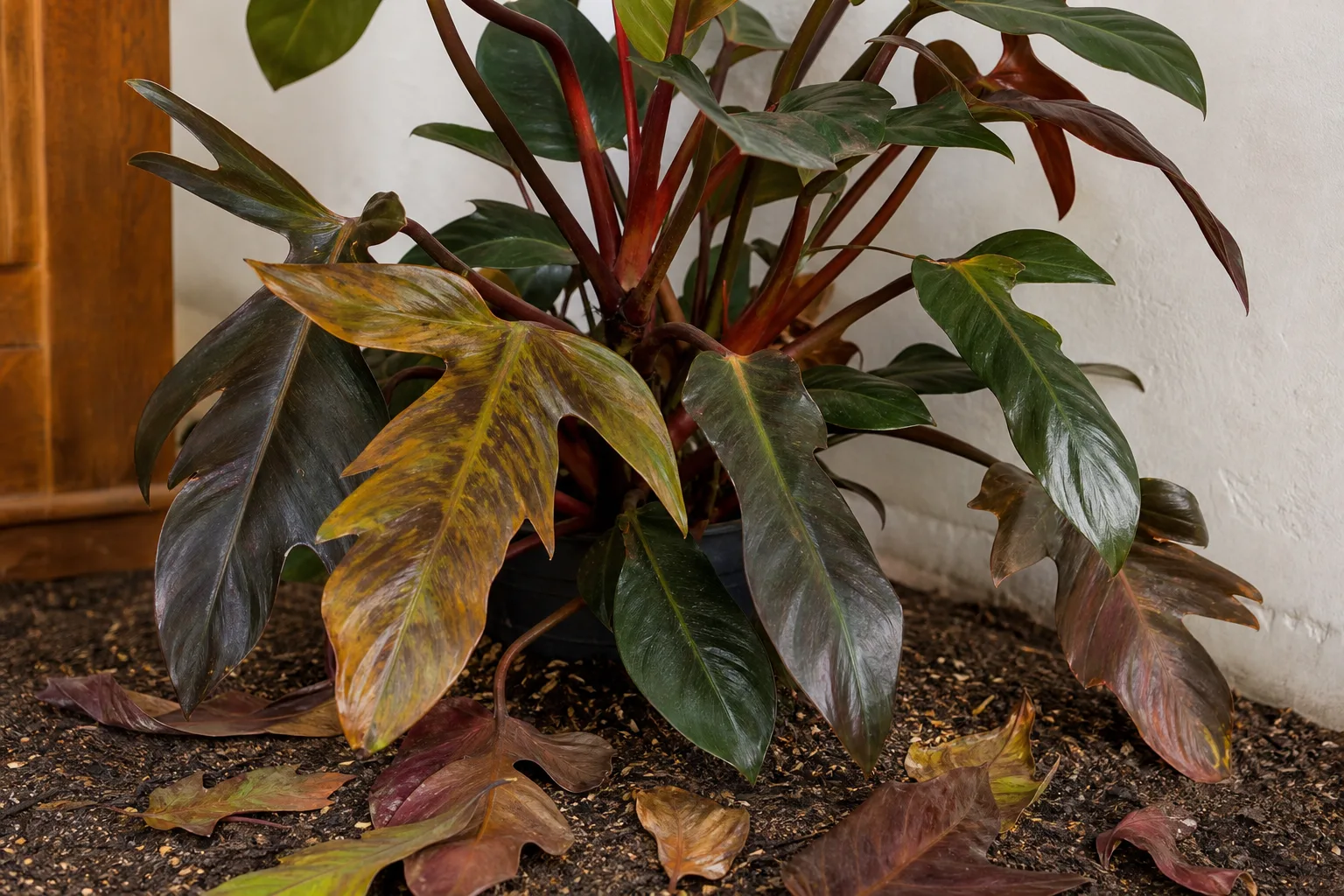
Leaf Drop on Philodendron Imperial Red: Causes, Checks & Fixes
This guide covers leaf drop on Philodendron Imperial Red. See also the general Leaf Drop guide, watering, and light pages for this plant.
Leaf Drop on Philodendron Imperial Red: Causes, Checks & Fixes
Quick answer
A few lower dark leaves falling from an otherwise healthy Philodendron Imperial Red is often normal aging. Problematic leaf drop is continuous shedding-especially of still-green, half-yellow, or red-bronze leaves across the rosette. On Imperial Red, the most common triggers are overwatering that damages roots in a compact crown, underwatering during active burgundy leaf production, insufficient light after a move, and cold or dry drafts near HVAC vents. Before Philodendron Imperial Red repotting guide, fertilizing, or shifting the pot again, check soil moisture 3–5 cm deep and lift the pot for weight. That single step tells you whether to pause watering or give a thorough drink-and stops you from stacking fixes that make shedding worse.
What leaf drop looks like on Philodendron Imperial Red
Philodendron erubescens ‘Imperial Red’ grows as a self-heading upright rosette with thick burgundy petioles and red-bronze new leaves that mature darker-not a trailing vine. Leaf loss shows up as a thinning crown, often starting from the lowest, oldest leaves and working inward toward the center.
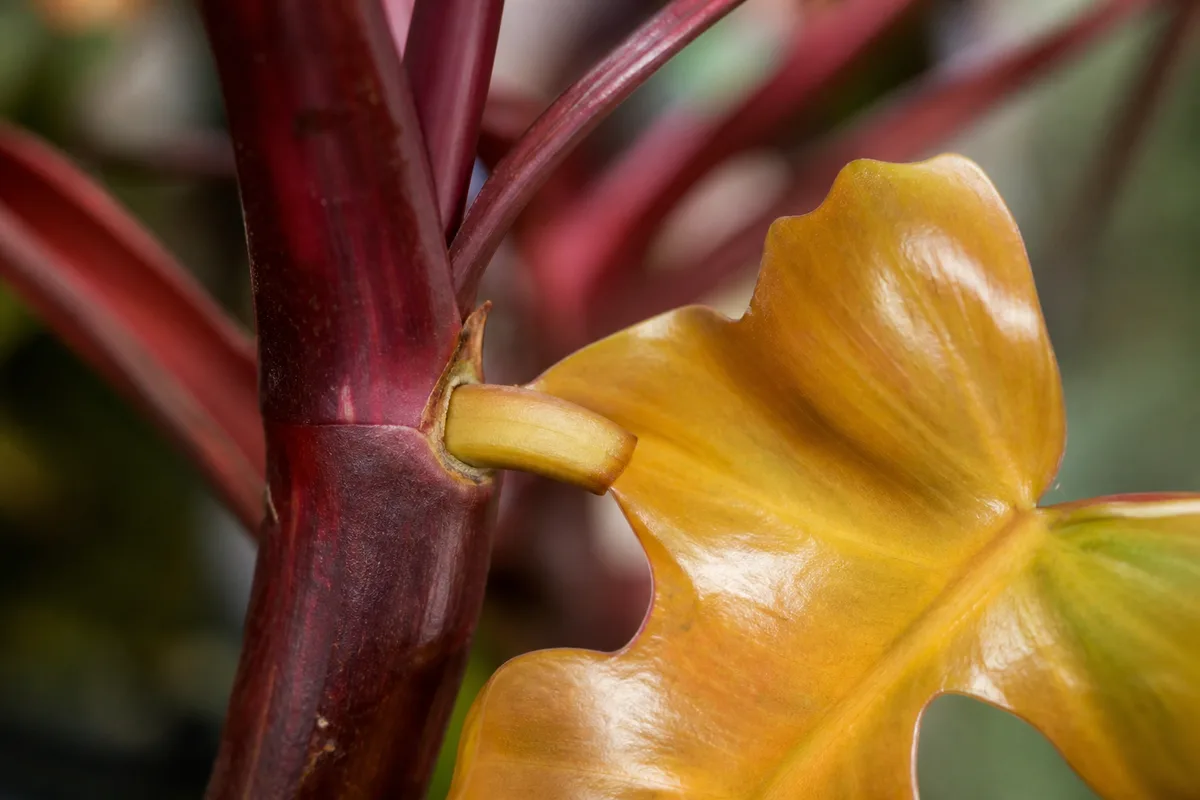
Leaf Drop symptoms on Philodendron Imperial Red - compare with healthy tissue on the same plant.
Normal senescence: one or two bottom leaves turn yellow, then detach while new red-bronze foliage at the crown looks firm and richly colored. Stress-related drop looks different:
- Yellow-then-drop pattern on multiple lower leaves while soil stays wet and the pot feels heavy
- Green or burgundy leaves popping off with little resistance after a recent move, repot, or winter window shift
- Pale, weak new growth with washed-out green instead of red-bronze before older foliage falls-often paired with stretched stems in dim corners
- Soft limp burgundy petioles on wet mix, sometimes without prior yellowing
- Crisp brown edges on leaves that later yellow and drop when air is too dry
- Sticky residue or speckling on new growth when sap-sucking pests weaken the plant enough to shed leaves
Unlike vining heartleaf philodendrons, Imperial Red holds its canopy in one compact crown close to damp mix. A dropped leaf will not grow back on the same petiole; new leaves emerge only from the central growth point.
Why Philodendron Imperial Red drops leaves
Imperial Red sheds foliage when roots or the environment cannot support the full leaf canopy. Several traits make this cultivar more sensitive than a basic green philodendron.
Overwatering and root stress. Philodendron erubescens prefers moist, well-drained soil rich in organic matter. In dim rooms, soil stays wet for days because the slow-growing rosette uses little water. Waterlogged roots cannot absorb oxygen, decline, and fail to supply the canopy-triggering yellowing and drop even when upper burgundy leaves still look partly healthy. The compact crown sits close to damp mix, so poor drainage at the root zone hits Philodendron Imperial Red overview quickly. Soft petioles at the base while soil stays heavy is a classic Imperial Red warning sign.
Underwatering during growth. Imperial Red tolerates brief dry spells but not prolonged drought while actively pushing new red-bronze leaves. Bone-dry mix forces the plant to shed foliage it cannot hydrate. Leaves may curl inward and feel thin before they detach.
Insufficient light. Yellowing of lower leaves can be caused by too little light or overwatering on philodendrons. Imperial Red needs medium to Philodendron Imperial Red light guide to keep red-bronze new growth vivid-weak green new leaves in a dim corner often precede inner foliage loss the plant cannot sustain. This cultivar dulls faster than Imperial Green when light is weak.
Drafts and temperature swings. Philodendrons prefer temperatures between 65 and 85 degrees F and are very sensitive to cold-drafts should be avoided. Sudden cold from AC vents, winter windows, or porch trips can cause green or burgundy leaves to drop without prior yellowing.
Relocation and repotting shock. Plants subjected to a significant change in environment may drop leaves, though this should ease within about three weeks if conditions stabilize. Imperial Red often sheds after nursery-to-home moves, repotting, or shifting from a bright greenhouse to a dim living room. Moving indoor plants between environments can also trigger leaf drop when light levels change sharply.
Pests on new growth. Severe spider mites, mealybugs, aphids, or scale on new burgundy leaves weaken the crown first, and stressed plants may shed foliage before obvious pest damage spreads across the whole rosette.
How to confirm the cause
Work through these checks in order before changing multiple variables:
- Soil moisture at 3–5 cm depth - Wet and cold-damp mix with yellowing lower leaves points to overwatering. Bone-dry mix with thin, curling burgundy petioles suggests underwatering.
- Pot weight - A heavy pot days after watering confirms slow dry-down; a feather-light pot confirms drought stress.
- New growth color - Rich red-bronze on firm emerging leaves means the core is healthy. Pale green or small weak new leaves with long internodes mean light is too weak even if watering seems fine.
- Recent history - Note repotting, room moves, new windows, or winter heat running. Drop within two weeks of a change often fits acclimation, not rot.
- Draft path - Feel for cold or dry airflow from AC, heat vents, or leaky winter glass near the rosette.
- Petiole firmness - Press where burgundy petioles meet the crown. Firm tissue with environmental clues fits water or light stress; soft mushy tissue at soil line with wet mix suggests advancing root damage.
- Pest scan - Inspect leaf undersides, stem joints, and new unfurling leaves for mites, mealybugs, or scale bumps.
If only one or two oldest bottom leaves yellowed while soil moisture and light are stable, you are likely seeing natural senescence-not an emergency.
First fix to try
Check soil moisture 3–5 cm deep, then take one watering action-nothing else yet.
If the mix is wet or the pot is heavy and leaves are yellowing or dropping, stop watering until the top 3–5 cm is fully dry. Move Imperial Red to medium bright indirect light with airflow if it has been in a dim corner-but do not also repot, prune heavily, or fertilize the same week.
If the mix is bone dry, the pot is light, and burgundy petioles look thin or curled, water thoroughly once until excess drains from the hole and the saucer is emptied within 30 minutes. Then wait for the top layer to dry before the next drink.
If you recently moved or repotted the plant and petioles are still firm, hold all other changes for two to three weeks. Keep light and watering steady so Imperial Red can acclimate.
Do not repot on day one unless soil smells sour, petiole bases are softening, or roots are clearly rotting when you inspect.
Step-by-step recovery
Once the first fix is in place, follow this sequence based on what you confirmed:
For overwatering-related drop: Skip watering until the top 3–5 cm dries. Ensure drainage holes are open and the pot is not sitting in a full saucer. If drop continues after two weeks of corrected watering, unpot, trim dark mushy roots, and repot into fresh perlite-amended mix. Remove only fully yellow or detached leaves; keep any partially green foliage that still photosynthesizes.
For underwatering-related drop: Establish a moisture-based rhythm-water when the top 3–5 cm is dry, roughly every 7–10 days in active growth and 10–14 days in winter when dry-down slows. Imperial Red is forgiving after a single missed drink but not after weeks of chronic drought during new leaf production.
For low-light drop: Move to medium to bright indirect light-east window or filtered south/west exposure without harsh midday sun. Hold watering steady for two weeks; do not compensate with extra water. Watch for red-bronze color returning on new growth within several weeks.
For draft or cold shock: Relocate away from vents and cold glass. Keep room temperature in the 65–85 °F range and avoid touching the plant to a chilly windowpane at night.
For post-repot or relocation shock: Minimize further disturbance. Maintain stable light and watering; drop should slow within one to three weeks if petioles stay firm.
For pest-related drop: Isolate the plant, rinse leaf undersides, confirm active pests, then treat before adjusting fertilizer or repotting.
Recovery timeline and signs of improvement
Imperial Red is a moderate grower, so leaf drop slows before the rosette looks full again. Expect shedding to decrease within one to three weeks once watering and light stabilize. New burgundy leaves may take several more weeks to emerge from the center.
Signs you are winning:
- Fewer leaves falling each week
- Firm upright burgundy petioles
- New leaves unfurling with rich red-bronze color
- Pot weight and dry-down becoming predictable between waterings
Signs the problem is worsening:
- Green or burgundy leaves detaching without yellowing first while soil stays wet
- Crown petioles softening at the base
- Sour smell from mix
- New growth stalling entirely for more than a month
Fully yellow or dropped leaves will not return on the same stems. Bare lower sections may stay visible on Imperial Red’s thick upright petioles-that is cosmetic, not fatal, if the crown keeps producing healthy new foliage.
Lookalike symptoms
Drooping without drop often means water stress before leaves detach-see the drooping-leaves guide if petioles hang limp but foliage still hangs on.
Yellow leaves without mass drop often mean early overwatering or light stress-see the yellow-leaves guide if foliage discolors but stays attached.
Brown tips without mass drop usually point to low humidity rather than root failure.
Wilting with wet soil suggests root damage, not thirst-adding water will worsen drop.
One old bottom leaf every few months is normal aging on a mature Imperial Red rosette, not a care crisis.
Mistakes to avoid
Do not increase watering because leaves are falling-wet roots are the most common Imperial Red killer. Do not fertilize a shedding plant to “push” new growth; that adds salt stress while roots are already struggling. Do not repot, prune, relocate, and feed in the same week during active drop. Do not assume every fallen burgundy leaf means the plant is dying; confirm soil, light, and petiole firmness first. Keep fallen leaves cleared if you have pets-Philodendron contains calcium oxalate crystals toxic to cats and dogs.
How to prevent leaf drop next time
Match watering to how fast your pot dries in your actual light-allow the top 3–5 cm to dry between drinks and cut back in winter when growth slows. Keep Imperial Red in medium to bright indirect light with stable placement; avoid bouncing it between rooms with very different brightness. Maintain moderate humidity around 50–60% and buffer the plant from HVAC drafts. Use well-draining perlite-amended mix so the compact crown is not sitting above chronically soggy peat. Do not leave the plant standing in water. Inspect new burgundy growth monthly for mites and mealybugs before pests weaken the rosette enough to trigger shedding.
When to worry
Prioritize root inspection if active drop continues more than two weeks despite corrected watering and light, if healthy green or burgundy leaves detach in clusters, or if petioles soften while soil is wet. An Imperial Red with firm petioles, slowing drop, and one new red-bronze leaf emerging is on the path to recovery even if the rosette looks sparse for now.
Conclusion
Leaf drop on Philodendron Imperial Red is a signal, not a diagnosis. Wet heavy soil with yellowing lower leaves means root stress; light dry pots with thin burgundy petioles mean drought; stable moisture with vent-side green-leaf drop means heat, cold, or acclimation shock. Confirm with a 3–5 cm moisture check, pot weight, and petiole-base firmness, then make one correction. Prevent it by dry-down watering, drainage, stable temperatures, and enough light for this self-heading rosette to keep vivid red-bronze new growth. Judge success by firm fresh burgundy leaves-not by old foliage reattaching.
When to use this page vs other Philodendron Imperial Red guides
- Philodendron Imperial Red watering guide - Use for routine moisture checks before assuming leaf drop is the main issue.
- Philodendron Imperial Red problems hub - Browse all 10 common issues on this species.
- Yellow Leaves on Philodendron Imperial Red - Different entry point when symptoms overlap with leaf drop.
- Root Rot on Philodendron Imperial Red - Different entry point when symptoms overlap with leaf drop.