Root Rot on Philodendron Imperial Red: Causes, Checks &
Quick answer
Root rot on Philodendron Imperial Red usually starts when self-heading roots sit in wet, poorly drained mix-often in low light or an oversized pot. Stop watering, unpot immediately, trim mushy roots, and repot into fresh airy mix; wait one week before the first drink.
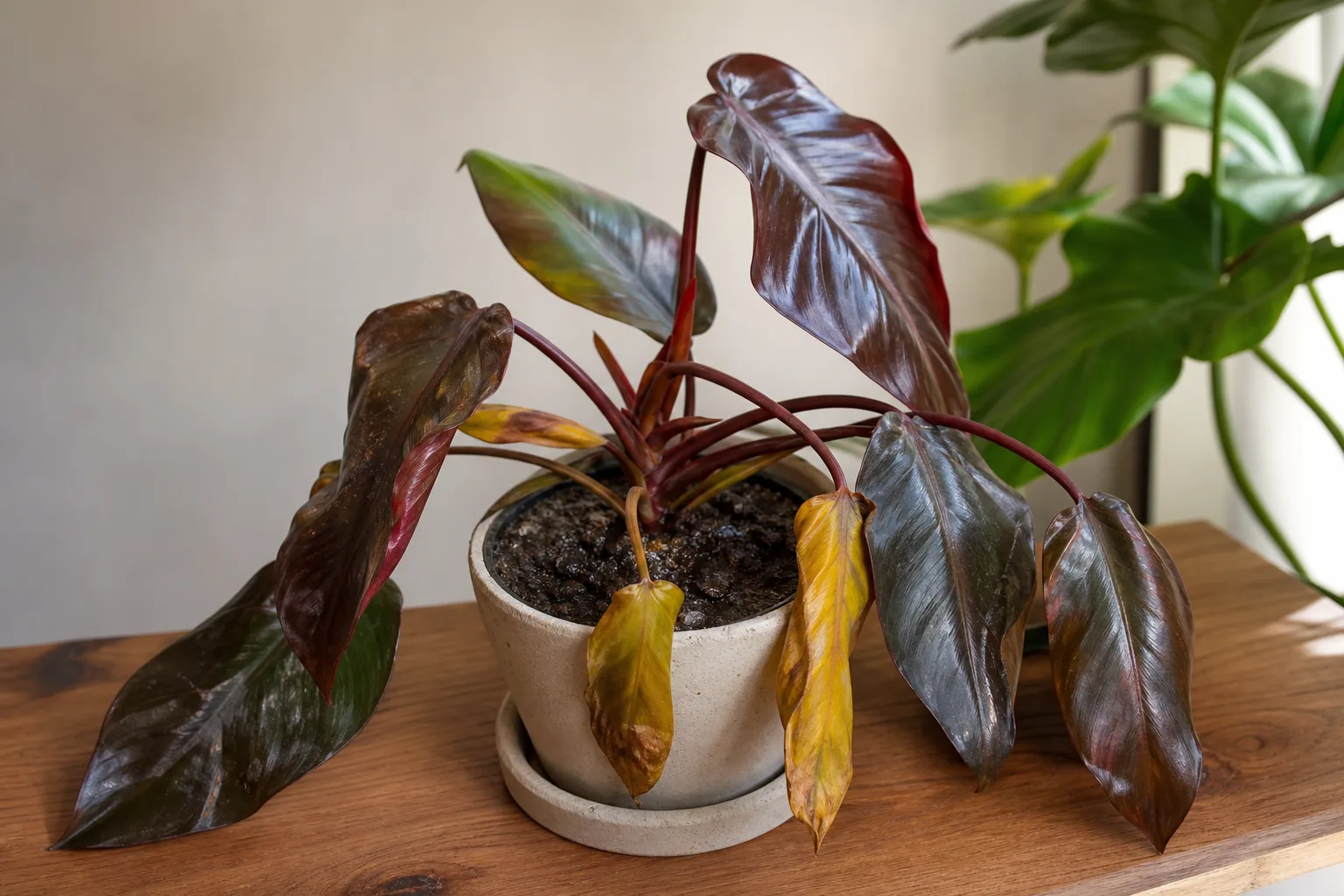
Root Rot on Philodendron Imperial Red: Causes, Checks & Fixes
This guide covers root rot on Philodendron Imperial Red. See also the general Root Rot guide, watering, and light pages for this plant.
Root Rot on Philodendron Imperial Red: Causes, Checks & Fixes
Quick answer
Root rot on Philodendron Imperial Red usually starts when self-heading roots sit in wet, poorly drained mix-often in low light or an oversized pot. Stop watering, unpot immediately, trim mushy roots, and repot into fresh airy mix; wait one week before the first drink.
Philodendron erubescens ‘Imperial Red’ is a self-heading philodendron with thick burgundy petioles and red-bronze new leaves that mature darker. Unlike vining heartleaf types, it holds moisture in a compact crown and uses water more slowly in dim corners. When roots stay saturated, oxygen drops out of the mix, tissue softens, and decay can climb into the crown. The confusing part is that a rotting Imperial Red often looks thirsty-petioles droop and lower leaves yellow even when the pot is wet-because damaged roots cannot move water upward.
Why Philodendron Imperial Red gets root rot
Overwatering and poor drainage are the primary triggers. Clemson Extension notes that root rot usually results from a soil mix that does not drain quickly or overly frequent watering-both common mistakes on self-heading philodendrons in decorative pots. Imperial Red prefers evenly moist but never soggy soil; letting the plant stand in water or watering on a calendar without checking dryness pushes the root zone toward anaerobic conditions.
Dense or peat-heavy mix in an oversized container makes the problem worse. RHS guidance warns that if the pot is much bigger than the rootball, compost stays wet for longer, which can cause the roots to rot. Imperial Red in a large ceramic pot on a north-facing shelf may stay damp for two weeks after one watering, especially in winter when growth slows.
Low light compounds the pattern. Without enough bright filtered light, the plant uses less water and the burgundy new leaves may fade toward green-but the pot still feels heavy. Yellowing of lower leaves on philodendrons often overlaps with overwatering and insufficient light; on Imperial Red, several yellow lower leaves plus limp petioles usually mean root stress, not normal aging alone.
What root rot looks like on Philodendron Imperial Red
Early signs are easy to miss because the rosette looks structurally strong until roots fail. Watch for these patterns together:
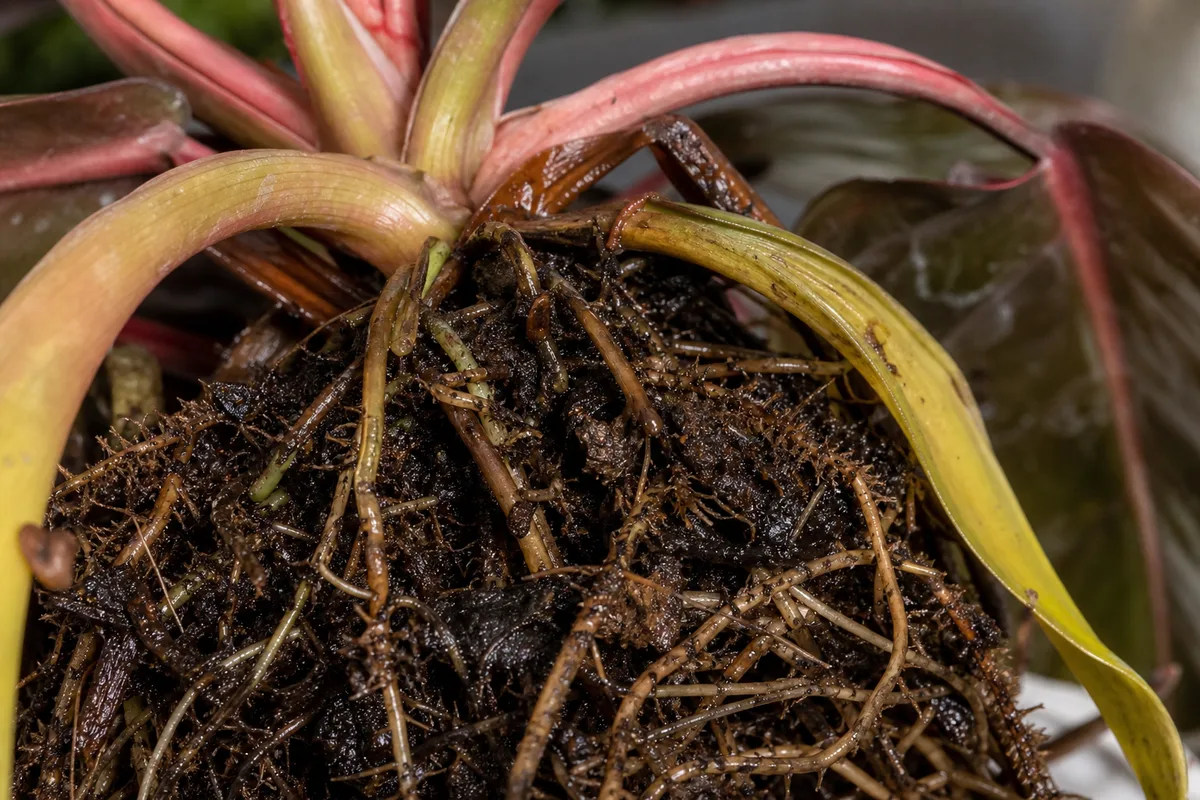
Root Rot symptoms on Philodendron Imperial Red - compare with healthy tissue on the same plant.
- Soil that stays damp on the surface for more than a few days after watering
- A sour or swampy smell when you lift the pot or probe near the drainage hole
- Lower leaves turning yellow while petioles feel soft at the base, not just at the tip
- New red-bronze leaves stalling, emerging small, or collapsing before they harden off
- The crown feeling less firm when you gently wiggle the central petioles
- Wilting despite wet soil-a classic sign that roots cannot take up water
On Imperial Red, do not mistake normal color darkening on maturing leaves for rot. Rot shows up with wet soil, smell, and soft tissue-not with healthy firm petioles and gradual burgundy-to-green hardening.
How to confirm the cause
Do not guess from one yellow leaf. Use this inspection order:
- Pot weight and drainage - Lift the pot. Heavy days after watering, or water pooling in the saucer, suggests saturation.
- Soil smell - A sour odor from the drainage hole strongly suggests decaying root tissue.
- Petiole bases - Press where burgundy petioles meet the crown. Firm is good; wet, collapsing tissue is not.
- Unpot and rinse roots - Shake off wet mix and rinse roots under lukewarm water to see color and texture clearly.
- Root check - Healthy roots feel firm and pale. Rotten roots turn brown to black, feel slippery or squishy, and may fall away when touched.
If more than one-third of the root mass is mushy, or soft tissue is climbing above the soil line into the crown, treat the case as advanced.
Lookalike symptoms to rule out
Underwatering on Imperial Red causes dry, lightweight pots, crispy leaf edges, and firm roots when you check. Normal old-leaf yellowing usually affects one or two lowest leaves while the crown and new red growth stay active. Mealybugs or scale can cause yellowing and stickiness but roots stay firm and soil odor stays neutral.
First fix for Philodendron Imperial Red
Stop watering immediately and unpot the plant the same day you suspect rot. Delay lets decay move from roots into the self-heading crown, where recovery becomes unlikely.
Once out of the pot:
- Remove all wet, degraded soil gently with your fingers or a soft stream of water.
- Cut away every mushy, brown, or black root back to firm tissue using clean, sharp scissors.
- Sterilize blades between cuts on badly affected plants.
- Let trimmed roots air-dry for several hours before Philodendron Imperial Red repotting guide.
- Repot into a clean container with drainage holes, using fresh standard potting mix amended with 20–25% perlite-only slightly larger than the remaining root mass.
Do not water for one week after repotting. This dry spell lets cut tissue callus and reduces reinfection risk while the plant relies on stored leaf moisture.
Make one correction at a time. Do not fertilize, move to harsh sun, and repot into a much larger pot on the same day.
Step-by-step recovery
After the initial dry repot:
- Place the plant in medium to Philodendron Imperial Red light guide with good airflow so the mix can dry evenly when you resume watering.
- When you water again-only after one week and only if the new mix is dry in the top 3–5 cm-soak thoroughly until water runs from the drainage hole, then empty the saucer.
- Resume the dryness check: water only when the top 3–5 cm feels dry, roughly every 7–10 days in summer and 10–14 days in winter in typical homes.
- Watch for new firm red-bronze leaves over the next four to eight weeks.
- Remove leaves that collapse completely, but leave mostly green foliage until new growth appears.
If the crown is fully soft with no firm roots left, salvage may require division of any firm offshoots at repotting rather than saving the main rosette.
Recovery timeline
Mild cases with mostly firm crown tissue often stabilize within two to four weeks once rot is trimmed and the mix stays appropriately dry. Moderate cases may need six to eight weeks before confident new red growth. Severely rotted crowns with little firm tissue left rarely recover fully; honest progress means no spreading softness and at least one healthy root section.
Old yellow or limp leaves will not green up again. Use new burgundy leaves, firm petioles, and a neutral-smelling pot as recovery markers.
What not to do
- Do not keep watering because petioles look limp while soil is still wet.
- Do not repot into a much larger pot; extra wet soil volume slows drying and raises rot risk.
- Do not fertilize until new growth shows and watering is back on a stable dry-down rhythm.
- Do not leave the plant sitting in a full saucer after watering.
- Do not bury the crown deeper to steady a wobbly plant-that traps moisture against stem tissue.
- Do not handle cut tissue without gloves; philodendrons contain calcium oxalate crystals that irritate skin.
How to prevent root rot next time
Match watering to how fast your pot dries, not a fixed schedule. For most indoor Imperial Red plants, check the top 3–5 cm before every drink. Use a pot only slightly larger than the root mass, bright indirect light so the root zone breathes between waterings, and mix with 20–25% perlite for drainage.
Pour away excess runoff, reduce frequency in winter or dim rooms, and refresh compacted mix every one to two years. Weekly glance checks-pot weight, soil smell, firm petiole bases-catch trouble while rescue is still straightforward.
When to worry
Treat root rot as high severity on Imperial Red. Escalate immediately if:
- Petiole bases soften and collapse at the crown
- Black or mushy tissue spreads upward from the soil line
- More than one-third of roots are mushy on inspection
- The plant declines noticeably within seven to ten days despite dry surface soil
- Soil smells sour even though you have stopped watering
If only a few roots were affected and a solid crown remains after pruning, the odds are reasonable. If the crown pulls apart with no resistance, focus on saving any firm divisions rather than the main rosette.
Conclusion
Root rot on Philodendron Imperial Red is almost always a drainage and watering problem, not bad luck. Confirm with wet heavy soil, sour smell, and mushy roots; act by unpotting, pruning soft tissue, repotting dry, and waiting one week before the first drink. Prevent it by letting the top 3–5 cm go dry, using perlite-amended mix, and giving enough light for the self-heading rosette to use water steadily. Judge success by firm roots and new burgundy growth-not by old leaves returning to perfect color.
When to use this page vs other Philodendron Imperial Red guides
- Philodendron Imperial Red watering guide - Use for routine moisture checks before assuming root rot is the main issue.
- Philodendron Imperial Red problems hub - Browse all 10 common issues on this species.
- Yellow Leaves on Philodendron Imperial Red - Different entry point when symptoms overlap with root rot.