Philodendron Imperial Green Pruning: When, How
Philodendron Imperial Green Pruning: When, How, and Mistakes to Avoid
Philodendron Imperial Green Pruning: When, How, and Mistakes to Avoid
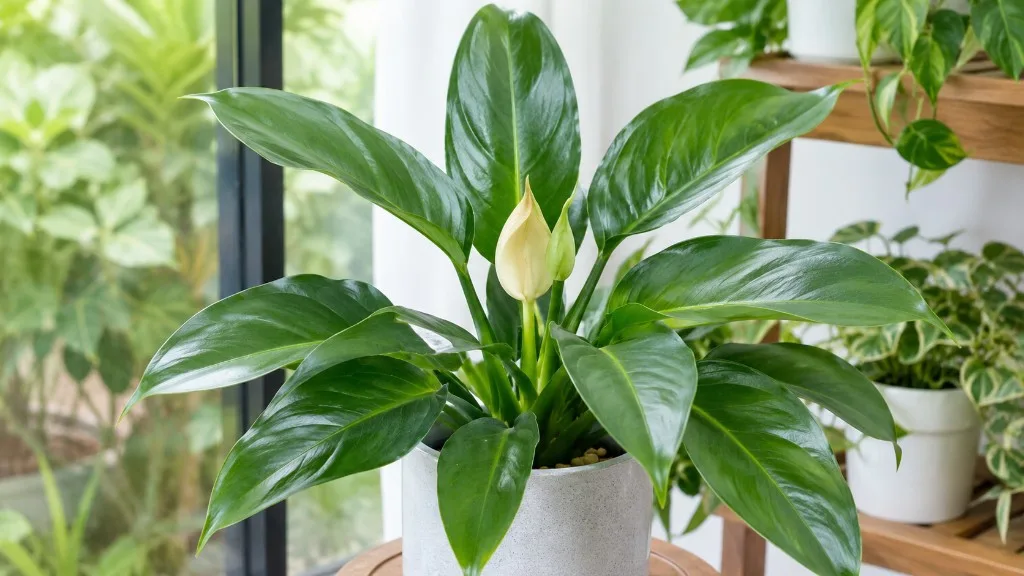
Start with one yellow or damaged lower leaf. Trace its petiole to where it meets the main stem, sterilize your scissors, and cut cleanly at that junction - do not pull or tear. Philodendron Imperial Green (Philodendron erubescens ‘Imperial Green’) is a self-heading philodendron that grows as a firm upright rosette of large glossy leaves. It is not a trailing vine, and it does not need a moss pole. Most pruning on Philodendron Imperial Green overview is cleanup, not shaping.
NC State Extension describes P. erubescens as a tropical aroid that climbs in nature but is widely grown indoors in many cultivated forms. Imperial Green stays compact as a self-heading rosette when light is adequate. Pruning removes aging lower leaves, damaged petioles, and occasionally shortens a stretched central stem - it does not create the bushy side branches you get from node cuts on pothos or heartleaf philodendron.
If Imperial Green leans or stretches toward a window, brighter indirect light usually fixes the problem better than repeated cutting. Pruning a leggy crown without improving placement often produces a shorter plant that still leans.
Self-Heading Growth Changes Everything
Trailing philodendrons produce long stems with visible nodes spaced along the vine. Cut above a node and the plant often pushes new growth from that point or along the stem. Imperial Green concentrates new leaves at a central crown - the tight growing tip where each leaf unfurls from the top of the rosette.
Lower leaves naturally senesce as the crown matures. That bare stem below the living foliage is normal on upright types, not a sign you should keep cutting nodes until the plant refills from below. Self-heading philodendrons rarely replace lost lower leaves on the exposed trunk indoors. Remove yellow petioles cleanly and accept the architectural silhouette.
Do not install a moss pole expecting larger leaves or fuller sides. Imperial Green supports its own weight. Support stakes are for unstable pots, not for this cultivar’s growth habit.
What to Check Before You Cut
Walk through three quick checks so you prune the right tissue for the right reason.
Leaf condition. Fully yellow, brown, crispy, or pest-damaged blades are safe removal candidates. A leaf that is mostly green but has one brown tip can stay if the petiole is firm - cosmetic tip trimming is optional, not urgent.
Petiole and crown firmness. Soft, collapsing petioles while soil stays wet often signal root stress, not a pruning deficit. Clemson HGIC notes philodendron problems frequently trace to overwatering and poor drainage. Cutting healthy leaves off a stressed plant removes photosynthetic surface without fixing the cause.
Light and stretch. Internodes that lengthen and new leaves that shrink usually mean the plant is reaching for light. Note which direction it leans before you decide whether crown shortening is necessary.
When to Prune Imperial Green
Any time: fully yellow, brown, or clearly dead leaves; leaves with active pest damage you have isolated; torn petioles that will not heal.
Late spring through early summer: crown shortening on a genuinely leggy specimen, or removing several lower leaves in one session when the plant is in active growth.
Avoid heavy cuts: during winter when growth slows in cooler, dimmer rooms; immediately after Philodendron Imperial Green repotting guide; while the plant is recovering from root rot on Philodendron Imperial Green, leaf spot, or major leaf drop - stabilize care first, then trim damaged tissue.
Routine grooming every few weeks beats one aggressive session that removes too much healthy foliage at once.
Tools, Sap Safety, and Sanitation
Use sharp bypass pruners or scissors. Wipe blades with 70% isopropyl alcohol before and between cuts, especially if you removed diseased tissue.
Wear gloves when handling cut material. RHS philodendron guidance notes Araceae sap can irritate skin. The ASPCA lists philodendron as toxic to cats and dogs due to calcium oxalate crystals - bag and discard trimmings where pets cannot reach them.
Removing Lower Yellow or Damaged Leaves
This is the most common and lowest-risk cut on Imperial Green.
Follow the petiole from the leaf blade down to its junction with the main stem. Position the blade flush against the stem and cut in one clean motion. Support the leaf with your free hand so the weight does not twist or tear crown tissue.
One yellow lower leaf on an otherwise vigorous plant is normal aging - wait until the blade is mostly yellow unless disease or pests require faster removal. Stagger removal of several aging leaves over weeks rather than stripping the base in a single day.
For brown tips on otherwise healthy leaves, trim only the dead edge with scissors, following the natural curve of the leaf. Do not cut into green tissue unless the damage is spreading.
Shortening a Leggy or Leaning Crown
Reserve stem cuts for plants that have clearly elongated internodes and a crown that feels top-heavy or one-sided after you improve light.
Move Imperial Green gradually toward medium to Philodendron Imperial Green light guide first. Give it two to three weeks in the brighter spot before deciding whether a stem cut is still needed.
To reduce height, identify the highest node that still carries a healthy leaf or visible dormant bud along the central stem. Cut the stem 5–10 mm above that node. Imperial Green may produce a new growing tip from the crown rather than multiple side branches like a vining philodendron. One crown-shortening cut per growing season is usually enough.
Never remove or damage the central meristem - the active tip where new leaves emerge. Topping that point stops normal crown development and can leave the plant without a clear growing direction.
How Much You Can Safely Remove
Each Imperial Green leaf is large and energetically expensive for the plant to maintain and replace. Cap removal of healthy green foliage at roughly one-third of the leaf count per session.
Example: a specimen with nine healthy leaves should lose no more than three green ones at once. Fully yellow or dead leaves from normal aging do not count toward that limit if the crown remains firm and new leaves are still emerging.
If you need major size reduction, division at spring repotting - separating rooted offsets with their own crowns - manages bulk more safely than repeated defoliation. Missouri Botanical Garden philodendron notes describe philodendron as a genus with varied habits; division suits clumping self-headers better than chasing side branches with stem cuts.
What Not to Cut
- The central growing tip where new leaves unfurl
- Healthy green leaves removed only for symmetry - Imperial Green replaces them slowly from the crown
- Bare stem sections expecting new leaves to sprout along the trunk like a pothos rejuvenation
- Multiple healthy leaves at once when the plant is stressed, recently repotted, or sitting in wet soil
Pruning cannot fix chronic overwatering, cold drafts, or dim light. Correct those conditions before aggressive cutting.
Aftercare and Recovery
After any multi-leaf session, keep care stable:
- Maintain medium to bright indirect light - avoid direct hot sun on a freshly trimmed crown
- Water when the top 3–5 cm of mix feels dry, not on a rigid calendar
- Hold fertilizer for two to three weeks after removing several leaves so the plant can redirect energy to new growth
- Wipe remaining glossy leaves gently to remove dust that reduces photosynthesis
In spring and summer, new crown leaves within three to six weeks confirm the plant recovered well. Winter recovery is slower in cooler rooms - patience matters more than extra inputs.
Signs Pruning Worked - or Went Too Far
Success: firm petioles on remaining leaves, new leaves unfurling from the crown at normal size, stable color, no continued yellowing beyond the usual lowest leaf.
Too aggressive or badly timed: widespread yellowing after a heavy cut, soft crown tissue, stalled new growth for more than six weeks in warm active conditions, or repeated lean after crown shortening without a light change.
If decline continues after a conservative prune, inspect roots and soil moisture before cutting again.
Common Mistakes to Avoid
Treating Imperial Green like a vine. Node cuts along a long runner will not produce the same branching response as heartleaf philodendron or Brasil.
Stripping every yellow lower leaf at once. Normal senescence is staggered; mass removal stresses a plant that cannot quickly backfill from below.
Pruning without fixing light. Etiolated crowns grow back leggy in the same dim spot.
Adding a moss pole. Unnecessary for this self-heading cultivar and can crowd the rosette.
Pruning during root rot. Remove only clearly dead leaves until roots recover; do not defoliate to “help the plant dry out.”
Conclusion
Philodendron Imperial Green pruning is straightforward when you match technique to anatomy: remove dead and yellow leaves at the petiole base, shorten the central stem only when the crown is genuinely leggy after a light upgrade, and stay within the one-third rule on healthy glossy foliage. Skip vine logic, moss poles, and meristem cuts. A well-placed Imperial Green needs minimal intervention - a clean upright clump of green leaves with occasional lower-leaf cleanup.
When to use this page vs other Philodendron Imperial Green guides
- Philodendron Imperial Green overview - Start here for whole-plant context before deep-diving this topic.
- Philodendron Imperial Green problems hub - Jump to symptom-specific fix guides when this care topic does not resolve the issue.
- Slow Growth on Philodendron Imperial Green - Escalate here when pruning adjustments are not enough.
- Brown Tips on Philodendron Imperial Green - Escalate here when pruning adjustments are not enough.
Related Philodendron Imperial Green guides
- Philodendron Imperial Green overview
- Philodendron Imperial Green watering
- Philodendron Imperial Green light
- Philodendron Imperial Green soil
- Philodendron Imperial Green propagation
- Philodendron Imperial Green fertilizer
- Slow Growth on Philodendron Imperial Green
- Brown Tips on Philodendron Imperial Green
- Philodendron Imperial Green problems