Slow Growth on Philodendron Imperial Green: Causes, Checks
Quick answer
Slow growth on Philodendron Imperial Green is usually a light-and-root-zone issue, not a fertilizer shortage. First step: move it closer to bright indirect light, then let the top 3-5 cm of mix dry before watering again.
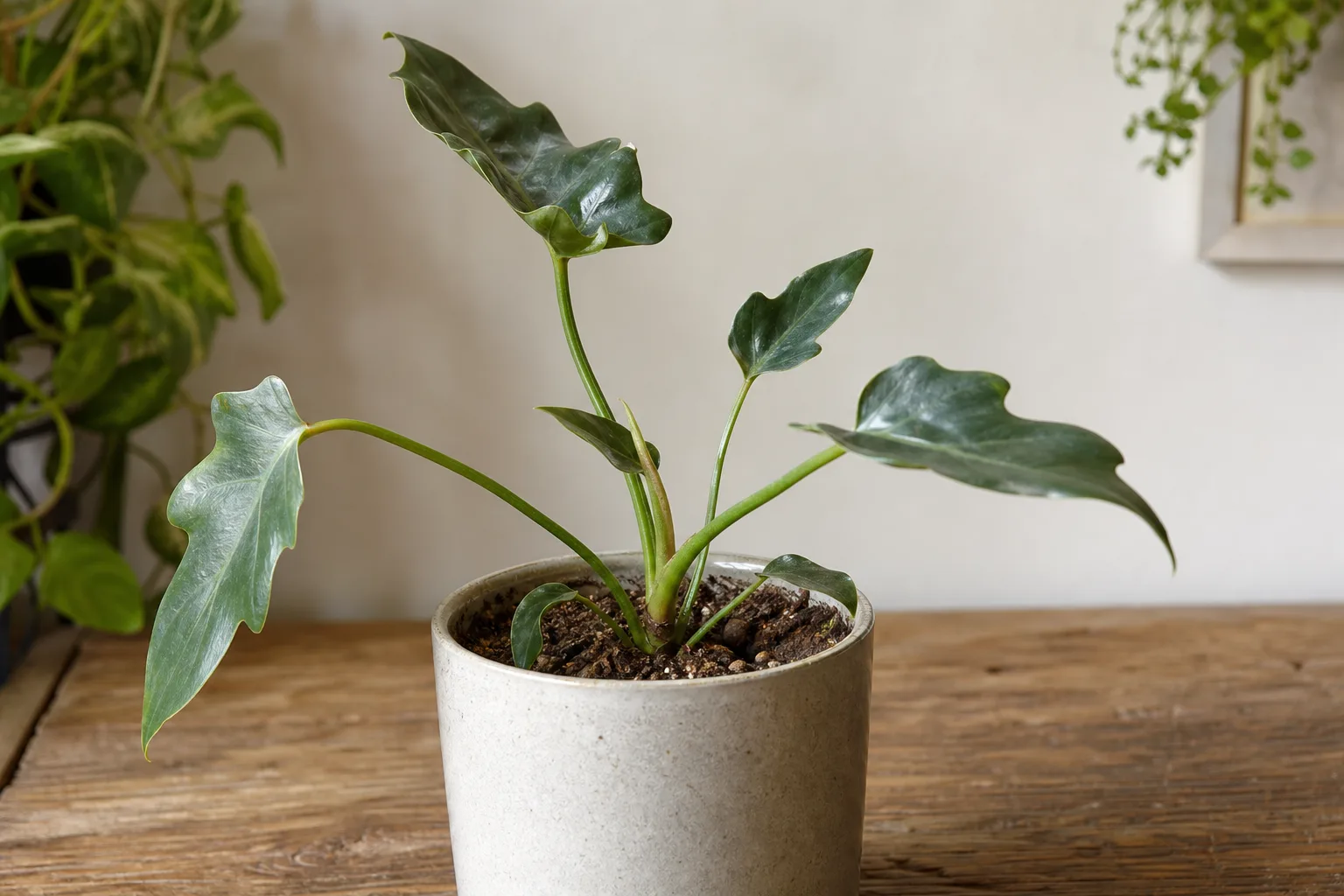
Slow Growth on Philodendron Imperial Green: Causes, Checks & Fixes
This guide covers slow growth on Philodendron Imperial Green. See also the general Slow Growth guide, watering, and light pages for this plant.
Slow Growth on Philodendron Imperial Green: Causes, Checks & Fixes
Quick answer
Slow growth on Philodendron Imperial Green is usually a light-and-root-zone problem, not a feeding problem. First action: move the plant into stronger indirect light and wait to water until the top 3-5 cm of potting mix dries.
This cultivar is a self-heading type of Philodendron erubescens, so owners notice stall quickly because growth should come from a compact central crown rather than long vines. If your main concern is light placement itself, use the dedicated Imperial Green light guide. If your plant is stretching with long gaps and sparse form, also check leggy growth. This page focuses on slow overall growth rate when the plant seems “stuck.”
Why Philodendron Imperial Green grows slowly
Low light is the most common limiter. University of Minnesota Extension notes that in lower light, plants grow more slowly and use less water, which explains why “safe-looking” watering routines can still lead to chronic stall.
Overwatering in dim conditions makes this worse. UC IPM reports that houseplant decline is commonly tied to improper watering, root disease, and low light intensity. When soil stays wet too long, roots lose function and crown growth slows.
Root crowding is another frequent cause. NC State says philodendrons should be repotted when root-bound, ideally in spring, which is especially relevant for self-heading hybrids that stay in the same container for years.
Season matters too. Penn State Extension notes indoor plants naturally slow during winter, so a winter pause can be normal if leaves stay firm and healthy.
Secondary causes include chronic underwatering, compacted old mix, pests, and cool drafts. NC State lists an ideal philodendron range of 65-85 F, so prolonged cool rooms can reduce growth speed.
What slow growth looks like on Philodendron Imperial Green
Use this quick lookalike check before making major changes:
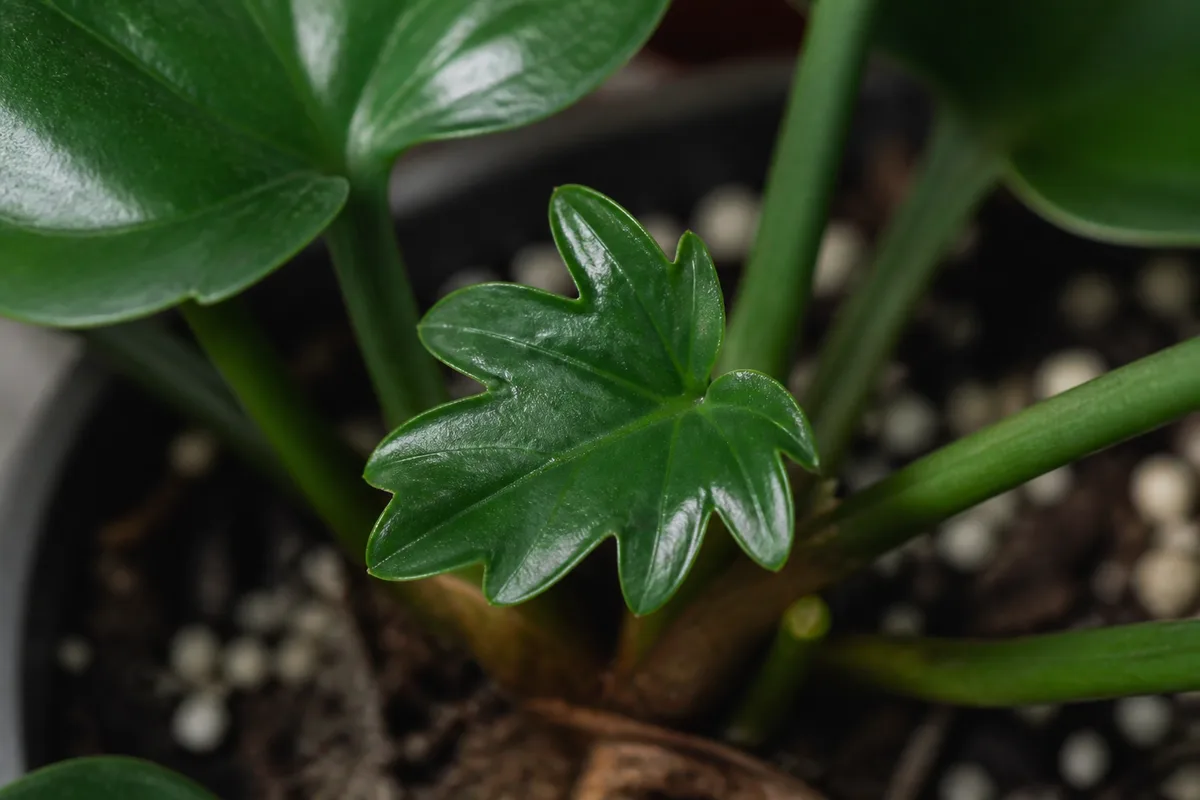
Slow Growth symptoms on Philodendron Imperial Green - compare with healthy tissue on the same plant.
- Low light: Smaller new leaves, stretched petioles, crown leaning toward window.
- Root-bound: Good light but stalled crown, roots circling, fast dry-through.
- Overwatered in dim spot: Wet heavy pot for many days, yellow lower leaves, sour smell.
- Normal winter slowdown: Fewer new leaves but foliage remains firm, glossy, and stable.
- Pest pressure: Stippling, webbing, or distorted new growth with reduced growth rate.
If symptoms are mostly droop and collapse rather than slow growth, cross-check wilting and overwatering.
How to confirm the cause
- Check location light: A north corner may maintain survival but not active growth. Move closer to a brighter window before changing anything else.
- Compare recent leaf size: If new leaves are repeatedly smaller than older mature leaves, growth conditions are limiting.
- Track dry-down time: If the top 3-5 cm stays damp too long, roots may be oxygen-limited.
- Inspect roots: Healthy roots are firm and light-colored; UC IPM notes root rot often appears as discolored, decaying roots.
- Factor in season: A winter pause with otherwise healthy foliage is not the same as spring/summer stall.
Lookalike symptoms to rule out
Repot shock can pause growth for a short period. Pest damage usually leaves visible feeding signs. True nutrient deficiency is less common than light or root-zone issues in indoor philodendrons.
First fix for Philodendron Imperial Green
Move it to brighter indirect light first, then wait and observe:
- Place near an east window, or set back from south/west light behind a sheer.
- Rotate weekly to keep the rosette balanced.
- Avoid sudden direct afternoon sun; glossy leaves can scorch.
Then align watering to root oxygen and season: water thoroughly, drain fully, and wait until the top 3-5 cm dries before watering again.
Do not fertilize heavily as a first response. Iowa State Extension notes excess fertilizer can damage roots through salt buildup.
If roots are tightly circling, repot one size up in spring and use fresh, airy mix. For deeper repot workflow, see Imperial Green repotting.
Step-by-step recovery
- Week 0: Move to brighter indirect light and stop schedule watering.
- Week 1-2: Confirm dry-down rhythm and leaf firmness; do not stack multiple interventions.
- Week 2-4: If roots are crowded or declining, repot once into an airy mix and ensure drainage.
- Week 4-8: Resume light feeding only if new growth restarts and roots are stable.
- After restart: Maintain consistent placement and rotate weekly to avoid one-sided crown growth.
Recovery timeline and success signs
In active season, many plants show larger new leaves within four to eight weeks after correction. Winter corrections can take longer because light duration is shorter. Measure recovery by new-leaf size, steadier leaf emergence, and stable roots, not by old damaged leaves “healing.”
What not to do
- Do not force growth with heavy fertilizer.
- Do not jump from a dark corner to hot direct sun in one day.
- Do not keep watering on calendar dates when light has dropped.
- Do not add a moss pole expecting growth-rate improvement on this self-heading plant.
How to prevent slow growth next time
Keep Imperial Green in consistent bright indirect light, monitor dry-down instead of calendar watering, and refresh old compacted mix before roots decline. Missouri Botanical Garden’s common indoor plant problem guide and UC IPM both emphasize environment and root-zone management over quick fixes.
For neighboring issues that can overlap with slow growth, use:
When to worry
Slow growth by itself is usually low urgency. Escalate quickly if you see crown softening, foul soil odor, black mushy roots, or rapid yellow collapse because those signs suggest root decline.
Keep Philodendron Imperial Green overview away from pets. ASPCA lists philodendron as toxic to cats and dogs due to calcium oxalate crystals.
Conclusion
Slow growth on Philodendron Imperial Green is most often solved by improving usable light and root-zone conditions, not by adding more fertilizer. Start with brighter indirect placement, keep a real wet-dry cycle, and repot when roots are crowded. Judge success by better new crown growth over the next one to two leaf cycles.
When to use this page vs other Philodendron Imperial Green guides
- Philodendron Imperial Green watering guide - Use for routine moisture checks before assuming slow growth is the main issue.
- Philodendron Imperial Green problems hub - Browse all 8 common issues on this species.
- Yellow Leaves on Philodendron Imperial Green - Different entry point when symptoms overlap with slow growth.
Related Philodendron Imperial Green guides
- Philodendron Imperial Green overview
- Philodendron Imperial Green watering
- Philodendron Imperial Green light
- Philodendron Imperial Green soil
- Yellow Leaves on Philodendron Imperial Green
- Philodendron Imperial Green problems
- Ants on Plant on Philodendron Imperial Green
- Brown Tips on Philodendron Imperial Green