Philodendron Imperial Green Light Needs: Best Window, Sun &
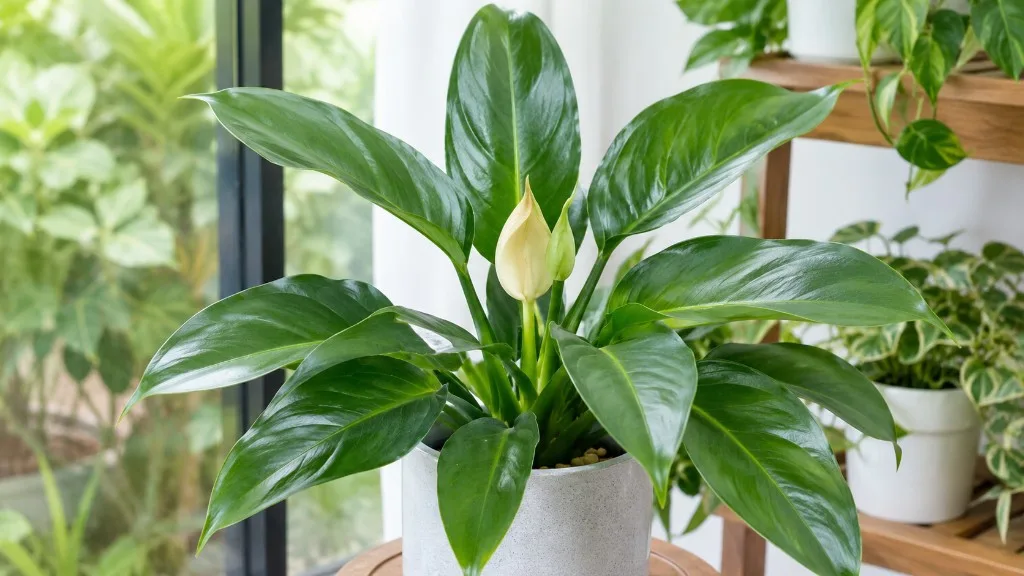
Philodendron Imperial Green Light Needs: Best Window, Sun & Warning Signs
Philodendron Imperial Green Light Needs: Best Window, Sun & Warning Signs
Philodendron Imperial Green is sold as an easy office plant - and that label creates one of the most common care mistakes growers make with this hybrid: treating tolerance for lower light as proof the plant prefers dim corners. It does not. Imperial Green is a self-heading Philodendron erubescens hybrid bred for a compact upright rosette of large glossy leaves, not a trailing vine that can limp along on reflected hallway brightness forever. Indoors, the practical goal is not to find the spot where the crown refuses to collapse immediately. The goal is to place the pot where new leaves emerge broad, deep green, and evenly spaced without bleach, scorch, or the slow stretch-and-yellow cycle that happens when a fast-growing aroid sits in a dim wet pot.
NC State Extension lists Philodendron erubescens for partial shade and dappled sunlight indoors, with a clear warning to avoid direct sunlight on unacclimated foliage. UF/IFAS Gardening Solutions groups Imperial-type hybrids under medium to bright indirect light, noting they accept lower indirect light if watering is adjusted. That combination tells you what experienced aroid growers already know: Imperial Green survives moderate and low indoor light longer than many variegated philodendrons, but it grows, holds internodes short, and keeps a firm crown best when plant-facing brightness is genuinely strong for most of the day.
This guide covers optimal versus tolerated light, window-by-direction placement, direct sun limits, honest office low-light survival, grow-light starting specs, safe relocation, self-heading stretch diagnostics, and the warning signs that tell you to move the pot before cosmetic damage becomes a watering crisis. For watering rhythm tied to light level, see the Imperial Green watering guide. For mix and drainage that keep bright-light watering safe, see soil guidance. For the full species picture, start with the Imperial Green overview.
How Much Light Philodendron Imperial Green Needs
Imperial Green wants bright, indirect light for most of the day and accepts medium or lower indirect light as a tolerance band - not an equal preference. Think of it as a plant that evolved under tropical canopy gaps: strong ambient brightness filtered by leaves overhead, not all-day shade and not harsh midday beams on glossy tissue.
The parent species Philodendron erubescens is native to Colombia and climbs in nature; Imperial Green was selected as a self-heading hybrid with short internodes and a dense crown. That breeding choice makes light mistakes visible fast: in good brightness, internodes stay tight and new leaves are large. In chronic under-lighting, the plant stretches petioles, leans toward the window, and may shed lower leaves - especially if the pot stays wet in the dim corner.
Optimal vs Tolerated Light Ranges
Optimal (preferred): Medium to bright indirect light - roughly the brightness you get 3 to 6 feet (1 to 2 m) back from an east-facing window, or behind a sheer curtain on a south- or west-facing exposure. New growth should be broad, glossy, and deep green with petioles that feel firm, not rubbery.
Tolerated (survival): Lower indirect light - north windows, interior rooms with reflected light, or office cubicles several meters from glass. Imperial Green often keeps existing leaves here, but growth slows, internodes lengthen, and soil dries slowly. Label this band honestly: the plant can maintain, not thrive, unless you supplement with a grow light.
Too much: Unfiltered afternoon sun through south or west glass on unacclimated leaves. NC State is explicit: direct sunlight should be avoided for Philodendron Imperial Green overview. A few hours of gentle morning sun through east glass is a different story - filtered, cooler, and easier to acclimate.
Foot-Candles and Lux at the Crown
UF/IFAS EP150 notes that most interiorscape philodendrons (excluding P. selloum) are produced under 80–88% shade, equivalent to about 1,500–2,500 foot-candles, and that philodendrons tolerate light as low as 75 fc but 150 fc or more maintains color and leaf size (UF/IFAS EP150). Imperial Green is not a separate line item in that bulletin, but as a large-leaf erubescens hybrid it fits the same production band better than deep-shade ferns.
The table below translates those extension anchors into home-placement heuristics measured at the top of the crown, not at desk height across the room.
| Placement (typical home) | Approximate foot-candles at crown | Approximate lux | Expected Imperial Green response |
|---|---|---|---|
| 2–4 ft from unobstructed east window | 300–600 fc | 3,000–6,000 lux | Ideal default: compact crown, large new leaves |
| Behind sheer on south/west; 4–6 ft back | 200–500 fc | 2,000–5,000 lux | Strong growth with filtration; watch summer heat |
| Bright north window, 1–3 ft from glass | 150–300 fc | 1,500–3,000 lux | Maintenance band; slower flush, monitor stretch |
| Interior office shelf, no window path | 75–150 fc | 750–1,500 lux | Long-term survival possible; stretch and wet-soil risk |
| Unfiltered south sill, midday summer | 2,000+ fc | 20,000+ lux | Scorch risk without acclimation |
Field test without a meter: on a clear day, hold your hand between the crown and the window. A soft shadow with readable edges at the plant usually lands in the bright-indirect range Imperial Green prefers. A faint or absent shadow means the room looks lit to your eyes but the crown is underpowered. A crisp dark shadow on the leaf surface at noon means direct sun - pull back or filter.
Phone lux app: measure at the newest leaf, not the floor. A crown reading of 3,000–6,000 lux near east glass is common on a clear morning; the same room may read 800 lux at the sofa - too dim for the specimen you placed “near the window” but actually set across the room.
Best Window Placement for Imperial Green
Window direction is a starting point. Overhangs, tint, sheer curtains, outdoor tree shade, and pot distance all change intensity at the crown. Still, compass orientation gives a reliable first guess in the northern hemisphere.
Place Imperial Green where plant-facing brightness is strong for most of the day - not where the room looks sunny to you. Human vision adapts to dim interiors; self-heading philodendrons do not. A floor specimen in a bright living room corner often receives a fraction of sill light. Rotate the container a quarter turn every one to two weeks if the crown leans toward the glass.
East, North, South, and West Windows Compared
| Window | Light character | Best pot distance (starting point) | Imperial Green notes |
|---|---|---|---|
| East | Cool morning direct + bright indirect day | 2–4 ft (60–120 cm) from glass | Safest default; gentle direct hours, then steady ambient |
| North | Gentle indirect all day; weaker in winter | 1–3 ft from glass | Survival/maintenance; expect slower growth unless supplemented |
| South | Highest total daily intensity | 4–6 ft back or sheer curtain | Excellent with diffusion; scorch risk if pressed to hot pane |
| West | Strong late-afternoon sun + heat | 4–6 ft or sheer; monitor summer | Viable with caution; heat load exceeds east |
An east-facing window is the default sweet spot for most Imperial Green specimens: enough brightness to keep internodes short without the midsummer heat load south glass can place on glossy leaves against the pane. A south-facing window is the performance choice when you want maximum indoor leaf size and can manage distance or sheer fabric. North works for maintenance in bright climates but often lands in the tolerated band at mid and high latitudes in winter.
Distance From the Glass Matters
Light falls off fast with distance. A pot on the sill can receive several times the foot-candles of the same plant six feet back on a bookshelf. For Imperial Green floor specimens reaching 60–100 cm (2–3 ft) tall indoors (UF/IFAS hybrid philodendrons), measure at the top of the crown, not the pot rim. Lower leaves on a tall self-heading plant naturally receive less light than the upper crown - another reason dim rooms produce lower-leaf yellowing while the top still looks acceptable for a while.
If you use a sheer curtain, aim for filtered brightness, not a dark room. The goal is to knock down direct beam intensity while keeping ambient levels in the bright-indirect band.
Can Philodendron Imperial Green Take Direct Sun?
Not as a default. NC State lists partial shade and dappled sunlight - the indoor translation is bright ambient light with limited direct rays, not a south sill with unfiltered afternoon sun.
Imperial Green can handle some direct sun when acclimated and when exposure is gentle: typically morning east glass for one to three hours, or filtered south/west through sheer fabric. Leaves formed in nursery shade or shop dim light lack the pigment and structural toughness for sudden high-UV exposure. Moving a low-light plant directly onto a hot south sill in July is how bleached patches and crisp sun-facing tissue appear in a single afternoon.
Watch for these direct-sun stress signals: chalky bleached areas that do not green up, crisp brown patches on the leaf face nearest the glass, curling during peak hours, and sudden leaf collapse after a move. Old scorch does not heal - judge recovery by new leaves after you pull back or filter.
Low-Light Limits for Offices and Dim Rooms
Imperial Green’s reputation for office tolerance is real but frequently overstated. The plant keeps going in lower indirect light longer than Pink Princess or many variegated aroids, which is why it appears in lobbies and cubicle farms. That tolerance is not the same as preference.
In low light, expect slower growth, smaller new leaves, longer petioles, and a crown that leans toward the brightest vector. Soil dries slowly, which raises overwatering risk - the classic pairing of dim placement plus generous watering schedule. If you must keep Imperial Green in a low-light room, reduce watering frequency and accept a looser silhouette, or add artificial light.
Office Cubicle and Interior Shelf Survival
A cubicle without a window path usually lands below 150 foot-candles at the crown unless a grow light is present. Imperial Green may persist here for months because stored carbohydrates and a healthy root system buffer the deficit, but you should expect minimal new growth and rising odds of leggy growth or not enough light symptoms.
Realistic office strategy: place the pot within line-of-sight of a window even if not on the sill - reflected light from a white wall helps. If the nearest window is more than 3 m (10 ft) away with no clear light path, plan on a full-spectrum LED rather than ceiling fluorescents alone. Pair any low-light placement with the watering guide discipline: check the pot, do not water on autopilot.
Pet note: Imperial Green contains insoluble calcium oxalate crystals and is toxic to cats and dogs if chewed. Floor specimens in bright corners still need pet-safe elevation or a pet-free room - light placement and safety overlap when cats can reach glossy leaves.
Warning Signs: Too Much Sun vs Not Enough Light
The page title promises warning signs - here is the consolidated reference. Read new growth after any placement change; old scars from a previous location will not reverse.
Symptom Comparison for Self-Heading Crowns
| Signal | Too much sun / heat | Too little light |
|---|---|---|
| New leaf color | Bleached, pale, or yellow-white patches | Smaller, darker, or dull green |
| Petiole length | May shorten if stress is heat-only; scorch dominates | Noticeably longer; crown opens wider |
| Crown shape | Crisp damage on sun-facing side | Lean toward window; sparse upper spacing |
| Lower leaves | Sudden crisp edges after move | Yellow lower leaves, especially if pot stays wet |
| Leaf texture | Papery, scorched zones | Soft, thin new leaves; slow unfurl |
| Soil dry-down | Fast near hot glass | Slow; wet mix for weeks |
| Timeline after move | Hours to days | Weeks to months |
Too much sun - act fast: move back 12–24 inches, add sheer fabric, or shift to east exposure. Hold water steady unless soil was already saturated; light stress is not fixed by drought.
Too little light - act gradually: step the pot closer to the window over 7–14 days (see acclimation below) or add a grow light. Reduce watering to match slower metabolism. If lower leaves yellow on wet soil, fix light and drainage together - see yellow leaves guidance.
Using Grow Lights for Philodendron Imperial Green
When natural glass falls short - north winter, interior offices, or shaded apartments - a full-spectrum grow light is a better substitute than hoping ceiling LEDs suffice. Imperial Green responds well to supplemental light because its large leaves capture photons efficiently and its fast growth habit (selected in the Imperial Green patent) stalls visibly when underpowered.
Hours, Distance, and Spectrum
Fixture: full-spectrum white LED labeled for houseplants, roughly 4000K–6500K. Avoid cheap narrow-band purple panels as the sole source for long-term foliage plants.
Distance: start 12–18 inches (30–45 cm) above the crown. If new leaves stretch toward the lamp, increase duration slightly or lower the fixture a few inches. If only the tissue directly under the beam crisps, raise the light or reduce hours.
Duration: 10–12 hours daily during active indoor growth (spring through early fall) is a practical starting point for a floor specimen. In winter maintenance, 8–10 hours may suffice if the plant is not pushing new leaves. Use a timer - consistency matters more than heroic overnight bursts.
Heat check: place your hand at leaf height under the lamp for a minute. If the glossy surface would feel uncomfortably warm, increase distance. Grow lights should deliver steady plant-facing brightness, not leaf-cooking heat.
When you add a grow light, increase watering checks slightly - brighter total daily light raises transpiration and dry-down rate. Link light changes to the watering guide rather than keeping an old dim-room schedule.
How to Move or Acclimate Imperial Green Safely
Sudden light jumps are how otherwise healthy Imperial Greens drop leaves, curl, or scorch after a well-intentioned “brighter is better” move. Use a staged protocol, especially for plants grown in nursery shade or big-box dim shelves.
Days 1–3: place the pot in the target room but 4–6 feet back from the goal window. Days 4–7: move halfway to the final distance. Days 8–14: settle at 2–4 feet from east glass or behind sheer on south/west, unless bleach appears - then hold an extra week at the last safe distance.
One change at a time: do not combine a major light upgrade with Philodendron Imperial Green repotting guide, heavy feeding, or division in the same week. Read the newest leaf before adjusting water or fertilizer. For propagation timing after a move, see the propagation guide.
Why Self-Heading Growth Changes Light Decisions
Vining philodendrons can send a runner toward a window and still produce leaves along the stem. Self-heading Imperial Green cannot - it grows from a central crown with short internodes (UF/IFAS EP486). The entire rosette must receive adequate brightness, or the plant elongates petioles to lift leaves into better light, producing the stretched “palm tree” silhouette growers misread as a moss-pole problem.
Upper leaves shade lower ones as the plant matures toward 3 ft tall and about 16 inches wide for the parent species indoors (NC State). In dim rooms, lower leaves lose the light race first - yellowing on the bottom while the top still looks acceptable is a light-and-watering pattern, not random senescence, when the pot stays wet.
Worked example: a 60 cm floor specimen 1 m from an east window often produces firm petioles near 30 cm and broad new leaves every few weeks in summer. The same plant 3 m from the only window may show 45 cm petioles within eight weeks, a leaning crown, and smaller leaves - without any pest involved. The fix is brightness, not fertilizer.
Imperial Green vs Trailing Philodendrons: Light Differences
Heartleaf, Brasil, and Micans philodendrons tolerate lower light longer because vining species can allocate growth along a searching stem and often carry smaller individual leaves. Imperial Green’s large elliptical leaves and upright habit (UF/IFAS hybrid philodendrons) mean each leaf must pay its own photosynthetic rent - dim survival shows up as stretch, not as a discreetly longer vine you can coil.
Imperial Green vs Imperial Red: care ranges are nearly identical - medium to bright indirect preferred, lower indirect tolerated. Imperial Red’s burgundy new growth fades faster in low light, so color loss is an extra diagnostic on the red cultivar. Imperial Green stays green throughout; your light signal is petiole length and leaf size, not pigment loss.
Clemson HGIC notes philodendrons generally want bright indirect light and that self-heading types differ from climbers in form - support and placement logic diverge even when light bands overlap.
Practical Checks and Seasonal Adjustment
New-growth test: judge light by the newest leaf on the crown. Old damage will not repair, but new growth should be firm, glossy, and proportionally large for the plant’s age.
Watering link: every light change changes dry-down. Brighter placement → check moisture more often. Dimmer placement → let the top 3–5 cm dry longer before watering (UF/IFAS hybrid philodendrons advises watering when the top inch feels dry).
Seasonal shift: winter drops day length and sun angle; a placement that worked in June may land in the tolerated band by December. If growth stalls without other changes, move closer to glass, add sheer removal on south windows for more winter intensity, or extend grow-light hours by two hours. Reverse the adjustment in late spring if summer heat builds on west glass.
Buying check: choose a specimen with a strong central crown and leaves not creased from crowding. Avoid soft petioles or a wet heavy pot - self-heading philodendrons hide root stress until several leaves yellow.
Conclusion
Philodendron Imperial Green light needs reduce to a distinction beginners skip and self-heading growers respect: tolerance is not preference. Philodendron erubescens ‘Imperial Green’ will endure lower indoor light longer than many showy aroids, but it grows best in medium to bright indirect light - roughly the brightness 2 to 4 feet from an east window, or filtered south or west glass, with the crown receiving a soft readable shadow on a clear day.
Place the pot where new leaves prove the light works, not where the room looks decorated. Acclimate shop plants over 7 to 14 days before parking them against hot south glass. Treat deep interior offices as survival placements unless you add a full-spectrum LED for 10 to 12 hours daily. When something looks wrong, read the newest leaf, use the symptom table to separate bleach from stretch, and adjust one variable at a time - light first, then water. Old sunburn never heals, but the right window today still produces clean new glossy growth tomorrow. For the full care picture, start with the Imperial Green overview, then watering, soil, and propagation guides.
When to use this page vs other Philodendron Imperial Green guides
- Philodendron Imperial Green overview - Start here for whole-plant context before deep-diving this topic.
- Philodendron Imperial Green problems hub - Jump to symptom-specific fix guides when this care topic does not resolve the issue.
- Leaf Drop on Philodendron Imperial Green - Escalate here when light adjustments are not enough.
Related Philodendron Imperial Green guides
- Philodendron Imperial Green overview
- Philodendron Imperial Green watering
- Philodendron Imperial Green soil
- Philodendron Imperial Green propagation
- Philodendron Imperial Green fertilizer
- Philodendron Imperial Green repotting
- Leaf Drop on Philodendron Imperial Green
- Philodendron Imperial Green problems