Leaf Drop on Philodendron Imperial Green: Causes, Checks &
Quick answer
Leaf drop on Philodendron Imperial Green is usually stress from watering swings, relocation, or low light-not random bad luck. First step: check whether the top 3–5 cm is dry or wet, lift the pot for weight, and stabilize light and water before making other changes.
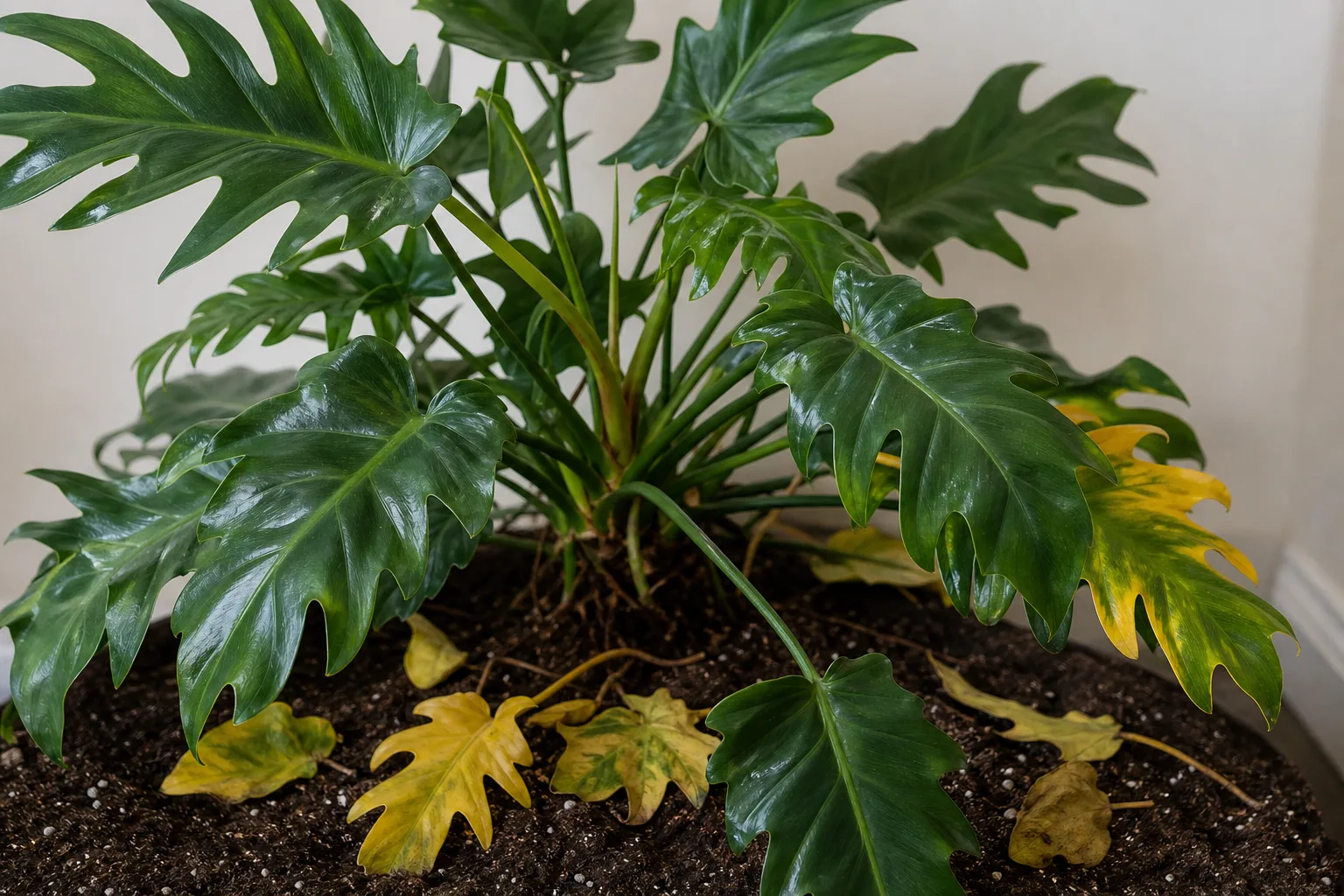
Leaf Drop on Philodendron Imperial Green: Causes, Checks & Fixes
This guide covers leaf drop on Philodendron Imperial Green. See also the general Leaf Drop guide, watering, and light pages for this plant.
Leaf Drop on Philodendron Imperial Green: Causes, Checks & Fixes
Quick answer
Leaf drop on Philodendron Imperial Green is usually stress from watering swings, relocation, or low light-not random bad luck. First step: check whether the top 3–5 cm is dry or wet, lift the pot for weight, and stabilize light and water before making other changes.
Philodendron erubescens ‘Imperial Green’ is a self-heading plant that holds a compact upright rosette of large glossy leaves. It sheds its oldest lower leaf occasionally as part of normal growth. The problem is pattern: when several leaves detach within days-especially green or yellow leaves from the lower crown while soil stays wet-the cause is usually root-zone stress, acclimation shock, or environmental instability rather than simple aging.
Why Philodendron Imperial Green drops leaves
Watering inconsistency is the leading indoor trigger. Clemson HGIC notes that yellowing of lower leaves and death of growing tips on philodendrons can result from too little light or overwatering. Imperial Green in a large decorative pot on a dim shelf may stay wet for two weeks after one watering-long enough for roots to decline and leaves to abscise from the bottom up.
Relocation and acclimation shock are common on self-heading philodendrons moved between rooms, shipped from a nursery, or repotted. Clemson HGIC describes leaf drop and yellowing from environmental shock when light, humidity, or temperature shift suddenly. Imperial Green often drops one to three outer leaves after a move even when care is mostly correct.
Low light weakens the rosette over time. Illinois Extension lists leaf drop among symptoms of inadequate light and overwatering. Imperial Green tolerates lower light than many aroids, but chronic dim placement plus heavy watering encourages the plant to shed leaves it cannot sustain.
Other causes include underwatering (less common but possible when soil goes bone dry between long intervals), cold drafts below 15°C, pest stress on new growth, and natural senescence of a single oldest leaf on an otherwise vigorous crown.
What leaf drop looks like on Philodendron Imperial Green
Leaf loss on Philodendron Imperial Green overview has distinct patterns depending on cause:
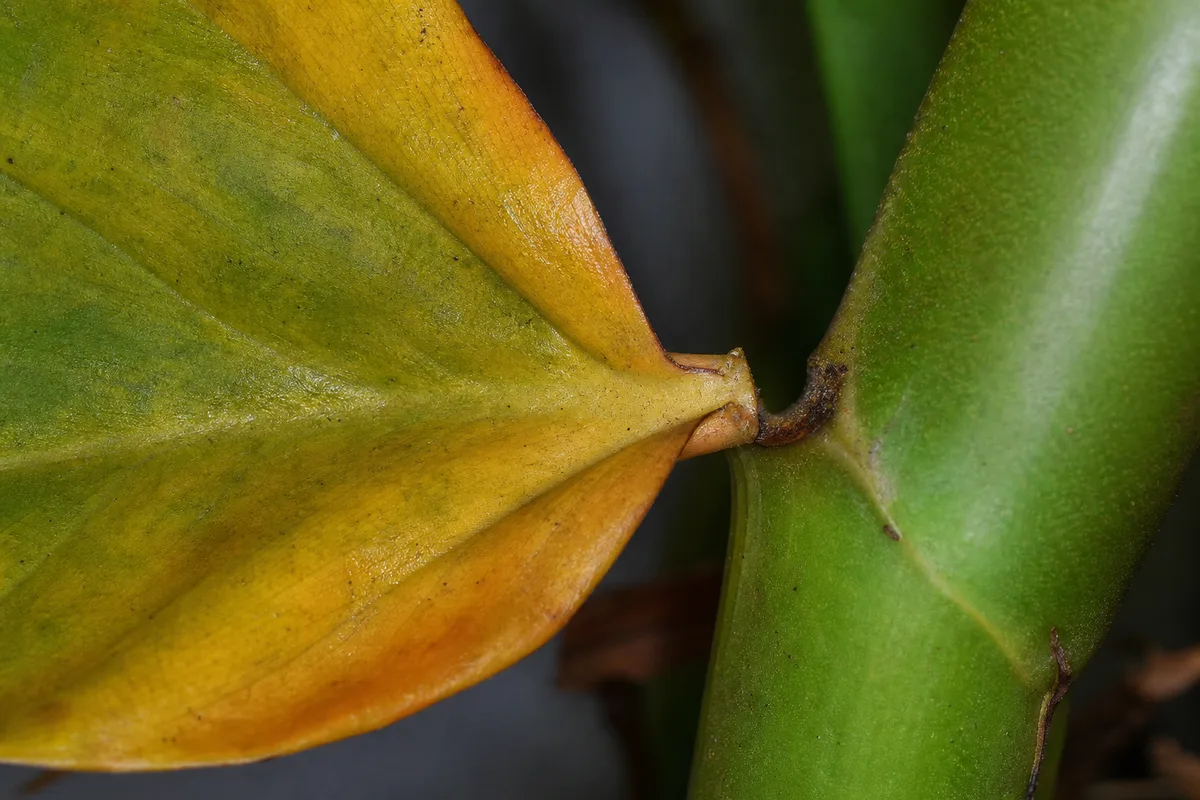
Leaf Drop symptoms on Philodendron Imperial Green - compare with healthy tissue on the same plant.
- Overwatering or root stress: Lower leaves yellow, soften, and detach; soil stays damp; pot feels heavy; sour smell in advanced cases
- Acclimation shock: Green or lightly yellow leaves drop soon after moving, shipping, or Philodendron Imperial Green repotting guide; crown may still feel firm
- Low light: Progressive thinning from lower and inner sections; petioles may elongate; soil moisture unremarkable
- Underwatering: Crispy leaf edges before drop; pot is light; soil pulls from sides
- Normal aging: One lowest leaf yellows and falls while new glossy growth stays firm at the crown
On Imperial Green, simultaneous loss of multiple leaves at the same height on the rosette usually signals a systemic issue-water, roots, or environment-not isolated damage on one paddle leaf.
How to confirm the cause
Work through this order before removing healthy foliage:
- Soil moisture - Probe the top 3–5 cm. Wet and heavy suggests overwatering; bone dry suggests drought.
- Pot weight and smell - Lift the pot. Sour odor from drainage holes points to root decay.
- Timeline - Did drop start within two weeks of a move, repot, heat wave, or watering change?
- Petiole bases - Press where petioles meet the crown. Soft tissue is serious.
- Light check - Confirm medium to Philodendron Imperial Green light guide for most of the day.
- Pest scan - Inspect new growth and leaf undersides for mites, mealybugs, or scale.
- Root inspection - Unpot only if multiple leaves drop quickly with wet soil; look for firm versus mushy roots.
Lookalike symptoms to rule out
A single dropped lowest leaf on an otherwise healthy rosette is often normal senescence-remove the spent petiole and watch for clean new growth. Yellow leaves without drop overlap with overwatering; treat with the same moisture diagnostic. Pest damage usually shows stippling or sticky residue before whole-leaf abscission.
First fix for Philodendron Imperial Green
Stabilize watering and environment before any other intervention. If soil is wet and leaves are dropping, stop watering immediately. Let the top 3–5 cm dry fully before the next drink. Empty standing water from the saucer. Do not repot, prune half the crown, and relocate on the same day.
For mild overwatering without sour smell:
- Move to brighter indirect light if the plant has been in a dim corner-this speeds drying without scorching glossy leaves.
- Improve airflow around the pot.
- Do not fertilize a stressed plant.
If several leaves drop within a week and soil smells sour, unpot, trim mushy roots, and repot into fresh mix with 20–25% perlite. Wait one week before watering again.
For acclimation drop after a recent move: keep light and water boring and stable for two to four weeks. UC IPM notes that sudden changes in light, temperature, or humidity can trigger leaf drop; adding more variables worsens recovery.
Recovery timeline
Mild acclimation drop often slows within one to two weeks once conditions stabilize. Overwatering-related loss may need four to six weeks after roots recover. Dropped leaves will not reattach; watch for firm new glossy leaves from the central crown. If drop continues despite dry soil and stable placement, inspect roots again.
What not to do
- Do not change watering, light, pot, and fertilizer all at once during active drop.
- Do not water because fallen leaves look “thirsty” while soil is still wet.
- Do not increase fertilizer to force new foliage.
- Do not assume a moss pole will help-Imperial Green is self-heading and does not climb.
- Do not ignore soft petiole bases; crown decline on self-heading philodendrons moves fast once started.
How to prevent leaf drop next time
Water when the top 3–5 cm is dry-typically every 7–10 days in summer and 10–14 days in winter, adjusted for your home. Use a pot sized to the root ball, mix with 20–25% perlite, and place in medium to bright indirect light. SDSU Extension recommends watering philodendrons when the top inch of soil is dry and reducing frequency in winter when growth slows.
Buffer the plant from HVAC vents and cold windows. When relocating, choose the final spot first and let the plant acclimate before further changes. Pour away saucer runoff after every watering.
When to worry
Escalate if drop spreads to new growth, petioles collapse at the crown, or loss accelerates while soil stays wet. Multiple leaves failing within seven to ten days on a heavy wet pot warrants immediate root inspection. Philodendron is toxic to pets-keep fallen leaves off floors where cats or dogs may chew them.
Conclusion
Leaf drop on Philodendron Imperial Green usually means the plant is under stress from water, light, relocation, or declining roots-not that it needs more attention in general. Confirm with soil moisture, pot weight, timeline, and crown firmness; stabilize one variable at a time; inspect roots if the pattern accelerates. Judge recovery by new glossy growth from the crown, not by expecting dropped leaves to return.
When to use this page vs other Philodendron Imperial Green guides
- Philodendron Imperial Green watering guide - Use for routine moisture checks before assuming leaf drop is the main issue.
- Philodendron Imperial Green problems hub - Browse all 8 common issues on this species.
- Yellow Leaves on Philodendron Imperial Green - Different entry point when symptoms overlap with leaf drop.
- Root Rot on Philodendron Imperial Green - Different entry point when symptoms overlap with leaf drop.
Related Philodendron Imperial Green guides
- Philodendron Imperial Green overview
- Philodendron Imperial Green watering
- Philodendron Imperial Green light
- Philodendron Imperial Green soil
- Yellow Leaves on Philodendron Imperial Green
- Root Rot on Philodendron Imperial Green
- Philodendron Imperial Green problems
- Ants on Plant on Philodendron Imperial Green