Yellow Leaves on Philodendron Imperial Green: Causes
Quick answer
Yellow leaves on Philodendron Imperial Green are most often caused by overwatering or poor drainage-especially when lower leaves yellow while the pot stays wet. First step: stop watering, check the top 3–5 cm for dryness, and inspect roots if several leaves yellow at once.
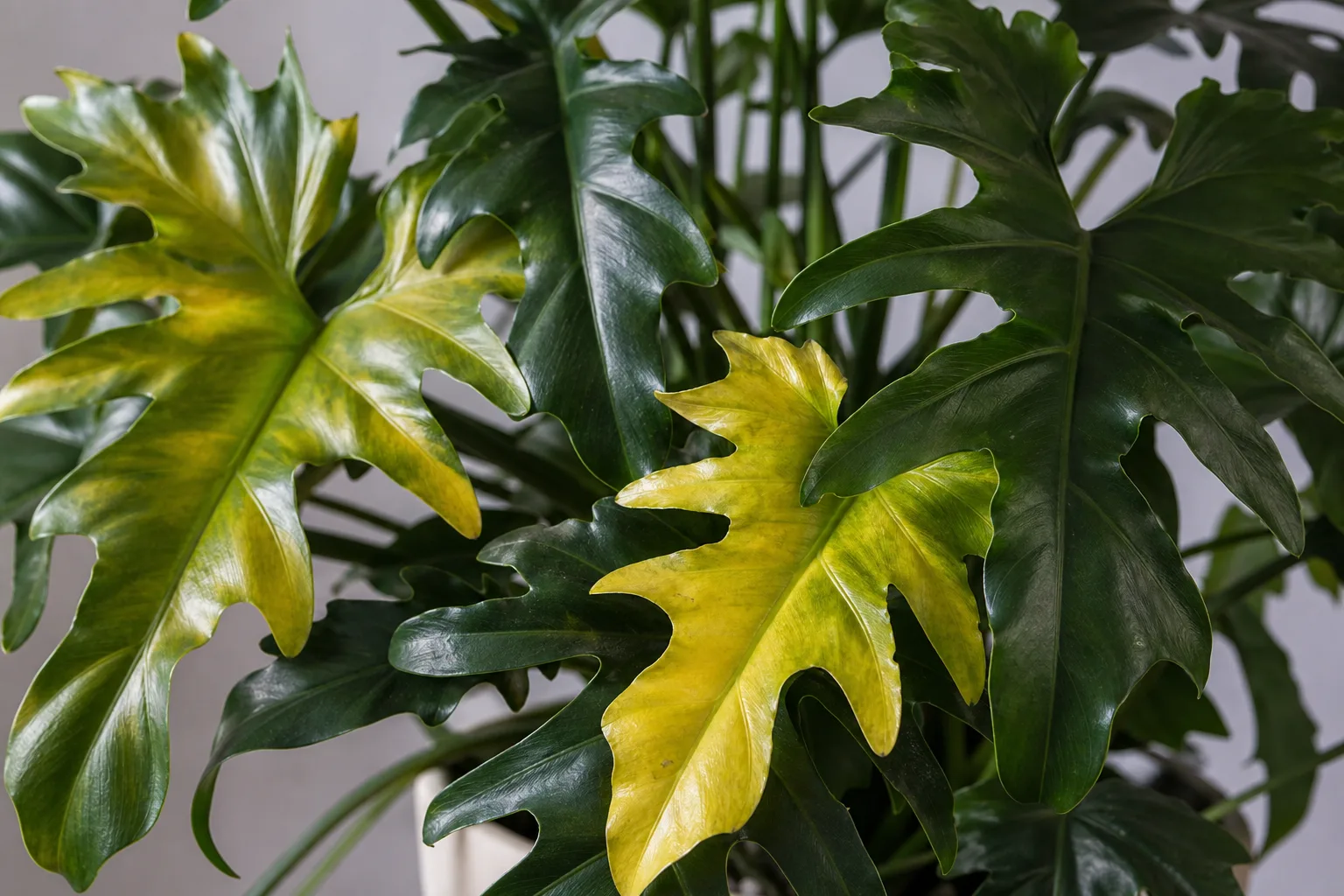
Yellow Leaves on Philodendron Imperial Green: Causes, Checks & Fixes
This guide covers yellow leaves on Philodendron Imperial Green. See also the general Yellow Leaves guide, watering, and light pages for this plant.
Yellow Leaves on Philodendron Imperial Green: Causes, Checks & Fixes
Quick answer
Yellow leaves on Philodendron Imperial Green are most often caused by overwatering or poor drainage-especially when lower leaves yellow while the pot stays wet. First step: stop watering, check the top 3–5 cm for dryness, and inspect roots if several leaves yellow at once.
Philodendron erubescens ‘Imperial Green’ sheds its oldest lower leaves occasionally as part of normal growth on a self-heading rosette. The problem is pattern: when several leaves yellow at once, especially while soil stays damp, the cause is usually root-zone stress rather than simple aging. Because Imperial Green does not vine, yellowing often starts at the bottom of the upright crown and works upward if overwatering continues unchecked.
Why Philodendron Imperial Green gets yellow leaves
Overwatering is the leading cause on Philodendron Imperial Green overview. Missouri Botanical Garden identifies overwatering as a frequent source of houseplant decline, with root damage that shows up as yellowing foliage even when the surface looks merely moist. Imperial Green in a large decorative pot on a dim shelf may stay wet for two weeks after one watering-long enough for roots to suffocate and leaves to yellow from the bottom up.
Poor drainage and compacted mix amplify the issue. Illinois Extension lists yellow leaves among top symptoms of overwatering alongside wilting and leaf drop. On a self-heading philodendron, several yellow lower leaves plus a heavy pot usually mean the root environment needs correction, not more water.
Low light slows water use without slowing your Philodendron Imperial Green watering guide. Penn State Extension notes that root rot and overwatering can cause yellowing and wilting even when you believe you are watering moderately. Imperial Green tolerates lower light than many aroids, but chronic dim placement plus frequent drinks is a reliable yellow-leaf recipe.
Other causes include underwatering (yellow leaves with dry, light soil), natural senescence of one or two oldest leaves, pest stress, and cold drafts below 18°C.
What yellow leaves look like on Philodendron Imperial Green
Yellowing on this plant has distinct patterns depending on cause:
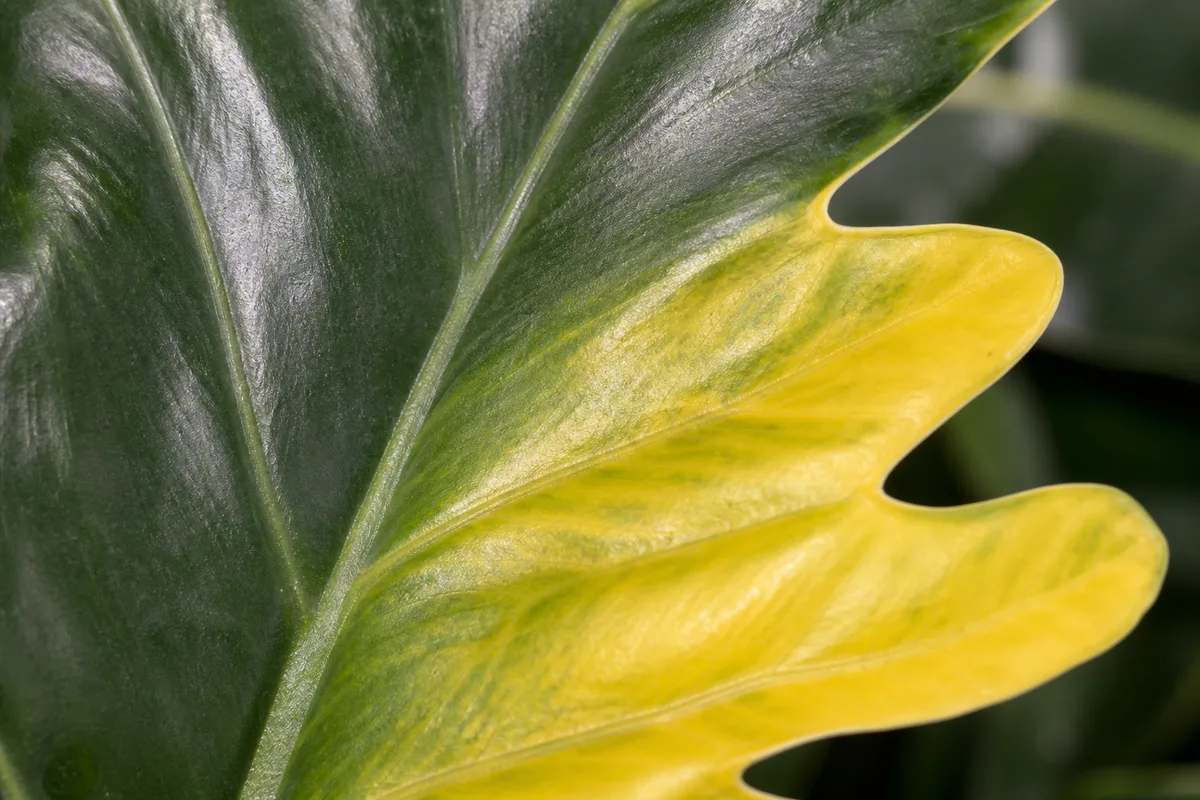
Yellow Leaves symptoms on Philodendron Imperial Green - compare with healthy tissue on the same plant.
- Overwatering: Lower leaves yellow first, often starting at tips or edges, while petioles may feel soft at the base; soil stays damp and pot feels heavy
- Underwatering: Leaves yellow with brown crispy margins; pot is light; soil pulls away from pot sides
- Normal aging: One lowest leaf yellows while crown and new growth stay firm and glossy
- Root rot overlap: on Philodendron Imperial Green Yellowing accelerates over days; sour soil smell; crown may feel less firm
- Pest stress: Stippling, sticky residue, or webbing on undersides alongside patchy yellow
On Imperial Green, uniform yellowing across multiple leaves at the same height often signals a systemic root or watering issue, not isolated sunburn on one paddle leaf.
How to confirm the cause
Work through this order before trimming yellow foliage:
- Soil moisture - Probe the top 3–5 cm. Wet and heavy suggests overwatering; bone dry suggests drought.
- Pot weight and smell - Lift the pot. Sour odor from drainage holes points to root decay.
- Light check - Confirm medium to Philodendron Imperial Green light guide for most of the day; dim corners slow drying.
- Petiole bases - Press where petioles meet the crown. Soft tissue is serious.
- Pest scan - Inspect leaf undersides and new growth for mites, mealybugs, or scale.
- Root inspection - Unpot only if multiple leaves yellow quickly with wet soil; look for firm versus mushy roots.
Lookalike symptoms to rule out
A single yellow lowest leaf on an otherwise vigorous plant is often normal senescence-remove it and watch for clean new growth. Nutrient deficiency is uncommon when Imperial Green is in fresh mix and not overwatered. Direct sun scorch shows as bleached or brown patches on exposed leaves, not uniform lower-leaf yellowing.
First fix for Philodendron Imperial Green
If soil is wet and leaves are yellowing, stop watering immediately. Let the top 3–5 cm dry fully before the next drink. Empty any standing water in the saucer.
For mild overwatering without sour smell:
- Move the plant to brighter indirect light if it has been in a dim corner-this speeds drying without scorching glossy leaves.
- Improve airflow around the pot.
- Do not fertilize a stressed plant; salts in dry pockets can burn roots further.
If several leaves yellow within a week and soil smells sour, unpot, trim mushy roots, and repot into fresh mix with 20–25% perlite. Wait one week before watering again.
Make one correction at a time. Do not repot, prune half the crown, and relocate on the same day.
Recovery timeline
Mild overwatering cases often stabilize within one to two weeks once the mix dries properly and watering pauses. Yellow leaves will not re-green; watch for firm new glossy leaves from the crown. Moderate root stress may need four to six weeks. If yellowing continues despite dry soil and corrected light, inspect roots again.
What not to do
- Do not remove all yellow leaves immediately-each cut stresses a recovering plant.
- Do not water because yellow leaves look “thirsty” while soil is still wet.
- Do not increase fertilizer to “green up” foliage.
- Do not assume a moss pole or support issue-Imperial Green is self-heading and does not climb.
- Do not ignore soft petiole bases; crown rot on self-heading philodendrons moves fast once started.
How to prevent yellow leaves next time
Water when the top 3–5 cm is dry-typically every 7–10 days in summer and 10–14 days in winter, adjusted for your home. Use a pot sized to the root ball, mix with 20–25% perlite, and place in medium to bright indirect light. Common houseplant problems often trace back to watering before checking soil moisture.
Pour away saucer runoff after every watering. Reduce frequency in winter or when the plant moves to a cooler room.
When to worry
Escalate if yellowing spreads to new growth, petioles collapse at the crown, or soil smells sour despite dry surface soil. Multiple leaves failing within seven to ten days on a wet pot warrants immediate root inspection. Philodendron is toxic to pets-keep fallen yellow leaves off floors where cats or dogs may chew them.
Conclusion
Yellow leaves on Philodendron Imperial Green usually mean the root zone is too wet, too dry, or declining from poor drainage-not that the plant needs more care in general. Confirm with soil moisture, pot weight, and crown firmness; fix watering and light first; inspect roots if the pattern accelerates. Judge recovery by new glossy growth, not by old yellow leaves turning green again.
When to use this page vs other Philodendron Imperial Green guides
- Philodendron Imperial Green watering guide - Use for routine moisture checks before assuming yellow leaves is the main issue.
- Philodendron Imperial Green problems hub - Browse all 8 common issues on this species.
- Root Rot on Philodendron Imperial Green - Different entry point when symptoms overlap with yellow leaves.
Related Philodendron Imperial Green guides
- Philodendron Imperial Green overview
- Philodendron Imperial Green watering
- Philodendron Imperial Green light
- Philodendron Imperial Green soil
- Root Rot on Philodendron Imperial Green
- Philodendron Imperial Green problems
- Ants on Plant on Philodendron Imperial Green
- Brown Tips on Philodendron Imperial Green