Brown Tips on Philodendron Imperial Green: Causes, Checks &
Quick answer
Brown tips on Philodendron Imperial Green are usually caused by low humidity, inconsistent watering, or salt buildup in dry indoor air. First step: raise humidity toward 50–60%, water when the top 3–5 cm is dry, and flush the pot if fertilizer salts may be involved.
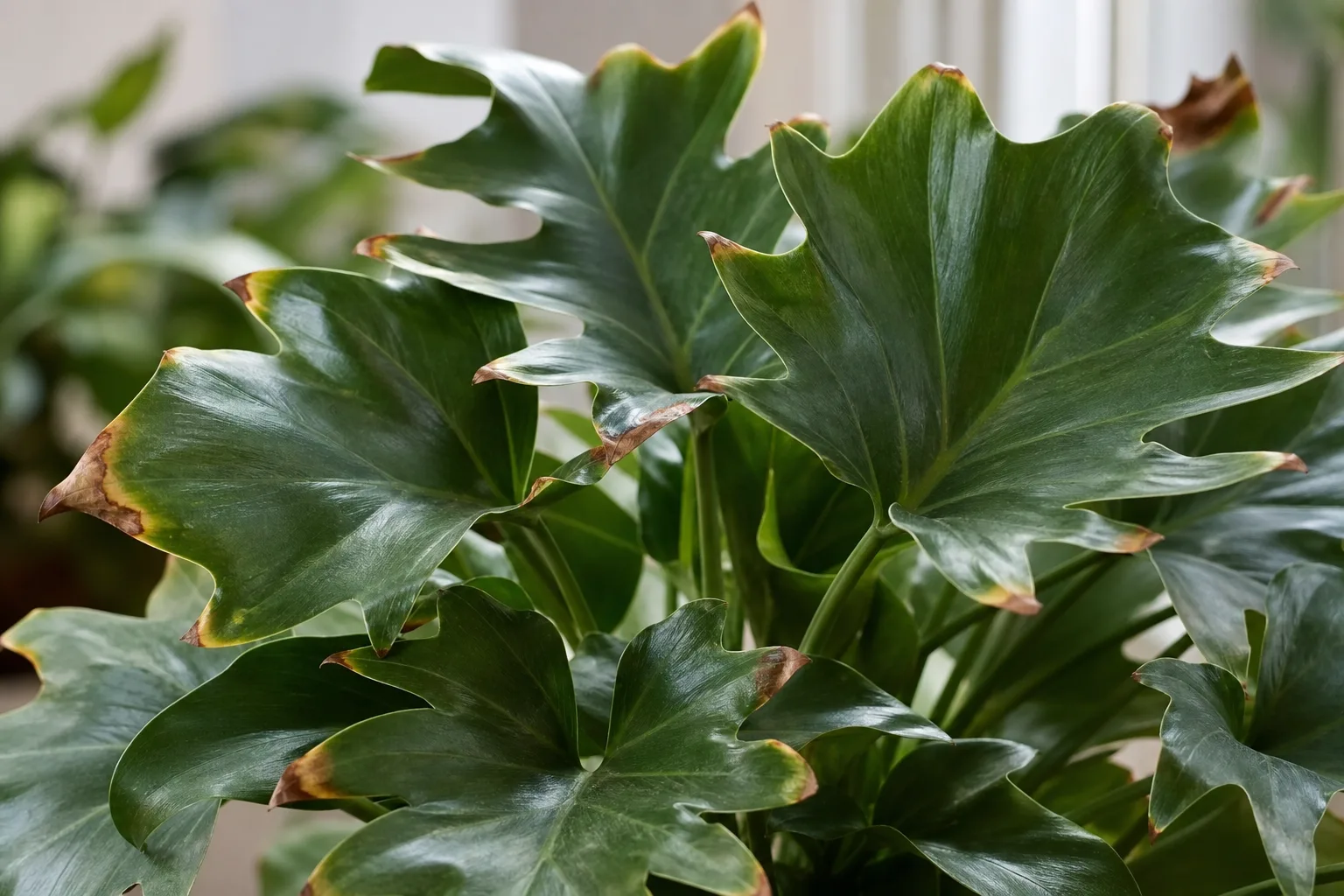
Brown Tips on Philodendron Imperial Green: Causes, Checks & Fixes
This guide covers brown tips on Philodendron Imperial Green. See also the general Brown Tips guide, watering, and light pages for this plant.
Brown Tips on Philodendron Imperial Green: Causes, Checks & Fixes
Quick answer
Brown tips on Philodendron Imperial Green are usually caused by low humidity, inconsistent watering, or salt buildup in dry indoor air. First step: raise humidity toward 50–60%, water when the top 3–5 cm is dry, and flush the pot if fertilizer salts may be involved.
Imperial Green carries large, glossy paddle-shaped leaves with substantial surface area. In heated winter rooms where humidity drops below 40%, moisture exits leaf tips faster than the plant can replace it-especially when roots are also stressed by irregular watering. Brown tips are often cosmetic, but they signal that air or water balance needs attention before damage spreads to leaf margins.
Why Philodendron Imperial Green gets brown tips
Low humidity is the most common trigger. Missouri Botanical Garden’s common indoor plant problems guide notes that dry air causes leaf tip burn on many foliage plants. Imperial Green targets 50–60% humidity; office HVAC and winter heating often deliver 25–35%, which browns tips on the largest leaves first.
Inconsistent watering contributes. Illinois Extension troubleshooting guidance links brown leaf tips to underwatering and salt buildup as well as low humidity. Alternating long dry spells with heavy soaking stresses large philodendron leaves; tips are the first tissue to desiccate when roots cannot supply steady moisture.
Salt and fertilizer buildup concentrates at leaf margins. Penn State Extension notes that over-fertilization and soluble salts can burn leaf edges on indoor plants. Imperial Green fed heavily in a small pot without occasional flushing may show tip burn even when humidity is acceptable.
Other causes include direct sun scorch on exposed leaf tips, cold drafts, and fluoride or chlorine sensitivity in tap water-less common but worth noting if only new leaves show tip burn after Philodendron Imperial Green repotting guide with fresh mix.
What brown tips look like on Philodendron Imperial Green
Tip burn on Philodendron Imperial Green overview is usually distinct from other damage:
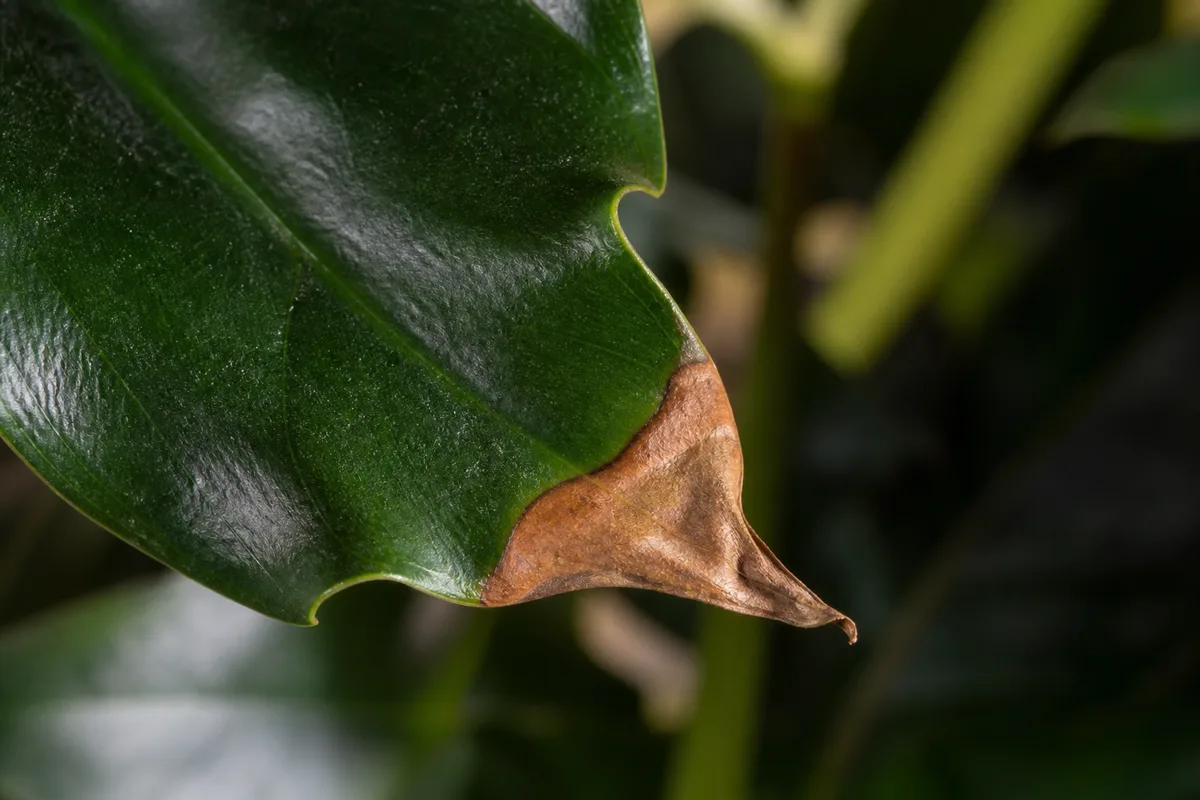
Brown Tips symptoms on Philodendron Imperial Green - compare with healthy tissue on the same plant.
- Low humidity: Dry, papery brown tips on otherwise glossy green leaves; often worst on the largest outer leaves near heat sources
- Underwatering: Brown tips plus crispy margins and slight leaf curl; pot feels light
- Salt burn: Browning after recent feeding; may affect multiple leaves at similar positions; crusty white deposits on soil surface possible
- Sun scorch: Bleached or tan patches on the side facing a window, not isolated tip burn alone
On Imperial Green, tips browning while the crown produces healthy new glossy leaves usually points to environmental air dryness, not crown rot.
How to confirm the cause
- Humidity reading - Place a meter near the rosette. Below 40% with winter heating running supports low humidity.
- Watering history - Note whether soil went very dry between drinks or stayed wet too long.
- Fertilizer timing - Did tips brown within two weeks of feeding?
- Placement - Check distance from vents, radiators, and direct afternoon sun.
- Whole-plant health - Firm crown and firm petioles rule out root rot on Philodendron Imperial Green as the primary cause.
Lookalike symptoms to rule out
Fungal leaf spots show as round brown patches with yellow halos, not uniform tip crisping. Pest stippling from spider mites creates fine yellow speckles before bronzing. Root rot causes yellowing and soft petioles, not isolated tip burn on an otherwise firm plant.
First fix for Philodendron Imperial Green
Raise humidity toward 50–60%:
- Run a humidifier near the plant, or group it with other houseplants.
- Move the pot away from heating vents and drafty doorways.
- A pebble tray adds modest humidity but is not a substitute for a humidifier in very dry rooms.
Correct watering: soak when the top 3–5 cm is dry, then empty the saucer. Do not let the plant sit in drought for weeks between heavy drinks.
If you suspect salt buildup, flush the pot by watering slowly until excess runs freely from drainage holes two or three times in one session. Pause fertilizer for four to six weeks.
Trim brown tips with clean scissors, following the natural leaf curve-do not cut into living green tissue.
Recovery timeline
Humidity and watering corrections show in new leaves within four to eight weeks. Existing browned tips will not recover cosmetically. One or two trimmed leaves are fine; wait for two clean new leaves before declaring the fix successful.
What not to do
- Do not mist heavily as your only humidity fix-surface moisture evaporates quickly and can encourage foliar issues in stagnant air.
- Do not overwater because tips look dry; wet soil with brown tips usually means salts or humidity, not drought.
- Do not increase fertilizer to “heal” tips-that worsens salt burn.
- Do not place Imperial Green in direct hot sun to compensate for low humidity; glossy leaves scorch easily.
How to prevent brown tips next time
Maintain 50–60% humidity year-round, especially October through March. Water on dryness checks, not calendar dates. Feed lightly during active growth only, and flush the pot every few months if you fertilize regularly. Bringing houseplants indoors for winter often exposes them to much drier air-plan humidity before tips brown.
Keep the plant in medium to Philodendron Imperial Green light guide without hot afternoon sun on the leaves.
When to worry
Brown tips alone are low severity. Escalate if browning spreads into large dead patches, multiple leaves yellow, or petioles soften at the crown. Those patterns suggest root or watering problems beyond humidity. Wear gloves when trimming-philodendron sap contains calcium oxalate crystals that irritate skin.
Conclusion
Brown tips on Philodendron Imperial Green usually mean the air is too dry, watering is uneven, or salts are accumulating-not that the plant is dying. Raise humidity to 50–60%, stabilize watering when the top 3–5 cm dries, and trim old damage. Judge success by clean edges on new glossy leaves, not by old tips re-greening.
When to use this page vs other Philodendron Imperial Green guides
- Philodendron Imperial Green watering guide - Use for routine moisture checks before assuming brown tips is the main issue.
- Philodendron Imperial Green problems hub - Browse all 8 common issues on this species.
- Yellow Leaves on Philodendron Imperial Green - Different entry point when symptoms overlap with brown tips.
Related Philodendron Imperial Green guides
- Philodendron Imperial Green overview
- Philodendron Imperial Green watering
- Philodendron Imperial Green light
- Philodendron Imperial Green soil
- Yellow Leaves on Philodendron Imperial Green
- Philodendron Imperial Green problems
- Ants on Plant on Philodendron Imperial Green
- Leaf Miners on Philodendron Imperial Green