Philodendron Imperial Green Repotting: When, How
Philodendron Imperial Green Repotting: When, How, and Mistakes to Avoid
Philodendron Imperial Green Repotting: When, How, and Mistakes to Avoid
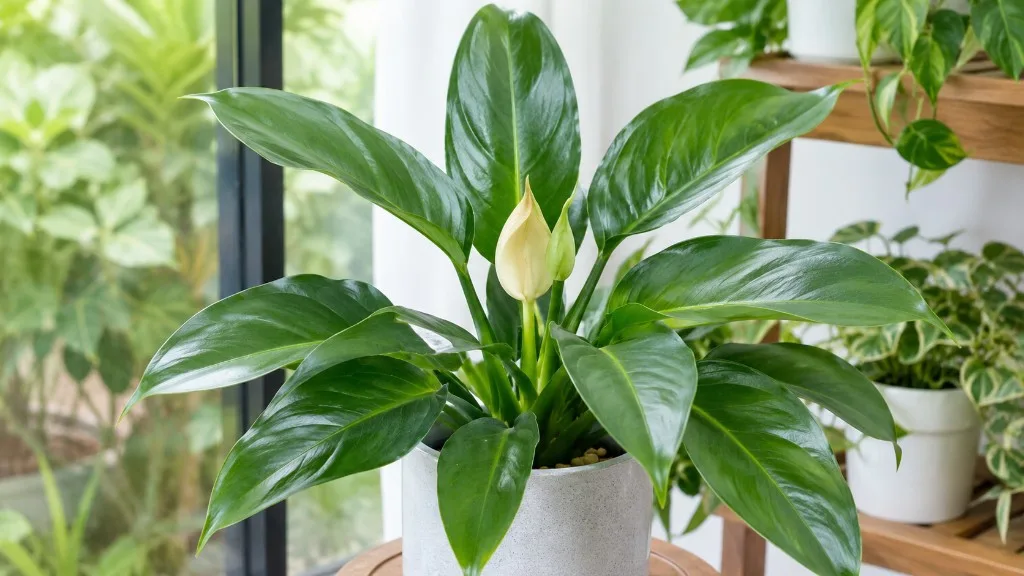
Philodendron Imperial Green repotting is not the same job as refreshing a trailing heartleaf in a hanging basket. Imperial Green is a self-heading Philodendron erubescens hybrid - a compact upright rosette with large glossy leaves on a short crown, often grown as a floor specimen that can reach 60–100 cm (2–3 ft) indoors. When roots outgrow the nursery pot, the challenge is not finding a moss pole; it is moving a top-heavy crown into fresh, airy mix without oversizing the container, disturbing the root ball more than necessary, or trapping moisture in a decorative cachepot that hides drainage problems until lower leaves yellow.
Most Imperial Green repotting failures trace back to three predictable errors: jumping two or three pot sizes because the plant looks impressive, bare-rooting or aggressively washing away fine roots, and watering on the old schedule while the new pot holds unused wet volume the root ball cannot yet colonize. This guide covers when a self-heading specimen actually needs repotting, the one pot size up rule with explained rationale, top-dress versus full repot for mature floor displays, a numbered step-by-step procedure for floor plants and cachepot setups, root-health decisions at unpot time, post-repot watering tied to Imperial Green soil and watering guides, and the Imperial Red identity check that catches mislabeled stock when you finally see the root crown.
Quick Answer
Repot Philodendron Imperial Green when two or more signs appear together: roots circling drainage holes or the pot bottom, water running straight through without wetting the root ball, growth stalling despite adequate light and feeding, or the plant drying out unusually fast because roots have consumed most of the mix. A practical check interval is every 12–18 months for fast-growing floor specimens - a heuristic, not a calendar rule. Spring and early summer are the safest windows when the plant is in active growth. Go one pot size up only - roughly 2–5 cm (1–2 inches) wider in diameter - with fresh standard potting mix plus 20–25% perlite (see soil guide). Hold fertilizer for at least four weeks after repotting and expect mild transplant shock for 1–2 weeks, with full root re-establishment in 4–6 weeks.
Why Self-Heading Imperial Green Repotting Is Different
Trailing philodendrons show stress early: stems wilt, leaves curl, and growers notice dryness within days. Self-heading Imperial Green keeps a firm upright crown even when roots are circling tightly or sitting in stale mix below. Lower leaves may yellow while new upper leaves still look glossy - a pattern that makes growers delay repotting until the problem is harder to reverse. The plant also fills vertical space fast: a happy Imperial Green can push large new leaves every few weeks in bright indirect light, which means a correctly sized pot from last spring may feel crowded again by autumn even though the crown still looks balanced.
UF/IFAS Gardening Solutions groups Imperial Green with hybrid self-heading philodendrons - large spade-shaped leaves on an upright habit rather than a vining stem. That growth form changes repot physics: you are stabilizing a wide, shallow-effective root zone under a heavy leaf canopy, not training aerial roots up a pole. UF/IFAS recommends stout containers for large self-heading philodendrons because top-heavy foliage can tip narrow pots - a stability check matters as much as mix quality when you upsize a floor specimen.
Compact Root Ball vs. Trailing Philodendrons
Imperial Green develops a dense, compact root ball under a short stem crown. Trailing types often tolerate more root disturbance because new adventitious roots form along stems; self-heading types rely on the existing root mass for water uptake until new white tips appear after repot. That is why gentle handling beats aggressive bare-rooting: tease circling roots at the bottom and sides, keep most of the old mix attached to fine roots, and trim only what is clearly dead or rotting. Climbing philodendrons may recover from harsh root work; Imperial Green often responds with sustained wilting and leaf drop when too much of the absorbing surface is stripped at once.
When to Repot Philodendron Imperial Green
Treat repotting as a diagnosis-driven decision, not an annual ritual on a fixed date. Imperial Green tolerates moderate root confinement better than an oversized pot full of wet, unused mix - the more dangerous error for self-heading specimens in dim offices is almost always over-potting, not waiting one extra month while roots are merely snug.
Signs You Actually Need a New Pot
Plan a full repot when two or more of these appear together:
- Roots circling the drainage holes, the pot bottom, or the surface - visible when you lift the nursery pot or slip it out of a cachepot
- Water runs straight through in seconds without evenly wetting the root ball - a sign of compacted peat, exhausted mix, or a root mat blocking absorption
- Growth stalls despite proper light and appropriate feeding - new leaves emerge small, spaced far apart, or stop entirely
- Dry-down accelerates - the pot feels light again in 3–4 days when it used to take 7–10, because roots have consumed most of the soil volume
- Salt crust or sour smell on old mix - white mineral buildup on the surface or a musty odor from the drainage hole suggests exhausted substrate
- Chronic lower leaf yellowing on wet soil after you have corrected watering - may indicate root decline that requires inspection and fresh mix
A single older yellow leaf at the base is often normal senescence. Repeated lower yellowing with a heavy pot usually means the root environment - not the calendar - needs attention. If multiple lower leaves yellow while soil stays wet for more than ten days, unpot the same day and inspect roots - do not wait for spring.
Top-Dress vs. Full Repot Decision
Not every snug Imperial Green needs a larger pot. For mature floor specimens in heavy cachepot displays you cannot easily enlarge, top-dressing - scraping off the top 3–5 cm (1–2 inches) of old mix and replacing it with fresh perlite-amended blend - often buys one full growing season without destabilizing the display.
| Situation | Top-dress only | Full repot (one size up) | Division at repot |
|---|---|---|---|
| Roots white and firm; mix exhausted at surface only | Yes - spring or early summer | Optional next season | No |
| Water runs through in seconds; circling roots at bottom | No | Yes | Only if multi-crown offsets visible |
| Irreplaceable large cachepot; plant stable and growing | Yes - refresh inner nursery mix if possible | Only when inner pot truly outgrown | Rarely |
| Mushy roots, sour smell, multiple lower leaves yellow on wet soil | No - emergency unpot | Yes - same or smaller pot + extra perlite | No until rot cleared |
| Hydrophobic dry brick in center | Partial soak + top-dress may fail | Yes - full refresh with pre-moistened mix | No |
Top-dress alone works when the root ball is still healthy at the edges, growth is active, and your goal is to reset the upper mix layer without changing pot geometry. Full repot is mandatory when drainage has failed through the whole root zone, roots circle heavily at the bottom, or dry-down has become unpredictable. When in doubt on a prized floor display, top-dress in spring and schedule a full repot for the following year if circling roots persist - that beats oversizing a cachepot display in one dramatic move.
Best Time of Year to Repot Imperial Green
Spring and early summer are the safest windows - roughly March through June in the Northern Hemisphere - when days lengthen, temperatures rise, and Imperial Green enters its most active leaf production. NC State Extension aligns philodendron container maintenance with the start of the growing season, when roots can regenerate white tips quickly in fresh mix. The NC State Gardener Handbook notes repotting is best done in early spring, before active growth - the same window applies to houseplants moved indoors.
Early fall can work for mild climates or warm indoor homes if the plant is clearly root-bound and you can keep it in bright indirect light with stable temperatures. Avoid winter repotting unless the plant has severe root-bound stress, active root rot, or hydrophobic mix that no longer absorbs water - winter adds recovery time when growth is slow and wet mix stays cold longer. If you must repot in winter for rot, use the smallest appropriate pot, maximum perlite aeration, and reduce watering until new growth confirms recovery.
What You Need: Pot, Soil, and Tools
Gather everything before you unpot - a self-heading floor plant is awkward to hold mid-procedure with loose mix falling on carpet.
Pot: One size larger in diameter only - about 2–5 cm (1–2 inches) wider than the current container. NC State’s container handbook recommends a container one size larger in diameter when potting up; two sizes only for vigorously growing species - Imperial Green rarely qualifies indoors. Must have drainage holes. For floor specimens, choose a wide, stable base rather than a tall narrow cylinder that tips when leaves enlarge. As a stability rule of thumb, the pot outer diameter should be at least half the current leaf spread - a 60 cm-wide leaf canopy wants a pot no narrower than 30 cm at the rim, even if roots would fit a smaller cylinder.
Soil: Fresh standard indoor potting mix plus 20–25% perlite by volume - three parts mix to one part perlite as the default (full recipes in the Imperial Green soil guide). Do not reuse exhausted mix.
Tools: Hand trowel, clean sharp scissors or pruning shears, chopstick or pencil for settling mix, watering can with narrow spout, optional tarp or table cover for floor specimens, gloves if sap irritates your skin.
Optional: Sterilized blade if dividing a multi-stem plant at repot - link to propagation guide for division aftercare.
Step-by-Step: How to Repot Philodendron Imperial Green
Worked scenario: A 25 cm (10 inch) floor Imperial Green in a plastic nursery pot, circling roots at the bottom, water running through in seconds, still pushing one new leaf every three weeks. Repot in April into a 27–30 cm (11–12 inch) pot - one size up, not a dramatic 35 cm decorative upgrade.
-
Water lightly the day before - moist (not soggy) mix helps the root ball hold together when you slide the plant out. Bone-dry peat crumbles; soaking wet mix smears and hides root color.
-
Prepare the new pot - add enough fresh mix at the bottom so the crown will sit at the same depth as before. Never bury the self-heading stem deeper than it grew originally.
-
Remove the plant - tilt the pot, support the crown with one hand, tap or squeeze the nursery pot sides. For cachepots, lift the inner nursery pot out first - never pull by petioles.
-
Inspect the root ball - healthy roots are white to tan, firm, and earthy-smelling. Brown, black, mushy, or foul-smelling sections need trimming before repotting. Use the decision tree below.
-
Tease circling roots gently - loosen the bottom third and outer edges with fingers. Do not bare-root or wash all mix away. NC State advises breaking encircling root patterns by teasing apart or making vertical cuts along the root ball side - never leave roots molded to the old pot shape.
-
Place in the new pot centered - the crown should sit level. Fill around the sides with fresh mix, tapping the pot lightly to settle without compacting.
-
Settle mix with a chopstick - push mix into gaps around the root ball without stabbing through healthy roots. Leave 1–2 cm below the rim for watering space.
-
First watering - water lightly until a small amount runs from drainage holes. Empty saucers and cachepots within 15 minutes. Do not soak repeatedly the first week.
-
Placement - return to the same bright indirect light the plant had before. Avoid hot direct sun and cold drafts for two weeks.
-
Hold fertilizer for at least four weeks - roots need to colonize new mix before feeding resumes per the fertilizer guide.
Worked Scenario: 25 cm Floor Specimen
Recovery log (editorial observation, April repot): Day 1 - one lower leaf drooped slightly; crown firm. Day 7 - no new wilt; top 4 cm dry on schedule. Day 14 - transplant shock eased; one old lower leaf yellowed and was removed. Day 35 (week 5) - first new glossy leaf emerged at normal size, pot weight increasing evenly after watering. Day 42 - resumed quarter-strength fertilizer after second new leaf confirmed establishment. This timeline matches the 4–6 week re-establishment window labeled in How We Reviewed - your room’s light and pot material will shift the dates, but new leaf emergence is the signal that matters, not old blemishes healing.
Floor Specimen vs. Cachepot Upgrade
Many Imperial Green floor displays use a nursery pot inside a decorative cachepot with no drainage. At repot time, prioritize the inner pot:
- Same cachepot, new nursery pot one size up - safest upgrade when the outer shell is already heavy and stable
- Refresh mix only, same nursery pot - often the best fix for compacted peat in a mature display you do not want to enlarge
- Move to a larger cachepot - only when the inner nursery pot has outgrown the shell and tips the display; verify the new outer pot still allows you to lift the nursery pot out for watering checks
Never repot directly into a sealed decorative pot without drainage holes. Illinois Extension is clear: containers need drainage so excess water exits and oxygen returns to the root zone. If you must use cachepots, always remove the nursery pot to water, drain fully, then return - the same rule as the watering guide cachepot section.
Root Inspection and Trim Decision Tree
| What you see | Action |
|---|---|
| White firm roots, circling only | Tease bottom loops, trim nothing or snip a few tight circling tips - repot one size up |
| Brown mushy roots, sour smell | Emergency: stop watering, trim all mushy tissue back to firm white, repot into same or smaller pot with extra perlite - see root-rot protocol below |
| Salt crust, dense but firm roots | Top-dress or full repot with fresh mix; same pot size is fine |
| Hydrophobic dry brick | Soak root ball 20–30 minutes in lukewarm water, drain, then repot with fresh mix |
| Multiple crowns / offsets | Optional division at repot - see propagation |
When the decision table routes to mushy roots: treat it as root rot, not routine repot stress. Unpot immediately, cut away all brown mushy tissue until you reach firm white roots, discard saturated old mix, and repot into the smallest pot that fits the trimmed root ball with 30%+ perlite. Do not fertilize, do not upsize “to help recovery,” and do not wait for spring if multiple lower leaves are yellowing on wet soil. Full step-by-step recovery - drying intervals, when to water again, and when the plant is beyond salvage - lives in the Imperial Green root rot guide.
Iowa State Extension notes philodendrons grow well in containers large enough to stay upright - that supports wide-based floor pots, not oversized depth that holds stagnant moisture.
Soil Mix for Repotting
Repotting is the right moment to reset mix structure, not to copy whatever exhausted peat was in the old pot. Imperial Green wants moist, well-drained soil rich in organic matter - NC State Extension language that translates indoors to peat- or coir-based potting soil amended with perlite, not straight bagged mix alone.
Default repot blend: 3 parts quality indoor potting mix + 1 part perlite (~25%) by volume. In dim offices or large floor cachepots that dry slowly, push toward 2 parts mix + 1 part perlite (~33%). In warm bright rooms with terracotta, 20% perlite plus optional 10% fine orchid bark is often enough. Full scenario tables live in the dedicated Imperial Green soil guide.
After repot, expect slower dry-down for 4–6 weeks while roots colonize the new volume - the same window where fast vertical growth can suddenly accelerate water use once roots reach the pot edges. Adjust watering by pot weight, not the calendar you used before repot.
Signs Your Repot Worked - and When Something Went Wrong
Success signals within 2–4 weeks: firm crown with no sustained wilting, white root tips visible if you gently slip the nursery pot out, new leaf emerging at normal size and spacing, pot weight increasing gradually as roots take up moisture evenly, and no sour smell from drainage holes.
Problem signals: sustained wilting beyond 2–3 weeks, multiple lower leaves yellowing and dropping, new leaves emerging small or distorted, mix staying wet and cold more than ten days after a light watering, or soft petioles at the crown. The most common causes are pot too large, overwatering on the old schedule, bare-rooting damage, or repotting into a cachepot that traps runoff.
If several problem signs appear together, stop watering, confirm drainage, check whether the new pot is oversized, and inspect roots. Partial recovery often means holding water longer and keeping stable light - but mushy roots require the root rot protocol, not patience alone.
Recovery Timeline After Repotting
Days 1–7: Mild wilt or leaf droop is normal. Keep light stable, water lightly when the top 3–5 cm feels dry - err slightly dry rather than wet in a fresh larger volume.
Weeks 2–3: Transplant shock should ease. One older lower leaf may yellow and drop; that is not automatically failure.
Weeks 4–6: Roots colonize new mix. New glossy leaf emergence is the clearest all-clear signal. Resume fertilizer only after you see active new growth and the pot dries on a predictable rhythm.
Damaged leaves do not heal backward - judge recovery by new growth, not old blemishes.
Common Philodendron Imperial Green Repotting Mistakes
Oversized pot: The single most damaging error for self-heading floor plants. Extra mix stays wet while roots occupy a small fraction of the volume - lower leaves yellow on damp soil, and root rot follows. One size up only.
Bare-rooting: Washing away all old mix strips fine root hairs that absorb water. Keep the root ball intact except for trimmed rot or teased circling loops.
Burying the crown: Self-heading philodendrons rot when stem tissue sits below mix level. Repot to the same depth as before.
Immediate heavy watering: Repeated soaks the first week saturate mix roots cannot yet use. One light settling water, then wait for partial dry-down.
Fertilizing too soon: Fresh roots in new mix burn easily. Wait until new growth confirms establishment.
Repotting day one after purchase: The overview guide recommends quarantine and observation first unless mix is failing or pests are obvious. Learn dry-down speed before adding transplant stress.
Disturbing the crown: Do not pull leaves or twist the rosette to free the pot. Support the root ball and crown together.
Skipping stability check: A new pot narrower than the leaf spread tips as the crown enlarges - match pot width to display footprint, not just root volume.
Imperial Green vs. Imperial Red at Unpot Time
Repotting is the first time many growers see new leaf color clearly without nursery labels. Imperial Green (Philodendron erubescens ‘Imperial Green’) produces glossy green leaves from emergence to maturity - no burgundy flush on new growth. Imperial Red pushes wine-burgundy or bright red new leaves that mature to dark green, often with reddish undersides (NC State Extension describes the parent species’ red-leaf variants).
If your labeled Imperial Green produces burgundy new leaves after repot stress, you likely have Imperial Red or mislabeled stock - not a care failure. Care requirements are nearly identical; ID matters for expectations and display planning. Both stay self-heading without a moss pole.
Pet and Child Safety During Repotting
Philodendron Imperial Green contains insoluble calcium oxalate crystals - the ASPCA lists philodendrons as toxic to cats and dogs, causing oral irritation, drooling, and difficulty swallowing if chewed (ASPCA philodendron listing). Sap can irritate human skin and eyes during repot - wear gloves if you are sensitive, wash hands after handling cut tissue, and keep children away from trimmings on the floor.
Work on a table pets cannot reach. Bag and discard pruned roots and leaves promptly. If ingestion is suspected, contact your veterinarian and ASPCA Animal Poison Control at (888) 426-4435 (US fee may apply) - the same guidance in the overview FAQ. Imperial Green is best treated as an elevated display plant, not a floor pot in pet households.
When to use this page vs other Philodendron Imperial Green guides
- Philodendron Imperial Green overview - Start here for whole-plant context before deep-diving this topic.
- Philodendron Imperial Green problems hub - Jump to symptom-specific fix guides when this care topic does not resolve the issue.
- Root Rot on Philodendron Imperial Green - Escalate here when repotting adjustments are not enough.
Related Philodendron Imperial Green guides
- Philodendron Imperial Green overview
- Philodendron Imperial Green watering
- Philodendron Imperial Green light
- Philodendron Imperial Green soil
- Philodendron Imperial Green propagation
- Philodendron Imperial Green fertilizer
- Root Rot on Philodendron Imperial Green
- Philodendron Imperial Green problems
Repotting FAQs
Does Imperial Green need a bigger pot than a trailing philodendron?
Not necessarily wider at the same age - but self-heading Imperial Green often moves into heavier floor pots sooner because the upright crown and large leaves need a stable base. Trailing types may live longer in the same hanging pot while stems lengthen. The one-size-up rule applies to both; the difference is pot shape and stability, not a license to jump two sizes for Imperial Green.
Can I divide a multi-stem Imperial Green at repot time?
Yes, if you see clearly separate crowns with their own root systems at unpot. Use a clean sharp knife to separate offsets, pot each division in its own container with fresh perlite-amended mix, and follow reduced watering during the four-to-six-week recovery window. See the Imperial Green propagation guide for division aftercare and when not to split a stressed plant.
How do I keep a tall self-heading Imperial Green stable after repot?
Choose a pot with a wide base relative to height - aim for rim diameter at least half the leaf spread - center the root ball, and settle mix evenly around all sides so the plant does not lean. Avoid top-heavy decorative cachepots narrower than the leaf spread. Rotate the pot a quarter turn weekly for the first month so new root growth is balanced. Do not stake the crown unless the root ball was severely trimmed - stability should come from the container, not ties on petioles.
What perlite ratio should I use when repotting Imperial Green?
Start with 20–25% perlite - three parts indoor potting mix to one part perlite by volume. In dim offices or large floor pots that stay wet longer than ten days after watering, increase toward 30–33% perlite. In bright warm rooms with terracotta, 20% plus optional 10% fine orchid bark is often enough. Match the blend to your room’s dry-down speed using the Imperial Green soil guide drainage test.
Is my plant Imperial Green or Imperial Red after repotting?
Check new leaf color at the next emergence, not stress-yellowed older leaves. Imperial Green stays green from bud to maturity. Imperial Red pushes burgundy or wine-red new leaves that later darken to green, often with reddish undersides. If burgundy new growth appears on a plant labeled Imperial Green, you likely have Imperial Red or mislabeled stock - care is nearly identical, but expectations for foliage color differ.
Conclusion
Choose top-dress when roots are still firm and you need one more season from a stable floor display; choose full repot one size up when water runs through in seconds, circling roots block the bottom, or dry-down has become unpredictable. Escalate to the root-rot protocol the same day if multiple lower leaves yellow on wet soil and roots are mushy at unpot - spring timing is irrelevant when rot is active. For everything else in the Imperial Green cluster, use the related guides above rather than stacking repot, fertilizer, and light changes in the same week.
Related tool
Try the Pot Size Calculator with philodendron-imperial-green pre-selected to estimate needs for your setup.