Slow Growth on Philodendron Imperial Red: Causes, Checks &
Quick answer
Slow growth on Philodendron Imperial Red is usually caused by low light-especially when new leaves emerge weak green instead of red-bronze. First step: move the plant to a brighter indirect position and watch the next two leaves for color and size.
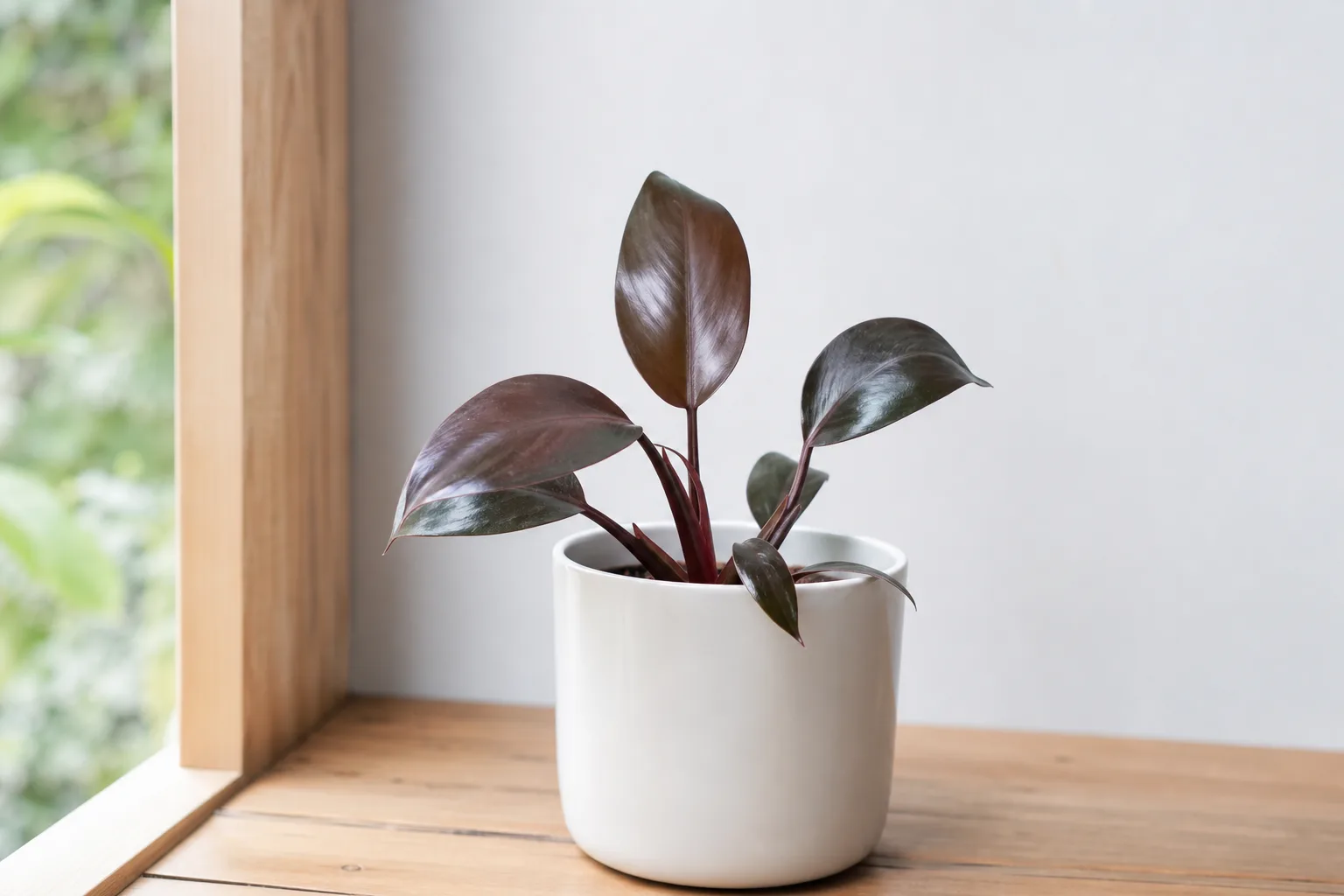
Slow Growth on Philodendron Imperial Red: Causes, Checks & Fixes
This guide covers slow growth on Philodendron Imperial Red. See also the general Slow Growth guide, watering, and light pages for this plant.
Slow Growth on Philodendron Imperial Red: Causes, Checks & Fixes
Quick answer
Slow growth on Philodendron Imperial Red is usually caused by low light-especially when new leaves emerge weak green instead of red-bronze. First step: move the plant to a brighter indirect position and watch the next two leaves for color and size.
Philodendron erubescens ‘Imperial Red’ is an upright self-heading hybrid grown for warm red-bronze new leaves that mature darker. It needs more light than Imperial Green to keep that color interesting. When light is limiting, photosynthesis drops, new leaves open slowly or stay small, and the burgundy flush fades toward plain green-a pattern that is easy to miss because the plant still looks alive, just quiet.
Why Philodendron Imperial Red gets slow growth
Low light is the most common cause on this cultivar. NC State Extension notes that Philodendron erubescens prefers partial shade and dappled sunlight-bright filtered light, not a dim corner across the room. Imperial Red was selected for vivid new color; without enough light energy, the plant survives but does not build new tissue quickly, and the red-bronze pigment in emerging leaves weakens.
Winter dormancy is normal and not the same problem. Most philodendrons slow growth in cooler, darker months. On Imperial Red, one or two months with little new growth in winter is expected. Slow growth becomes a diagnosis when the plant stalls through spring and summer, or when new leaves stay small and green while older leaves look fine.
Rootbound conditions and stale mix can also cap growth. RHS guidance warns that when roots fill the pot, growth may slow and watering becomes harder to manage. On a self-heading rosette, circling roots at the drainage holes plus months without a new leaf often mean the root zone-not just light-needs attention.
Chronic overwatering in low light slows growth from the roots up. Clemson Extension lists yellowing of lower leaves among signs of insufficient light and overwatering on philodendrons. Imperial Red in a dim spot with wet mix may produce almost no new leaves while lower foliage yellows-a lookalike that still starts with correcting light and dry-down watering.
Cool drafts and temperatures below the species’ comfort range suppress growth too. NC State recommends protecting P. erubescens from cold drafts and keeping it between 65 and 85 °F. A plant near an AC vent or chilly window may stall even when light looks adequate on paper.
What slow growth looks like on Philodendron Imperial Red
Watch for these patterns together rather than in isolation:
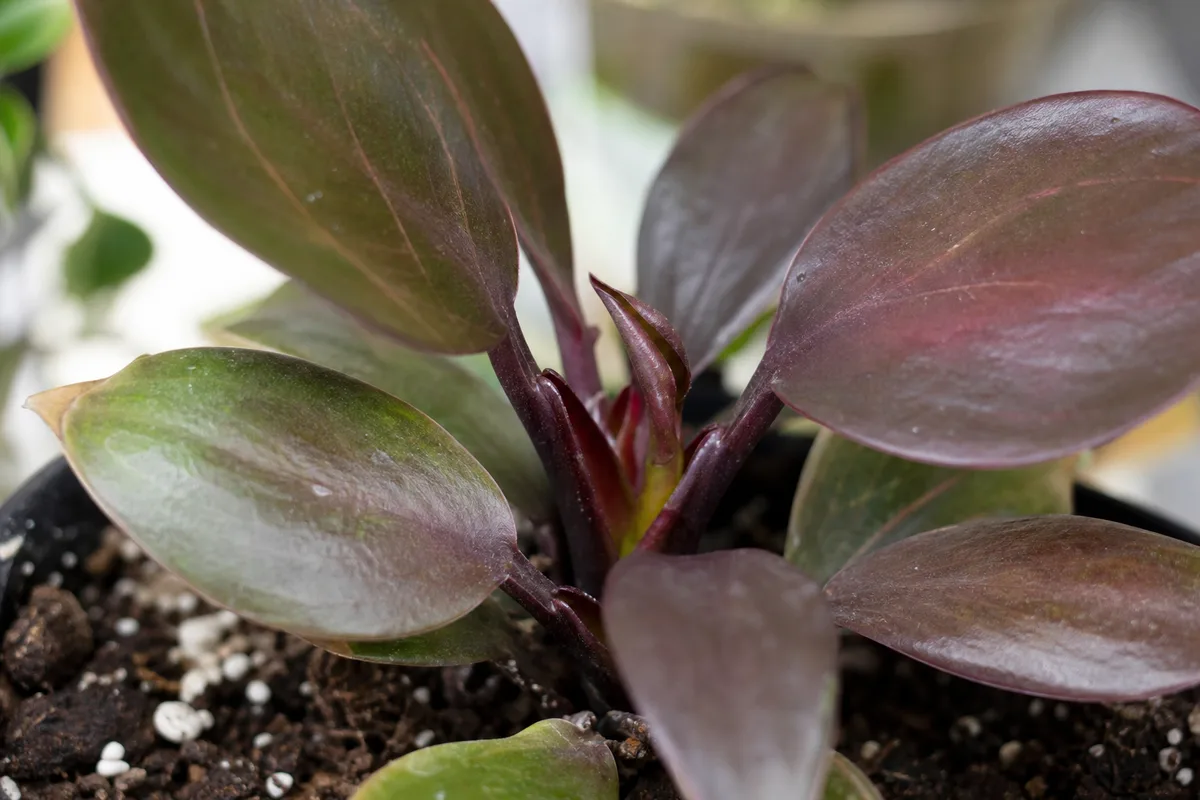
Slow Growth symptoms on Philodendron Imperial Red - compare with healthy tissue on the same plant.
- No new leaf for six to ten weeks during active spring or summer growth
- New leaves noticeably smaller than the previous two or three
- New growth opening weak green or olive instead of red-bronze
- Long gaps between leaf unfurling while the rosette stays otherwise healthy
- Petioles firm but short; the plant holds its shape without vining or stretching
- Pot staying wet longer than your usual 7–10 day summer rhythm
On Imperial Red, weak green new growth is the clearest low-light tell. Imperial Green may look acceptable in the same corner; Imperial Red loses its reason to be there when color dulls. Leggy stretching is less common on this self-heading type than on vining philodendrons-stalling with small green leaves is the more typical low-light portrait here.
How to confirm the cause
Do not guess from one old leaf. Use this inspection order:
- Light at the canopy - Hold your hand where the top leaves sit. A soft, diffuse shadow for several hours suggests usable indirect light; a faint or absent shadow means the plant is too far from the window.
- New-leaf color - Compare the newest leaf to one three leaves back. Loss of red-bronze on fresh growth strongly points to light before fertilizer or Philodendron Imperial Red repotting guide.
- Season check - Note the calendar. Stalled growth in December is often normal; stalled growth in May after a light correction is not.
- Pot weight and dry-down - Lift the pot. If it stays heavy and the top 3–5 cm never dries within ten days in summer, root stress may overlap with low light.
- Root glance - If light looks fine and dry-down is correct but growth still stalls for a full season, slide the plant out and check for dense root circling or broken-down mix.
Lookalike symptoms to rule out
Underwatering causes dry, lightweight pots and crispy edges, but roots stay firm and new leaves-when they appear-may still show some burgundy tone. Over-fertilizing or salt buildup can brown tips and stall growth, but you will often see crust on the soil surface or a recent heavy feed. Spider mites cause stippling and webbing, not uniform small green leaves. Normal post-repot adjustment can pause growth for three to four weeks without color loss-wait that out before assuming chronic slow growth.
First fix for Philodendron Imperial Red
Move the plant to a brighter indirect position before changing anything else. A spot within a few feet of an east window, or three to five feet from a filtered south or west window, usually gives Imperial Red enough energy to resume steady unfurling. Avoid jumping straight to direct midday sun-acclimate over a week if you increase exposure sharply.
Once light improves:
- Keep watering on the top 3–5 cm dry rule; brighter light means slightly faster dry-down, not more frequent guessing.
- Maintain moderate humidity around 50–60% so new leaves unfurl cleanly without crisp edges.
- Wait for the next two leaves before repotting or feeding. Those two leaves tell you whether light was the bottleneck.
Make one correction at a time. Do not repot, fertilize, and move to a new room on the same day-that hides which change helped.
Step-by-step recovery
After the light move:
- Rotate the pot a quarter turn every week so new growth stays symmetrical.
- Water only when the top 3–5 cm of perlite-amended mix is dry-roughly every 7–10 days in summer and 10–14 days in winter in typical homes.
- Wipe leaf surfaces monthly so dust does not further reduce light reaching the chlorophyll.
- If natural light remains weak, add a full-spectrum grow light for 10–12 hours daily, starting at moderate intensity and distance.
- Watch for a firm new red-bronze leaf within four to eight weeks during active season.
If two new leaves still emerge small and green after six to eight weeks in clearly brighter light, inspect roots for binding or compacted mix and repot in spring using fresh standard potting mix with 20–25% perlite-one pot size up at most.
Recovery timeline
Mild low-light cases often show a larger, better-colored leaf within four to six weeks after a light correction during spring or summer. Moderate cases with root binding or winter timing may need one full active season before growth feels normal again. Old small leaves will not expand; judge progress only on new unfurling.
If the plant produces nothing new through an entire spring and summer despite good light, dry-down watering, and a recent repot, the issue may be chronic root damage or pest stress-escalate to a full root and leaf-underside inspection.
What not to do
- Do not pour on fertilizer to “wake up” a dim plant-Clemson notes excess fertilizer can damage roots and will not replace light.
- Do not keep watering on a summer schedule when the plant sits in low light and the pot stays wet.
- Do not repot into a much larger container hoping for a growth spurt; extra wet soil volume slows drying.
- Do not assume Imperial Green’s corner works for Imperial Red-the red cultivar needs brighter filtered light to color and size new leaves.
- Do not discard the plant after one slow winter; confirm the pattern against season before acting.
Causes to rule out
If brighter light does not help within two new leaves, check these in order:
- Rootbound pot - Roots circling heavily, mix broken down to fine dust, water running straight through.
- Chronic wet roots - Sour smell, yellow lower leaves, soft petiole bases; fix drainage and dry-down before expecting growth.
- Nutrient depletion - Only after light and roots look sound; use balanced liquid feed monthly in spring and summer at half strength.
- Temperature stress - Drafts, cold windowsills below 18 °C (65 °F), or hot air blasts drying new tips.
- Pests - Stippling, sticky residue, or webbing on leaf undersides stealing vigor.
How to prevent slow growth next time
Match placement to Imperial Red’s color needs, not just survival. Give medium to Philodendron Imperial Red light guide daily, water when the top 3–5 cm of perlite-amended mix dries, and keep humidity near 50–60%. Repot every one to two years before roots coil tightly, and refresh mix so oxygen and water move predictably.
In autumn, expect slower unfurling and reduce watering slightly as light drops. Supplement with a grow light if the plant must live away from windows. Weekly checks on new-leaf color catch low light while correction is still a simple move-not a rescue repot.
When to worry
Slow growth alone is low severity on Imperial Red. Escalate if:
- Several lower leaves yellow while soil stays wet
- Petiole bases soften at the crown
- No new growth appears through a full spring and summer after a clear light upgrade
- New leaves stay smaller and greener for three cycles in a row despite corrected care
- Roots are mushy or smell sour on inspection
Cosmetic dullness on one old leaf is not urgent. Weak green new growth for months in active season is worth fixing promptly before root decline in the same dim, wet corner.
Conclusion
Slow growth on Philodendron Imperial Red is usually a light problem wearing a quiet mask. Confirm it with stalled unfurling, small leaves, and weak green new growth instead of red-bronze. Fix it by moving to brighter indirect light, keeping the top 3–5 cm dry-down rhythm, and reading the next two leaves-not by stacking fertilizer and repots. Prevent it by treating Imperial Red as a brighter-light cultivar than Imperial Green and watching new color as your early warning system.
When to use this page vs other Philodendron Imperial Red guides
- Philodendron Imperial Red watering guide - Use for routine moisture checks before assuming slow growth is the main issue.
- Philodendron Imperial Red problems hub - Browse all 10 common issues on this species.
- Yellow Leaves on Philodendron Imperial Red - Different entry point when symptoms overlap with slow growth.