Poor Potting Setup on Philodendron Birkin: Causes, Checks &
Quick answer
Poor potting setup on Philodendron Birkin shows as a heavy pot that never dries, yellow or limp pinstriped leaves, and roots circling a dense peat plug-common when the plant sits in a cache pot, oversized container, or mix without perlite and bark. First step: confirm water drains freely within minutes and empty any standing runoff.
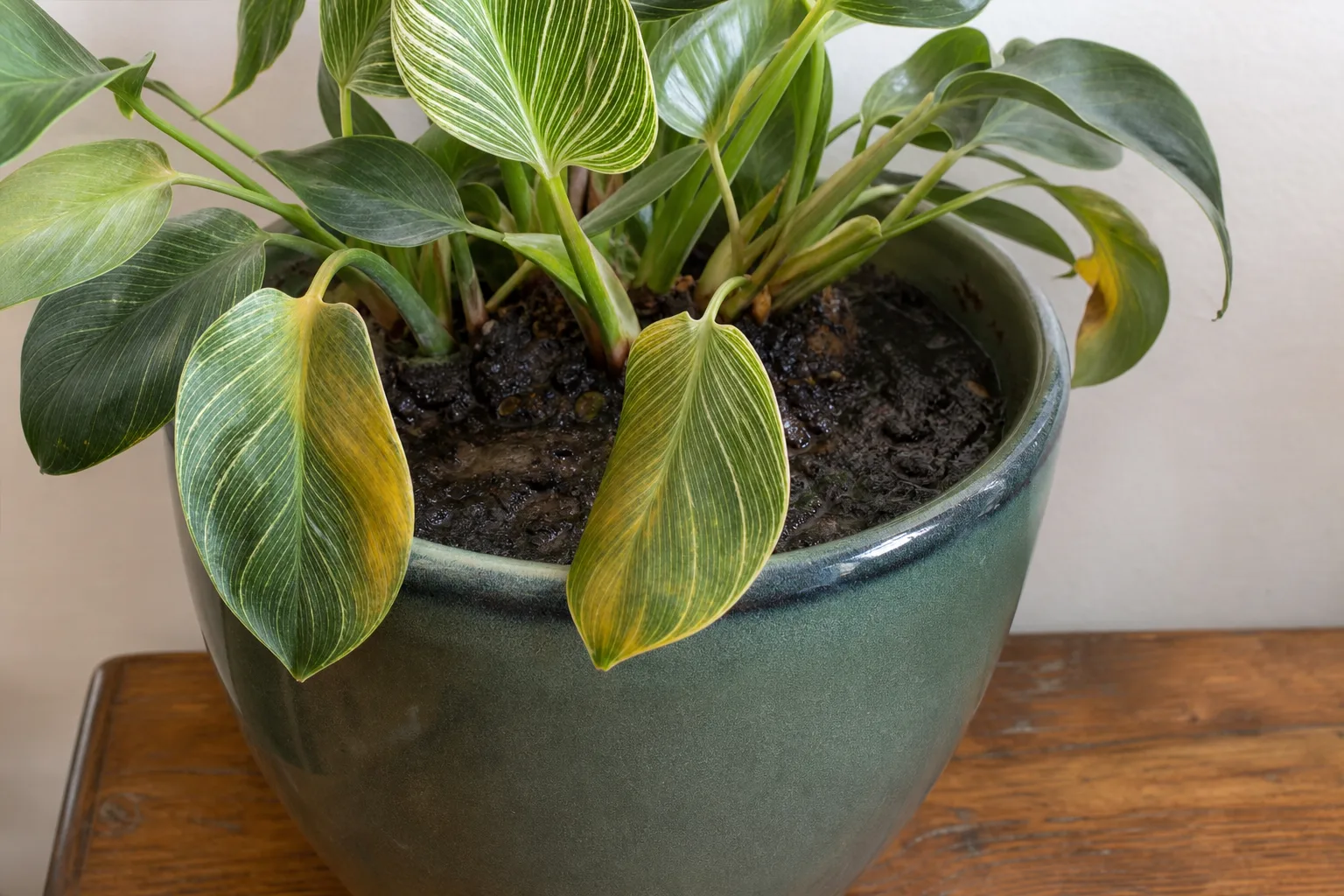
Poor Potting Setup on Philodendron Birkin: Causes, Checks & Fixes
This guide covers poor potting setup on Philodendron Birkin. See also the general Poor Potting Setup guide, watering, and light pages for this plant.
Poor Potting Setup on Philodendron Birkin: Causes, Checks & Fixes
Quick answer
Philodendron Birkin is a compact self-heading aroid sold as a tabletop specimen-often already potted in dense peat inside a decorative cover with no exit for water. When the container, drainage path, or soil mix fails, roots sit in oxygen-poor wet substrate even if you water carefully. Symptoms mimic overwatering on Philodendron Birkin: yellow pinstriped leaves, a heavy pot, limp foliage, and stalled new growth with weak striping.
First step: confirm that water drains freely within minutes. Lift Birkin out of any cache pot, check that holes are not blocked by roots or debris, water once, and watch runoff exit the bottom. Potted plants should always have good drainage-if water pools in a saucer or outer pot for days, fix the setup before Philodendron Birkin repotting guide, fertilizing, or trimming leaves.
What poor potting setup looks like on Philodendron Birkin
Birkin does not announce pot problems with a unique leaf pattern. Instead, a failing root environment shows through water stress on variegated foliage:
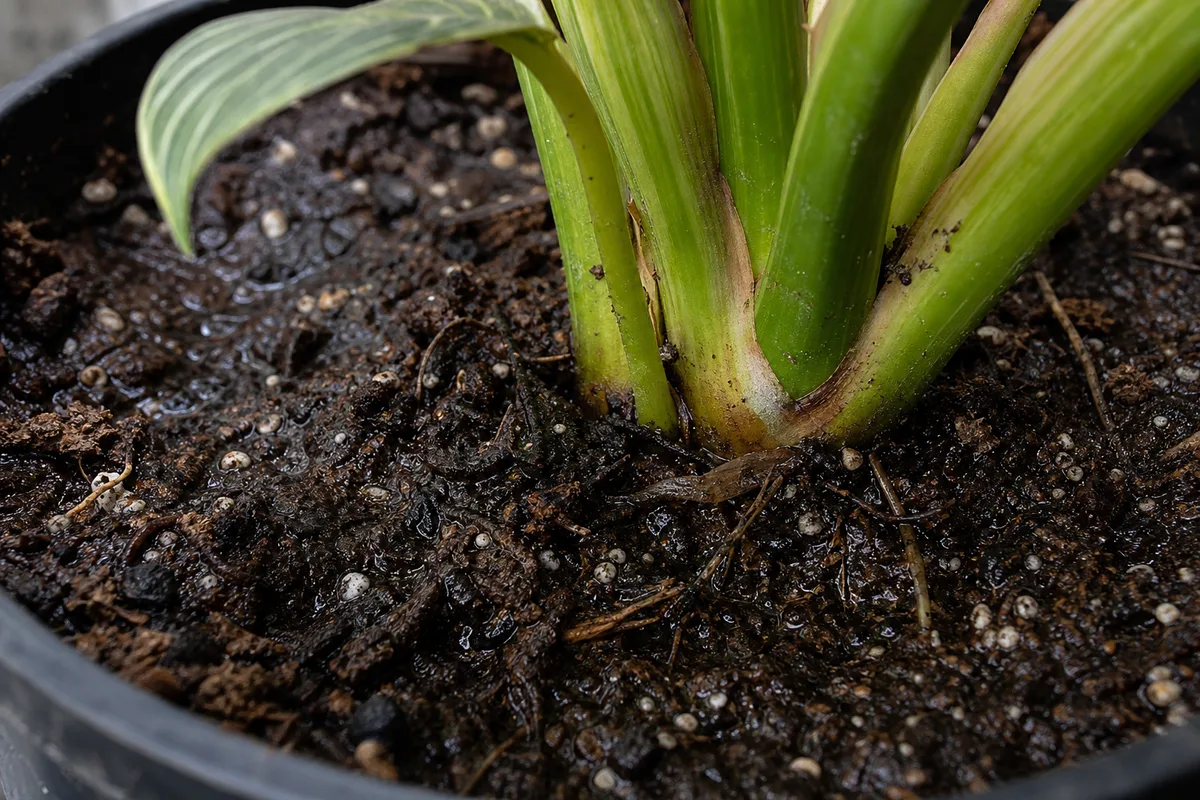
Poor Potting Setup symptoms on Philodendron Birkin - compare with healthy tissue on the same plant.
- Heavy pot that stays wet 7–10 days after one drink while leaves yellow or droop
- Limp pinstriped leaves with damp mix-not the light pot and crisp curl of underwatering on Philodendron Birkin
- White mold or algae on the soil surface under the tight leaf crown
- Roots circling the nursery plug or pushing through drainage holes while growth stalls
- Sour smell from the mix when you lift the pot
- New leaves emerging small, pale, or without crisp white stripes in otherwise adequate light
Because Birkin grows as an erect rosette with thick upright stems, the crown sits close to wet soil. A bad setup traps moisture at the root zone longer than on a trailing philodendron whose stems hang away from the mix.
Normal lookalikes: One older bottom leaf yellowing on a firm stem with predictable dry-down is often natural shedding-not a pot crisis.
Why Philodendron Birkin gets a poor potting setup
Birkin needs moist, well-drained, slightly acidic soils and bright filtered light. Most decline from bad potting is culture stacked against that profile, not a mysterious disease.
Cache pots without drainage. Birkin is often displayed inside a sealed decorative pot. Water drains from the inner nursery pot straight into standing water at the bottom. Never let houseplants sit in water-roots reabsorb stagnant runoff and lose oxygen.
Oversized containers. Jumping from a 4-inch nursery pot to a large statement planter surrounds a small Birkin root ball with a huge wet zone. Too large a pot or inadequate drainage often leaves excess mix wet around roots that cannot use it. Birkin’s slow growth rate means it fills extra mix even more slowly than fast vines.
Dense peat-only mix. Store Birkins frequently arrive in moisture-retentive potting soil without perlite or bark. Adding garden soil to potting media often leads to poor drainage and root diseases. Aroid roots need air pockets-straight peat behaves like a sponge around Birkin’s compact root mass.
Blocked or missing drainage holes. Some decorative pots have no holes, or roots mat over openings. Even careful top watering leaves the lower root zone saturated.
Wrong pot material for the room. Glazed ceramic and plastic dry slower than terracotta. That is fine in bright, warm rooms if you check dry-down-but in dim winter corners, a non-porous pot plus heavy mix extends wet time beyond Birkin’s tolerance.
Repotting into fresh mix without fixing size or drainage. A new bag of soil in the same oversized cache pot repeats the problem. Birkin also stresses easily if you change pot, mix, light, and Philodendron Birkin watering guide the same week.
How to confirm the cause
Work through these checks before repotting:
- Drainage test - Water until it runs from the bottom. If no exit within minutes, holes are missing, blocked, or the plant sits in a full cache reservoir.
- Pot weight and dry-down - Lift the plant to check weight change. A heavy pot days after watering with limp leaves suggests trapped moisture-not thirst.
- Soil moisture at depth - Stick your finger 3–5 cm into the mix. Chronic dampness with yellowing confirms setup failure when combined with poor drainage.
- Pot-to-root ratio - Slide the plant out. If the root ball is small relative to pot diameter-especially more than 1–2 inches of empty wet mix on all sides-oversizing is likely.
- Mix texture - Crumbly mix with perlite and bark bits dries faster. A solid wet plug of peat that stays saturated indicates wrong soil for an aroid.
- Light cross-check - Birkin in very low light dries slowly even in a good pot. Note bright filtered hours before blaming the container alone.
If drainage is good, mix is airy, pot size fits the root ball, and soil still never dries in adequate light, look at overwatering or insufficient light instead-those problems overlap but need different first fixes.
First fix to try
Confirm and restore the drainage path-do not repot on day one unless roots smell sour or the stem base is soft.
Lift Birkin out of any decorative cover pot. Water at the sink until runoff flows freely from the bottom. Empty the saucer or cache reservoir completely within 30 minutes. Discard water that remains beneath the pot one hour after watering.
If holes are blocked, clear them with a pencil or chopstick. If the outer pot has no holes, treat it as display only-keep the plant in a nursery pot that drains, or drill holes where safe.
This single step breaks the standing-water cycle without disturbing roots. Watch whether the pot weight drops over the next few days and whether limp leaves firm up once the lower mix can breathe.
Step-by-step recovery
After drainage is restored, choose a path by severity.
Mild case: slow dry-down, firm stem, limited yellowing
- Keep Birkin in a draining inner pot; empty cover pots after every watering.
- Move to bright filtered light so the mix dries on a predictable rhythm.
- Let the top 3–5 cm dry before the next drink-often 7–10 days in active growth.
- Remove fully yellow leaves at the base; they will not re-green.
- Add perlite and orchid bark to future top-dressings only if you are not ready to full repot.
Moderate case: heavy peat plug, oversized pot, or circling roots
- Unpot during active growth-spring or early summer is ideal for Birkin’s slow habit.
- Gently loosen circling roots and shake away dense wet peat.
- Repot into fresh mix: standard potting soil plus 20–25% perlite and 10% orchid bark, or equal parts potting soil, perlite, and orchid bark as recommended for aroid houseplants.
- Choose a pot 1–2 inches wider than the root ball with open drainage holes-not a dramatic size jump.
- Water once to settle mix, drain fully, then wait for the top layer to dry before watering again.
- Hold fertilizer until new pinstriped growth appears.
Severe case: sour smell, mushy roots, or soft stem base
- Unpot immediately and trim all brown, mushy roots back to firm white or tan tissue.
- Discard old mix; scrub the pot or use a clean container with drainage.
- Repot the remaining root mass into a small well-draining pot-extra wet soil around damaged roots worsens rot.
- Follow the root rot on Philodendron Birkin recovery rhythm: dry-top watering, Philodendron Birkin light guide, no feed for several weeks.
- If the base is gone but a firm stem section remains, propagate a cutting with a node as backup.
Wear gloves when handling cut tissue-philodendron sap can irritate skin.
Recovery timeline
Drainage fixes alone often show improvement within one to two weeks-the pot should feel lighter on schedule and stems stay firm.
Repotting into proper mix and size typically needs four to eight weeks before Birkin pushes a new leaf with defined pinstripes. This cultivar is slow-growing even when healthy; patience after repot is normal.
Full root recovery after trimming decay may take a full growing season. Old damaged leaves will not recover their variegation-judge success by firm upright stems, no new mushy roots, and crisp new growth.
Worsening signs: stem softening after repot, spreading yellow while mix stays wet, or no new growth by mid-spring in adequate light.
Lookalike symptoms
- Overwatering on a good pot - Same yellow and limp leaves, but drainage works and mix is airy; fix the watering rhythm and light before upsizing or changing mix again.
- Underwatering - Light pot, dry mix throughout, slightly limp or curled leaves; a thorough soak perks foliage within hours if roots are healthy.
- Low light stress - Leggy stems, fading pinstripes, slow dry-down in an otherwise fine pot; brighter filtered light comes first.
- Root rot as the next stage - Persistent wet setup eventually decays roots; if mushy roots are widespread, see the Birkin root rot guide after confirming drainage.
- Normal leaf drop - One or two older bottom leaves yellow while the pot dries normally and new growth looks good.
Mistakes to avoid
- Repotting into a much larger decorative pot for aesthetics-excess mix stays wet around Birkin’s small root ball
- Drilling no holes because “Philodendron Birkin overview likes moisture”-Birkin wants moist cycles, not stagnant saturation
- Leaving the nursery pot inside a sealed cache pot forever without emptying runoff
- Using garden soil or heavy clay in the container-poor drainage and root diseases follow
- Changing pot, mix, location, and watering all at once when the plant is already stressed
- Fertilizing immediately after repot hoping to push growth-wait until new roots form
- Assuming a bigger pot fixes yellow leaves without checking whether water can exit
Birkin care cross-check
A corrected pot only works when the rest of the setup matches Birkin’s needs:
- Light: Bright filtered or indirect light most of the day-too dark slows dry-down; direct afternoon sun scorches pinstripes.
- Soil: Well-draining aroid mix with perlite and bark; pH roughly 5.5–7.0.
- Water rhythm: When the top 3–5 cm is dry-about every 7–10 days in active growth, longer in winter.
- Humidity: 50–60% supports leaf quality but does not replace drainage.
- Temperature: Stable 18–26°C (65–79°F); cold rooms slow evaporation-reduce watering when growth stalls.
How to prevent poor potting setup next time
Size up gradually. When roots circle the pot or emerge from drainage holes, move to a container only 1–2 inches wider in diameter-Birkin needs repotting only when roots grow out of drainage holes.
Use drainage holes always. If you want a ceramic cover pot, keep Birkin in a plastic nursery pot that drains, water at the sink, and return it to the cover only when dripping has stopped.
Mix for aroids, not for garden beds. Blend potting soil with perlite and orchid bark, or use a commercial aroid mix. Avoid straight peat plugs and garden soil.
Match watering to pot weight. Learn how the pot feels when the top 3–5 cm is dry; lifting the plant is a reliable check regardless of calendar schedules.
Refresh tired mix on schedule. Repot every one to two years or when watering becomes unpredictable-even if the plant has not outgrown the pot, old peat compacts and holds water longer.
Scout after any display change. Moving Birkin into a new decorative pot is the most common hidden setup failure in home displays.
When to worry
Treat potting setup as urgent when:
- Water stands in a cache pot or saucer for more than 30 minutes after every drink
- The stem base feels soft at the soil line
- Soil smells sour or roots are brown and mushy on inspection
- Yellowing spreads across multiple leaves within a week despite pausing water
- The plant wilts while mix is wet 3–5 cm down-roots may already be failing
The plant may not be saveable if the entire root system is mushy and the stem base has collapsed. Take a firm stem cutting with a node before discarding if any healthy tissue remains.
Conclusion
Philodendron Birkin looks like a low-maintenance tabletop plant, but its showy pinstriped rosette depends on an invisible foundation-a right-sized pot, open drainage, and airy aroid mix. Most “mystery” yellow leaves and limp foliage trace to water trapped in peat, cache pots, or oversized containers-not a bad watering hand alone. Confirm runoff first, right-size the setup second, and judge recovery by firm stems and one new crisp pinstriped leaf-not by old yellow foliage greening up again.
When to use this page vs other Philodendron Birkin guides
- Philodendron Birkin watering guide - Use for routine moisture checks before assuming poor potting setup is the main issue.
- Philodendron Birkin problems hub - Browse all 42 common issues on this species.