Slow Growth on Parlor Palm: Causes, Checks & Fixes
Quick answer
Parlor Palm is a naturally slow grower-one to three new fronds from April through September is solid performance. Months without a new spear in spring or summer usually means light is too dim. Move it to brighter indirect light before changing fertilizer or pot size.
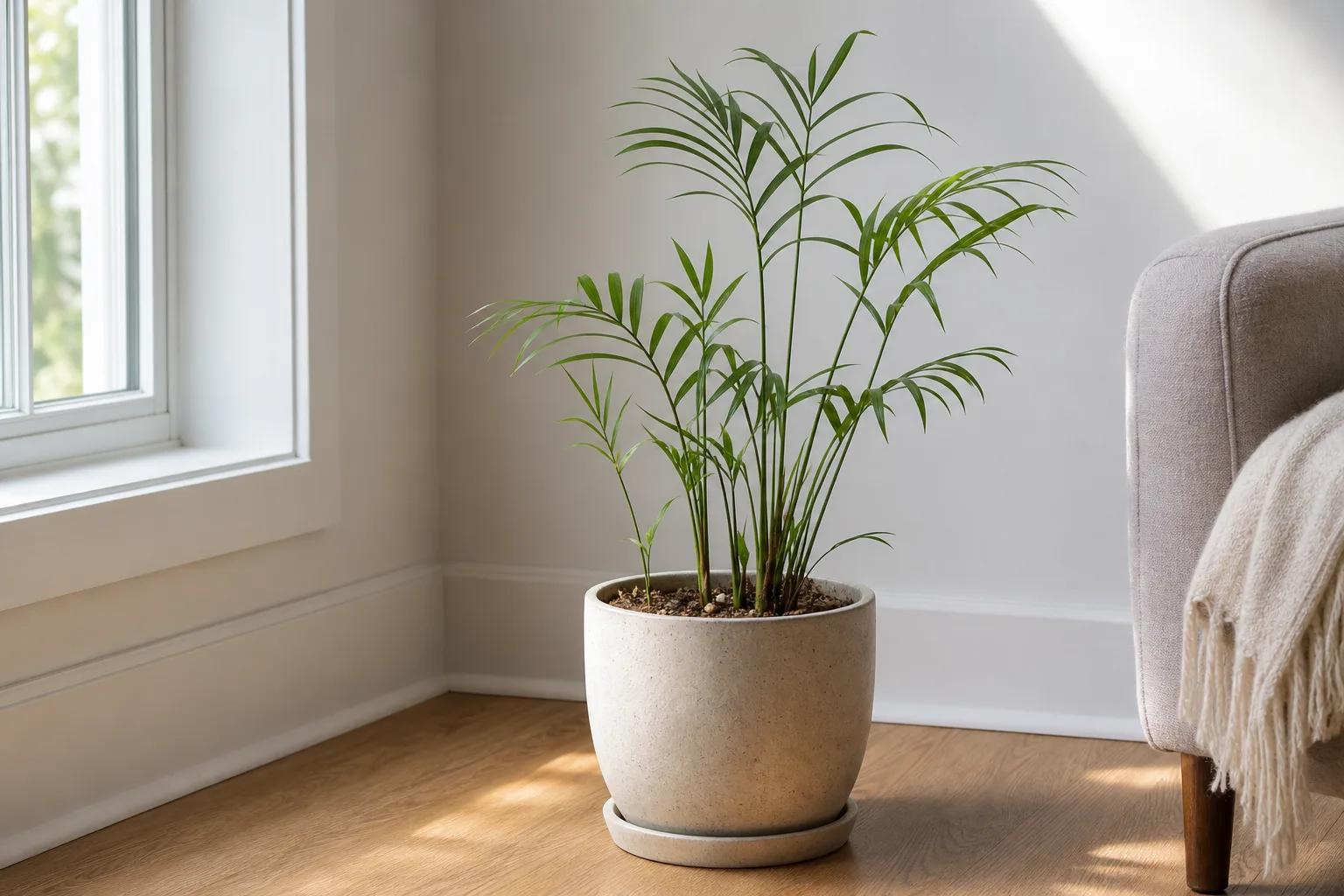
Slow Growth on Parlor Palm: Causes, Checks & Fixes
This guide covers slow growth on Parlor Palm. See also the general Slow Growth guide, watering, and light pages for this plant.
Slow Growth on Parlor Palm: Causes, Checks & Fixes
Quick answer
Slow growth on Parlor Palm (Chamaedorea elegans) is often normal-this species is a naturally slow grower that may add only a handful of fronds per year indoors. One to three new fronds from April through September counts as solid performance for a healthy clump. Worry when the plant looks alive but produces no new growth through an entire spring and summer, or when new leaves emerge smaller and paler than older ones.
First step: move the palm to brighter indirect light-near a north- or east-facing window, or a few feet back from south or west glass where sun never hits the fronds directly. Parlor Palm tolerates dim rooms, but survival is not active growth. Improve light before doubling fertilizer, repotting, or chasing other fixes. Window-by-window placement detail lives on the Parlor Palm light guide.
How this page differs from other growth guides
| Your main question | Start here | Use instead |
|---|---|---|
| ”Is my palm supposed to grow this slowly?” | This page - normal pace, seasonal rest, stall diagnosis | - |
| ”Which window is bright enough?” | Brief light audit below | Not enough light - full placement audit |
| ”Why are petioles long and leaflets sparse?” | Lookalikes section | Leggy growth - etiolation recovery |
| ”Yellow fronds on wet soil, no new spears” | When to worry | Overwatering or root rot |
Shade-tolerant palms like Chamaedorea elegans often stall without stretching in office dim corners-the clump stays green and compact while months pass without a new spear. That pattern belongs on this page, not the leggy-growth guide, which focuses on visible etiolation.
What slow growth looks like on Parlor Palm
On this palm, “slow” usually means time between new fronds, not a sudden collapse. Healthy plants push out a central spear that slowly opens into arching, pinnate leaves. When growth is genuinely stalled-not just winter rest-you may notice:
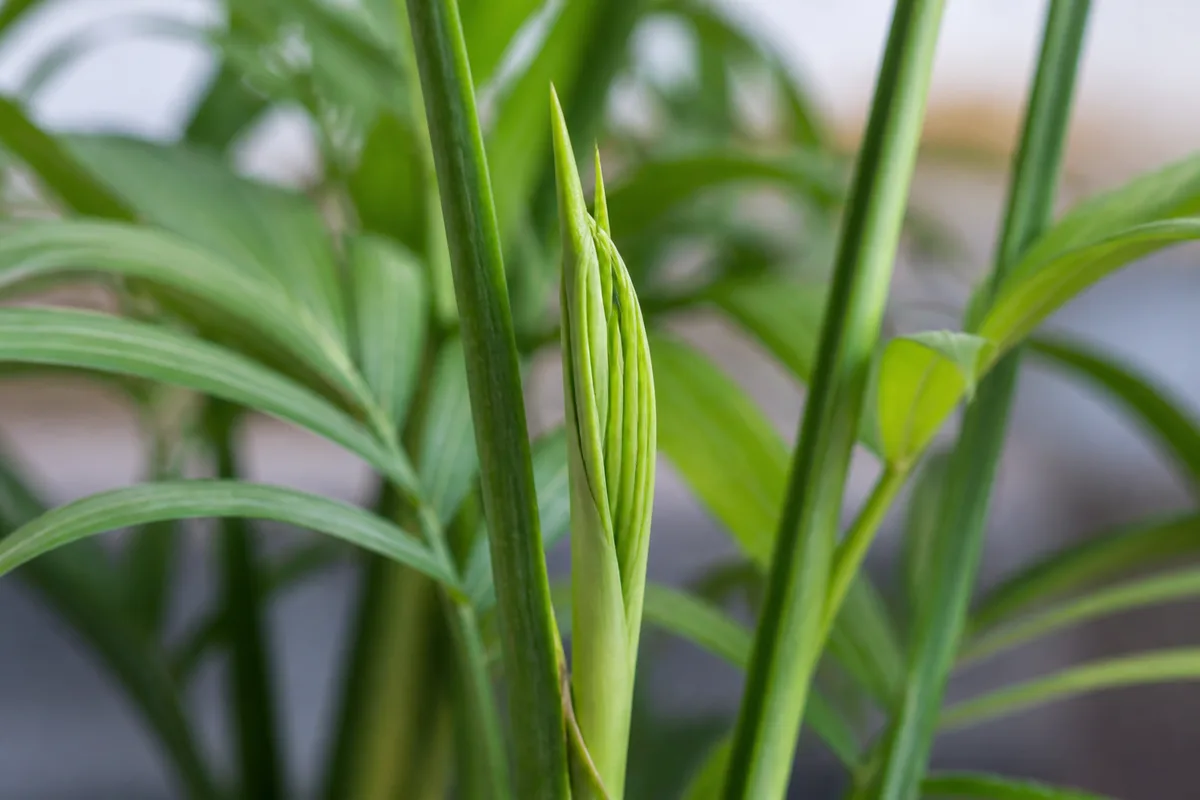
Slow Growth symptoms on Parlor Palm - compare with healthy tissue on the same plant.
- No new spear for months during March through September, when light and warmth normally support foliage
- Smaller or thinner new leaflets compared with fronds from the previous year
- Static height even after years in the same pot, with only lower fronds browning and dropping
- Pale or dull green new growth while the plant otherwise looks alive
- Soil that dries very fast after watering-a sign roots may have filled the pot
What slow growth usually is not: widespread yellowing with wet soil (overwatering or root rot), crispy brown tips alone (brown tips-often humidity or water quality), or long stems reaching toward a window (leggy growth with stretching).
Parlor Palm clumps often contain several stems in one pot. It is normal for one trunk to outgrow others or for an older stem to die back while neighbors keep growing-judge the whole clump’s frond output, not a single cane.
Why Parlor Palm grows slowly
Normal biology comes first
Do not compare Parlor Palm to fast tropical foliage plants. RHS notes that parlour palms are slow growing and compact, often staying around 30–60 cm (1–2 ft) for long periods before reaching taller sizes over many years. Missouri Botanical Garden describes a houseplant size of about 4 ft as typical over time-not something this palm achieves in one season.
Indoors, expect:
- A few new fronds per year when conditions are good
- Near pause in fall and winter when daylight shortens and you reduce water and feeding
- Years between meaningful height gains, even with solid care
If your palm adds one frond in summer and rests all winter, that may be fine. Mark each new spear on a calendar so you can tell rest from a true stall.
Low light is the most common fixable limiter
Parlor Palm survives in offices and dim corners-Missouri Botanical Garden notes it adapts to limited indoor light-but survival is not active growth. RHS growing guidance ties the best growth and greenest foliage to bright but indirect light, with partial shade acceptable but slower. Too little light leads to weaker growth and can yellow leaves over time.
Light drives photosynthesis. Without enough intercepted light, the palm budgets energy for maintenance, not new fronds. In a three-stem office clump, all canes may stay green while zero spears appear through summer-that is the classic dim-corner stall this page targets.
Seasonal slowdown
From late fall through winter, shorter days and cooler room temperatures slow metabolism. RHS recommends cooler winter conditions when daylight drops, and Missouri Botanical Garden advises reducing water and stopping fertilizer in winter. A plant that looks unchanged from November to February is often resting-not failing. Match winter rhythm on the watering guide.
Root congestion and tired soil
Parlor Palm does not need frequent repotting. RHS notes it can stay in its original pot for several years until roots become densely crowded. When roots circle the pot wall or emerge from drainage holes, uptake efficiency drops and new fronds become infrequent even if light is adequate.
UF IFAS production notes describe fine, sensitive roots on Chamaedorea species-roots that lose efficiency quickly when the mix compacts or stays wet too long. Old peat-based mix also breaks down, holding more water and fewer nutrients-two stresses that show up as stalled growth rather than sudden wilt. Full repot protocol is on the repotting guide.
Nutrient depletion-after light is ruled out
Parlor Palm is a light feeder, but months of watering without replacement fertilizer can leave soil depleted. Missouri Botanical Garden recommends fertilizing once per month during the growing season. Pale, small new leaves during bright-light months fit nutrient shortage better than simple winter rest. See the fertilizer guide for half-strength timing.
Do not feed a palm that is stressed from wet soil, recent repotting, or obvious pest damage.
Root damage from overwatering
Chronic overwatering does not always cause dramatic collapse. RHS lists poor growth alongside overwatering damage to roots as a common issue on parlour palms. When roots stay oxygen-starved in soggy mix, the plant may look mostly green while failing to push new spears. UF IFAS notes that palms often show foliar symptoms only after root damage has begun-so a green clump with no new spears and persistently wet soil deserves a root check, not more patience.
Cool drafts and temperature dips
NC State Extension places optimal indoor light near north- or east-facing windows and warns to protect plants from cold drafts. Temperatures below the comfort zone-roughly 18–27°C (65–80°F) for steady growth-slow development even when light and water look acceptable.
How to confirm the cause
Work through these checks in order. You are separating normal slow pace, fixable limits, and hidden decline.
- Season check - Is it late fall or winter? If yes, expect little to no new growth until longer days return. Reduce watering frequency and hold fertilizer.
- Light audit - Can the plant see sky brightness without direct sunbeams on leaves? North- and east-facing windows, or filtered south/west light, support growth. Deep interior shelves and windowless rooms stall fronds even when leaves stay green. Run a full placement audit on not enough light if unsure.
- New-frond log - When did the last spear open fully? If zero new growth appeared from March through August, light or roots deserve scrutiny.
- Leaf size comparison - Are newest leaflets smaller or paler than fronds from six to twelve months ago? That pattern points to light or nutrients more than seasonal rest.
- Soil moisture rhythm - Stick your finger 3–5 cm into the mix. Parlor Palm prefers drying slightly between waterings per the watering guide. Soil wet for days after one watering suggests overwatering or poor drainage; soil pulling away from the pot edge and going dusty within two days may mean underwatering or a root-bound pot.
- Root and pot inspection - Slide the root ball out if growth has stalled all season. Healthy roots are pale and firm. Mushy brown roots, sour smell, or a dense root mat circling the pot explain slow growth differently than dim light-advance to root rot when tissue is mushy.
- Pest scan - Check leaflet undersides and stem joints for spider mites, scale, or mealybugs. Low-level infestations drain vigor before obvious leaf damage appears. Treat per spider mites once soil and light are ruled out.
Confirmed patterns:
| What you see | Likely cause | What confirms it | Related guide |
|---|---|---|---|
| No fronds all winter; firm plant; dry soil | Seasonal rest | New spear in spring when light increases | Watering |
| No fronds all summer; dim placement; older fronds hold | Low light | Brighter spot produces a new spear within 4–8 weeks | Light, not enough light |
| Fast dry-down; roots circling; small new leaves | Root-bound / tired mix | More frequent spears after spring repot one size up | Repotting |
| Pale small new growth; good light; no feed in 12+ months | Nutrient depletion | Improved new leaf color after monthly dilute feed in summer | Fertilizer |
| Wet soil; yellow lower fronds; no new spears | Root stress / rot risk | Firm roots and new growth only after drying cycle and drainage fix | Overwatering, root rot |
First fix for Parlor Palm
Move the plant to the brightest indirect-light location available in your home.
Practical placements that work for Parlor Palm:
- Near a north- or east-facing window, where NC State Extension notes optimal light levels for this species
- Three to six feet back from a south- or west-facing window behind sheer curtains-bright, but no direct sun that scorches leaflets
- Under a full-spectrum LED grow light 30–60 cm (12–24 inches) above the canopy for 10–12 hours daily on a timer if natural light is weak-raise the lamp if new spears bleach or stretch, matching guidance on the light guide
Leave the pot, watering schedule, and fertilizer unchanged for three to four weeks after the move. You want to test whether light alone unlocks the next spear. If a new frond begins emerging in that window, you found the main bottleneck.
Avoid direct sun on the fronds, especially in summer-Missouri Botanical Garden warns that full sun scorches this palm.
Step-by-step recovery
After the light move, address remaining limits in this order:
1. Stabilize watering to match new light levels
Brighter light usually means faster soil dry-down. Water when the top 3–5 cm of mix feels dry, not on a fixed calendar-full rhythm on the watering guide. In winter, stretch intervals toward every 14 days if the pot stays heavy. Never let the palm sit in a full saucer or cachepot with standing water.
If soil was staying wet for a week or more, ease off watering until the mix breathes again-wet roots cannot support new fronds.
2. Feed lightly during active months only
From spring through early fall, apply a balanced liquid fertilizer at half strength once per month, following Missouri Botanical Garden’s monthly growing-season guidance. Stop completely in winter. Skip feeding if you recently repotted into fresh mix or if roots are still recovering from overwatering.
3. Repot only when roots are crowded
If inspection shows a dense root mat and soil dries within a day or two of watering, repot in spring into a container only one size larger with drainage holes. RHS advises a pot just a couple of centimetres wider-overpotting keeps excess soil wet and can trigger root rot. Step-by-step timing is on the repotting guide.
Use a well-draining, peaty mix with perlite. Parlor Palm dislikes root disturbance; repot only when necessary, not as a growth hack. Spear abortion after repotting is common-wait four to six weeks before a second intervention.
4. Wipe dust from leaflets
A damp cloth on arching fronds removes dust that blocks light absorption-small but worthwhile in dim homes.
5. Address pests if present
If mites or scale show up during inspection, treat the specific pest before expecting a growth surge. Do not fertilize a pest-stressed palm to “push” growth.
Recovery timeline
Set expectations to the plant’s biology, not fast-growing tropicals.
- After a light correction: first visible new spear often appears within four to eight weeks during spring or summer; slower if corrected in late fall
- After repotting: allow two to four weeks of adjustment before judging new growth; some stall is normal after root disturbance
- After starting fertilizer: improved color on the next frond may take one to two months; older leaves do not green up retroactively
- Full season benchmark: track frond count and leaflet size from April through September-one to three new fronds in that window can be solid performance for Parlor Palm
Signs recovery is working: a central spear emerging, new leaflets opening wider than the previous frond, firmer soil dry-down rhythm, and no spread of yellowing up the crown.
Signs the problem is deepening: spears brown and abort before opening, lower fronds yellow in clusters, soil stays sour and wet, or stem bases soften.
Lookalike symptoms
Winter dormancy vs. problem stall: Dormancy is a seasonal pause with firm tissue and gradual dry soil. A problem stall runs through the bright months with no spear while other houseplants are actively growing.
Not enough light vs. slow growth: The not-enough-light guide walks a full window audit when you are unsure about placement. This page covers stall without obvious stretch-common in offices where the clump stays compact and green.
Leggy growth vs. slow growth: Stretching toward windows, long thin petioles, and sparse leaflets point to etiolation on the leggy-growth page. Slow growth without stretching can still be low light-especially in offices.
Root rot vs. slow growth: Rot brings yellowing, wilting, or sour soil with wet mix. Slow growth alone with firm roots and stable older fronds is milder.
Underwatering vs. slow growth: Chronic drought may stall growth and crisp leaf tips. Soil will be very dry and the pot unusually light; a thorough soak after dry-down resets uptake faster than a light move.
Mistakes to avoid
- Fertilizing heavily to force speed - Excess salts burn fine palm roots and stress a plant already growing slowly. Feed lightly only in active months.
- Repotting into a much larger pot - Extra wet soil around a small root ball invites rot and further stalls growth. Do not repot to “force” growth when the palm only needs light.
- Chasing humidity before light - Parlor Palm tolerates average indoor humidity; dim light is a far more common growth limiter.
- Judging progress weekly - This palm’s timeline is measured in months. A quiet winter is not failure.
- Keeping the palm in direct sun - Scorched leaflets reduce photosynthetic area and set growth back.
- Stacking changes at once - Moving, repotting, feeding, and pruning the same week makes it impossible to know what helped.
How to prevent slow growth next time
- Place new purchases in your brightest indirect spot, not a dark shelf where they merely survive
- Log new spears on a calendar so seasonal rest does not look like decline
- Refresh soil and pot size before roots form a solid mat that chokes uptake
- Dust leaflets monthly in dusty homes
- Reduce water and stop feed in winter instead of pushing summer care through dormancy
- After moving homes or furniture, re-check that the palm still receives adequate filtered light per the overview
When to worry
Escalate beyond a light move when:
- No new growth through an entire growing season despite bright placement and sane watering
- Yellowing spreads up the plant while soil stays wet-see yellow leaves and overwatering
- New spears brown and die repeatedly before unfurling
- Stem bases soften or the pot smells sour on inspection
- Pests recur after treatment while vigor keeps dropping
Those patterns need root inspection, drainage correction, or pest intervention-not another fertilizer dose. If repeated spear abortion or sour soil persists after you correct watering, contact your local cooperative extension office or a master gardener helpline for hands-on diagnosis before discarding the clump.
Related Parlor Palm guides
- Light - window placement, grow lights, scorch warnings
- Watering - dry-down rhythm, winter reduction
- Repotting - one-size-up timing, root disturbance
- Fertilizer - half-strength monthly feed in active months
- Overview - full care hub for Chamaedorea elegans
- Not enough light - placement audit when brightness is uncertain
- Leggy growth - etiolation with long petioles and sparse leaflets
- Root rot - mushy roots, sour soil, crown decline
- Overwatering - wet mix stall with green foliage
- Spider mites - vigor drain before obvious leaf damage