Parlor Palm Fertilizer: When, How, and Mistakes to Avoid
Parlor Palm Fertilizer: When, How, and Mistakes to Avoid
Parlor Palm Fertilizer: When, How, and Mistakes to Avoid
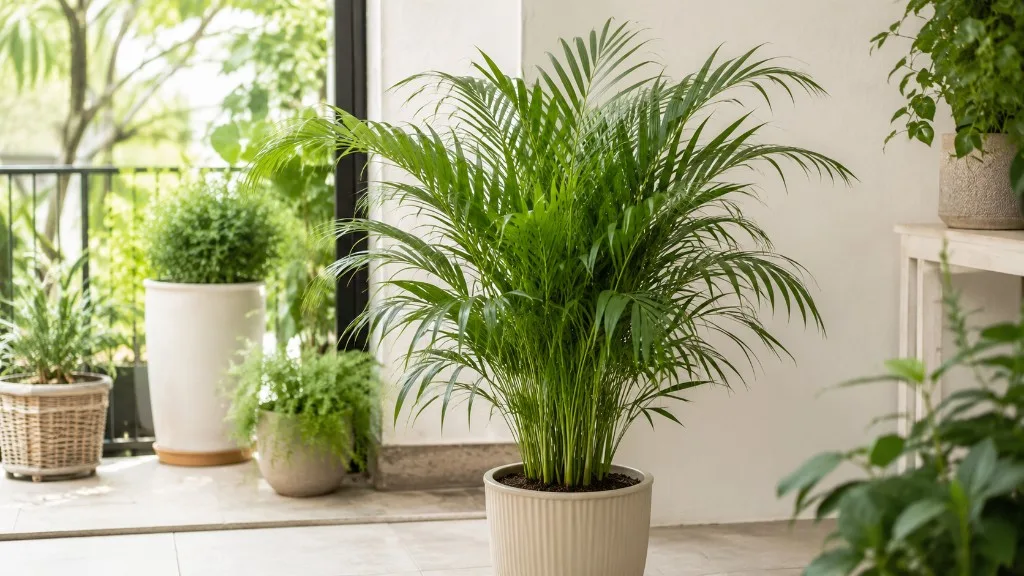
Parlor palm fertilizer is one of the easiest houseplant feeding routines to get wrong - not because the plant is picky about brands, but because it is a slow-growing, salt-sensitive understory palm that punishes enthusiasm far more than it rewards neglect. Chamaedorea elegans, the species sold as parlor palm or Neanthe bella palm, evolved on the dim, humid floor of Mexican and Central American rainforests. It builds new fronds gradually, rarely races for height, and processes nutrients at a modest pace. Feed it like a fast-growing tropical foliage plant and you get the classic failure pattern: brown leaflet tips, a white crust on the soil surface, stiff new fronds that brown before they fully open, and roots sitting in a salt-heavy root zone that looks wet but cannot absorb water effectively.
The practical goal for most home growers is straightforward: use a balanced water-soluble fertilizer diluted to half the label strength, apply it once a month during spring and summer while the plant is actively growing, and pause entirely from late fall through winter. Water onto moist soil, never onto dry roots. Flush the pot with plain water periodically to leach accumulated salts. Parlor palm is not a heavy feeder - light, consistent nutrition during the warm months beats any “more is better” approach.
This guide covers when to fertilize, how much to use, which formulas work best, how salt sensitivity shows up on the fronds, and the mistakes that cause more damage than skipping a month ever would.
Why Fertilizer Matters for Parlor Palm
Parlor palm uses nutrients to push out new fronds, extend its thin stems, and maintain root function in a container that leaches minerals with every watering. In its native understory habitat, organic matter cycles slowly through leaf litter and soil biology. Indoors, that natural replenishment is absent unless you add it. Fertilizer replaces what watering pulls out of the potting mix - but only up to the point the roots can absorb without salt damage.
The Royal Horticultural Society notes that Chamaedorea are naturally slow-growing and compact, typically reaching 30–60 cm (1–2 ft) indoors though they can grow taller over many years (RHS - Chamaedorea growing guide). That slow metabolism is the central fact about feeding.
Think of feeding as maintenance for a healthy, actively growing plant - not a rescue tool for a palm that is yellowing because it sits in too little light, dries out repeatedly, or struggles in waterlogged mix. Fix light and water first, then add nutrients on a conservative schedule. Half-strength liquid feeding and periodic salt flushing match how parlor palm handles nutrition in small containers far better than full label rates or slow-release spikes that dump unpredictable doses into a root zone that never dries fully.
Parlor palm is also highly sensitive to soluble salts from fertilizer and tap water minerals - a primary cause of brown leaflet tips even when soil moisture looks adequate (University of Maryland Extension - Fertilizer Toxicity). A parlor palm in moderate light may produce only a handful of new fronds per year. It simply does not need - and cannot efficiently use - the feeding schedule you might run on a coleus, pothos, or outdoor tomato.
When to Fertilize Parlor Palm: Active Growth vs Rest
Timing follows the plant’s metabolism more than the calendar on your wall. Feed when parlor palm is actively producing new fronds, and stop when growth slows sharply. Outdoors in tropical climates, that rhythm tracks warm weather and long days. Indoors, heated rooms and stable light can extend the window slightly - but most houseplant parlor palms still slow noticeably in late fall and winter, even when old fronds stay green and upright.
A palm that looks fine through December may not be growing - unused nutrients then accumulate as salts while roots absorb water more slowly.
Spring and Summer Feeding Window
Start feeding when you see fresh frond development - a new spear emerging from the crown, leaflets beginning to unfurl on an existing shoot, or roots visibly active if you gently check the drainage hole for white tips. In temperate climates, that usually means mid-spring through late summer, roughly March through September depending on your latitude, room temperature, and light exposure.
The RHS recommends applying a balanced liquid feed on a monthly basis through the growing season, from spring to autumn, for Chamaedorea (RHS - Chamaedorea growing guide). That monthly rhythm at half strength is the default most parlor palm owners should adopt. Growers in cooler springs or those keeping palms in dim offices can start a bit later - the signal is new tissue, not a fixed date on the calendar.
During this active window, half-strength balanced liquid feed once a month works for most container plants. A parlor palm in Parlor Palm light guide in a warm room may use nutrients slightly faster; one in a north-facing window may need feeding every six weeks instead of every four. Both are reasonable if fronds stay deep green, new growth opens cleanly without burnt edges, and the soil surface stays free of heavy salt crust.
| Month (temperate climate) | Growth phase | Feeding guidance |
|---|---|---|
| March–April | Waking up, new spears | Start half-strength liquid if active frond growth visible |
| May–August | Peak frond production | Monthly at half strength on moist soil |
| September | Slowing slightly | Final monthly feed or taper to every 6 weeks |
| October | Wind-down | Last light feed if still growing, then pause |
| November–February | Low growth indoors | No fertilizer for typical setups |
The table is a framework, not a law. Watch the plant: if it is building new fronds steadily, the timing is right. If it is static, solve light and water before adding food.
Fall Taper and Winter Pause
Taper feeding in early to mid-fall as day length drops and room temperatures cool. One practical approach: give a final half-strength feed in early fall if you still see new frond spears emerging, then stop entirely from late fall through winter - typically November through February for most indoor setups.
Do not fertilize parlor palm in winter under normal home conditions. Growth slows even when old fronds remain upright, and unused nutrients build up as harmful salts around the roots. Resume feeding in spring when new spears appear, not when you simply feel the plant “needs a boost” after a gray January.
Exception: if you grow under strong supplemental grow lights and the plant keeps producing new fronds all winter, you can feed lightly - still at half strength - but extend the interval to every six to eight weeks and watch closely for salt crust on the soil or pot rim. Even then, skipping winter feeds is safer than forcing growth with nutrients the roots cannot process. Parlor palm tolerates a skipped season far better than it tolerates a salt-heavy root zone.
Best Fertilizer Type for Parlor Palm
The best parlor palm fertilizer for most homes is a complete, water-soluble, balanced houseplant or palm formula with moderate nitrogen for frond development and modest phosphorus and potassium. You want enough nitrogen to support steady vegetative growth, phosphorus for root function at low levels, and potassium for overall stress tolerance. Micronutrients on the label - iron, magnesium, manganese - matter because pale new fronds on otherwise well-watered plants sometimes trace to trace-element gaps rather than macronutrient hunger.
Avoid shopping by the word “palm” on the bottle unless you already trust the brand’s dosing guidance. A standard balanced indoor formula used conservatively outperforms most specialty products applied at label strength on a slow-growing species.
Balanced Liquid Formulas and NPK Ratios
A 10-10-10 or 20-20-20 water-soluble fertilizer diluted to half strength is the default recommendation across horticultural sources for parlor palm. Equal ratios keep feeding simple when your main goal is steady frond development, not flowers or fruit - parlor palm does not produce showy blooms indoors anyway.
Some growers prefer a slightly nitrogen-leaning ratio such as 3-1-2 or 12-4-8 because nitrogen supports frond expansion and deep green color on palm foliage. That slight nitrogen emphasis is reasonable for a foliage palm. What matters more than chasing a perfect ratio is dilution and frequency: half strength, monthly during active growth, on moist soil.
Liquid formulas win for control. You mix, dilute, and apply a known dose. That matters in small pots where precision prevents localized hot spots of concentrated salts. For a typical container parlor palm in a 6- to 10-inch pot, mix fertilizer at half the label’s recommended strength for houseplants, then apply until a little water drains from the bottom. Discard saucer water so roots are not sitting in concentrated runoff.
If you are deciding between two bottles on the shelf: pick balanced or foliage-weighted, water-soluble, with micronutrients listed. Skip anything marketed primarily for roses, tomatoes, or heavy-feeding outdoor annuals at full strength.
Palm Formulas, Organic Options, and What to Skip
Palm-specific liquids work at half strength. Organic options like fish emulsion work if diluted conservatively. Slow-release granules and fertilizer spikes are poor choices in small pots - they release unpredictably and stack with liquid feeds. Skip liquid for two to three months if slow-release is already in fresh mix. Foliar feeding is unnecessary and can invite fungal issues.
Pet note: The ASPCA lists parlor palm (Chamaedorea elegans) as non-toxic to cats and dogs (ASPCA - Parlor Palm). That makes it a popular choice for pet households. Concentrated fertilizer solution and crusty, salt-heavy soil are still not safe for pets to ingest - keep bottles and runoff out of reach.
How Much Fertilizer to Use on Parlor Palm
If you remember one number, make it half strength - never full label strength on a container-grown parlor palm unless you have years of experience leaching salts regularly and the plant sits in bright light with excellent drainage.
Parlor palm is a light feeder - cut the label rate to one-half as the default. Quarter strength suits six-week intervals or plants with tip-burn history. Example: 1 teaspoon per gallon on the label becomes ½ teaspoon per gallon. Measure with a spoon or syringe. Go weaker still if you see salt crust or post-feed tip burn. Pale new fronds usually mean light or water stress, not hunger.
How Often to Fertilize Parlor Palm
Frequency should follow growth rate, container size, and salt management - not guilt about whether you are “doing enough” for a plant that grows slowly by design.
For most container parlor palms indoors:
- Once a month with half-strength balanced liquid from mid-spring through late summer
- Every six to eight weeks if the plant is in moderate light, a large pot, or fresh mix with starter fertilizer
- Once in early fall at half strength if frond spears are still emerging, then stop
- No fertilizer from late fall through winter for typical room-grown plants
- Optional light feed every six to eight weeks only if the plant keeps actively growing under bright light or grow lights in winter
That monthly rhythm beats feeding at every watering - constant low-dose fertilizer stacks salts faster than this slow-growing palm can use them.
| Situation | Suggested frequency | Strength |
|---|---|---|
| Active growth, bright indirect light | Monthly | Half label strength |
| Active growth, low to moderate light | Every 6–8 weeks | Half label strength |
| Early fall, slowing growth | Once, then pause | Half strength |
| Winter indoors, typical light | Skip | - |
| Winter under grow lights, new fronds | Every 6–8 weeks | Half strength |
| After Parlor Palm repotting guide into fresh mix | Wait 4–6 weeks | Then resume half strength |
| Recovering from over-fertilizing | Pause 4–8 weeks | Flush; resume at half strength |
The table is a starting framework. Your room, water quality, and watering habits matter. A parlor palm in hard tap water carries a double mineral load - fluoride, chlorine, and calcium salts add to fertilizer salts. If you see tip burn while feeding modestly, address water quality and flush the soil before increasing fertilizer.
Step-by-Step: How to Feed Parlor Palm Safely
Safe feeding is mostly about order of operations:
Here is a reliable routine:
- Check the calendar and the plant. Confirm you are inside the active growth window and see new frond spears or unfolding leaflets. If it is winter and nothing is growing, stop here.
- Inspect for salt crust or tip burn. White or yellowish residue on the soil surface or pot rim means skip feeding and flush instead.
- Water with plain water if the top layer feels dry. Bring the root zone to evenly moist before any fertilizer touches it. Never pour fertilizer onto dry soil - salts concentrate at the root surface and burn tissue on a species already prone to tip necrosis.
- Mix fertilizer at half strength in room-temperature water in a watering can with a narrow spout.
- Apply slowly and evenly across the soil surface, directing solution away from the crown where fronds emerge. Stop when a little water drains from the bottom.
- Discard drainage from the saucer within 30 minutes.
- Mark the date on a calendar or plant note so you do not double-feed in an enthusiastic week.
Feed the day after a regular watering when possible - the root zone is hydrated and you are not stacking concentrate onto dry peat.
Pre-Feed Checks and the Moist-Soil Rule
Before every feed, check soil moisture, newest frond condition, and season. If the top 3–5 cm of mix is dry, water with plain water first and fertilize the next day. If new fronds are pale or stuck half-open, check light and water before assuming hunger. Active growth gets food; slow winter metabolism gets plain water only.
Signs Your Parlor Palm Needs More Nutrition
Under-fertilizing is real but less common than over-fertilizing on container parlor palm, especially when plants start in nutrient-enriched potting mix or have been in the same pot less than a year. Most “hungry” diagnoses are actually low light, inconsistent watering, root damage from poor drainage, or natural senescence of older lower fronds.
When a plant truly needs more nutrients, signs are gradual and appear on new growth while older fronds still look reasonably healthy:
- Slower frond production during peak spring and summer despite good light and moisture
- Uniformly paler new fronds, not isolated yellow spots from pests or disease
- Smaller new leaflets than the previous generation, with thin, weak stems
- Overall lack of vigor after more than two years in the same depleted mix with no feeding
If only older lower fronds yellow while new growth looks fine, suspect natural senescence, overwatering, or underwatering before fertilizer. Parlor palm drops older fronds periodically as the clump matures; that is not automatically a nutrient call.
The RHS notes that if growth is poor despite good growing conditions, try feeding once a month with a general liquid feed from spring to autumn (RHS - Chamaedorea growing guide). That advice assumes light, water, and drainage are already correct - which is the order you should follow at home.
When you do increase feeding, move from every six weeks to every four weeks at half strength for one season - not from monthly to double dose overnight. Parlor palm responds to frequency adjustments more safely than concentration spikes.
Signs of Over-Fertilizing and Salt Buildup
Over-fertilizing is the dominant fertilizer problem on parlor palm. Symptoms often appear one to two weeks after a too-strong or too-frequent feed, or gradually when salts accumulate from winter feeding, hard water, and never flushing.
Watch for these signals:
- Brown, crispy leaflet tips and margins, especially on newer fronds or shortly after a feed
- White or yellowish crust on the soil surface, pot rim, or drainage holes - classic soluble salt accumulation
- Sudden frond wilt or yellowing despite moist soil - damaged roots cannot take up water effectively due to osmotic stress
- Stiff, brittle new fronds that brown at the tips before fully opening
- Stunted new growth with burnt edges on the smallest unfolding leaflets
- Visible salt deposits on terracotta pots after months of tap water and fertilizer use
High soluble salts cause osmotic stress - burn looks like drought even when soil is wet (University of Maryland Extension - Fertilizer Toxicity). Hard water plus fertilizer creates a double mineral load; flush and switch to filtered water before increasing feeds.
How to Flush Parlor Palm After Over-Feeding
If you suspect burn, stop fertilizing immediately and leach the soil. Flushing is the rescue tool when salts get ahead of you on a salt-sensitive palm.
- Move the pot to a sink, tub, or outdoor spot where copious drainage is acceptable.
- Water slowly with plain room-temperature water - filtered or rainwater if tap water is hard or high in fluoride - until water runs freely from the drainage holes. Let it drain completely.
- Repeat two to four times over 30–60 minutes, using roughly three to four times the pot’s volume of water total. Allow full drainage between passes. The goal is to pull dissolved salts out of the root zone, not to leave the plant sitting in soggy mix for days.
- Pause all feeding for 4–8 weeks while you monitor new frond emergence.
- Resume at half strength only when new fronds open without burnt margins and salt crust is gone.
Badly burned leaflet tips will not green up again - judge recovery by new growth, not old damage. Trim Brown Tips on Parlor Palm with clean scissors if they bother you aesthetically, but cut only the dead tissue and leave green leaflet material intact.
Many experienced growers flush with plain water every six to eight weeks during active growth as preventive maintenance, even when feeding at half strength monthly. That habit matters especially for palms kept in the same pot for years without repotting, where salts from tap water and fertilizer compound silently until tips brown.
Salt Sensitivity, Water Quality, and Mineral Buildup
Parlor palm’s salt sensitivity reflects thin leaflet tissue and slow growth in an indoor environment where fertilizer, hard water, and water softeners all add minerals. The palm needs low, steady input and periodic leaching - not zero minerals.
Fluoride and chlorine in tap water cause sharply defined brown tips independently of fertilizer. Water softeners add sodium - visible as white crust on soil and pots. If tips keep browning despite correct feeding, switch to filtered or rainwater and flush before changing your schedule. Salt deposits on terra cotta pots are a diagnostic clue. Palms in the same container three or more years with regular feeding and tap water likely need flushing or repotting regardless of how the fronds look.
Seasonal and Situational Adjustments
Seasonal feeding includes transitions, not just on/off switches. In late summer, hold your monthly rhythm but watch whether new spears are still emerging - if growth stalls in August, taper to every six weeks rather than forcing August and September feeds on a plant that is already winding down.
After Repotting, Stress, and Multi-Frond Containers
After repotting into fresh potting mix that already contains fertilizer or compost, wait four to six weeks before the first liquid feed. Many commercial mixes include starter charge; doubling up causes immediate tip burn on sensitive palms.
After stress - drought wilt, cold damage, pest infestation, or root disturbance - hold food until the plant shows stable new frond development. Fertilizer on damaged roots concentrates salts around tissue that cannot absorb nutrients or water effectively.
Multi-frond containers: Parlor palm is often sold as a clump of several stems in one pot. All stems share the same root mass and salt load. Feeding frequency does not increase because there are more fronds - if anything, the shared root zone in a unchanged pot makes conservative feeding and regular flushing more important as years pass.
Propagation divisions need no fertilizer until they are established with active new roots and visible frond growth; then use quarter to half strength at wide intervals.
Fertilizer and Other Parlor Palm Care
Fertilizer only works when light, water, and soil are already in range. Parlor palm in bright indirect light uses nutrients slightly faster than one in deep shade, where sparse fronds are usually a light problem. Consistently moist but never waterlogged mix keeps uptake steady. Target soil pH 5.5 to 7.0 - University of Florida IFAS recommends maintaining medium pH between 6.0 and 7.0 to reduce fluoride uptake on sensitive Chamaedorea. After repotting, stay on half-strength monthly rather than doubling doses. Fix environment first - humidity, stable temperature, and distance from heating vents reduce tip browning misattributed to hunger.
Conclusion
Parlor palm fertilizer success comes down to matching a light, conservative feeding plan to real growth - not to a rigid calendar that ignores your light, pot age, and season. Use a balanced water-soluble formula at half strength, feed once a month during active spring and summer growth, and stop in late fall and winter unless you are running strong grow lights and seeing continuous new fronds. Apply to moist soil only, flush salts periodically with plain water, and treat brown leaflet tips as a salt or water-quality warning before reaching for a stronger dose.
When in doubt, less is more. Parlor palm tolerates a skipped month - or an entire winter without food - far better than it tolerates full-strength fertilizer, winter feeding, or slow-release spikes in a small pot. Watch new fronds: soft green leaflets opening cleanly mean your rhythm is working. Brown tips, white crust, and stiff burnt new growth mean pull back, flush, and fix light and water before you open the bottle again. Get those pieces aligned and fertilizer becomes simple maintenance - the kind that supports a slow, elegant palm without turning a low-demand houseplant into a salt-stressed one.
When to use this page vs other Parlor Palm guides
- Parlor Palm overview - Start here for whole-plant context before deep-diving this topic.
- Parlor Palm problems hub - Jump to symptom-specific fix guides when this care topic does not resolve the issue.
Related Parlor Palm guides
- Parlor Palm overview
- Parlor Palm watering
- Parlor Palm light
- Parlor Palm soil
- Parlor Palm propagation
- Parlor Palm repotting
- Parlor Palm problems
Related tool
Try the Fertilizer Dilution Calculator with parlor-palm pre-selected to estimate needs for your setup.