Parlor Palm Propagation: Division and Seed Guide
Parlor Palm Propagation: Division and Seed Guide
Parlor Palm Propagation: Division and Seed Guide
Parlor palm propagation is one of the most misunderstood topics in houseplant care because the plant looks like it should behave like a pothos. A full, multi-stem Chamaedorea elegans in a nursery pot suggests easy splitting or quick stem rooting - but the biology says otherwise. Each parlor palm grows from a single unbranched trunk with a terminal crown; it does not produce nodes along the stem that can restart after cutting, and it does not spread through runners you can casually detach. The honest home answer is narrower than most propagation guides admit: careful division of multi-stem clumps during repot is the only method that routinely works indoors, while seed propagation belongs to nurseries and dedicated growers, not weekend kitchen experiments.
That framing is not discouragement - it is accuracy. The global parlor palm trade runs on millions of greenhouse-grown seedlings, not living-room divisions. If you own a healthy clump and need a second plant for another room, division at repot can work. If you want five palms fast, buying them costs less stress than fighting the plant’s root sensitivity. This guide explains what is actually possible, what fails every time, and how to divide without turning one good pot into two struggling ones.
Why Most Parlor Palms Are Bought, Not Propagated at Home
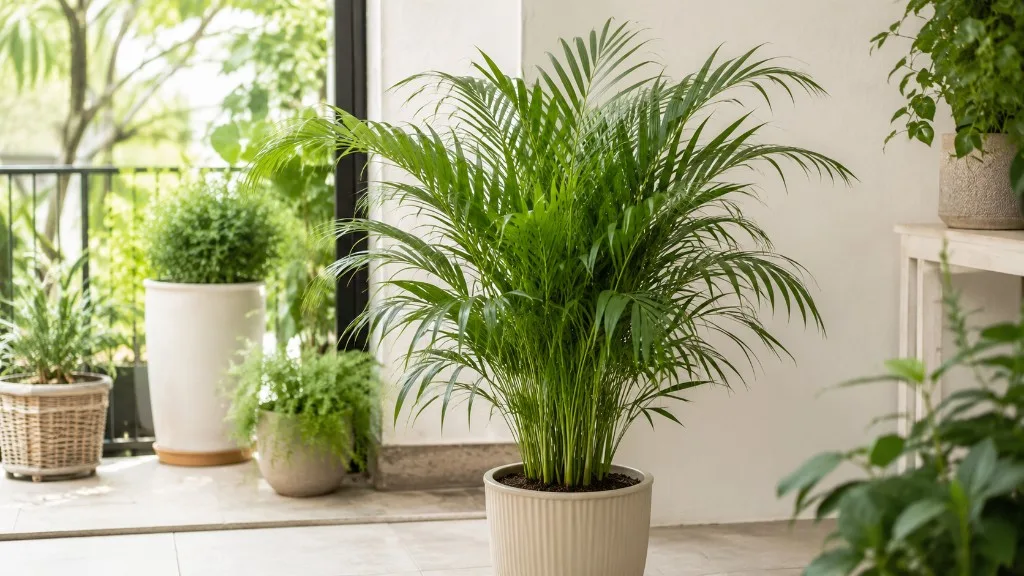
Walk into any plant shop and you will see parlor palms sold as lush, upright clusters - sometimes called bamboo palms in passing conversation, though true Chamaedorea elegans has its own distinct look. Those full pots rarely represent one magically branching individual. They are almost always several separate seedlings planted together to create density for retail display. Nurseries produce them from seed at scale, grow them in shaded greenhouse benches for months or years, then pot multiples into one container. Home growers inherit that appearance and assume propagation should be as simple as snipping a stem or pulling a pup.
In practice, most indoor gardeners never propagate parlor palms at all. They buy a 6-inch pot when they want one on a desk, upgrade to a 10-inch cluster when they want a floor plant, and replace a tired specimen when lower fronds thin out after years of low light. That is a rational workflow. Division is a maintenance decision for an overcrowded root ball, not a default hobby project. Treating propagation as optional - and purchase as the normal path - matches how the plant enters homes worldwide.
What Actually Goes Into Commercial Parlor Palm Production
Commercial production of Chamaedorea elegans is a seed industry. The CABI Compendium notes that over 400 million parlor palm seeds - overwhelmingly sourced from Mexico - are distributed annually for cultivation across the United States, Europe, Australia, and Asia. Those seeds germinate in controlled warmth and humidity, then grow slowly in partial shade until they reach saleable size. The species is native to rainforest understories in Mexico and Central America, where seedlings establish in moist, shaded leaf litter - conditions greenhouses approximate far better than most apartments.
Retail pots with five, eight, or twelve stems are assembled for aesthetics. Interior stems often receive less light and decline faster than outer ones, which is one reason mature clumps look uneven over time. Understanding that supply chain reframes your choices: when you buy a parlor palm, you are buying years of nursery time and batch seed genetics, not a single divisible organism like a spider plant parent with endless plantlets. Home division can separate those nursery-grouped individuals, but it cannot manufacture new plants from nothing the way seed propagation does at commercial scale.
Why Home Propagation Expectations Often Miss the Mark
Social media propagation culture trains people to expect water jars, leaf cuttings, and rapid rooting for every green thing in a pot. Parlor palms break that template. Guides that list “stem cuttings” or “water propagation” for Chamaedorea elegans are describing methods that work for aroids and vines, not palms. A cut frond has no bud to awaken; a severed trunk has no lateral meristem to branch. Attempts still happen - stems sit in water until they rot, or leaf segments mold in perlite - because the plant tolerates neglect elsewhere and owners assume it will tolerate this too.
The second expectation error is timing. Division is not an anytime project you squeeze in on a random Saturday because you want a gift plant. It is a repot-coupled surgery on a fibrous root system that hates disturbance. Doing it when roots are not ready, or when the plant is already stressed from overwatering or cold drafts, converts a optional experiment into a rescue operation. Setting expectations early - buy when you need more plants, divide only when repot evidence supports it - prevents the most common propagation regret: two wilted halves where one handsome clump used to sit.
Understanding Parlor Palm Biology Before You Divide or Sow
Palms are not generic houseplants with interchangeable propagation rules. Chamaedorea elegans belongs to Arecaceae, the palm family, and shares their central constraint: growth emerges from a single apical bud at the crown. Damage that bud and the trunk cannot resprout from dormant nodes lower down the way a fiddle-leaf fig might after a hard prune. The trunk is a column of old leaf bases, not a stem full of hidden activation points. That anatomy governs every method you might consider.
The species is also dioecious, meaning individual plants bear either male or female flowers, not both. Indoor specimens do flower - small yellow-cream panicles in spring on mature plants - but viable seed requires pollination between sexes. A lone palm in a studio apartment may bloom for years without producing fertile fruit. Seed propagation is therefore not just technically demanding; it is biologically gated by plant sex and hand pollination success in most homes.
Multiple Stems Usually Mean Multiple Plants
When you see many slender cane-like stems rising from one soil surface, you are usually looking at several individual parlor palms sharing a pot, not one palm branching like a shrub. Each stem has its own root crown where fronds emerge. Nurseries plant them close together so the container looks mature on the shelf. Over time, roots intertwine below the surface, which makes separation possible - but also explains why division feels like untangling a knot rather than popping off a clean offset.
Stem counts vary by pot size and producer. A small 4-inch pot might hold three to five plants; a large floor specimen can contain a dozen or more. Outer stems typically look healthier because they receive more light; inner stems yellow and die back as the clump ages - a normal consequence of crowded pot design, not necessarily a disease you can fix by propagating. Before you divide, identify distinct stem clusters with their own root attachments, not just thin weak shoots that lack independent roots. A stem without roots is not a division candidate; it is a casualty of poor light distribution inside a display pot.
Why Stem and Leaf Cuttings Cannot Work
Parlor palm cuttings do not root because the tissue you can easily remove - a frond, a leaf segment, or a chopped trunk - lacks the meristematic tissue required to build new roots and a new crown. A leaf cutting might sit in water for weeks without collapsing, giving false hope, but it will never develop a shoot or trunk. The CABI Compendium records seed propagation as the standard method for Chamaedorea elegans - not stem sections. A trunk cutting without its terminal bud has no growth point; it cannot branch like a dracaena or resprout like some woody herbs.
Water propagation fails for the same reason, not because your jar was too small or the water stale. Palms are not designed to root from arbitrary stem sections. Unlike monstera nodes or pothos internodes, the parlor palm stem is not a propagation organ. If a tutorial shows rooted “palm cuttings,” check the species carefully - it is often misidentified dracaena, cordyline, or lucky bamboo, which are not true palms despite the common name overlap. For Chamaedorea elegans, the viable paths are division of rooted individuals or germination from seed - nothing in between works reliably.
Division: The Only Realistic Home Method
Division means separating one multi-plant container into two or more pots, each retaining stems, crown tissue, and enough roots to support transpiration after the split. It is the only parlor palm propagation method that home growers can execute without greenhouse infrastructure. It is not easy, not fast, and not guaranteed - but when conditions align, it is real.
The critical rule this guide stresses: divide only during repot, when you can see the root ball and assess whether separate crowns exist. Do not attempt division by hacking soil away from the pot edge while the plant remains root-bound and blind to inspection. Repot day gives you visibility, fresh mix, appropriately sized containers, and a natural recovery window in active growth. Treat division as part of Parlor Palm repotting guide surgery, not a standalone impulse.
When Division Makes Sense
Divide a parlor palm when the pot is clearly overcrowded - roots circling the drainage holes, mix drying unevenly, water running straight through - and you can see at least two stem groups with independent root masses once you remove the plant. Spring through early summer is the best window, when warmth and brighter days support root repair. Avoid division in late fall or winter unless you supplement light and warmth; cold, slow metabolism extends shock and invites rot in wet mix.
The parent plant should be healthy, not rescued. Yellowing from chronic overwatering, active spider mites, or recent shipping stress are disqualifiers. Stabilize the plant first; propagate later. Water the pot two days before repot so the root ball holds together but is not sopping - a practical trick that reduces crumbling during handling. Gather one pot per division plus one for the remainder, fresh well-draining mix (standard indoor potting soil with 20% perlite is a solid baseline), sterilized cutting tools, and a workspace where you can lay the plant on its side without snapping fronds.
Division does not make sense for a single-stem parlor palm in a small pot just because you want duplication. One trunk equals one plant. You cannot split what does not exist. In that case, buying another seedling is the correct answer, not forced surgery on a lonely specimen.
Step-by-Step Division at Repot Time
Start by sliding the clump out of its pot. If it resists, squeeze plastic pots gently or run a knife around the perimeter of rigid containers - never yank by the fronds. Shake or brush away only the outer loose mix; keep the core root mass intact so you can see natural seams between stem groups. Work slowly. Parlor palm roots are fine and fibrous, breaking more easily than the thick roots on a peace lily or zz plant.
Identify a section with two to four stems and a visible root portion that could stand alone. Smaller divisions recover faster than huge chunks with eight stems still competing for the same limited root volume after the cut. Using a sterilized knife or hori-hori, slice through the root ball along the natural gap between crown zones. If roots are tightly braided, tease them apart with fingers before cutting - cut only where necessary. Each division needs roots, stems, and healthy green crown tissue; a stem that snaps free without roots attached will not establish.
Pot each section into a container only slightly larger than its root mass - often the same size or one inch up, not a dramatic jump. Bury crowns at the same depth they grew before; do not plant stems deeper to stabilize a wobbly division. That deep burial suffocates crown tissue. Fill with fresh mix, firm lightly to remove large air voids without compacting, and water lightly once so the mix settles. Place divisions in Parlor Palm light guide, not direct sun, and hold fertilizer for at least six to eight weeks. Expect some frond droop for days; new upright spears are the success signal, usually visible within four to six weeks in warm conditions.
Choosing Which Clump to Separate
Not every stem group deserves its own pot. Prioritize divisions where outer stems have firm green petioles and visible root flair at the soil line. Skip interior stems that are mostly brown, paper-thin, or loose in the mix - they are often declining already and will not become strong standalone plants. If you need one extra plant, take a modest division and leave a healthy core cluster in the original pot rather than splitting evenly into many weak pieces.
Aim for balance: each new pot should have enough leaf area to photosynthesize and enough root area to supply water, without so much top growth that roots cannot keep up. When in doubt, make fewer, larger divisions rather than many tiny ones. Two pots with four stems each outperform four pots with two stems each if root mass per pot is thin. You can always divide again years later at another repot if the plant thrives - repeating the operation on a recovered specimen is safer than over-splitting once.
Aftercare for Newly Divided Parlor Palms
Newly divided parlor palms are more fragile than the parent clump because root loss reduces water uptake while leaves continue losing moisture. Your job for the first month is boring stability: consistent light, cautious water, no fertilizer, no repeated repotting, no relocation every few days. The plant cannot speak, but wilting fronds and stalled spear growth tell you the balance is off.
Resist checking roots daily. Each unpotting re-traumatizes tissue that is trying to callus and regrow. Set the pot in a stable spot and observe leaf posture from a distance. Gentle care beats anxious interference - the same principle that keeps mature parlor palms alive for decades with modest attention.
Watering and Humidity During Recovery
Water less than you think for the first two weeks. The root system is smaller and cannot process a full soak the way an established clump could. Let the top 3–5 cm (1–2 inches) of mix approach dryness between light waterings, then moisten evenly until a little drains from the holes. Empty saucers promptly. Chronic overwatering after division is the fastest route to root rot on Parlor Palm, because damaged roots cannot oxygenate wet mix efficiently.
Humidity in the 40–60% range suits recovery in most homes. If your air is very dry - below 30% - a humidity tray or grouping divisions near other plants helps reduce frond edge crisping while roots rebuild. Misting leaves is optional and temporary; it does not replace sound watering at the root zone. Temperature stability matters too: keep divisions in the 18–27°C (65–80°F) band and away from heating vents that desiccate foliage overnight.
After four weeks, if spears are opening and older fronds hold color, gradually normalize watering toward your standard parlor palm rhythm - typically allowing the top layer to dry between thorough soaks during active growth. Do not fertilize until you see clear new spear development; premature feeding on a reduced root system causes tip burn more often than growth.
Signs Your Division Succeeded or Failed
Success looks like firm green spears emerging from crowns, fronds that recover from initial droop without widespread yellowing, and mix that dries on a predictable weekly rhythm in warm months. One or two lower fronds may brown - older leaves sacrificing themselves during stress is normal. Failure looks like progressive yellowing up the plant, blackening crown tissue, sour-smelling mix, or stems loosening in the pot when lightly tugged after three weeks.
If failure signs appear, stop watering and assess crown firmness. Mushy crown equals lost plant - dispose and sanitize the pot. If crowns are firm but roots stalled, verify drainage and light; sometimes a division simply needs more time in cool rooms. Do not compensate with fertilizer or bigger pots. If only one division fails while another thrives, you likely split unevenly - a learning outcome, not proof that division never works.
Seed Propagation: A Professional, Not Hobby, Path
Parlor palm seed propagation is real science, not a cute weekend project. Seeds germinate; seedlings grow; nurseries build entire product lines on that cycle. But indoors, without both male and female flowering plants, controlled pollination, warm germination benches, and patience measured in months, seed propagation is an advanced specialty - not the practical answer for someone who wants a second desk palm.
Say that plainly so nobody wastes a year waiting for a mango-sized pot to set fruit. Flowering on a windowsill is common; fertile seed set in a single-plant household is rare. Even collectors with both sexes nearby face germination timelines that punish impatience. Respect seed propagation for what it is: the professional foundation under the plant you probably should have bought yesterday.
Pollination, Harvesting, and Germination Basics
Female parlor palms - identified when fruit develops after pollination - produce small round fruits that ripen from green to black, roughly 4–7 mm in diameter, on orange-tinted stalks after flowering. Male plants produce pollen on their panicles; thrips, beetles, and wind pollinate in nature, but indoors you improve odds by hand pollination with a small brush, transferring pollen between flowers on several plants over multiple days while blooms are open.
Harvest fruit when ripe - often when fruits loosen or drop - then extract seeds and clean pulp. Fresh seed germinates best; viability drops as seed ages, which is why hobby packets stored for years disappoint. Soak seeds in warm water for 24–48 hours to soften the outer shell before sowing in a sterile, well-draining seed-starting mix. Maintain warmth around 21–29°C (70–85°F) with consistent moisture, not waterlogging. The Missouri Botanical Garden notes that black fruit appears on dioecious plants after pollination; germination can take less than one month to more than six months depending on freshness and environment.
Seedlings need shaded, humid growth for a long juvenile phase before they resemble retail plants. Damping off - fungal collapse of seedlings in overly wet trays - is a serious risk, which is why professionals use sterile media, airflow, and careful moisture monitoring. None of that is impossible at home, but it is a different hobby than keeping a mature parlor palm alive on a bookshelf.
Why Nurseries Grow From Seed at Scale
Nurseries propagate parlor palms from seed because division does not scale. You cannot produce hundreds of thousands of uniform seedlings by hand-splitting mature pots. Seeds allow batch sowing, climate-controlled germination, and graded transplanting into multi-plant display containers. Mexican production regions supply the global pipeline noted in CABI trade data - a reminder that your living-room division, if it succeeds, produces one or two plants, not a product line.
For home growers, the seed path makes sense only if you are deliberately breeding or experimenting, you have both sexed plants flowering together, and you enjoy slow horticulture. Everyone else - including most enthusiastic plant parents - gets better return on time and money by purchasing a healthy seedling from a reputable seller. A $15 to $40 young parlor palm already has months of nursery care embedded in it. Competing with that economics via seed is a passion project, not a propagation shortcut.
Common Propagation Mistakes and What to Do Instead
The most damaging mistake is attempting stem or leaf cuttings because generic propagation content says every houseplant roots in water. For Chamaedorea elegans, that path wastes material and spreads misinformation to friends you gift rotting stems. Do instead: verify species, then choose division at repot or purchase.
Dividing outside repot visibility is the second classic error. Stabbing a knife blindly into a root-bound pot to “free” a stem damages more roots than a controlled repot separation and rarely yields a viable independent plant. Do instead: wait for scheduled repot, unpot fully, and only separate where crowns and roots clearly part.
Over-splitting a clump into many tiny pots starves every division during recovery. Do instead: create two or three substantial sections with balanced roots and shoots. Overwatering immediately after division suffocates damaged roots. Do instead: light, spaced watering for two weeks, then adjust by moisture checks. Dividing a sick parent spreads weakness. Do instead: restore health first - fix watering, pests, and light - then propagate from vigorous tissue.
Expecting instant fullness from a small division leads to disappointment. A separated two-stem pot looks sparse compared with a nursery multi-plant container until years pass. Do instead: either buy a retail cluster for display impact or accept that home division produces starter specimens, not instant showroom density.
When to Skip Propagation and Buy Another Plant
Buy rather than divide when your palm is a single-trunk specimen, when the plant is already stressed, when you want a floor-scale display quickly, or when the clump is healthy but not overcrowded and you are only propagating from curiosity. A thriving parlor palm that fits its pot and dries on a steady rhythm does not need surgery for your entertainment.
Also skip division if you lack a stable bright spot for recovery pots. Divisions need the same bright indirect light mature plants prefer - not a dark hallway “temporarily.” If you cannot offer that, propagation becomes abandonment with extra steps. Purchasing from a nursery gives you a plant already acclimated to commercial growing conditions, often grouped for fullness, with risk transferred to the seller’s bench rather than your scissors.
Remember that parlor palms are listed as non-toxic to cats and dogs by the ASPCA, which makes buying an additional specimen an easy pet-safe expansion - no propagation required. For most readers in most situations, adding another purchased plant is the correct, honest, low-risk choice. Division remains the tool for when you already own an overcrowded multi-stem clump and repot day arrives - not the default way people should plan to acquire parlor palms.
Conclusion
Parlor palm propagation at home boils down to one dependable method and one professional method - nothing else. Division during repot can separate the multiple individuals nurseries planted together, provided each piece keeps crowns, stems, and roots intact and you follow cautious aftercare through the first month. Seed propagation is how the industry actually makes parlor palms, but it demands dioecious flowering, pollination, warm germination, and months of seedling care that most indoor growers will never need to replicate.
Stem cuttings, water jars, and leaf tricks do not work for Chamaedorea elegans because palm anatomy does not offer restart points along the trunk. Most people who love Parlor Palm overview will buy it, not propagate it - and that is normal, efficient, and aligned with how the species reaches homes worldwide. Use division when repot evidence supports it; buy when you want another healthy cluster without the risk. Either path respects the plant’s slow, crown-driven biology better than forcing it into propagation templates built for vines.
When to use this page vs other Parlor Palm guides
- Parlor Palm overview - Start here for whole-plant context before deep-diving this topic.
- Parlor Palm problems hub - Jump to symptom-specific fix guides when this care topic does not resolve the issue.
Related Parlor Palm guides
- Parlor Palm overview
- Parlor Palm watering
- Parlor Palm light
- Parlor Palm soil
- Parlor Palm fertilizer
- Parlor Palm repotting
- Parlor Palm problems
Related tool
Try the Propagation Success Calculator with parlor-palm pre-selected to estimate needs for your setup.