Root Rot on Parlor Palm: Causes, Checks & Fixes
Quick answer
Root rot on parlor palm (*Chamaedorea elegans*) follows fine roots sitting in soggy, airless mix-often after winter calendar watering in low light. First step: stop watering, unpot gently, and inspect whether roots are firm and pale or mushy and dark before trimming and repotting.
Root Rot on Parlor Palm: Causes, Checks & Fixes
This guide covers root rot on Parlor Palm. See also the general Root Rot guide, watering, and light pages for this plant.
Root Rot on Parlor Palm: Causes, Checks & Fixes
Quick answer
Root rot on parlor palm (Chamaedorea elegans) is confirmed root decay from chronically wet, poorly drained potting mix-not a mystery fungus you need to spray away. This clustering palm carries multiple slender canes with fine Arecaceae roots that suffocate quickly when oxygen cannot reach the root zone. In dim rooms, especially through winter, the same watering rhythm that worked in summer keeps the mix soggy for weeks while transpiration drops.
This page is for rescue after you suspect or confirm mushy roots. If stems are still firm and you mainly need dry-down checks, start with overwatering on parlor palm first.
First step: stop watering immediately. Lift the nursery pot out of any cachepot, empty standing runoff, and plan a gentle unpot within a day or two-not a rushed tear-apart, because Chamaedorea roots fracture easily.
Why parlor palm gets root rot
Fine roots and the low-light evaporation trap
Unlike succulents or bird-of-paradise with thicker storage roots, parlor palm depends on a living mat of fine roots near the soil surface. It does not store water in rhizomes. When mix stays saturated, those roots lose oxygen first and decay-often before the arching fronds show dramatic collapse.
NC State Extension lists Chamaedorea elegans as needing good drainage with soil moist and occasionally dry-not permanently wet. In low light, the plant uses water slowly. One thorough soak followed by a pot that never dries at the top inch is enough to start anaerobic decay.
Calendar watering, oversized pots, and cachepots
The most common indoor route to rot is watering on a calendar instead of checking the pot. Oversized decorative containers leave a ring of wet mix the roots never touch-it stays stale for weeks. Cachepots that trap runoff re-wick water into the mix overnight even when the inner pot has drainage holes.
Winter makes this worse. Cooler dim rooms slow growth while many growers maintain summer frequency. The parlor palm watering guide explains the seasonal dry-down shift; root rot is what happens when that shift never arrives.
Fluoride, salts, and wet-soil confusion
Parlor palm is moderately fluoride-sensitive. Fluoride and accumulated fertilizer salts damage leaf tips even when moisture is technically correct-but chronic overwatering compounds the problem because stressed roots cannot regulate uptake. Brown tips on wet sour soil are a different emergency than dark pinpoint necrosis on firm canes with evenly moist mix. See brown tips on parlor palm when water chemistry is the main suspect.
What root rot looks like on parlor palm
Lower frond yellowing with wet mix
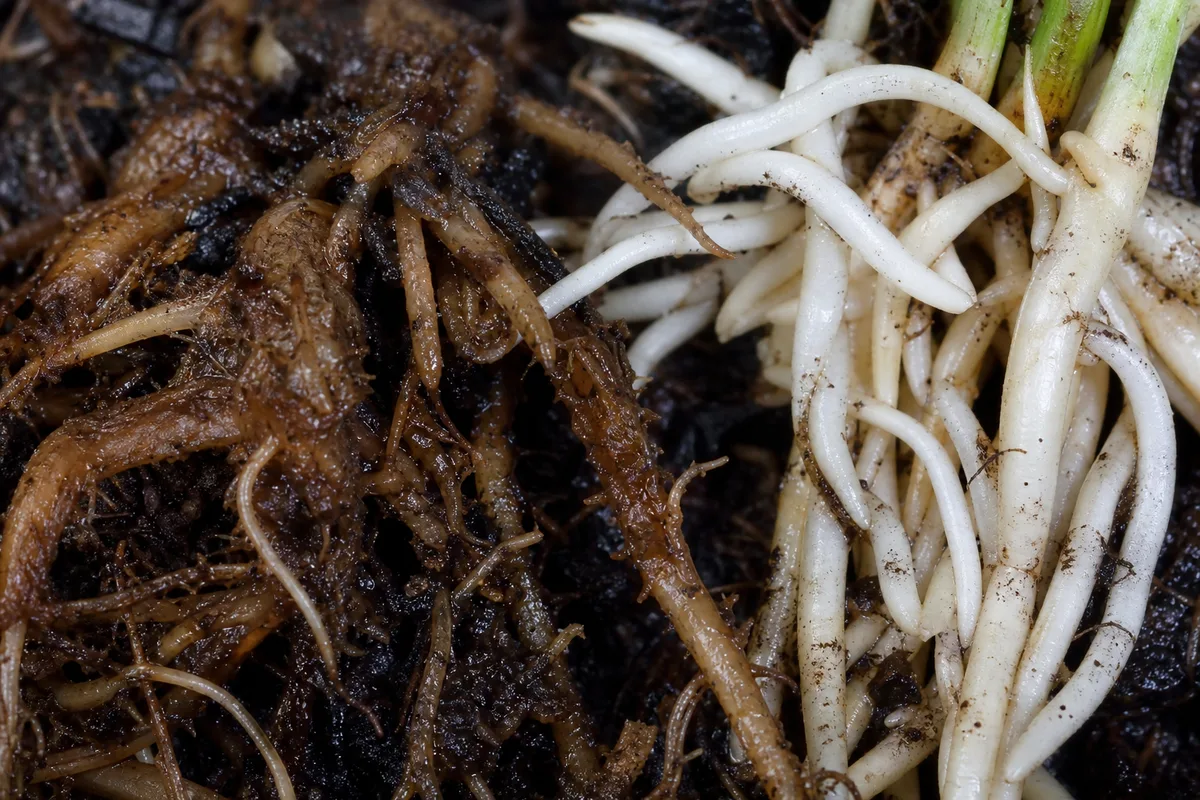
Root Rot symptoms on Parlor Palm - compare with healthy tissue on the same plant.
Early rot often starts on older lower fronds while newer spears still look green. Widespread yellowing at multiple levels-not just one aging frond at the base-matters more than a single senescent leaf. The confusing pattern is limp fronds on damp soil: the plant wilts because damaged roots cannot move water, not because the mix is dry. Adding water makes decay worse.
Terminal spear and crown involvement
Each cane carries a terminal spear-the folded new frond at the center. If that spear browns, collapses, or feels soft when you pinch it gently, rot may be moving up from the roots into the crown. That is the hardest stage to reverse on parlor palm because new growth originates from that point.
Single-cane decline in a cluster
Multi-stem clumps can lose one cane while neighbors look fine. The failing stem often sits over the wettest zone-near a blocked drain hole or in the outer ring of an oversized pot. Press each cane base at the soil line: firm tissue on most stems with one soft declining cane means partial salvage is possible.
Root rot vs. underwatering vs. overwatering stress vs. fluoride tip burn
| Pattern | Pot weight | Soil | Fronds / canes | Roots on inspection | Likely issue | First direction |
|---|---|---|---|---|---|---|
| Confirmed root rot | Heavy | Wet days; sour smell | Yellow + limp on damp mix; soft cane bases | Dark, slimy, break apart | Decayed roots | Rescue protocol below |
| Overwatering stress (early) | Heavy | Wet surface | Some yellow lower; stems still firm | Mostly pale, firm | Oxygen stress, not full decay | Overwatering guide dry-down |
| Underwatering | Light | Dry throughout | Crisp tips; droop | Firm, dry, intact | Drought | Deep soak; underwatering guide |
| Fluoride / salt tips | Normal weight | Moist, not sour | Dark pinpoint tips; firm canes | Firm, pale | Water chemistry | Brown tips guide |
| Wet-soil wilt only | Heavy | Wet | Whole clump limp | Mushy roots | Advanced rot | Unpot now |
If the whole clump goes limp with wet mix but stems are still firm, read wilting on parlor palm to separate wet wilt from dry wilt before you unpot.
How to confirm root rot
Work through these checks in order before repotting:
- Soil moisture and pot weight - Lift the pot. If it feels heavy days after the last watering and the top inch stays cool and damp, the root zone is not drying. Compare with a time you know the plant was appropriately watered.
- Smell and drain flow - Sour or musty odor from the drain hole confirms stale wet mix. Pour a little water through-if it pools or drains slowly, blocked holes or dense mix may be holding water against fine roots.
- Per-cane firmness - Press each slender stem at the soil line. Healthy tissue feels firm. Soft, dark, or collapsed bases suggest rot advancing upward.
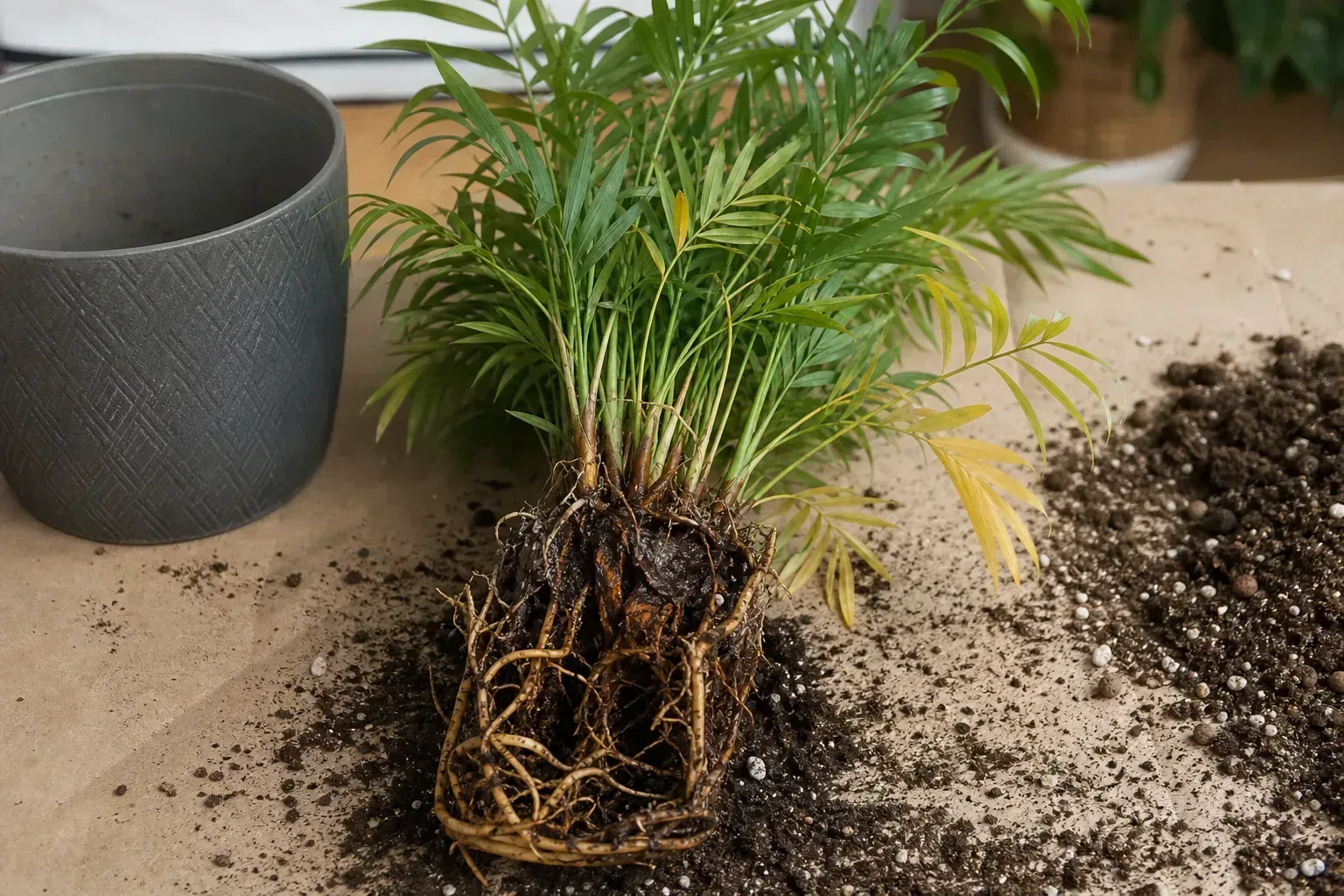
- Gentle unpot and root inspection - Slide the root ball out with minimal tugging. Healthy parlor palm roots are firm and pale to light tan. Rotted roots are brown, translucent, or slimy and may fall apart when touched. Rinse away old mix carefully; rough handling breaks fragile roots that were still alive.
- Rule out overwatering-only stress - If roots are mostly firm and pale, stems are solid, and smell is neutral, you may not need full trim-and-repot. Stop watering until the top inch dries, improve light and airflow, and follow the overwatering guide. Return to this rescue protocol only when mushy tissue is confirmed.
First fix: rescue protocol for parlor palm
Make one clear first move: stop all watering and remove the plant from any standing water. Then work through severity before you touch roots.
Severity branches
- Mild - Few yellow lower fronds, slightly sour smell, but firm cane bases and mostly pale roots with limited mushy tips. Trim only clearly decayed root ends, repot into the same or slightly smaller pot with fresh airy mix, water lightly once, then resume top-inch dry-down checks.
- Moderate - Multiple yellow fronds, wet mix for days, 30–50% mushy roots, firm central spears still intact. Trim all soft tissue, reduce canopy by removing fully dead fronds only, repot to root mass-not decorative pot size-and hold fertilizer until new growth.
- Severe - Soft terminal spear, most roots slough off as mush, or every cane base collapses. Salvage any firm cane with attached healthy roots into a small pot; accept that the rest may not recover. Do not fertilize or aggressively prune living green fronds hoping to force growth.
Numbered rescue steps
- Stop watering and improve conditions - Empty saucers and cachepots. Move the clump to bright indirect light and stable room air-not a dark recovery corner. No fertilizer.
- Unpot gently - Water lightly once only if the root ball is brick-hard and pulling away; otherwise work dry or slightly moist mix free with fingers, not forceful pulling on canes.
- Inspect and trim decay - Cut away every mushy, dark, or hollow root with clean scissors or pruners. Leave only firm tissue. If one cane is fully rotted at the base, remove that cane at the soil line; keep firm neighbors.
- Let cut surfaces breathe - Allow trimmed roots to air-dry for one to four hours on a clean surface if the weather is humid or roots were very wet-avoid leaving bare roots in direct sun.
- Repot to root mass - Choose a pot no larger than the trimmed root ball with open drainage holes. Use a light, well-drained mix-see the parlor palm soil guide. Moisten mix lightly before filling; do not pack wet mud around fragile roots.
- One cautious first watering - Water until a little runoff exits, then drain completely. Do not soak repeatedly on day one.
- Hold fertilizer until new spear growth - Stressed Chamaedorea elegans does not need feeding to recover. Salt-laden fertilizer on damaged roots worsens tip burn and uptake problems.
Full repot timing and disturbance limits are covered in the parlor palm repotting guide. During recovery, remove only fully dead fronds per the pruning guide-do not cut living green tissue expecting regrowth from the cane tip.
Recovery timeline and what success looks like
Parlor palm recovers slowly. In mild cases, the clump may stabilize within one to two watering cycles after trim-and-repot if cane bases stay firm. Moderate cases often need four to eight weeks before a new spear unfurls cleanly. Severe crown involvement-soft terminal spear with no firm roots left-usually means loss; judge honestly rather than keeping a clump in wet hope.
Damaged fronds do not re-green. Brown or yellow leaf tissue does not recover on houseplants-yellow or brown leaflets on old spears will senesce; that is normal. Success means firm cane bases, no spreading sour smell, and eventually a new central spear with healthy pinnae. Old cosmetic damage can be trimmed for appearance after conditions stabilize.
Watch for backsliding: fronds collapse again while mix stays wet, new spears stall for more than two months, or cane bases soften after an initial improvement. Those signs mean re-inspect roots rather than adding water or fertilizer.
What not to do during recovery
- Do not keep watering because fronds look wilted when soil is already wet. Wet-soil wilt means roots are failing, not thirsty.
- Do not repot into dense garden soil, a pot without drainage, or a much larger decorative container.
- Do not fertilize, flush heavily with hard tap water, and repot in the same week unless you have clearly separate problems. Fix rot first.
- Do not pull or yank canes when unpotting-fine roots snap off and the plant loses more tissue than necessary.
- Do not cut living green fronds to reduce transpiration unless they are fully dead; parlor palm has limited stored energy and needs whatever photosynthetic tissue remains.
How to prevent root rot next time
Build the moist but breathing rhythm from the watering guide:
- Check the top inch before every drink-keep soil moist but not waterlogged; do not water on calendar autopilot.
- Stretch intervals in fall and winter when light drops; many indoor clumps need 10–14 days or longer between soaks in cool dim rooms.
- Use well-drained mix and right-sized pots-slightly rootbound often performs better than swimming in extra wet soil. See soil and repotting guides.
- Empty saucers and cachepots within 30 minutes of every watering.
- Improve light modestly if mix stays wet for 10+ days in summer-a dim corner slows evaporation more than many growers expect. See light requirements.
- Use lower-fluoride water if tip burn persists after moisture is corrected-rainwater, distilled, or filtered water reduces compound stress on recovering roots.
When to worry (crown softening and pet-safe cleanup)
Escalate immediately when the terminal spear feels soft, most roots are mush on inspection, or every cane base collapses at the soil line. Those patterns overlap with the severe branch above and rarely reverse once the crown is involved.
Parlor palm is non-toxic to cats and dogs per ASPCA listings-still dispose of trimmed mushy roots and old mix in sealed trash rather than leaving debris where pets might chew it, and wash hands after handling decayed tissue. Do not confuse Chamaedorea elegans with sago palm (Cycas), which is highly toxic.
If salvage fails on one cane in a multi-stem clump, firm neighbors in fresh mix may still thrive-treat the clump as separate stems sharing one pot, not one indivisible plant.
Related parlor palm guides
- Overwatering - early triage when mix is wet but roots may still be firm
- Wilting - wet-soil wilt vs. dry-soil wilt before you unpot
- Watering - top-inch checks, seasonal rhythm, and moist-but-breathing prevention
- Soil - airy mix and drainage for fine palm roots
- Repotting - gentle disturbance limits after root trim
- Brown tips - fluoride and salt patterns that mimic rot stress
- Pruning - remove only dead fronds during recovery