Brown Tips on Parlor Palm: Causes, Checks & Fixes
Quick answer
Brown tips on parlor palm (*Chamaedorea elegans*) pinnae most often come from fluoride in tap water, humidity below about 40%, salt buildup, or dry soil between waterings. First step: check whether the top inch of mix is dry or wet, then switch to rainwater or filtered water for four weeks if new spear pinnae keep tipping on otherwise moist soil.
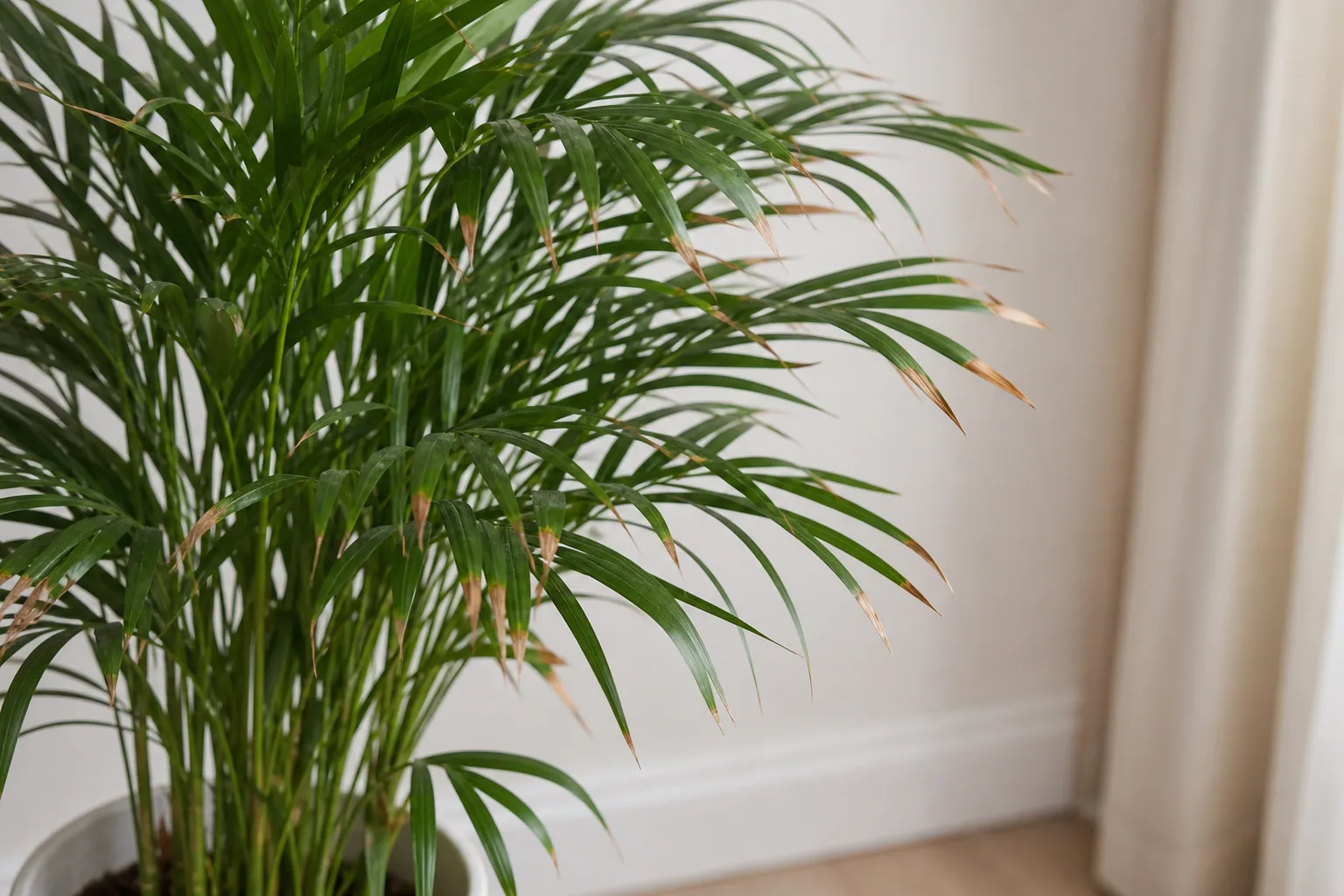
Brown Tips on Parlor Palm: Causes, Checks & Fixes
This guide covers brown tips on Parlor Palm. See also the general Brown Tips guide, watering, and light pages for this plant.
Brown Tips on Parlor Palm: Causes, Checks & Fixes
Quick answer
Brown tips on parlor palm (Chamaedorea elegans) are a margin stress signal on delicate pinnate pinnae-not one diagnosis. This slow-growing rainforest understory palm concentrates minerals at the farthest leaflet tips as water transpires, so water chemistry often shows up before roots fail. The leading triggers are fluoride and dissolved salts in tap water, humidity below about 40%, salt buildup from fertilizer and hard water, dry soil from underwatering, and direct sun scorch on arching fronds.
First step: stick your finger into the top inch of mix and note whether it is dry, evenly moist, or wet. Bone-dry soil with a light pot calls for a deep soak-not a humidity tray. Wet, sour-smelling mix with yellow lower fronds means pause watering and inspect roots before treating tips as thirst. When moisture is correct but new spear pinnae keep tipping, switch to rainwater, distilled, or filtered water for four weeks and watch the next unfolding frond.
Separate a few tan tips on older lower pinnae from a pattern that hits every new spear or pairs with wet, sour-smelling soil.
What brown tips look like on parlor palm
Parlor palm carries multiple slender canes topped with arching pinnate fronds made of narrow pinnae along a central rachis. Tip browning shows up in distinct patterns:
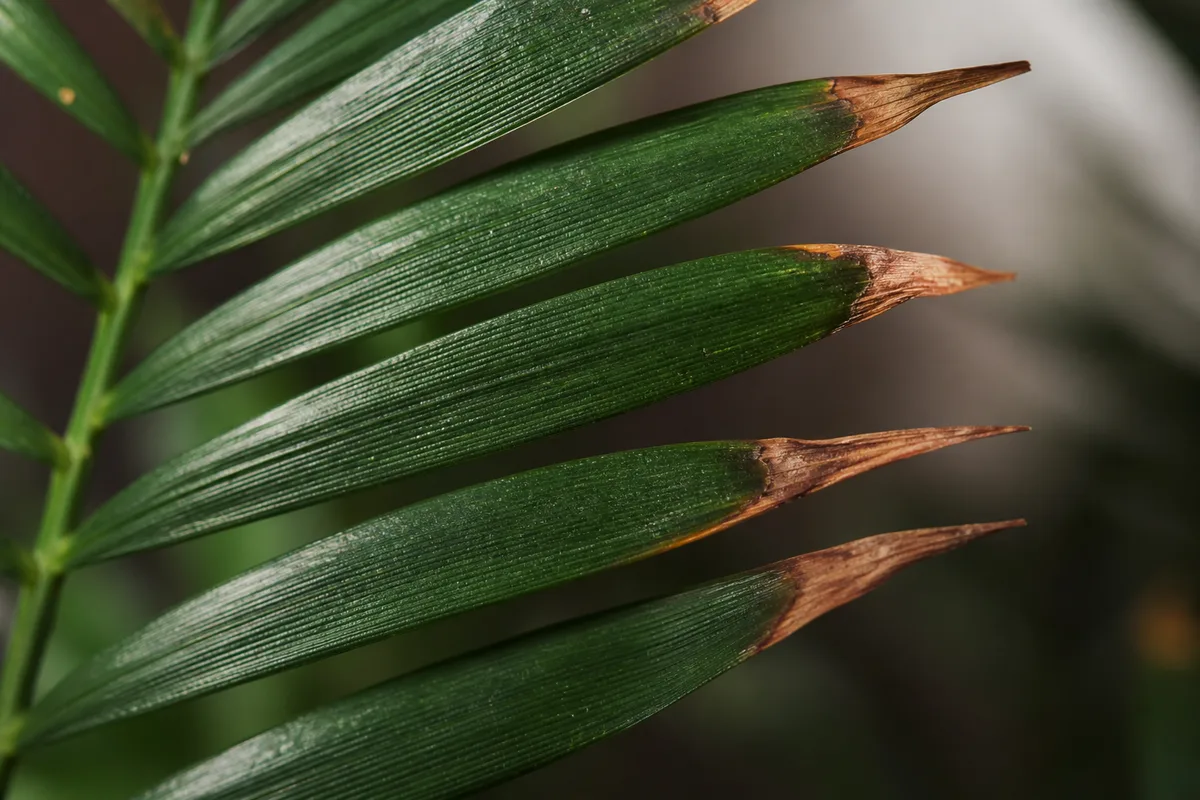
Brown Tips symptoms on Parlor Palm - compare with healthy tissue on the same plant.
- Tap-water or salt burn - Crispy or dark brown tips on newest pinnae as spears unfurl, sometimes within days of opening. You may see white crust on the soil surface or pot rim. Often follows months of municipal tap water or heavy feeding. Mature fronds may look mostly green while the leading edge of new growth shows damage first.
- Fluoride necrosis - Dark brown to black pinpoint tips on otherwise healthy pinnae, persisting even when soil moisture is correct. UF IFAS lists this as a known symptom on Chamaedorea palms.
- Low-humidity tip burn - Dry, papery tips on many pinnae, often on fronds nearest a radiator, heating vent, or cold AC stream. Soil moisture looks normal and canes stay firm. New spears may stay clean if the dry microclimate hits only outer fronds-see low humidity on parlor palm when placement is the main suspect.
- Underwatering stress - Tips crisp while the top 1–2 inches of mix are bone-dry, the pot feels light, and fronds may droop slightly between waterings. Differs from fluoride burn, which can occur with appropriately moist soil.
- Sunburn - Bleached yellow patches or crispy brown patches on pinnae facing a window, not just the very tip. Parlor palms want Parlor Palm light guide; direct midday sun scorches delicate fronds.
- Normal cosmetic aging - One or two oldest lower pinnae with minor tip browning on an otherwise stable clump. New spears above stay green with clean margins. Low priority if water and placement are sound.
Worry when browning hits every new spear, spreads down pinna margins on most fronds, pairs with wet sour soil, or follows softening at cane bases-not when a single old pinna near winter heat shows a few millimeters of tan tip.
Why parlor palm gets brown tips
Tap water, fluoride, and salt buildup
Chamaedorea elegans is moderately sensitive to fluoride in water and potting media. UF IFAS notes that fluoride toxicity produces dark brown tip necrosis and recommends avoiding fluoride sources such as superphosphate in some potting mixes while maintaining medium pH between 6.0 and 7.0 to reduce uptake.
Most municipal tap water in fluoridated areas contains fluoride at roughly 0.7 to 1.0 parts per million. Tap water contains fluoride and causes leaf tip burn on many plants as ions accumulate in leaf tissue over repeated watering. Fluoride moves through the vascular system and accumulates where transpiration is highest-at pinna tips and margins-producing the characteristic dark necrosis many growers blame on underwatering.
Chlorine and chloramine are separate issues. Letting tap water sit uncovered for 24 hours can allow chlorine to dissipate. It does not remove fluoride, and it does not reliably neutralize chloramine-the longer-lasting disinfectant many water utilities now use.
Salt buildup from fertilizer and hard tap water creates a different brown-tip pattern. Brown leaf tips can also come from hot, dry air, salt, or fluoride. White or yellowish crust on the soil surface or pot rim, stiff pinna tips with browning that follows a fertilizer spike, and worsening tip burn despite consistent moisture often point to accumulated minerals. See the parlor palm watering guide for flush timing and the fertilizer guide when overfeeding shares blame.
Low humidity and dry indoor air
Parlor palm evolved in humid rainforest understory in Mexico and Central America. It tolerates average indoor humidity better than areca palm, but forced-air heat and winter dryness still pull moisture from thin pinnae faster than roots replace it-especially when the pot sits above a vent or beside a radiator.
Target roughly 40–60% relative humidity at frond height. Readings sustained below about 35–40% for more than a few days explain most margin burn in heated homes. Parlor palms often tip when humidity levels are low inside during winter even though the soil still feels moist.
Dry air also weakens natural defenses against pests. Spider mites prefer warm, dry environments with low humidity-stippling and fine webbing on pinna undersides can accompany tip burn, not replace it. See spider mites on parlor palm when both patterns appear.
Underwatering and inconsistent watering
NC State Extension describes parlor palm culture as preferring soil kept moist but not soggy during the growing season. Light daily splashes that wet only the surface while the deeper root zone dries cause drought stress even in a pot that “got watered yesterday.” Tips crisp when roots cannot deliver water to the farthest pinna edges.
This cause is easy to misread as thirst when tips look dry-owners add more water on a schedule instead of checking the top inch. True underwatering shows dry deep mix and a lightweight pot; see underwatering on parlor palm if fronds droop with bone-dry soil.
Sunburn, magnesium deficiency, and less common triggers
Parlor palms want bright indirect light. Direct sun through an unfiltered window scorches pinnae before the whole plant yellows. Overfertilizing concentrates salts that burn tips-often with crust on the soil.
Magnesium deficiency can also produce brown tips on otherwise green fronds, especially after long periods without balanced feeding. It is less common than fluoride or dry air indoors but worth noting if tips persist despite good water and humidity-see the pruning guide for context. Recent Parlor Palm repotting guide stress can tip multiple fronds temporarily; hold off stacking fixes until the clump settles.
Lookalike symptoms to rule out
Before repotting or switching water on every frond, rule out these common misreads:
| Pattern | Soil moisture | Placement / water | Likely cause | First direction |
|---|---|---|---|---|
| Newest pinnae tip first, white crust possible | Moist, normal dry-down | Any room | Fluoride / salt in tap water | Filtered or rainwater; flush pot |
| Many pinnae crisp near heat source | Normal | Radiator, vent, AC draft | Low humidity / dry air | Move pot; humidifier |
| Tips crisp, pot light, fronds limp | Bone-dry top 2 in. | Away from vents | Underwatering | Deep soak; adjust rhythm |
| Bleached patches on sun-facing pinnae | Normal | Direct window sun | Sunburn | Filter light; shift back |
| Yellow lower fronds, soggy mix, soft tips | Wet for days | Any | Overwatering / root stress | Dry down; inspect roots |
| Fine webbing, stippled pinnae | Variable | Dry winter air | Spider mites | Rinse; treat pests |
If tips are dry and papery with firm canes, water source and humidity usually tell you which row fits. Wet soil with spreading yellow fronds is a different emergency-see overwatering.
How to confirm the cause
Work through this inspection in order-the same sequence used in the parlor palm watering guide brown-tips section:
- Which fronds are affected - Newest spears tipping first = water quality or salts likely. Older pinnae near vents only = dry air likely. Most fronds with dry soil = underwatering likely. Sun-facing patches = light scorch likely.
- Soil moisture at 1–2 inches - Cool and damp deep down with a heavy pot means pause watering. Bone-dry with a light pot suggests drought. Heavy pot days after watering confirms slow dry-down or overwatering-probe before treating tips as thirst.
- Water source history - Months of untreated tap water with recurring new-pinna tip burn supports fluoride sensitivity. Rested tap water that still produces new-tip damage points to fluoride, not chlorine alone.
- Soil surface and pot rim - White crust or gritty deposits suggest salt buildup from fertilizer or hard water. Plan a flush if crust is thick.
- Canopy humidity and airflow - Is the clump above a radiator, beside a vent, or in an AC stream? Place a hygrometer within 12 inches of the fronds; sustained readings below about 40% support dry-air tip burn.
- Light exposure - Direct sun on arching fronds? Very dim corner with wet soil creates different stress-neither is a water-quality fix alone.
- Newest spear test - After switching to filtered water and stable placement, the next frond that fully opens should show whether the fix worked. Clean new pinnae for two consecutive spears confirm water or humidity correction.
- Spider mite check - Tap a frond over white paper and look for moving specks, or check for stippling and fine webbing with a magnifying glass.
Confirmed tap-water burn shows tipping on newest pinnae, possible white crust, and a history of municipal water. Confirmed dry-air burn shows widespread papery tips on fronds near heat sources with clean new spears once the pot is moved.
First fix for brown tips on parlor palm
Check the top inch of mix and match your next action to that reading before you change water or humidity.
That single diagnostic step prevents the two most common mistakes on Chamaedorea elegans: drowning a palm whose tips look dry from low humidity, and switching water when the real problem is bone-dry soil.
- If mix is bone-dry and the pot is light, water deeply once until runoff exits drainage holes, then empty the saucer. Align with the watering guide rhythm-top inch dry before the next soak.
- If mix is wet for days with yellow lower fronds, stop watering until the top inch dries and inspect cane bases for softness-see overwatering before adding humidity gear.
- If moisture is correct but new spear pinnae keep tipping, switch to rainwater, distilled, or filtered water for four weeks and watch the next unfolding frond.
Do not compensate with extra fertilizer, daily misting marathons, or an immediate repot unless roots are mushy or salt crust is severe.
After the first correction, match secondary fixes to what you confirmed:
- If new spears still crisp with good water and the pot sits near a vent, move the clump off heat and AC paths and target 40–60% humidity with a humidifier or pebble tray-see low humidity for room-level setup. Avoid misting as your only fix; it barely shifts room humidity.
- If white crust covers the soil, plan a plain-water flush at the next watering-not the same day you changed water if the plant is already stressed.
- If sun-facing pinnae scorched, shift to bright indirect light only.
Make one major correction first. Wait two to four weeks before stacking repotting, heavy feeding, or multiple water experiments unless salt buildup is obvious.
Step-by-step recovery
Tap-water or fluoride sensitivity (new pinnae tipping):
- Use rainwater, distilled, or filtered water exclusively for four to six weeks.
- Skip fertilizer until new spears open with clean pinnae.
- Trim old brown tips for appearance if desired-follow each pinna’s natural curve.
Salt buildup (white crust, tips on multiple fronds):
- Water slowly with plain room-temperature water until it runs freely from drainage holes-about two to three times the pot volume in one session-to leach accumulated salts.
- Let the pot drain fully and empty the saucer.
- Resume light feeding only during active growth, not while the plant is recovering.
Low humidity and drafts (older pinnae near heat, clean new spears):
- Move the clump away from radiators, vents, and cold glass.
- Run a cool-mist humidifier or use a pebble tray if the room stays below about 40% in winter.
- Watch for two consecutive new spears with clean pinnae.
Underwatering (dry mix, light pot, slight droop):
- Soak thoroughly until runoff appears, then empty the saucer.
- Check the top inch before the next watering-NC State’s moist-but-not-soggy target means steady moisture, not a rigid calendar.
- Adjust winter frequency; parlor palms often need less water in cool months when growth slows.
Sunburn:
- Shift to bright indirect light-filter direct rays with a sheer curtain or move 3–6 feet back from the window.
- Remove severely scorched pinnae; new growth should emerge unbleached in correct light.
How to trim brown tips safely
Brown pinna tissue does not re-green-damaged leaf tips on houseplants do not recover. For appearance, snip only the discolored portion with clean scissors, following the natural curve of each pinna and leaving a thin sliver of brown edge. Cutting into green tissue creates brown tips again-wounding healthy cells undoes the trim. For whole dead fronds, remove at the petiole base per the parlor palm pruning guide-do not pull living green fronds.
Recovery timeline
Recovery is measured by new spears and clean pinnae, not by old brown tissue repairing itself:
- Tap-water burn - Switching water often shows clean tips on the next one or two spears within two to four weeks. Older tipped pinnae stay brown unless trimmed.
- Salt flush - Leaching plus filtered water may take four to eight weeks before several consecutive new fronds open clean.
- Low humidity - Moving off vents and raising humidity can stabilize new growth within two to three weeks; old papery tips remain unless trimmed.
- Underwatering - One deep soak and a corrected rhythm often stops spread within one to two watering cycles if roots are firm.
- Sunburn - New fronds in filtered light typically show unbleached pinnae within two to three weeks after relocation.
Signs of improvement: new spears with intact pinnae, pot weight dropping on a normal schedule, browning that does not spread down margins. Signs of worsening: sour smell from mix, soft cane bases, every new spear browning despite filtered water, or soil that never dries-inspect roots that week.
What not to do
Do not water more because tips look dry when soil is already wet-overwatering wet soil is a common mistake when leaves look tired and deepens root stress on a palm with delicate roots while the real problem is saturation.
Do not mist as the only humidity fix. Brief misting does not sustain the stable moisture parlor pinnae need; move the pot or run a humidifier instead.
Do not fertilize a tipped, stressed palm to force new spears. Salt buildup from overfeeding causes the same tip burn you are trying to fix.
Do not repot on day one unless roots are mushy, salt crust is severe, or drainage has failed. Repotting into a larger pot often slows drying and worsens wet-soil stress on slow-growing Chamaedorea elegans.
Do not trim brown tips back into green tissue. Follow the pinna curve and stop at the discolored edge.
Do not assume “sit overnight” fixes tap water for parlor palms. Chlorine may off-gas; fluoride does not-switch source if new tips keep appearing.
Do not ignore wet soil while treating water quality. Fluoride sensitivity and overwatering can overlap-fix saturation before stacking multiple remedies.
How to prevent brown tips next time
Prevention comes down to clean water, steady humidity, appropriate light, and watering that matches how fast the pot dries:
- Water quality first - Rainwater, distilled, or filtered water if new spears repeatedly tip; municipal water is fine in some areas if tips stay clean on new growth for months.
- Humidity band - Target roughly 40–60% at frond height in heated or air-conditioned rooms; act when a hygrometer reads sustained below about 40%.
- Water on dryness, not calendar - Check the top inch every time. Active growth may mean every 5–7 days; winter often means every 10–14 days-confirm with the watering guide.
- Flush salts every 3–6 months - Run two to three pot volumes of clean water through the mix if you feed regularly or use hard tap water.
- Bright indirect light - Filter direct sun; avoid dark corners that weaken new spears.
- Feed lightly in season only - Half-strength balanced fertilizer during spring and summer; skip feeding in fall and winter when salts accumulate.
- Stable placement - Keep the clump off radiators and out of forced-air paths.
When to worry
Treat brown tips as urgent when:
- Browning spreads down most pinna margins on many fronds at once.
- Soil smells sour or cane bases feel soft while tips crisp.
- New spears brown before fully opening despite filtered water and good placement-inspect roots the same week.
- Fronds collapse despite moist soil-roots may be failing to absorb water. See wilting if the whole clump goes limp alongside tip damage.
A few tan tips on one or two oldest pinnae near a winter vent on an otherwise stable parlor palm is cosmetic. Widespread margin browning with wet soil is not-probe roots promptly.
Parlor palm care cross-check
If brown tips keep returning after you adjust water and placement, compare your routine to what Chamaedorea elegans actually needs:
| Checkpoint | Healthy target | Brown-tip risk when wrong |
|---|---|---|
| Water source | Clean new pinnae over months | Fluoride / salts browning newest growth |
| Canopy humidity | ~40–60%; act below ~40% | Heat vents and dry winter air crisping margins |
| Soil moisture | Moist but not soggy; top inch dry before soak | Bone-dry drought or wet roots that cannot hydrate tips |
| Light | Bright indirect; no direct midday sun | Sun scorch on exposed pinnae |
| Salts | Occasional flush if feeding or hard water | White crust and recurring edge burn |
| Airflow | Stable room air; no vent drafts | Radiators and AC drying pinna tips |
Fix the condition that fails this check before repotting for size, adding fertilizer, or treating for pests you have not confirmed.
Related parlor palm problems
- Low humidity - when dry air, not water chemistry, drives margin burn
- Underwatering - when a light pot and dry mix pair with crisp tips
- Yellow leaves - when whole fronds yellow, not just pinna margins
- Spider mites - when stippling and webbing accompany dry winter air
When to use this page vs other Parlor Palm guides
- Parlor Palm watering guide - Use for routine moisture checks before assuming brown tips is the main issue.
- Parlor Palm problems hub - Browse all 4 common issues on this species.
- Yellow Leaves on Parlor Palm - Different entry point when symptoms overlap with brown tips.