Yellow Leaves on Parlor Palm: Causes, Checks & Fixes
Quick answer
Yellow leaves on parlor palm often mean overwatering, low light, or normal lower-frond aging-not a single diagnosis. First step: check whether the top inch of mix is wet or dry and whether one old frond or many fronds are yellowing at once.
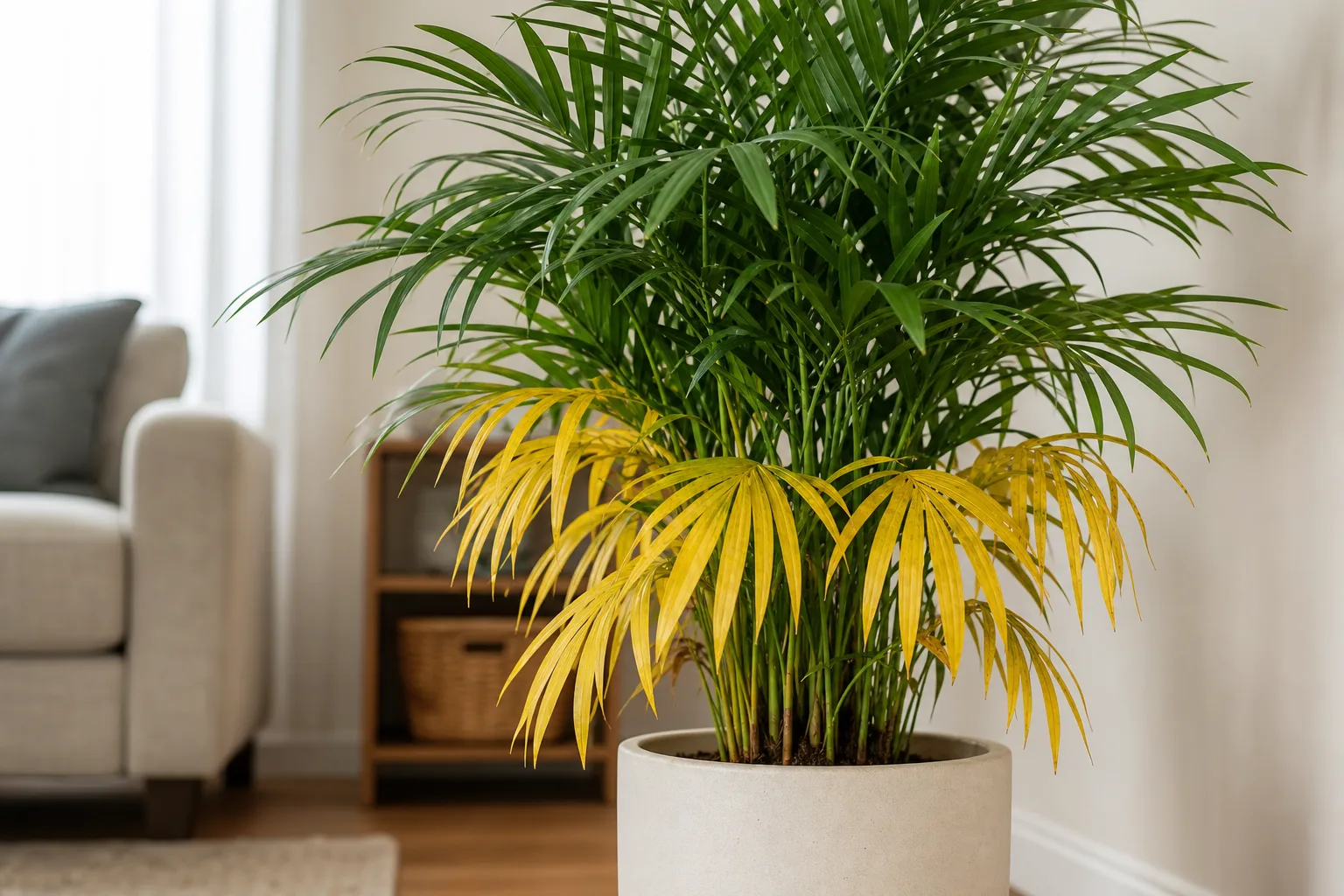
Yellow Leaves on Parlor Palm: Causes, Checks & Fixes
This guide covers yellow leaves on Parlor Palm. See also the general Yellow Leaves guide, watering, and light pages for this plant.
Yellow Leaves on Parlor Palm: Causes, Checks & Fixes
Quick answer
Yellow leaves on Parlor Palm (Chamaedorea elegans) are a symptom, not one diagnosis. This is a multi-stem understory palm with arching pinnate fronds-not a rosette plant and not a drought-loving succulent. Indoors, yellowing most often traces to overwatering in low light, chronic underwatering, too little indirect light, or normal aging of the lowest frond on each cane.
First step: check whether the top inch of mix is wet or dry and count how many fronds are yellowing. Insert your finger one inch into the mix near the pot edge. If soil is cool and damp while multiple fronds droop and yellow at once, pause watering-our parlor palm watering guide explains the wilt-on-wet-soil trap. If only one old lower frond fades slowly over months while new spear fronds stay green, aging is likely. Pale, washed-out yellow-green color across many fronds with long spacing between leaflets often means insufficient light, even when watering looks reasonable.
What yellow leaves look like on parlor palm
Yellowing on Chamaedorea elegans follows patterns tied to palm anatomy-fine-textured pinnate fronds on slender green cane-like stems, usually several stems planted together in one nursery pot:
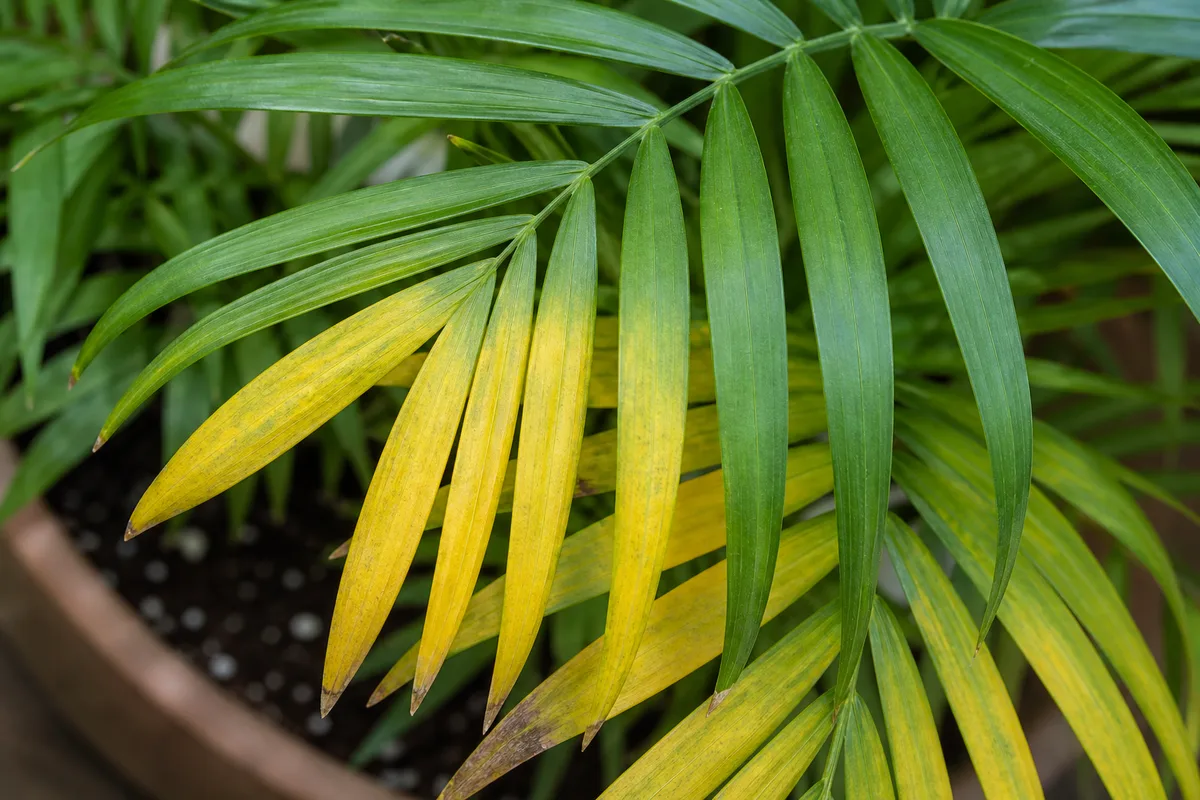
Yellow Leaves symptoms on Parlor Palm - compare with healthy tissue on the same plant.
Normal lower frond senescence
The oldest arching frond at the base of a single cane yellows from the tips inward or evenly, then browns and drops over weeks to months. Other canes stay green. New spear fronds continue emerging from each crown. NC State Extension notes that removing old dying fronds at the base keeps the plant looking its best-this is expected on a slow-growing palm, not an emergency.
Overwatering and root stress
Widespread yellowing across multiple fronds at different heights while soil stays damp is the classic overwatering pattern. Fronds may droop despite wet mix because damaged fine roots cannot move water-a trap that makes owners add more water. Soft or darkened tissue at the base of individual canes, a sour smell from drain holes, fungus gnats hovering over constantly damp soil, and stalled new spear fronds all point the same direction. See our overwatering guide when wet soil is the main clue.
Underwatering
Chronic dry spells produce brown tips and margins on pinnate leaflets, slight frond droop, and a very light pot. Yellowing may appear on older fronds after prolonged drought stress. The top inch of mix has been dry for many days and a skewer pulled from deeper in the pot comes out dusty. Recovery often follows one thorough soak-see underwatering when the pot feels feather-light.
Low light
Too little indirect light causes pale yellow-green fronds, weak new spear growth, and leggy spacing between leaflets on long petioles. Soil may stay wet for weeks because transpiration drops in dim offices-yellowing then looks like overwatering when light is the root cause. The RHS growing guide notes that too little light will cause leaves to yellow and growth to be poor. See not enough light when stretch and pallor dominate.
Spider mite stress
In dry indoor air, red spider mites cause stippling on leaflet undersides, fine webbing, and gradual yellowing from feeding damage. Soil moisture may look normal. Mites are a known problem on indoor parlor palms per NC State Extension. Compare with spider mites on parlor palm when stippling appears without wet soil.
Fluoride and salt stress
Chamaedorea elegans is moderately fluoride-sensitive. Fluoride in tap water and accumulated fertilizer salts more often produce dark brown tip necrosis than whole-frond yellowing-but chronic chemical stress can weaken fronds until lower leaves fade. White crust on the soil surface or stiff brown tips on otherwise moist soil suggest salts. See brown tips when tip burn is the primary pattern.
Why parlor palm gets yellow leaves
Parlor palm evolved on the rainforest floor of southern Mexico and Guatemala, where filtered light, steady humidity, and organic litter keep fine roots evenly moist without standing water. Indoors, that biology collides with dim offices, calendar watering, and tap water chemistry.
Overwatering in low light is the most common serious cause. NC State Extension warns that overwatering can be a problem and recommends letting soil dry slightly between waterings while maintaining good drainage. In a dim corner, the same drink that dries in a week near an east window can keep soil soggy for two weeks. Fine Arecaceae roots suffocate; fronds yellow while the mix still feels damp.
The evenly-moist trap confuses many growers. Missouri Botanical Garden recommends uniformly moist soil for container parlor palms-but uniformly moist means the root zone breathes between drinks, not that the surface stays dark every day. Daily light sips without a dry top inch produce yellow fronds and fungus gnats together.
Multi-stem nursery clumps-growers often plant three or more stems in a single pot-hold moisture longer than single-caned plants. One aging lower frond on the outside of the clump is normal; five fronds yellowing across the clump in two weeks is not.
Winter slowdown worsens wet-soil yellowing. When new spear growth pauses in cool, dim months, watering on a summer rhythm keeps roots cold and wet-stretch intervals per the watering guide.
Natural senescence removes the lowest frond on each cane as new spears emerge above. Slow, isolated lower-frond yellowing on firm stems is biology, not neglect.
How to confirm the cause
Work through this inspection order before fertilizing or Parlor Palm repotting guide:
- Frond count and pattern - One old lower frond fading over months on one cane, or multiple fronds yellowing at several heights within days?
- Top-inch moisture - Finger or dry skewer one inch into the mix. Cool dampness with widespread yellow droop confirms wet-soil stress. Bone-dry top inch with light pot and crispy tips confirms drought.
- Pot weight and drainage - Heavy pot days after watering, full saucer, or water pooled in a cachepot?
- Stem firmness - Press cane bases at soil line. Firm green tissue is reassuring; soft, dark, or collapsed bases suggest advancing root rot.
- New spear status - Are pale or stalled spear fronds emerging from crowns, or is new growth clean and green?
- Light exposure - Bright indirect east or north window, or dim interior corner with no direct sun ever?
- Leaflet undersides - Stippling, webbing, or moving specks when tapped over white paper?
- Water source and tips - Dark pinpoint necrosis on tips with otherwise correct moisture suggests fluoride; widespread yellow on wet soil does not.
Lookalike quick reference
| What you see | Likely cause | Quick check |
|---|---|---|
| One lower frond yellowing slowly; firm stems; green new spears | Normal senescence | Months-long fade on one cane only |
| Multiple yellow fronds; wet heavy soil; droop despite moisture | Overwatering / root stress | Top inch damp 5+ days; gnats |
| Crispy tips; very light pot; dry skewer deep in mix | Underwatering | Top inch dry many days |
| Pale yellow-green; leggy spacing; moist soil stays wet long | Low light (+ wet-soil overlap) | Dim placement; slow dry-down |
| Stippling, webbing; soil moisture normal | Spider mites | Tap test over white paper |
| Dark brown tips only; white soil crust | Fluoride / salt stress | Moist soil; tip necrosis pattern |
First fix for parlor palm
Match your first action to the most likely cause-one change at a time.
- Wet soil + widespread yellow fronds: Stop watering until the top inch of mix is dry and the pot feels noticeably lighter. Empty saucers and cachepots. Do not add water because fronds droop-that deepens root damage. This is the same first move as our overwatering guide.
- Dry soil + crispy tips + light pot: Water thoroughly until excess drains, then resume the top-inch-dry rule from the watering guide.
- Pale fronds in a dim corner with chronically wet soil: Improve to Parlor Palm light guide modestly and pause watering until the top inch dries-light and moisture must be fixed together.
- Stippling and webbing on leaflets: Isolate the plant, rinse leaflet undersides, and treat per our spider mites guide-do not assume yellow fronds mean thirst.
- One aging lower frond only: Trim the spent frond at the base once mostly yellow; no watering change needed if soil checks and new spears look healthy.
Do not fertilize a yellowing stressed palm to “green it up.” Do not repot on day one unless roots are clearly failing and stems are soft.
Step-by-step recovery
After the first fix, layer actions by severity:
- Maintain the top-inch-dry rhythm - Water only when that shallow layer is dry, then soak and drain fully. In active growth that is often every 5–7 days in medium light; in winter dim rooms, every 10–14 days or longer-always verify by touch.
- Remove fully yellow fronds - Cut spent pinnate fronds at the base with clean scissors. They will not re-green; removal reduces pest hiding spots and redirects energy to crowns.
- Improve light modestly - Move from a dim interior to bright filtered light. Avoid jumping from deep shade to harsh direct sun on delicate fronds.
- Address water quality if tips brown - Switch to rainwater or distilled water when fluoride necrosis persists despite correct moisture.
- Inspect roots only when stems soften or smell is sour - Unpot, trim mushy fine roots, and repot into fresh airy mix sized to remaining root mass per root rot protocol.
- Treat spider mites if confirmed - Rinse and repeat inspection weekly; mites prolong yellowing even after watering is corrected.
Severity tiers
- Mild - One lower frond yellowing over months; firm stems; appropriate soil moisture. Trim spent frond; continue normal checks.
- Moderate - Two to four fronds yellowing; soil was wet too long; stems still firm. Dry-down cycle plus light check; new spears in two to four weeks signal success.
- Severe - Widespread yellowing; soft stem bases; sour smell; stalled spears. Stop water, inspect roots, repot if needed-salvage depends on firm crown tissue remaining.
Recovery timeline
Fully yellow pinnate fronds do not re-green. Judge recovery by new spear fronds unfurling cleanly from cane crowns and by yellowing stopping its spread.
- Overwatering caught early - Fronds may firm slightly within days once soil oxygen returns; expect visible new spear growth in two to four weeks after consistent dry-down.
- Underwatering - Turgor often returns within hours to a day after a thorough soak; new growth resumes over one to two weeks.
- Low light correction - New spears emerge paler at first; improved color on fresh fronds may take several weeks if the plant was chronically dim.
- Root rot involved - Timeline stretches to months and depends on how much firm root tissue remains; old yellow fronds may keep dropping while crowns recover.
Signs you are winning: fewer new yellow fronds each week, firm cane bases, dry top inch between drinks on a predictable rhythm, and green spear fronds opening.
Signs the problem is deepening: yellowing climbing the clump while soil stays wet, soft stems at soil line, sour drain-hole smell, or new spears rotting before they open.
Causes to rule out
Yellow fronds can mimic other problems:
- Brown tips only - Often fluoride, salt, or brief drought-not whole-frond yellowing. See brown tips.
- Drooping without yellow yet - May precede widespread yellowing from wet roots. See wilting and drooping leaves.
- Fungus gnats - Signal wet surface soil; often accompany overwatering yellowing. See fungus gnats.
- Cold drafts - Sudden frond yellowing near AC vents or cold windows in winter; firm roots, sudden environmental change.
What not to do
Do not water because fronds droop while the top inch is still wet-on parlor palm that deepens root damage. Do not move into direct sun to fix pale yellow fronds; harsh sun scorches pinnate leaflets. Do not fertilize heavily on a yellowing clump-salt buildup can yellow foliage further. Do not confuse one aging lower frond with systemic overwatering and strip the plant bare. Do not repot into a much larger container to “help” a yellowing palm; extra wet soil volume slows dry-down on slow-growing Chamaedorea elegans.
How to prevent yellow leaves next time
Build a check-based habit from the watering guide: top inch dry before every drink, thorough soak, full drainage, empty cachepots. Match winter intervals to slower growth in dim rooms. Keep the clump in bright indirect light-parlor palm tolerates shade but yellows and stays wet longer in deep dim corners. Use filtered or rainwater if brown tips persist. Remove spent lower fronds promptly. Quarantine new plants before grouping them with your palm.
Target 40–60 percent relative humidity when air is very dry; misting and cleaning with a damp cloth can prevent or remove spider mites on parlor palm.
Parlor palm care cross-check
Yellow fronds often mean two conditions failed at once-calendar watering in a dim office, or tap water plus chronically wet peat. Align these factors while correcting yellowing:
| Factor | Target |
|---|---|
| Watering | Top inch dry before each drink; never let pot sit in runoff |
| Light | Bright to medium indirect; avoid deep shade if soil stays wet |
| Pot / mix | Drainage holes; perlite-rich mix; avoid oversized cachepots |
| Water quality | Rainwater or distilled if fluoride tips appear |
| Debris | Remove fallen leaflets from soil surface |
When to worry
Treat as urgent if:
- Multiple canes show yellow fronds while soil stays wet five or more days after one drink
- Stem bases soften or collapse at soil line
- Sour or musty smell comes from drain holes
- New spear fronds stall, blacken, or rot before opening
- Yellowing spreads to most of the clump within two weeks
In those cases, follow the root rot inspection protocol. Early firm stem tissue usually means salvage is possible; crown rot is much harder to reverse on this palm.
Conclusion
Yellow leaves on parlor palm are a diagnostic puzzle on a shade-tolerant palm with fine roots-not a single nutrient deficiency. Count fronds, check the top inch of soil, feel stem bases, and read new spear growth. One fading lower frond on a firm clump is often normal aging; widespread yellowing on wet mix is a watering emergency. Fix the most likely cause first, trim spent fronds, and judge success by clean new spears-not by old yellow leaflets re-greening.
This guide was written by sai-ananth, reviewed by the LeafyPixels Review Board on 2026-06-16, and checked against NC State Extension, Missouri Botanical Garden, RHS, University of Florida IFAS, and LeafyPixels Parlor Palm care data. For baseline culture, see the Parlor Palm overview and watering guide.
When to use this page vs other Parlor Palm guides
- Parlor Palm watering guide - Use for routine moisture checks before assuming yellow leaves is the main issue.
- Parlor Palm problems hub - Browse all 4 common issues on this species.
- Root Rot on Parlor Palm - Different entry point when symptoms overlap with yellow leaves.