Mealybugs on Marigold: Causes, Checks & Fixes
Quick answer
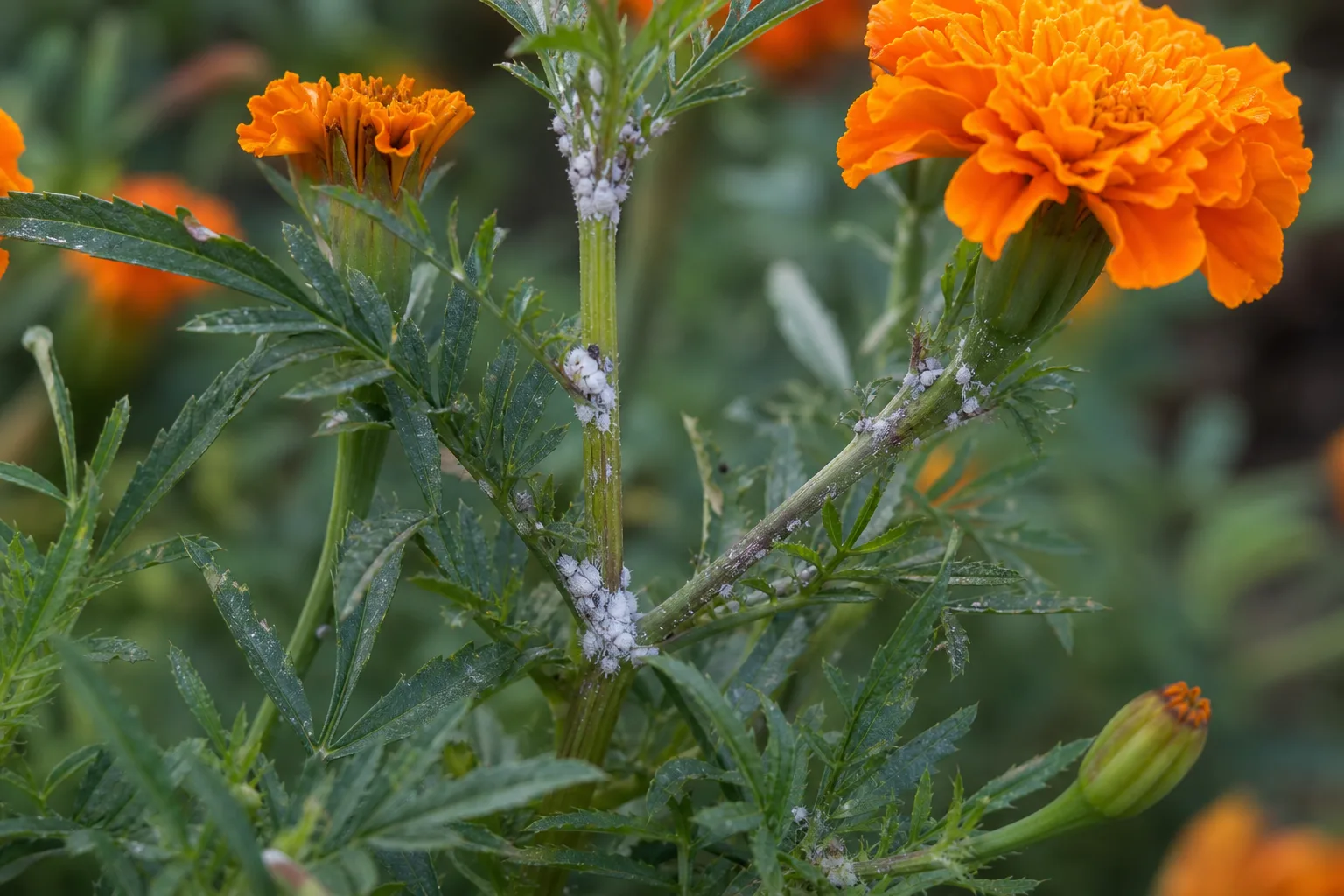
Mealybugs on marigolds appear as white cottony clusters tucked into stem joints and leaf axils on Tagetes erecta and T. patula, often with sticky honeydew below. First step: dab every visible cluster with a cotton swab dipped in 70% rubbing alcohol, then follow with insecticidal soap on crevices you cannot reach by hand.
Mealybugs on Marigold: Causes, Checks & Fixes
This guide covers mealybugs on Marigold. See also the general Mealybugs guide, watering, and light pages for this plant.
Mealybugs on Marigold: Causes, Checks & Fixes
Quick answer
Mealybugs on marigold (Tagetes erecta, African marigold, and T. patula, French marigold) appear as white, cottony wax clusters tucked into stem joints, leaf axils, and occasionally at the soil line on container seedlings. They suck sap, weaken bloom, and leave sticky honeydew that can support black sooty mold on upper leaves below feeding sites.
On dense bed edges before peak African marigold display, colonies spread quickly - treat when wax patches cover growing tips, not after ants have locked in bed-wide protection.
First step: dab every visible mealybug with a cotton swab dipped in 70% isopropyl alcohol, working stem joints from soil line to bloom tips. UC IPM recommends alcohol swabs for small mealybug numbers before escalating to sprays. Follow with insecticidal soap on crevices you cannot reach by hand.
What mealybugs look like on Marigold
Marigolds pack soft stems into tight bed rows and container groups where each leaf meets a stem at a sheltered angle - exactly where mealybugs rest in protected crevices on ornamentals.
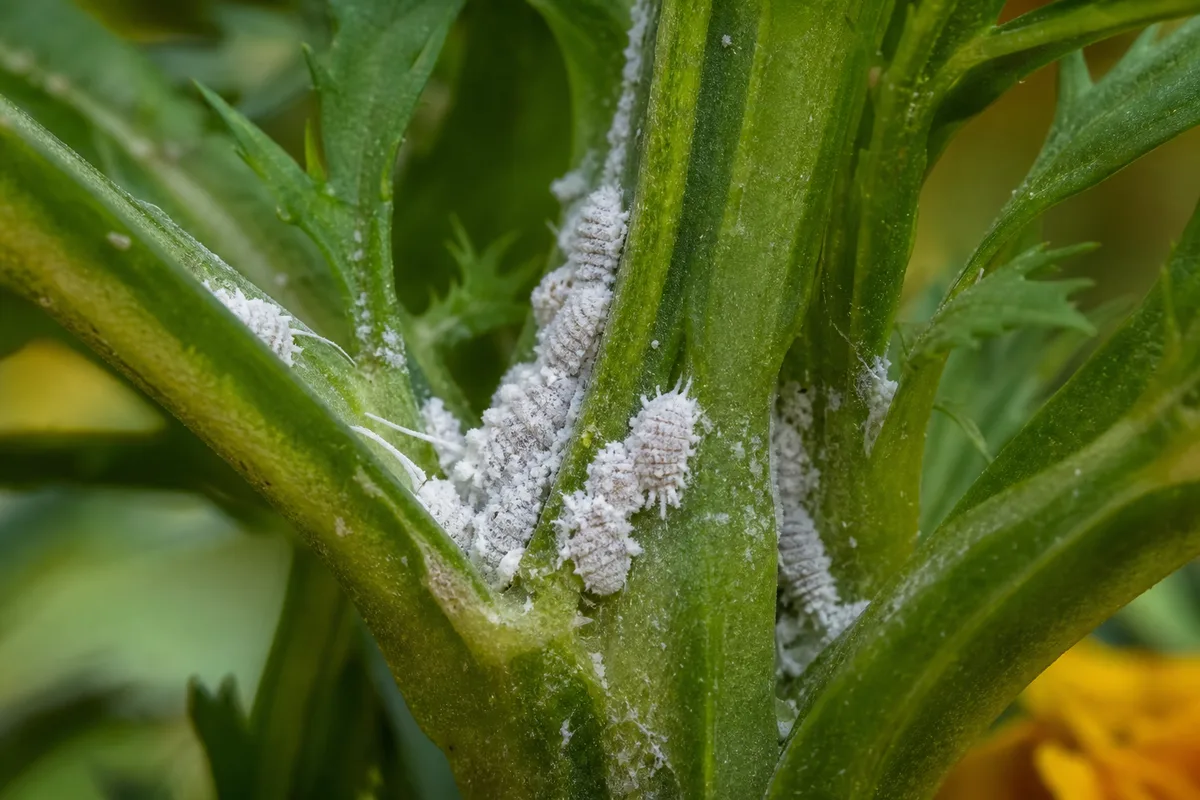
Mealybugs symptoms on Marigold - compare with healthy tissue on the same plant.
Typical signs on garden and container marigolds:
- White or gray cottony ovals clustered in leaf axils, stem forks, and flower-stem joints
- Slow-moving pinkish or gray bodies if you part the wax with a fingernail
- Shiny, tacky patches on upper leaves or bed-edge stakes from honeydew drips below colonies
- Black sooty mold on honeydew-coated foliage when humidity stays high in crowded borders
- Yellowing or stunted new growth when feeding is heavy on pre-bloom shoots
- Bud clusters coated in wax that fail to open cleanly before display peak
- Ant trails on pot rims, bed stakes, or container rails farming honeydew
Mealybugs are covered with powdery wax that makes them look cottony. On African marigolds with thick upright stems, infestations often start low near the soil line and climb toward developing buds. French marigolds have smaller stems and tighter joints - colonies can hide under overlapping foliage until honeydew gives them away on upper leaves.
Unlike aphids on marigold, mealybugs are coated in wax and move slowly. Unlike powdery mildew, they do not wipe off as dry dust alone - you will find insects beneath the white material.
Why Marigold gets mealybugs
Mealybugs are not random bad luck on marigolds. They arrive on new nursery bedding stock, hitchhike between companion-bed neighbors, or exploit marigolds already stressed by shade, excess nitrogen, or uneven watering.
Soft stems and dense bed structure hide pests. Marigolds are commonly grown in full-sun beds and containers where overlapping stems in dense African marigold borders create dozens of axils sprays miss. Persistent colonies survive in those pockets while blooms still look fine from across the garden.
Bloom-season tender growth invites feeding. Marigolds push constant soft new shoots and buds during warm summer display. High nitrogen with regular irrigation stimulates tender new growth where mealybugs prefer to settle - especially if you feed heavily while chasing larger flowers. See marigold fertilizer guidance for balanced feeding that does not push pest-attracting soft tissue.
Companion-bed spread. Marigolds often border tomatoes, peppers, beans, and zinnias. Mealybugs on one marigold in a crowded row often mean hidden colonies on neighbors with touching foliage. Adult females do not fly, but young crawlers walk plant to plant on contact across shared bed edges.
Ant partnerships protect colonies. Ants farming honeydew on bed stakes and pot rails defend mealybugs from lady beetles and lacewings. Control ants on rails and bed edges if they actively patrol wax-coated stems.
Introduction from nursery stock. New bedding plants skip quarantine, or stressed seedlings from cool greenhouses carry hidden mealybugs at stem bases. Inspect joints at purchase before planting into vegetable companion rows.
Partial shade and overwatering on Marigold stress. Marigolds perform best in full sun with well-drained soil. Weak shaded growth with lush nitrogen-heavy foliage offers more protected joints and tender stems pests colonize. Cross-check marigold light needs and marigold watering rhythm if infestations keep returning after treatment.
How to confirm the cause
Work through these checks before you buy spray:
- Location on the plant - Mealybugs cluster in stem axils, crown crevices, and the soil line on seedlings. Random dry white dust spread evenly across leaf faces alone is less typical.
- Texture test - Part the white mass gently. Mealybugs feel soft and may show a pinkish or gray body underneath. Scale is hard and fused to the stem.
- Movement - Crawlers and adults move slowly when disturbed. Scale, dried sap, and powdery mildew do not crawl.
- Honeydew check - Rub an upper leaf below a suspected cluster. Tacky residue with optional black sooty film points to sap feeders, not mineral dust.
- Alcohol swab test - Press a cluster with a cotton swab dipped in 70% alcohol. Waxy coating dissolves and insects turn orange if mealybugs. Flat powder on leaf surface only may be powdery mildew - different treatment.
- Crown and soil-line inspection - Follow stems from soil line upward with a hand lens. Check where each leaf attaches on both African and French types. White wax at the root crown without foliar clusters may indicate ground mealybugs - shake seedlings gently and inspect potting mix surface.
- Spider mite rule-out - Spider mites on marigold cause fine stippling and webbing, not cottony wax tufts. See that guide when leaves bronze without three-dimensional wax blobs.
- Neighbor scan - Inspect every marigold, zinnia, and vegetable within stem reach in the same bed row. Mealybugs rarely stay on one plant once established in a dense border.
If you find cottony colonies with honeydew and no hard scale shell, mealybugs are confirmed.
Lookalike symptoms to rule out
| Symptom pattern | What you see | Likely cause |
|---|---|---|
| Cottony white tufts in stem axils with honeydew | Three-dimensional wax blobs; slow movement when disturbed | Mealybugs |
| Flat dry white dust on leaf faces | No wax tufts, no honeydew, no crawling insects | Powdery mildew |
| Small green, pink, or black clusters on new tips | Pear-shaped bodies; move when disturbed; no thick wax | Aphids |
| Fine stippling plus webbing on undersides | No cottony wax; mites visible on paper tap test | Spider mites |
| Hard brown or tan domes glued to stems | Does not wipe off; not cottony | Scale insects |
| Sticky leaves without visible pests | Residue only; no wax clusters | Honeydew from other sap feeders - check aphids first |
First fix for Marigold
Dab every visible mealybug with a cotton swab dipped in 70% isopropyl alcohol, working systematically from the soil line up through stem joints toward developing buds.
Direct alcohol contact kills exposed adults and removes wax. Test alcohol on one leaf first and wait a day - sun-stressed marigold foliage in hot afternoon sun can scorch if solution pools on tissue. Treat in morning shade or evening when bees are less active on peak-bloom plants.
Work through each stem axil on African marigolds and the tighter joints on French types. On a dense bed-edge row, expect the first pass to take fifteen to thirty minutes per heavily infested plant. Do not soak roots with alcohol during dabbing.
Do not shower the whole plant on day one if that floods already-wet container soil. Do not repot immediately unless you confirm root-zone mealybugs at the crown. Do not fertilize a pest-hit plant hoping to push new blooms - that produces tender tissue pests prefer.
Step-by-step recovery by severity
Light infestation (a few white tufts on lower stems)
- Dab all visible clusters with alcohol swabs.
- Apply insecticidal soap to stem axils per label; repeat weekly until infestation clears.
- Rinse honeydew from leaves with plain water early in the day.
- Scout every three to five days until no new wax patches appear for two weeks.
Moderate infestation (colonies on multiple stems before bloom)
- Complete alcohol dab pass on all accessible clusters.
- Apply insecticidal soap covering every crevice; soap only works on direct contact.
- Prune heavily wax-coated tip clusters into a bag - see marigold pruning guidance for clean cuts above a leaf node.
- Manage ants on bed stakes and pot rails. Ants protect mealybugs from predators - wipe trails and use bait stations away from open blooms per label directions.
- Inspect neighboring marigolds, zinnias, and vegetables in the same bed within the same week.
Heavy infestation (wax across most stems, ants on bed edges)
- Remove and bag the worst plants mid-season if bloom value is low - crawlers spread faster than treatment on declining annuals.
- Treat remaining bed plants as a group, not one stem at a time.
- Consider horticultural oil or neem on ornamentals per label when soap cycles fail - apply evening when bees are absent and avoid spraying open flowers when possible. Test on one plant first; do not apply above label temperature limits on sun-heated foliage.
- For root-zone mealybugs on stressed seedlings, shake off old mix, rinse roots, and repot into fresh well-drained soil - or discard and replant if more than half the crown is wax-coated.
Use commercial insecticidal soap labeled for ornamentals - not homemade dish detergent mixes, which often cause severe leaf damage on sun-exposed marigold foliage.
Recovery timeline
Manual alcohol dabbing shows visible reduction within a few days when colonies are small. A full soap cycle with weekly repeats typically takes two to four weeks on garden marigolds. Dense African marigold borders with deep axils and active bloom stems may need six weeks of monitoring before you declare the bed clean.
Old leaves with heavy sooty mold or yellowing rarely regain their original color - watch for firm new shoots opening without wax at their bases and clean buds forming on upper stems. That is your recovery signal, not perfection on lower foliage. Heavily infested mid-season annuals may not rebloom fully even after control - focus on stopping bed-wide spread while foliage regenerates.
Causes to rule out before stronger sprays
- Root mealybugs (ground mealybugs): white wax near the root crown or in potting mix without obvious foliar clusters; plant declines despite clean upper stems - inspect soil line on container seedlings and consider repot or discard
- French vs. African stem structure: both T. patula and T. erecta get mealybugs, but African types have larger stem joints where colonies hide longer; French types pack joints tighter under overlapping leaves
- Excess nitrogen soft growth: pushes pest-attracting foliage - hold heavy feeds during active pest season per marigold fertilizer guidance
- Shade stress: weak leggy growth in partial shade - review marigold light needs
If wax clusters are absent but sticky leaves persist, cross-check aphids on marigold and bud drop on marigold for overlapping bloom-season stress.
Mistakes to avoid
Do not return treated plants to a crowded companion bed after one dab pass. Eggs hatch on a staggered schedule - plan for weekly repeats.
Do not use only overhead water - wax protects mealybugs in crevices where rinse water does not reach.
Do not apply alcohol or soap to sun-stressed leaves in hot direct afternoon sun. Treat in morning shade or evening when bees are less active on peak-bloom marigolds.
Do not use broad outdoor pesticides near food-adjacent companion beds without label clearance for the specific pest and setting.
Do not ignore neighboring plants. Mealybugs on one marigold in a vegetable border often mean hidden colonies on touching tomato or pepper stems.
Do not compost pruned infested stems near garden beds where crawlers can survive.
Do not fertilize heavily during active infestation - soft growth favors pests. Deadhead spent blooms on recovering plants so energy goes to clean new stems you can scout weekly.
How to prevent mealybugs next time
Quarantine every new marigold flat or container for at least two weeks before planting into companion beds. Inspect stem axils at purchase - retail displays often miss pests on dense African marigold specimens.
Add mealybug checks to weekly care during bloom season: one pass from soil line to bud tips with a hand lens takes minutes once you know the hiding spots. Check plants regularly for mealybugs each time you water or deadhead.
Keep marigolds in full sun with well-drained soil. Avoid excess nitrogen that reduces flowers and pushes soft foliage.
Space bed rows so stems do not touch - crawlers bridge gaps between marigolds and zinnias. Clean bed stakes and pot rails after a prior outbreak if ants farmed honeydew last season.
When planting marigolds as companion plants around vegetables, treat border colonies before they spread to crop rows - marigolds are meant to distract pests, not harbor them.
When to worry
Treat as urgent when cottony colonies cover most developing buds before African marigold display peak, honeydew drips onto bed stakes daily, ants swarm pot rims and rails, or white wax appears on multiple plants in one dense border. Heavy feeding on marigolds already stressed by heat or root issues can spiral quickly in warm weather when mealybugs reproduce steadily across overlapping generations.
Mealybugs are very difficult to control on large infestations. Heavily infested mid-season marigolds may need to be removed rather than repeatedly treated - especially if bloom season is nearly over and vegetable neighbors are at risk.
A few isolated white tufts on one lower stem, caught early, are manageable. Scale the response to the spread you actually see.
Marigold care cross-check
While treating pests, keep baseline care stable:
- Light - Full sun supports recovery. Dim corners slow new growth and extend rehab time. See marigold light guide.
- Water - Water when the top inch of soil dries in beds and containers. Never leave standing water in saucers where humidity promotes sooty mold. Details in marigold watering guide.
- Fertilizer - Hold heavy nitrogen feeds during active pest season. Resume light balanced feeding only after two weeks of clean new growth per marigold fertilizer guidance.
- Pruning - Remove wax-coated bud clusters and heavily infested tips so you inspect fresh stems weekly. See marigold pruning guide.
Fixing only the bugs while ignoring wet soil, shade placement, or excess nitrogen often brings the infestation back.
Related marigold problems
Mealybugs often overlap with other sap feeders and bloom-season stress on marigolds:
- Aphids on marigold - pear-shaped colonies and honeydew without thick wax
- Spider mites on marigold - stippling and webbing, not cottony tufts
- Bud drop on marigold - tight buds fail when pests or moisture stress combine
- Marigold watering guide - steady moisture without soggy soil
- Marigold overview - sun, soil, and placement basics
When to use this page vs other Marigold guides
- Marigold watering guide - Use for routine moisture checks before assuming mealybugs is the main issue.
- Marigold problems hub - Browse all 20 common issues on this species.
- Yellow Leaves on Marigold - Different entry point when symptoms overlap with mealybugs.
- Slow Growth on Marigold - Different entry point when symptoms overlap with mealybugs.
- Spider Mites on Marigold - Different entry point when symptoms overlap with mealybugs.