Overwatering on Marigold: Causes, Checks & Fixes
Quick answer
Overwatered marigolds stay wet at root depth for too long, which causes wilt on wet soil, lower yellow leaves, and eventually stem or root rot. Stop watering, confirm the mix is drying at least 3 cm down, and correct drainage before watering again.
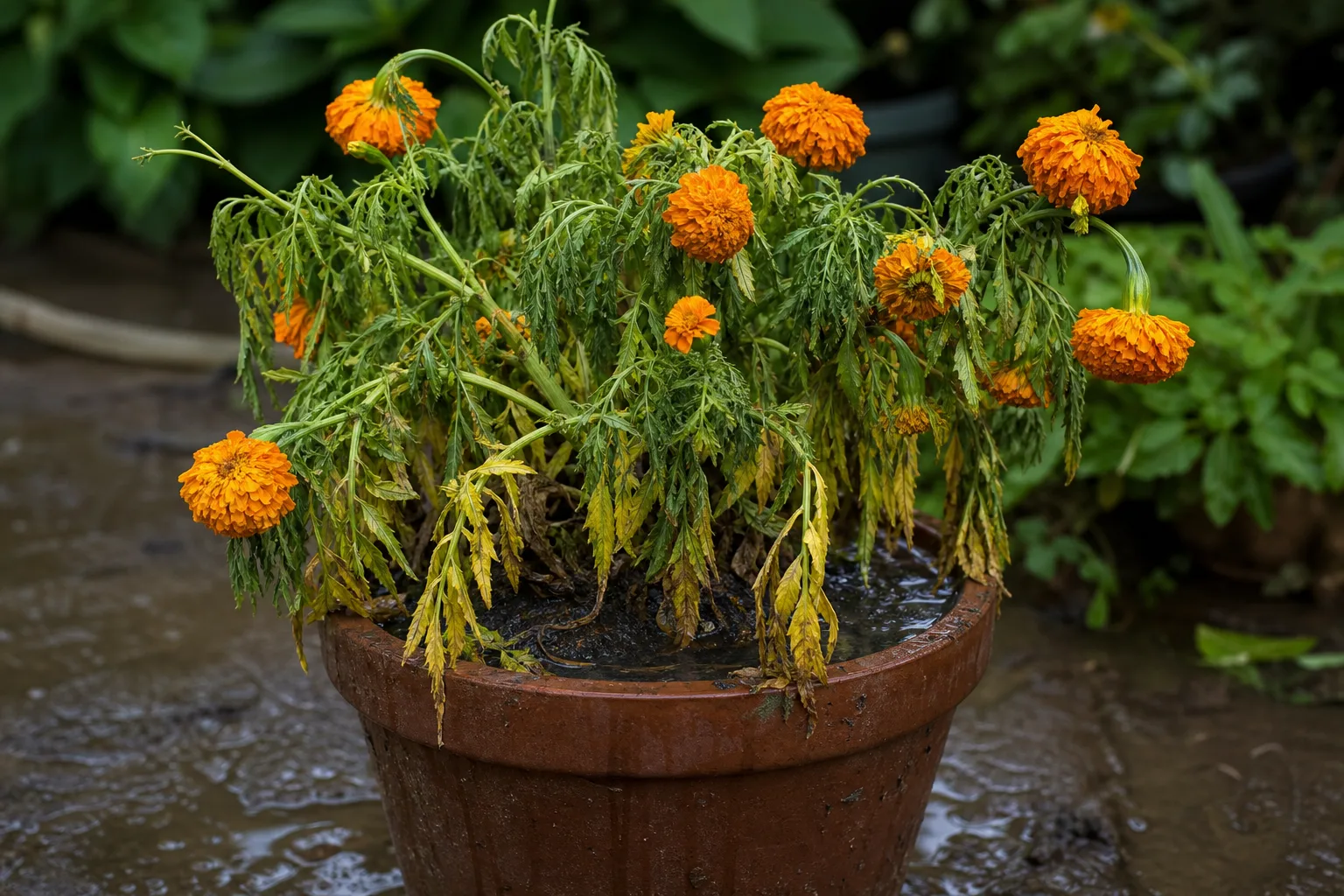
Overwatering on Marigold: Causes, Checks & Fixes
This guide covers overwatering on Marigold. See also the general Overwatering guide, watering, and light pages for this plant.
Overwatering on Marigold: Causes, Checks & Fixes
Quick answer
Overwatering on marigold is not one extra drink on a hot day. It is the pattern of keeping the root zone wet long enough that oxygen disappears from the soil and the roots stop working normally. The first clue is often wilt on wet soil. After that come lower yellow leaves, dull growth, flower problems, and eventually root or stem decay.
If the soil is still wet 3 cm down, the pot feels heavy, or water is sitting around the roots after rain or irrigation, stop watering first and fix drainage second. Do not answer wilt with more water until you know whether the root zone is actually dry.
What Overwatering Looks Like on Marigold
Marigolds are warm-season annuals that prefer bright light and reasonably quick drainage. They tolerate a short dry interval better than they tolerate constantly wet roots. That is why overwatering often looks different from simple drought stress.
Typical signs include:
- Leaves droop even though the soil is still moist
- Lower leaves yellow before the top of the plant does
- Flowers fade early or develop gray fuzzy mold in humid weather
- Pots stay heavy long after watering
- The soil surface grows algae or stays dark for days
- Stem bases soften in severe cases
- Roots turn brown and mushy if you unpot the plant
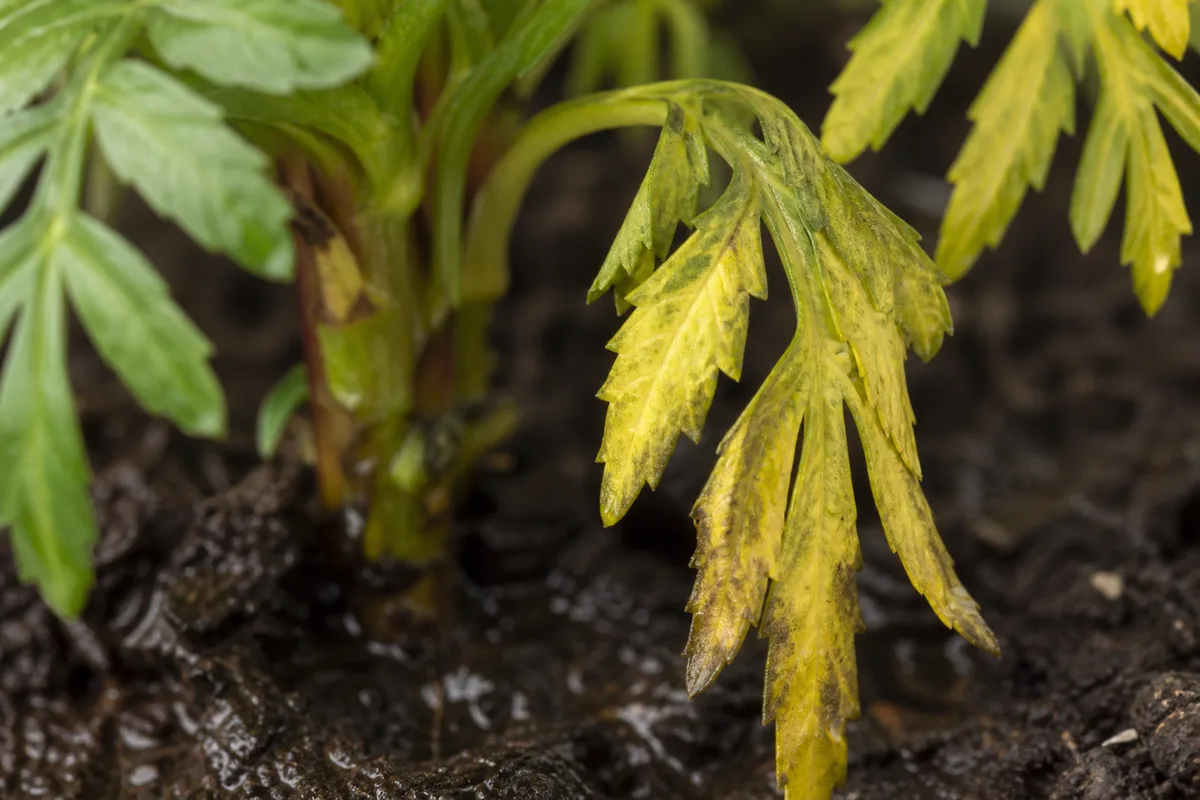
Overwatered marigolds usually show wet soil plus weak growth, not dry soil plus quick recovery after watering.
Why Marigolds Get Overwatered
The University of Minnesota Extension marigold guide notes that marigolds prefer well-drained soil and handle drought better than soggy conditions. The problem is that growers often water them as if full sun always means high water demand. That misses how strongly weather, soil texture, and container setup change root-zone moisture.
Containers Trap Water Easily
In pots, overwatering usually comes from one of these:
- A dense mix that stays wet too long
- A saucer or outer pot that holds runoff
- Watering on a schedule instead of checking the mix
- Cool or cloudy weather after a previous deep watering
Small marigold pots can dry fast in heat, but that does not mean every droop is drought. Wet soil plus droop points the other direction.
Beds Fail Differently
In garden beds, the usual causes are:
- Heavy clay
- Low spots that stay saturated after rain
- Frequent shallow irrigation
- Mulch packed too tightly around the crown
Beds can mislead growers because the surface may crust over while the deeper root zone remains wet.
Species and Form Matter a Little
Iowa State notes that French marigolds and African marigolds do not behave identically in the garden. Taller African types are especially disappointing when roots stay wet for too long because they are expected to push big flowers and thick stems in warm, airy conditions. That does not change the diagnosis, but it does affect how fast the decline looks dramatic.
How To Confirm the Problem
Do not diagnose overwatering from yellow leaves alone. Confirm it with the root zone.
Check the Soil at Depth
Push a finger or skewer about 3 cm into the mix. If it is still cool and wet, the plant is not ready for more water. If you are in a bed, dig carefully at the edge of the root zone instead of only checking the crusted surface.
Lift the Pot
A properly drying marigold pot gets noticeably lighter. If the pot still feels heavy days after watering, the root zone is staying wet too long.
Check the Crown and Stem Base
Firm tissue means you are still dealing with a cultural watering problem. Softening at the soil line means the page you need next is root rot on marigold, not another round of waiting.
Inspect Flowers in Wet Weather
The Penn State Extension marigold disease page notes that Botrytis can damage flowers under persistently damp conditions. If flower heads are molding while the soil stays wet, the moisture problem is affecting both roots and blooms.
Overwatering vs Underwatering vs Root Rot
These three get confused constantly.
| Pattern | Overwatering | Underwatering | Root rot |
|---|---|---|---|
| Soil 3 cm down | Wet or cool for too long | Dry | Wet and often sour |
| Pot weight | Heavy | Light | Heavy |
| Leaf look | Limp, yellowing from the bottom | Limp, often perkier after watering | Collapse that does not improve after dry-down |
| Stem base | Usually firm early | Firm | Soft, dark, or collapsing |
| Root condition | Stressed but may still be mostly intact | Dry but firm | Brown, mushy, decaying |
If the plant perks up quickly after one thorough watering, it was thirsty. If it stays limp on wet soil, the problem is too much water or what too much water has already caused.
First Fix
The first fix is not fertilizer, pruning, or disease spray.
Stop watering until the top layer has started to dry and the root zone is no longer staying saturated.
Then correct the setup that caused the wetness:
- Empty saucers
- Unblock drainage holes
- Move the pot out of a water-holding cachepot
- Improve air flow and sun exposure if the plant is in a dim, slow-drying spot
- Loosen or replace dense container mix if it stays waterlogged
When Dry-Down Is Enough and When It Is Not
Mild cases can recover without unpotting if:
- The crown is firm
- The stem base is not dark or soft
- The mix is starting to dry normally again
- New growth is not collapsing
Unpot and inspect roots if:
- The pot stays wet for days despite stopped watering
- The stem base is soft
- The plant smells sour
- Lower yellowing spreads upward
- Growth keeps worsening after a dry-down interval
At that point, trim mushy roots, repot into a freer-draining mix, and move to the root rot guide if the crown is involved.
Flower Problems That Wet Soil Makes Worse
Overwatering does not only show up in leaves. On marigolds it often shows up in the flowers first.
Wet roots slow overall growth, which means:
- Buds may stall or abort
- Blooms fade early
- Spent flowers stay damp and invite mold
- Petals can brown and collapse in humid weather
This is one reason overwatering is easy to miss on marigolds. Growers may blame the flowers, deadhead harder, or add fertilizer, when the real problem is that the soil never gets enough air.
What Not To Do
- Do not water every droop automatically.
- Do not leave marigolds in standing runoff.
- Do not pile on fertilizer while the roots are stressed.
- Do not use heavy garden soil alone in containers.
- Do not overhead-water late in the day during humid weather if flowers are already showing mold.
- Do not assume full sun means the plant needs daily water in cool or rainy conditions.
How To Prevent It Next Time
The prevention rule is straightforward: deep watering with a dry-down window beats constant dampness.
Practical ways to get there:
- Use a fast-draining container mix rather than heavy soil
- Water only when the upper layer has started to dry
- Match watering to weather instead of habit
- Give container plants enough drainage holes
- Avoid low, soggy planting sites in beds
- Remove spent blooms so wet flower tissue does not sit against the plant
The University of Minnesota Extension container watering guidance is useful here: thorough watering is good, but roots still need oxygen between drinks. Marigolds make that tradeoff visible quickly.
When To Treat It as Urgent
Move fast if you see any of these:
- Stem bases softening at the soil line
- Multiple plants collapsing together in the same wet bed
- Strong sour smell from the pot
- Roots that are mostly brown and mushy
- Rapid flower and leaf decline even after you stop watering
Those signs mean you are past a simple watering tweak and into active root failure.
Conclusion
Overwatered marigolds look thirsty and unhappy at the same time, which is why they are so often watered again when they actually need air. The reliable pattern is wet soil, a heavy pot or slow-draining bed, and foliage that does not recover when the surface still feels damp. Check the root zone first, stop the watering cycle that caused the problem, and fix drainage before you try anything else. When you do that early, marigolds often recover. When you ignore the wet-soil signal, they slide into rot fast.