Slow Growth on Marigold: Causes, Checks & Fixes
Quick answer
Slow marigold growth usually means insufficient sun, cold or waterlogged roots, or waiting on seasonal warmth after an early transplant. Move to full sun, confirm the top 3 cm dries between waterings, and expect fast growth only when soil and air are warm enough for this annual.
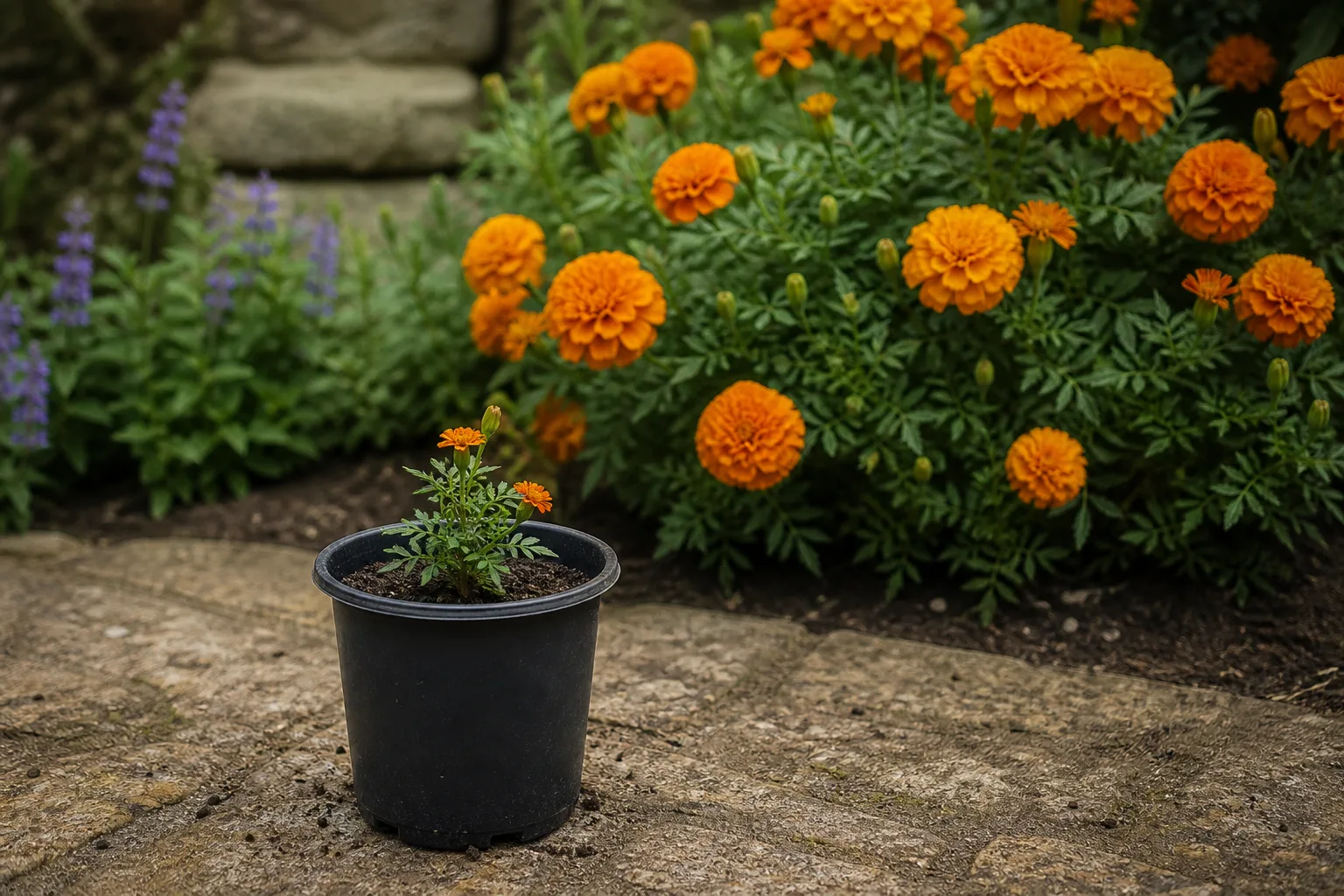
Slow Growth on Marigold: Causes, Checks & Fixes
This guide covers slow growth on Marigold. See also the general Slow Growth guide, watering, and light pages for this plant.
Slow Growth on Marigold: Causes, Checks & Fixes
Quick answer
Slow growth on marigold means Tagetes erecta and other Tagetes bedding types have lost forward momentum - small new leaves, no buds for weeks, and size far below what neighbors reach in the same warm week. The usual causes are insufficient direct sun, cold or waterlogged roots, or planting before soil warms.
First step: move the pot or transplant to full sun, confirm the top 3 cm dries between waterings, and judge pace on new leaf size and bud formation - not old stunted tissue.
Scope on this page: stalled pace and sluggish establishment - the triage branch when a marigold simply will not grow. For stretch toward windows and long bare stems, see leggy growth on marigold. For general low-light vigor and bloom failure, see not enough light on marigold. For wet wilt and mushy roots, see root rot on marigold. Placement detail and grow-light options live in the marigold light guide; watering rhythm in the marigold watering guide.
Cool early-spring stalls after transplant are often normal and low urgency. Mid-summer stalls in open sun with wet yellow lower leaves are not - inspect roots the same week.
What slow growth looks like on Marigold
Healthy African marigolds (Tagetes erecta) grow quickly under warm sun - flowers in 6–8 weeks from seed under good conditions, with mature plants commonly reaching 30–90 cm mid-season depending on cultivar. Slow growth shows as:
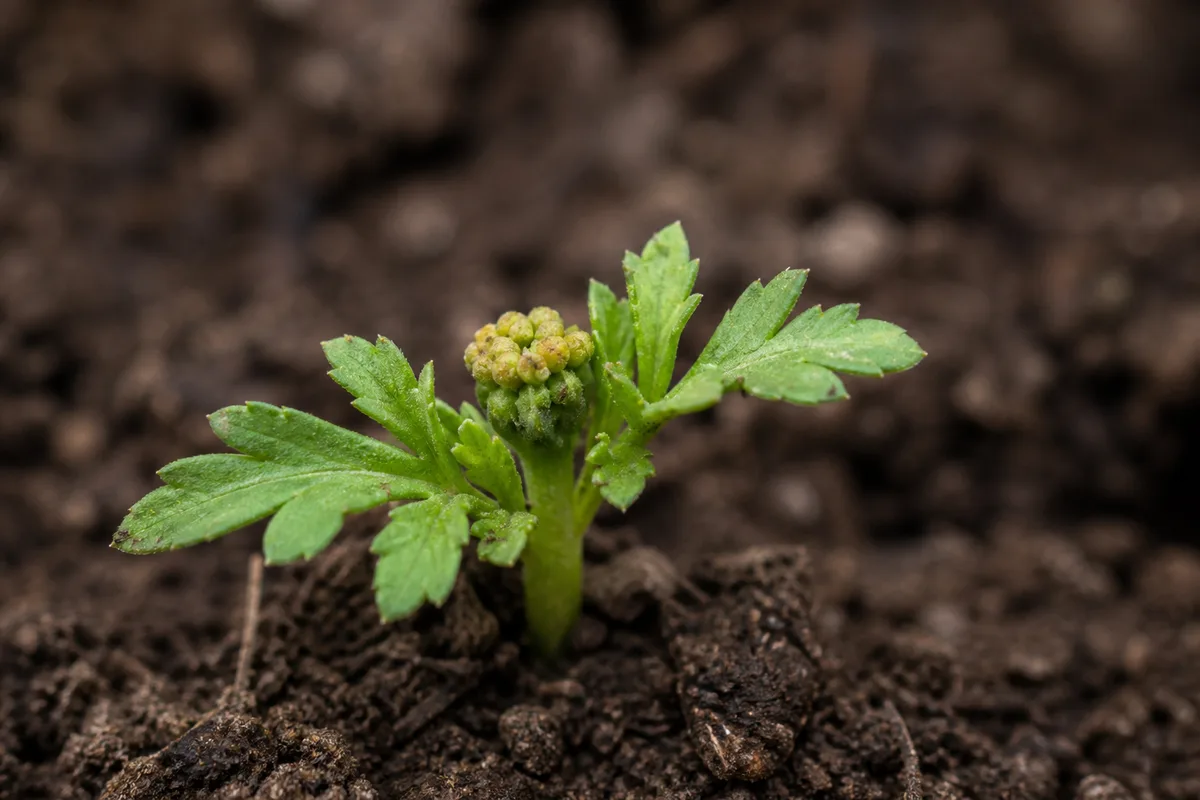
Slow Growth symptoms on Marigold - compare with healthy tissue on the same plant.
- Small new leaves that open smaller than older sun-grown foliage lower on the stem
- Long gaps between nodes without corresponding height gain - the plant looks stuck, not climbing
- No buds for weeks after transplant or after neighbors in the same bed begin flowering
- Overall size below baseline for the calendar week - a mid-June African marigold still under 15 cm with no bud swell is stalled, not “still young”
Stall signs in containers and beds
In containers, a stalled marigold keeps a light or heavy pot weight unchanged for days while new tips barely move. Soil may stay wet longer than expected in shade or stay bone-dry at the root ball edge in a small pot baking on a sunny rail - both read as “slow” from above.
In beds, one plant lagging behind flatmates in the same row usually signals microclimate - tree-root competition, a low wet corner, or partial shade from a fence - not random weak genetics.
Placement vignette (observed pattern): A cool May transplant in partial shade beside a south foundation often stalls for 2–3 weeks with no new leaf pairs while soil stays below active warmth. Moving the same plant to an open bed edge with six or more direct sun hours in mid-June commonly produces visible new leaf acceleration within 7–10 days and first bud swell by week three - provided the top 3 cm dry test replaces a daily watering habit copied from the shady corner.
Leggy stretch vs. true slow growth vs. root decline
These three patterns overlap in shade but need different fixes:
| Pattern | Stem habit | Leaf signal | Soil / roots | Primary page |
|---|---|---|---|---|
| True slow growth | Short or average height; stuck size | Small new leaves; few buds | May be wet or dry | This page |
| Leggy stretch | Tall, thin, leaning toward light | Pale; tip-heavy flowers | Often slow dry-down in shade | Leggy growth |
| Root decline | May wilt or yellow before height gain | Yellow lower leaves | Wet, heavy, sour smell | Root rot |
| Cool spring stall | Modest size; no lean | Normal green; no buds yet | Cool; not necessarily wet | Wait + sun - this page |
| Heat pause | Growth slows briefly | No scorch; firm foliage | Normal moisture | Resume when nights cool |
Pale, stretchy stems in dim light look like slow growth but are really leggy light stress - route to leggy growth when lean and internode stretch dominate. Wet soil with yellow lower leaves looks like slow growth but is root decline - confirm before fertilizing; see root rot when mushy roots appear.
Why Marigold grows slowly
Insufficient direct sun
Marigolds need full sun all day to provide blooms all season long. Shade slows photosynthesis and bud formation even when water is adequate - the plant survives but does not advance. NC State lists full sun as six or more hours of direct sunlight daily for Tagetes erecta, with partial sun reducing flowering and vigor.
Cold soil and cool-season planting
Tagetes erecta is a warm-season annual - roots and top growth stall when soil is cool after early planting, even if daytime air feels pleasant. Transplanting into soil that has not warmed invites a physiological wait state: the plant lives but produces few new leaves until soil temperature supports active uptake. In short-season climates, that lost week matters for display; in long-season regions, patience plus sun often resolves the stall without rescue.
Wet roots and root rot
Root rot in cool, wet, poorly drained soil stunts marigolds and yellows leaves - UMN lists root rot as a direct cause of stunted marigold growth. Overwatering keeps roots cold and anaerobic; underwatering desiccates roots so they cannot support fast top growth. Both extremes read as “slow” from above.
Moisture extremes and heavy clay
In-ground heavy clay beds after cool rain hold water at the root zone longer than raised containers - one lagging plant in a low bed corner often signals drainage, not fertilizer need. Incorporate compost or sand for drainage when replanting problem spots; see the marigold soil guide for bed prep.
Grow lights when outdoor sun is not yet available
Marigolds are poor long-term indoor performers. If you must hold transplants on a porch or windowsill before frost-free planting, use full-spectrum fluorescent or LED panels 4–6 inches above the canopy for 14–16 hours daily, raised as plants grow - start seed indoors 4–6 weeks before the frost-free date in bright light, matching the seedling setup in the marigold light guide. Insufficient supplemental light produces weak starts that stall outdoors even after a sun move. Move plants out as soon as soil warms and frost danger passes; grow lights maintain tissue quality during brief holds, not full-season bloom.
How to confirm the cause
Work through this five-step checklist before fertilizing or repotting:
- Sun hours - Count direct sun on leaves from mid-morning through afternoon. Fewer than six hours strongly limits growth rate; see not enough light for placement detail.
- Soil temperature and season - Cool spring weeks after planting may simply need warmth. Mid-summer stalls in open sun are not seasonal - treat as care errors.
- Moisture - Lift the pot. Heavy and wet 48 hours after you stopped watering points to root stress; light and crispy points to drought stall.
- Root inspection - Unpot if wet-yellow pattern present. Firm white roots vs. brown mushy roots separates moisture stall from root rot.
- Feed level - Heavy nitrogen in shade produces leafy stagnation without buds. Too much fertilizer reduces blooms on marigolds already stressed by shade or wet roots.
Decision fork: If sun is adequate, soil is warm, moisture is balanced, and roots are firm but internodes still stretch toward one direction, switch to leggy growth - pinching, not more sun, may be the missing step.
First fix for Marigold
Move to full sun and correct watering - dry the top 3 cm between drinks; never keep soggy mix.
That single pairing fixes most stalls that are not advanced rot. Full sun means direct rays on leaves for most of the day - open bed edge, sunny patio pot, or south-facing rail per the marigold light guide. Harden off over 7–10 days if the plant came from deep shade.
If roots are rotted after the moisture check, repot into fresh draining mix after trimming decay - follow root rot on marigold for trim thresholds. Do not push high-nitrogen fertilizer on stalled shaded or wet-rooted plants.
Step-by-step recovery
- Relocate to the sunniest feasible site with airflow - not under deep eaves or beside tall shade competitors.
- Adjust watering to the top 3 cm dry test at the base; empty saucers after every drink per the marigold watering guide.
- Unpot and trim rot if wet yellow lower leaves and sour smell are present - see root rot for salvage vs. replace.
- Pinch tips once new growth resumes to encourage branching - timing detail in the marigold pruning guide.
- Apply light balanced feed only after two weeks of stable new growth in warm weather - not while soil is still correcting from saturation.
Do not stack repot, heavy feed, and hard prune on the same week you fix sun and moisture.
Recovery timeline
| Milestone | What to expect |
|---|---|
| Cool spring wait | No new leaves for 1–3 weeks in marginal soil warmth can be normal - reassess when nights stay consistently mild |
| 7–14 days after sun + moisture fix | Visibly larger new leaves in warm full-sun conditions |
| 2–4 weeks | Bud swell on healthy plants that were only stalled, not rotted |
| Mid-season replace threshold | No new leaf pairs after 14 days in full sun with firm roots → replace for display |
Cool weather naturally slows pace - not every stall is a care error. Judge recovery on new tissue, not old stunted leaves. Severely rotted roots may never support vigorous growth through the display season.
Causes to rule out
| Lookalike | Key differentiator | Where to go |
|---|---|---|
| Cool spring stall | Green foliage; no wet wilt; soil still cool | Wait + sun - this page |
| Leggy stretch | Tall lean; tip-heavy flowers; may have adequate sun missed pinch | Leggy growth |
| Not enough light | Stretch, pale leaves, zero buds in dim site | Not enough light |
| Root rot | Wet wilt; sour soil; mushy roots | Root rot |
| Heat pause | Firm plant; slows during heat spike; resumes when nights cool | Hold watering steady; no rescue feed |
| Pests on tips | Sticky or stippled new growth; localized bud stall | Inspect tips; treat pests before assuming culture |
| No flowers despite size | Foliage OK; zero buds in full sun | No flowers |
Dormancy does not apply - marigolds are annuals without winter dormancy indoors.
Variety note: African marigolds (T. erecta) often look smaller than French types (T. patula) for the first weeks after transplant, then surge in warm sun. French types tolerate moist soil better than African types, but both need full sun for display pace - type difference is not shade tolerance.
What not to do
Do not repot repeatedly into ever-larger wet pots hoping to “unlock” growth. Do not fertilize rotting roots. Do not keep waiting in shade mid-season - light is mandatory for this species. Do not confuse a cool May stall with a July care error; calendar and neighbor comparison matter.
How to prevent it next time
Plant in full sun with well-drained soil after frost when soil has warmed - not the first frost-free afternoon if soil is still cold. Start with healthy transplants rather than root-bound waterlogged seedlings from nursery benches.
Choose type to match site: African marigolds for open beds and maximum bloom; French types for tighter containers - neither for deep shade. Review marigold overview for cluster placement and marigold light for hour counts before planting.
Pinch young plants per the pruning guide so energy stays in compact branches once warmth arrives.
Marigold care cross-check
Slow growth is usually light + roots + warmth, not fertilizer deficiency. Align full sun placement and base watering before adding inputs. If yellow lower leaves appear on wet soil, cross-check overwatering on marigold before feeding.
When to worry
Low urgency early in cool spring - wait for warmth if foliage is green and roots are firm.
Urgent when slow growth pairs with wet wilt, sour soil, or spreading yellow lower leaves - inspect roots for rot the same week.
Display urgency mid-season: replace plants that stay stunted while neighbors bloom in the same bed, especially with mushy roots - they rarely catch up for the season. Cool early stalls are normal; mid-summer stalls in open sun are not.
Related marigold guides
- Not enough light on marigold - stretch, pale leaves, and bloom failure from shade
- Leggy growth on marigold - tall thin stems and missed pinching in sun
- Root rot on marigold - wet wilt, mushy roots, salvage thresholds
- Yellow leaves on marigold - when yellowing is not moisture alone
- Marigold light guide - sun hours, grow lights, acclimation
- Marigold watering guide - top-3-cm rhythm in containers and beds
- Marigold overview - types, placement, and seasonal culture