Spider Mites on Marigold: Causes, Checks & Fixes
Quick answer
Spider mites on marigolds usually start as pale stippling, then bronzing and fine webbing on leaf undersides during hot, dry spells. First isolate the plant and rinse leaf undersides with a firm morning spray every 2 to 3 days, then keep root-zone moisture steady to reduce rebound.
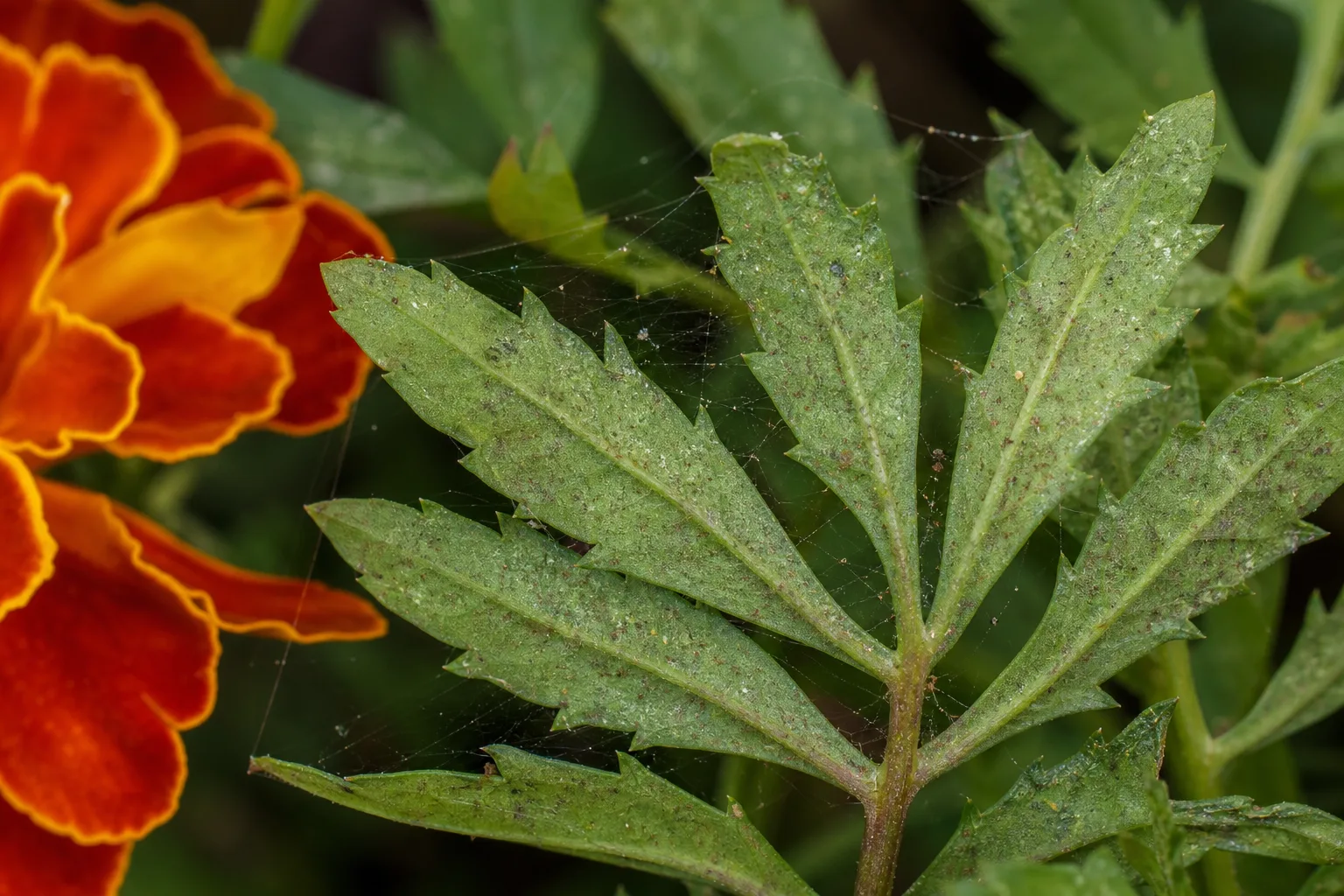
Spider Mites on Marigold: Causes, Checks & Fixes
This guide covers spider mites on Marigold. See also the general Spider Mites guide, watering, and light pages for this plant.
Spider Mites on Marigold: Causes, Checks & Fixes
Quick answer
Spider mites on marigolds usually flare in hot, dry weather, especially when plants cycle between drought stress and quick rewatering. UC IPM notes spider-mite damage is most severe in hot, dusty conditions and on water-stressed plants.
First fix: isolate the marigold and rinse leaf undersides with a firm morning spray every 2 to 3 days while you stabilize base watering.
What spider mites look like on Marigold
Spider-mite injury on marigold is usually a pattern, not one symptom:
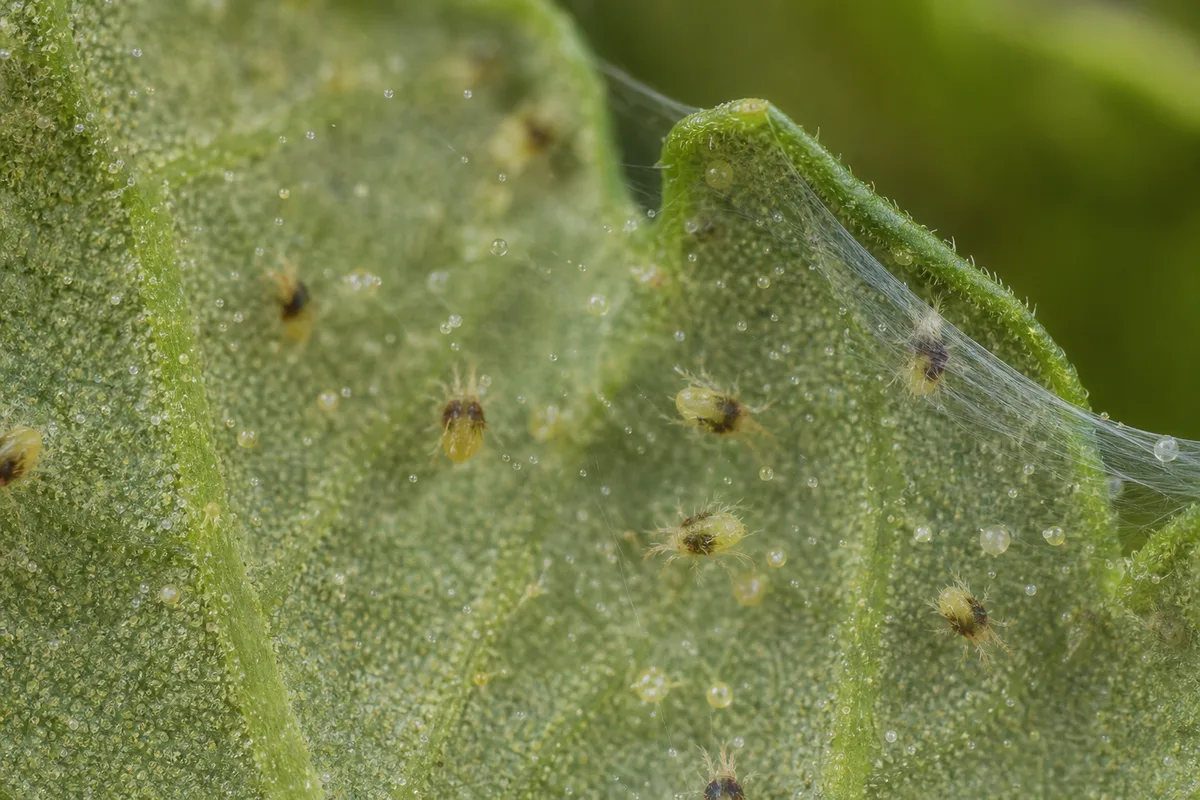
Spider Mites symptoms on Marigold - compare with healthy tissue on the same plant.
- Fine pale stippling on upper leaves
- Progression to bronzing as feeding continues
- Fine silk near leaf undersides, petioles, and tip growth
- Slower flower opening or bud failure on heavily infested stems
The usual pest is two-spotted spider mite (Tetranychus urticae). Mites are tiny, so confirm by tapping suspect growth over white paper and checking for moving specks with a hand lens.
Why Marigold gets spider mites
Marigolds are full-sun annuals, and that exposure helps bloom production but can raise mite pressure when roots repeatedly dry too far. UMN Extension recommends full sun for marigold, and NC State lists Tagetes erecta as a full-sun annual that prefers evenly moist, well-drained soil.
The risk pattern on marigold beds and containers is usually:
- Repeated dry-down in containers or bed edges
- Hot, dusty, low-humidity weather
- Crowded canopies with poor airflow near bloom tops
- Delayed scouting under leaf undersides
Populations can surge quickly in heat. UMN Extension reports development can complete in 1 to 2 weeks and speed up above 90F, and Penn State links outbreaks to extended hot, dry weather.
How to confirm the cause
Follow this order so you do not misread drought stress as a mite outbreak:
- Check undersides first. Mites build colonies on undersides before obvious top-side collapse.
- Do a paper tap test. Shake suspect foliage over white paper and look for moving dots with a lens.
- Look for webbing. Fine silk strongly supports spider mites; it is uncommon with simple drought stress.
- Review watering history. Drought swings make marigold infestations more likely and more severe.
- Compare lookalikes before spraying.
Lookalikes to rule out on marigold
| Problem | Typical pattern | What is usually missing |
|---|---|---|
| Spider mites | Stippling plus underside mites, then webbing | N/A |
| Drought bronzing | Broad dull/bronze leaves after dry spells | Moving mites and silk |
| Thrips | Silvery scrape marks and black specks | Fine webbing |
| Aphids | Visible pear-shaped colonies and sticky honeydew | Fine stippling pattern |
If stippling appears but no live mites are found after two checks, review marigold underwatering and light stress on marigold before escalating sprays.
First fix for Marigold
Isolate and rinse first.
Use a firm water stream early in the day, aiming at leaf undersides and tip growth. Repeat every 2 to 3 days for 10 to 14 days. UC IPM lists water sprays as a primary management tool, and this is often enough for light to moderate marigold infestations.
If pressure persists, move to insecticidal soap or horticultural oil labeled for ornamentals and follow temperature and pollinator precautions on the label. Missouri Extension advises targeted mite management and caution with broad-spectrum products.
Keep base watering steady while you treat. Marigolds under repeated drought stress are more likely to rebound with mites.
Step-by-step recovery by severity
Light infestation (stippling, little or no webbing)
- Rinse undersides thoroughly.
- Repeat every 2 to 3 days.
- Monitor new growth for fresh stippling.
- Improve spacing and airflow around dense flowering tops.
Moderate infestation (webbing at several tips)
- Rinse as above.
- Prune heavily webbed tips.
- Add soap/oil if mites persist after repeated rinsing.
- Inspect nearby plants, especially touching foliage.
- Treat nearby hosts in the same zone, not one pot at a time.
Heavy infestation (webbing across stems, bloom collapse)
- Isolate or remove the worst plant.
- Protect neighboring marigolds and nearby vegetables.
- Treat remaining plants as a group, not one-by-one.
- Consider replacing severely infested seasonal plants to break pressure quickly.
Recovery timeline
If control is working, new growth should look cleaner within about 7 to 14 days, while old stippled leaves usually stay marked. Purdue extension guidance notes mite-damaged foliage generally does not green back up.
Judge recovery by fresh, cleaner growth, falling live-mite counts, and no new webbing. If webbing returns after two full cycles, reassess spacing, moisture stress, and nearby host plants.
Causes to rule out before stronger sprays
- Drought bronzing: broad dull color without silk or moving mites
- Thrips injury: silvery scraped patches and black specks, usually no webbing
- Aphids: visible colonies and honeydew
- General nutrient stress: diffuse yellowing without stipple pattern
Marigold beds often have overlapping stressors. If mite signs are weak but wilting is strong, cross-check marigold watering and root rot on marigold.
Mistakes that make spider mites worse
Avoid these during a marigold outbreak:
- Starting with broad-spectrum insecticides that remove natural enemies.
- Rinsing late and leaving dense flowers wet overnight.
- Treating one container while ignoring touching plants.
- Pushing fertilizer while foliage is still under active mite stress.
Penn State notes marigold botrytis flower blight risk rises with wet flower tissue, and PNW guidance also emphasizes moisture and humidity as major drivers. Time rinses for early day and improve airflow.
How to prevent spider mites next season
Prevention is mostly a stress-management routine:
- Keep moisture steady in heat without daily wilt-crash cycles.
- Space plants so air can move through canopies.
- Scout weekly under leaf undersides, not just top foliage.
- Quarantine new nursery plants before adding to beds or patio groups.
- Use water-first intervention at first signs, before webbing appears.
For mixed marigold plantings, remember UMN identifies common types as French, African, and Signet. Larger African marigolds often need more spacing than compact French types to keep canopies from trapping heat.
When to worry
Escalate quickly when:
- Webbing covers multiple stems before peak bloom
- Flowering stalls or buds fail repeatedly on infested tips
- Mites spread into nearby vegetables or ornamentals
- Reinfestation happens within a week despite correct water-first treatment
At that point, remove the worst plants, protect the rest of the bed, and consider local extension diagnostics if decline continues.
Marigold care cross-check
If symptoms overlap, use related guides to separate primary cause from side effects:
- Marigold bud drop
- Marigold small flowers
- Marigold aphids
- Marigold mealybugs
- Marigold fertilizer guide
- Marigold overview
When to use this page vs other Marigold guides
- Marigold watering guide - Use for routine moisture checks before assuming spider mites is the main issue.
- Marigold problems hub - Browse all 20 common issues on this species.
- Low Humidity on Marigold - Different entry point when symptoms overlap with spider mites.
- Slow Growth on Marigold - Different entry point when symptoms overlap with spider mites.