Leggy Growth on Marigold: Causes, Checks & Fixes
Quick answer
Leggy marigolds usually lack enough direct sun or missed an early pinch. Move the plant to full sun, then pinch or cut stems back to force compact side branches and fresh flowers.
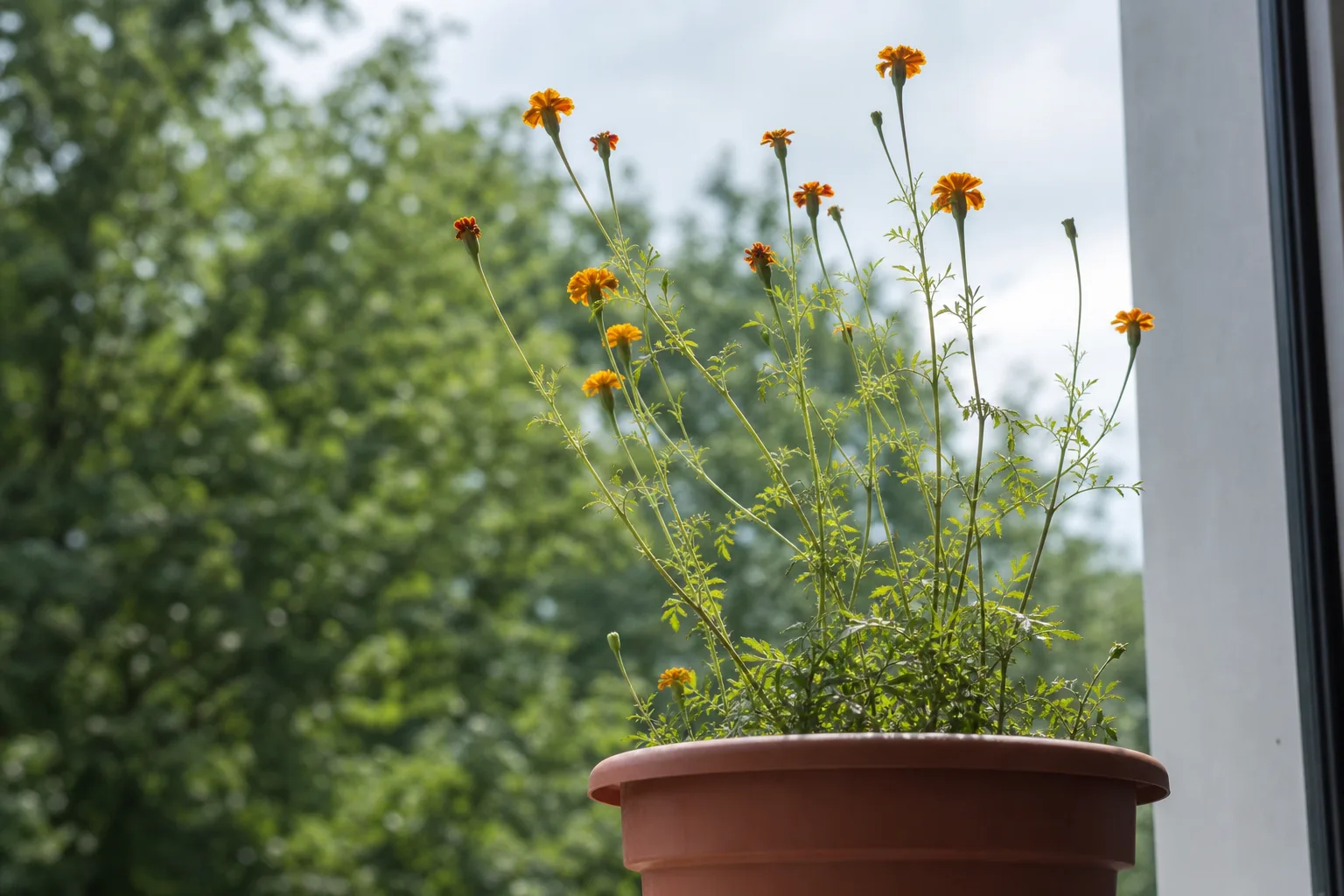
Leggy Growth on Marigold: Causes, Checks & Fixes
This guide covers leggy growth on Marigold. See also the general Leggy Growth guide, watering, and light pages for this plant.
Leggy Growth on Marigold: Causes, Checks & Fixes
Quick answer
Use this page when marigold stems stretch with sparse flowers at the tips. For general low-light yellowing without structural stretch, see not enough light.
Leggy growth on marigold is usually tied to insufficient direct sun or skipping an early pinch. First step: move the plant to full sun, then pinch or cut stems back to restart compact branching.
Tagetes erecta (African marigold) is a bloom-driven annual that tells you quickly when light or pruning rhythm is off. Stems stretch, internodes lengthen, and flowers cluster at the tips while the middle of the plant looks bare. Healthy African marigolds form upright, bushy plants roughly 30–90 cm tall with blooms along the stems - not lollipop-shaped shoots reaching toward a window.
What leggy growth looks on Marigold
On marigolds, legginess shows up as long, wiry stems with wide gaps between leaves. Lower foliage may yellow and drop as the plant puts energy into reaching light. Flowers appear mostly at stem tips, and the container or bed looks hollow in the center.
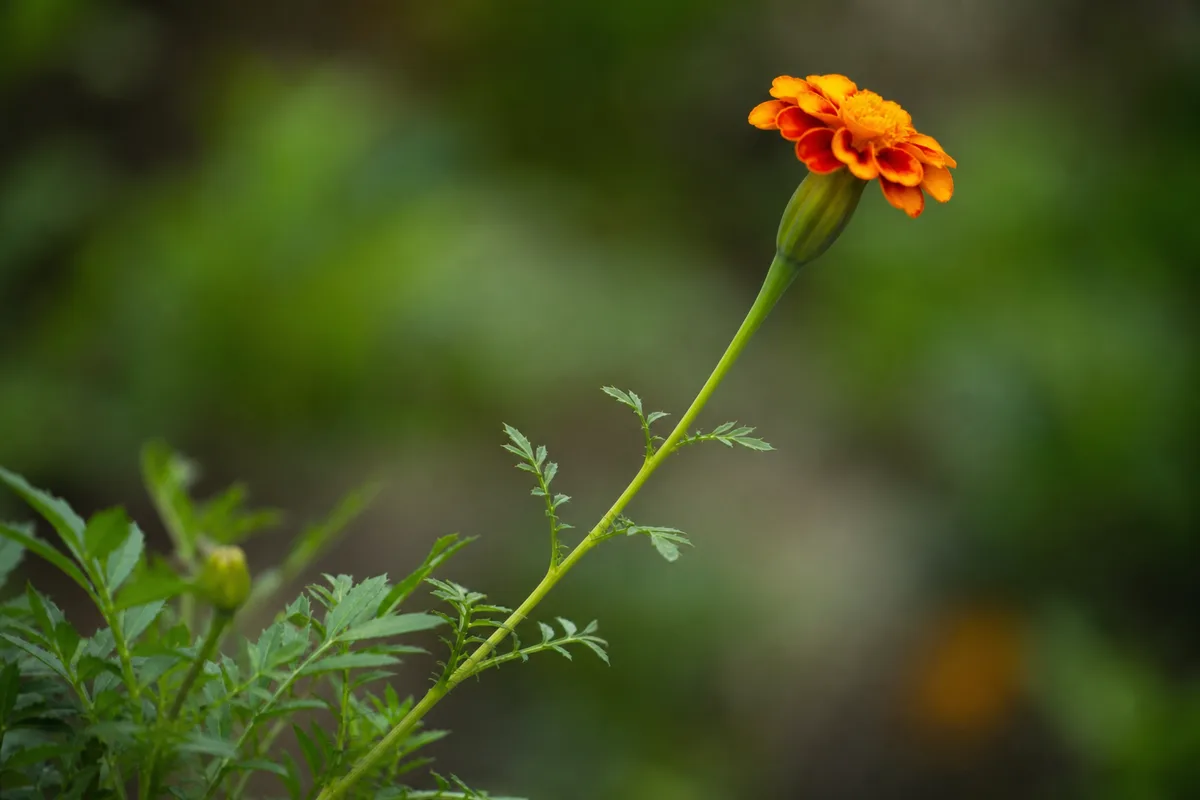
Leggy Growth symptoms on Marigold - compare with healthy tissue on the same plant.
Taller African cultivars can reach 90 cm, but leggy plants lack the dense flower cover and upright habit that defines a healthy display. Compare new growth with old: if only the newest tips look acceptable while everything below is bare, you are seeing a structural problem, not normal aging.
Why Marigold gets leggy growth
Marigolds need strong light to stay compact and bloom heavily. Marigolds need full sun all day to provide blooms all season long. The more shade they receive, the fewer flowers they produce - and stems elongate as the plant searches for light.
In partial shade or on a bright indoor sill that never gets direct sun, marigolds survive but do not bloom or branch well. They require full sun all day long - partial shade produces the classic leggy pattern with sparse color.
Skipping early maintenance is the second common cause. Without pinching off the top of the plant while it is still small to promote more branches, stems keep extending while side branches fail to form. Spent blooms left on the plant also slow rebloom and let stems lengthen-see pruning guide for deadheading technique.
High-nitrogen fertilizer in low light makes the problem worse. Too much fertilizer will cause the plant to produce fewer blooms as it devotes energy to foliage growth instead.
Container and balcony traps: North-facing railings, deep porch overhangs, and pots tucked under taller plants block direct rays even when the area looks bright. Marigolds on a windowsill indoors rarely receive enough photons regardless of fertilizer.
Grow-light note: Porch or indoor keepers need supplemental light if direct sun is unavailable. Full-spectrum LEDs at roughly 12–14 hours can support compact growth when placed 15–30 cm above foliage-still secondary to outdoor full sun per our light guide.
How to confirm the cause
Work through these checks before pruning or moving the pot:
- Sun hours - Note direct sun on the plant from mid-morning through afternoon. Fewer than six hours strongly points to light as the cause.
- Stem pattern - Light-starved plants lean toward the brightest direction. Pinch-neglected plants may still stand upright but have long bare sections between old flower nodes.
- Flower density - Shade-stressed marigolds produce small or fewer blooms. Overfed plants in low light may stay green but flower poorly.
- Variety type - Large-flowered African marigolds need more sun and early pinching than compact French types.
- Root check - If stems are leggy and the pot stays wet, rule out root rot before fertilizing heavily.
First fix for Marigold
Move the plant to full sun, then pinch or cut stems back.
Full sun means the leaves receive direct light for most of the day - on an open balcony, sunny bed, or south-facing railing, not tucked under a deep overhang. Acclimate gradually if the plant has been in deep shade: increase exposure over three days to avoid scorch on tender leaves.
Once light is corrected, pinch. Pinch off the top of the plant while it is still small to promote branching - on established leggy plants, cut stems back by one-third to one-half just above a leaf node per pruning guide. Deadhead spent blooms to help the plant produce more flowers rather than seed.
Water at the base after pruning. Avoid high-nitrogen feed until new compact growth appears.
Step-by-step recovery
- Move to the sunniest feasible spot with good airflow.
- Remove dead flowers and any yellow or damaged lower leaves.
- Pinch or cut each long stem back by one-third to one-half above healthy nodes.
- Water at the base until excess drains; empty saucers per watering guide.
- Stake taller African varieties if needed after pruning.
- Deadhead new flowers every few days to keep the plant branching.
Expect new side shoots within 7–14 days in warm weather. Blooms typically return on fresh growth within two to three weeks. Judge recovery by side-branch flowers along stems-not by old bare sections filling in.
Recovery timeline
Stretched tissue does not shrink back - only new growth will look compact. After a proper cutback in full sun, most healthy marigolds show fresh shoots within a week. Flower production resumes on side branches, not on old bare stem sections.
If nothing sprouts after two weeks in warm sun, inspect roots. Leggy appearance plus stagnant growth can mean root rot or severe nutrient imbalance, not light alone.
Lookalike comparison table
| What you see | Likely cause | Key cue | Guide |
|---|---|---|---|
| Wiry stems, hollow center, tip-only blooms | Leggy etiolation | Fewer than 6 h direct sun; missed pinch | This page |
| Tall upright plant, flowers along stem | Normal African habit | Flower-dense; firm stems | - |
| Pause in bloom, firm green leaves | Heat stall | Extreme summer heat | Overview |
| Soft leafy growth, few flowers in sun | Nitrogen excess | Recent high-N feed | Fertilizer |
| Wilting on wet soil, yellow lower leaves | Root rot | Mushy roots | Root rot |
| Pale leaves, weak growth, no stretch | General low light | Not always long internodes | Not enough light |
What not to do
Do not leave a leggy marigold in the same shady spot and expect fertilizer to fix structure. Do not remove every leaf when pruning; marigolds need foliage to recover. Avoid pruning during extreme heat if the plant is already drought-stressed. Do not repot, prune, and relocate all on the same day.
How to prevent leggy growth next time
Start with short, compact transplants rather than already-stretched seedlings. Pinch off the top while plants are still small to encourage bushier growth with more flower stems. Deadhead regularly - removing spent blooms helps the plant produce more flowers rather than seed.
Match placement to needs: African marigolds belong in full sun locations with well-draining soil per our soil guide, not shaded rooms or north-facing balconies. Avoid heavy nitrogen fertilizer in dim sites.
Marigold care cross-check
Leggy growth often appears when light, water, and pruning drift out of sync. Marigold wants full sun with well-drained soil, base watering when the top 3 cm of mix dries, and moderately fertile mix - not too rich.
If the pot stays wet in mediocre light, fix drainage and placement together - wet roots plus weak light produce weak, stretched stems that no amount of pruning fully corrects until both issues are resolved.
When to worry
Leggy growth alone is a maintenance issue, not an emergency. Escalate if stems collapse at the base, the crown feels soft, or wilting persists despite moist soil - those signs point to root rot rather than simple stretching.
Related Marigold guides
- Pruning - pinch depth and deadheading
- Light - full sun placement and grow lights
- Not enough light - general low-light vigor
- No flowers - shade-stress overlap
- Overview - full care hub