Not Enough Light on Marigold: Causes, Checks & Fixes
Quick answer
Not enough light on marigold shows as stretched stems toward windows, long internodes, pale leaves, and few or no flowers despite green foliage. First step: move Tagetes erecta to full sun with at least six hours of direct sunlight on the leaves, then pinch leggy stems to restart compact branching.
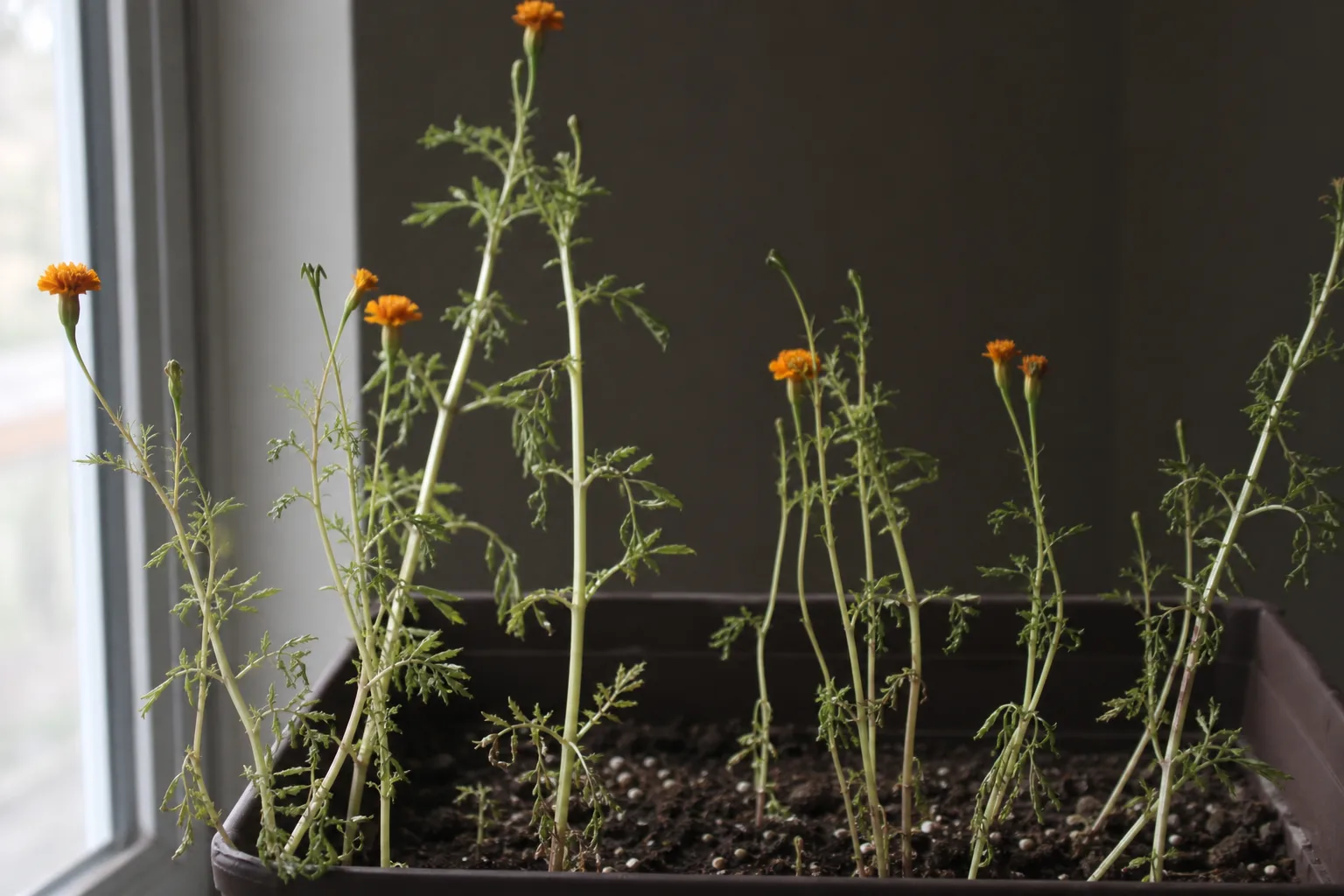
Not Enough Light on Marigold: Causes, Checks & Fixes
This guide covers not enough light on Marigold. See also the general Not Enough Light guide, watering, and light pages for this plant.
Not Enough Light on Marigold: Causes, Checks & Fixes
Quick answer
Not enough light on Marigold means Tagetes erecta and other Tagetes bedding types cannot meet their full-sun requirement-the most common reason African marigolds fail on shaded balconies, covered patios, or indoor sills. Marigolds need full sun all day to provide blooms all season long, and partial shade reduces flowers while producing sparse, stretched plants.
First step: move the pot or transplant to a site with at least six hours of direct sunlight on the leaves daily, then pinch or cut back leggy stems to encourage side branches. Do not fertilize, repot, or hard-prune on the same day you change light.
This page covers stretch, pale leaves, and bloom failure driven by too little direct sun. If stems stretch despite six or more sun hours, see leggy growth on marigold for pinch and spacing fixes. If foliage looks fine in full sun but zero buds appear, see no flowers on marigold. For proactive placement, grow lights, and hour counts, see the marigold light guide.
What insufficient light looks like on Marigold
Marigolds in low light stretch toward the brightest source, develop long internodes, open pale leaves, and produce few or no flowers even when the plant still looks broadly green. Lower leaves may yellow and drop, leaving bare stems in the center of the pot. The plant can appear alive while failing the bloom test that defines successful marigold culture outdoors.
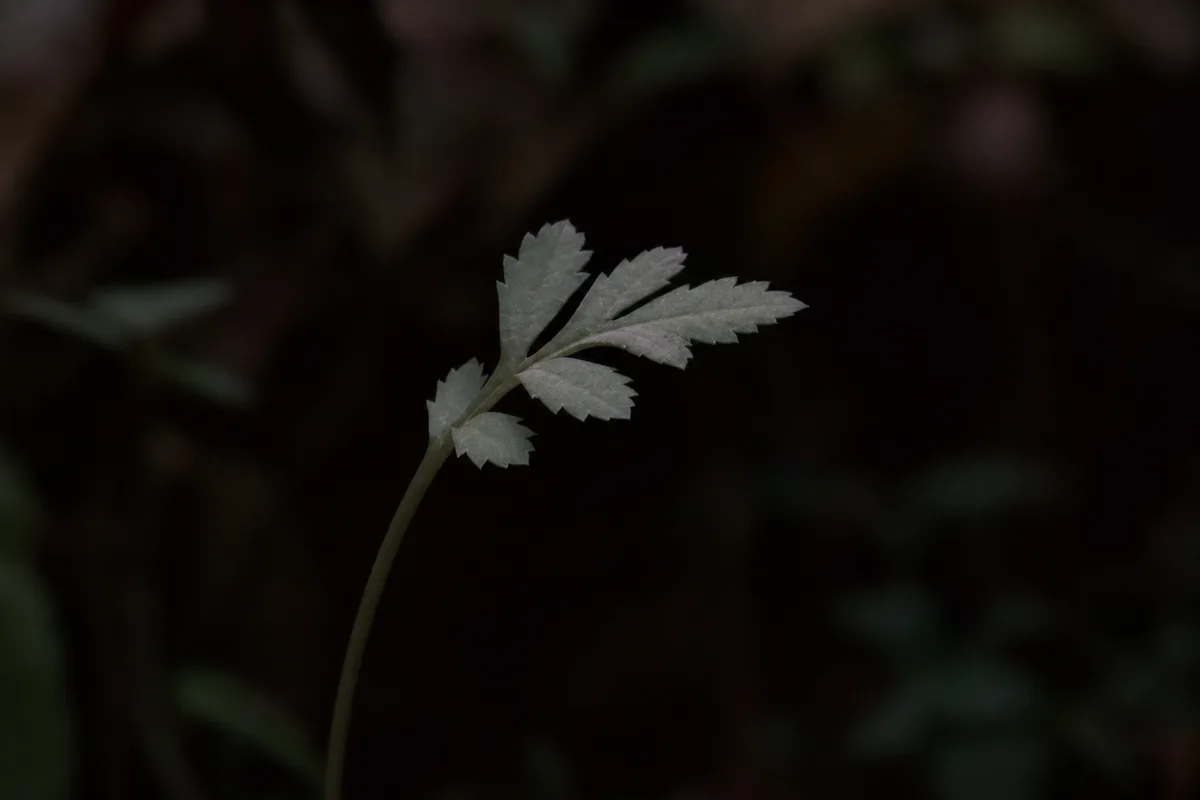
Not Enough Light symptoms on Marigold - compare with healthy tissue on the same plant.
Watch for these patterns on African marigolds (T. erecta) and French types (T. patula):
- Lean and reach - stems tilt toward a window, doorway, or gap in a fence instead of growing upright and bushy.
- Wide internodes - noticeable gaps between leaf pairs on new growth; compare the last two leaves that opened on the same stem.
- Pale or undersized new foliage - fresh leaves open lighter green and smaller than older sun-grown leaves lower on the branch.
- Tip-heavy flowering - any blooms cluster at stem ends while the middle of the plant stays bare.
- Slow pot dry-down - soil stays wet longer than expected because the plant photosynthesizes less and uses less water in shade.
Scope note: Stretch from shade overlaps leggy growth when light is the root cause. If your marigold already sits in open full sun but still looks lanky, the leggy-growth page-not this one-covers missed pinching, deadheading, and spacing.
Why Marigold needs more light
Marigolds are warm-season annuals bred for open Mexican and Central American sun-not dim interior corners. Tagetes erecta grows easily in well-drained soils in full sun. UF/IFAS recommends fertile soil and at least six hours of sun for marigold performance; the same source notes that too much nitrogen or shade causes leafy plants with few flowers.
Typical triggers include:
- North windows and covered patios - bright ambient light without direct rays on leaves is the classic balcony failure.
- Deep overhangs and tall neighbors - eaves, pergolas, and adjacent buildings cut afternoon sun more than owners expect.
- Indoor overwintering without grow lights - marigolds may survive briefly on a sill but stretch and stop blooming without supplemental light.
- Dirty glass or sheer curtains - even south windows deliver less energy when filtered.
Low light also slows transpiration and pot dry-down. That combination-dim placement plus unchanged watering-is one of the most common paths to yellow lower leaves and root stress on shaded containers, because the mix stays wet while the plant barely uses water. Cross-check rhythm in the marigold watering guide after you improve light.
African, French, and signet types in shade
UMN Extension identifies French, African, and signet as the three common marigold types. African marigolds (T. erecta) are tallest with the largest double flowers and demand the most sun for display-grade bloom. French types are more compact and somewhat more adaptable in tight containers, but they still flower poorly in deep shade. Signet marigolds (T. tenuifolia) need the same direct sun hours; their smaller blooms simply dry faster after rain.
How to confirm the cause
Work through these checks before changing fertilizer or pot size:
- Sun-map the pot - count hours when direct sun hits the leaves, not just the rim or a bright wall reflection. Fewer than six hours during warm active growth strongly points here.
- Lean direction - stems pointing toward one light source confirm phototropism from deficit, not random weak growth.
- Bloom count in warm weather - established marigolds in shade often show zero buds for weeks while foliage stays green.
- Compare open-sun neighbors - a marigold in full bed sun beside your shaded pot is the fastest reality check.
- Pot weight and moisture - lift the container. Chronic dampness in a dim corner suggests slow use; pair a light fix with a watering review per the overwatering guide if lower leaves yellow on wet soil.
- Rule out feed-only fixes - fertilizer cannot replace missing photons for bloom on Tagetes.
Placement vignette (observed pattern): A north-facing balcony rail with zero direct sun on leaves often produces visible internode stretch within 7–10 days on young African marigolds in late spring. Moving the same pot to a south bed edge with six or more direct sun hours commonly yields the first tight side shoots within two weeks and meaningful bud clusters by weeks three to four in warm weather-provided watering is adjusted as the pot dries faster.
If lean, long internodes, pale new leaves, and failed bloom align with a dim site, you have enough evidence to fix light before reaching for bloom booster.
The first fix to try
Move the plant to the sunniest feasible outdoor site and leave everything else alone for several days.
That means an open bed edge, sunny patio pot, or south-facing balcony rail without deep overhangs-not a middle-of-room shelf or north exposure. NC State lists full sun as six or more hours of direct sunlight daily for Tagetes erecta, with partial sun reducing flowering.
If the plant came from deep shade or indoors, acclimate over 7–10 days: start with morning sun, add hours gradually, and watch new leaves for bleaching. Sudden harsh afternoon sun on shade-formed foliage can scorch-see lookalikes below.
After the move stabilizes, pinch or cut back stretched stems by one-third to one-half to restart side branches. Detailed pinch timing lives in the marigold pruning guide.
Reduce watering frequency if the previous shady spot kept soil wet-sunny placement dries the mix faster, but do not assume more water is needed just because leaves look soft.
Step-by-step recovery after light improves
Once placement is corrected, follow this order:
- Wait 5–7 days before Marigold repotting guide or feeding. Let new tip growth confirm the site works.
- Adjust watering - use the top 3 cm dry test at the base; brighter light increases dry-down speed.
- Pinch leggy stems after several days of good light if internodes stayed long. Old stretched sections will not become compact without cutting.
- Deadhead spent blooms to redirect energy toward new buds once flowering resumes.
- Resume weak fertilizer only after new leaves look normal in warm weather-not while the plant is still stretching in shade.
Do not stack repot, hard prune, and heavy feed on the same week you fix light.
Recovery timeline
| Milestone | What to expect |
|---|---|
| 3–7 days | Lean may slow; newest leaf pairs should open closer together if the new site delivers direct sun. |
| 1–2 weeks | Compact side shoots often appear at pinched tips in warm weather (roughly 18–27°C active growth). |
| 2–4 weeks | Meaningful bud increase after sun correction and pinch; judge by new growth, not old stretched stems. |
| Cool or cloudy stretch | Recovery slows; allow extra week before assuming placement failed. |
Old elongated stems do not shorten on their own. Success means tighter new tips, upright side branches, and rising bud count-not instant reshaping of every bare lower branch.
Lookalike symptoms to rule out
Overwatering in shade yellows lower leaves while soil stays damp-especially on covered patios where light is low and rain or habitual watering keeps the mix wet. Sour smell, blackened lower stems, or a soft base point toward root stress. Fix light and drainage together; see root rot on marigold if collapse is advanced.
High nitrogen fertilizer produces lush green foliage with few flowers. If leaves are dark and full in a sunny window but buds never form, review feeding in the marigold fertilizer guide-not light alone.
underwatering on Marigold wilts leaves between drinks and produces dry crispy edges, not long internodes toward a window. A light pot that perks up after a thorough soak fits drought stress better than shade stretch.
Sunburn after a rushed move shows bleached, papery, or crispy patches on leaves exposed suddenly to harsh afternoon sun. Low light causes reach and pale stretch; sunburn follows an abrupt jump without acclimation. Hold at partial sun for 48 hours before advancing exposure.
Leggy growth with adequate sun - if you already logged six or more direct sun hours and stretch persists, missed early pinching or spacing is more likely. Use the leggy growth guide instead of repeating a placement move.
No flowers despite good sun - zero buds with otherwise acceptable foliage in full sun points to wet roots, nitrogen imbalance, or missed deadheading on the no flowers page.
Mistakes to avoid
Do not keep marigolds as permanent indoor low-light color-they are warm-season sun annuals that stretch and stop blooming without strong supplemental light. See the marigold light guide for grow-light options on windowsills or winter holds.
Do not increase nitrogen in shade hoping to force flowers-that produces soft foliage, not buds.
Do not overwater shaded pots because leaves look “thirsty.” Slow dry-down in dim corners is a common trap.
Do not jump a deep-shade plant straight into peak afternoon sun without the 7–10 day acclimation schedule.
Do not confuse cosmetic old-leaf drop with active stretch. Focus on the newest two leaf pairs and current bud behavior.
How to prevent not enough light next time
Site selection before planting beats rescue mid-season. Full sun locations only for African marigolds intended for heavy bloom-open beds, vegetable-garden margins, and sunny patio pots outperform north-facing balconies and covered entries.
Choose cultivar type to match space, not shade tolerance: African types need the most open sky; French types fit tighter containers but still require direct sun; signet types suit edging beds with the same hour minimum. None thrive in deep shade.
Review the marigold light guide for balcony orientation, hardening-off schedules, and seedling grow lights before problems appear.
Deadhead and pinch young plants per the pruning guide so energy stays in compact, flower-ready branches once sun is adequate.
Marigold care cross-check
Light is the non-negotiable input for marigolds. Pair full sun with well-drained soil and base watering-shade culture fails bloom goals even when watering is otherwise correct.
Related care pages:
When to worry
Insufficient light alone is slow and correctable. Treat as urgent when weak light combines with wet soil:
- Yellow lower leaves while the mix stays damp in shade
- Sour or musty smell from the pot
- Soft stems at the soil line or visible root blackening
Inspect roots while improving placement and drainage. Prioritize root rot rescue if the base collapses-light correction alone will not save a rotted crown.
Otherwise, display urgency is high early in the warm season: every shaded week costs bloom time on an annual that finishes in one season.
Conclusion
Shaded marigolds ask for more direct sun, not more fertilizer. Confirm sun hours on the leaves, move to open placement, acclimate if needed, pinch stretched stems, and judge recovery on tighter new growth and rising bud count. For stretch with adequate sun, see leggy growth; for zero buds in full sun, see no flowers.
When to use this page vs other Marigold guides
- Marigold watering guide - Use for routine moisture checks before assuming not enough light is the main issue.
- Marigold problems hub - Browse all 20 common issues on this species.
- Leggy Growth on Marigold - Different entry point when symptoms overlap with not enough light.
- Slow Growth on Marigold - Different entry point when symptoms overlap with not enough light.
- Yellow Leaves on Marigold - Different entry point when symptoms overlap with not enough light.