Yellow Leaves on Marigold: Causes, Checks & Fixes
Quick answer
Yellow marigold leaves usually trace to one of five patterns: wet-soil lower yellowing, dry-soil crisp edges, mite stippling, aphid stress on new growth, or pale nutrient yellowing. Probe soil at 3 cm first, then match leaf pattern before you water, repot, or spray.
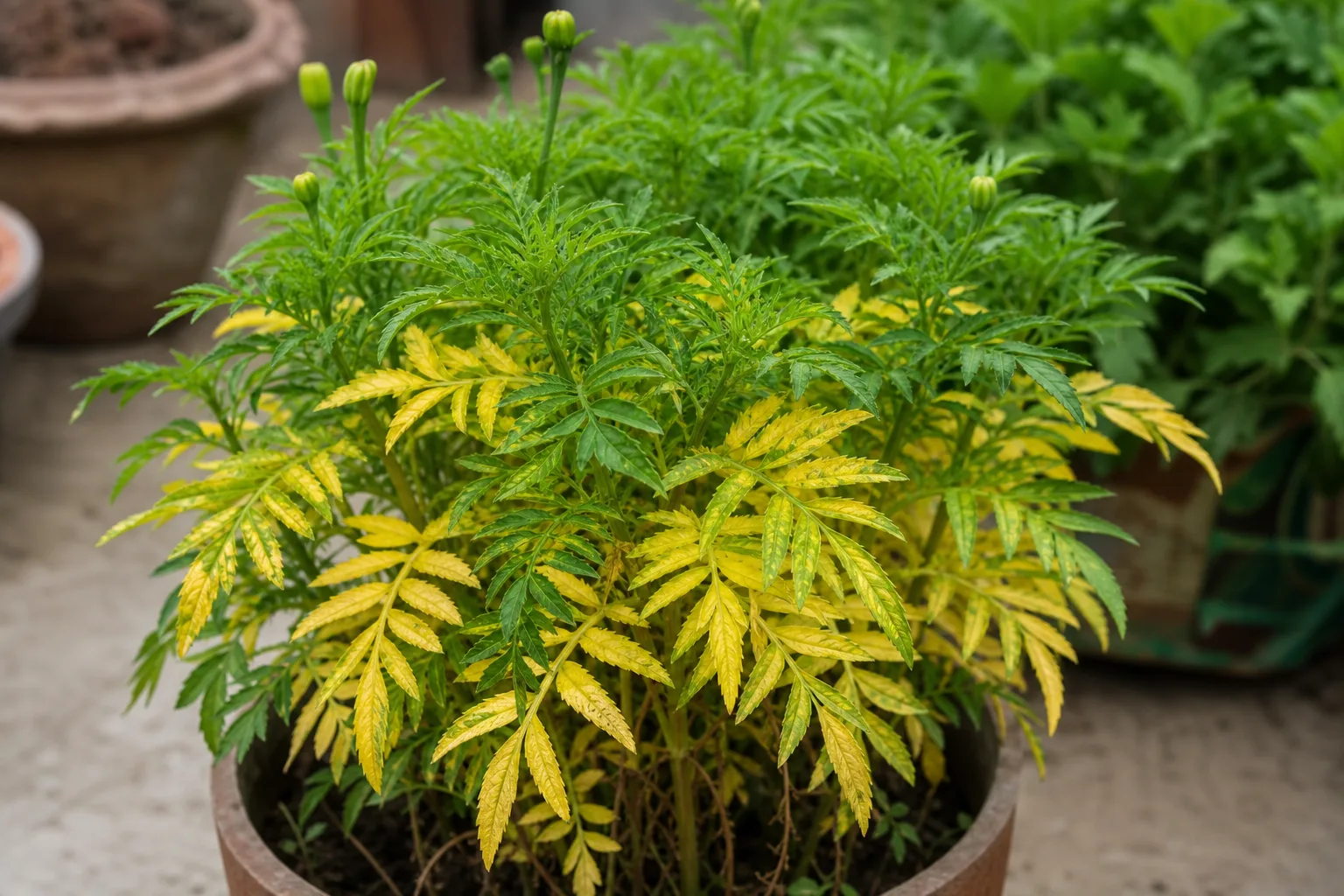
Yellow Leaves on Marigold: Causes, Checks & Fixes
This guide covers yellow leaves on Marigold. See also the general Yellow Leaves guide, watering, and light pages for this plant.
Yellow Leaves on Marigold: Causes, Checks & Fixes
Quick answer
Yellow leaves on marigold are a pattern problem, not one diagnosis. Wet roots, drought, spider mites, aphids, nutrient stress, foliar disease, and normal late-season aging all yellow foliage - but each leaves a different signature on Tagetes erecta (African marigold) and Tagetes patula (French marigold).
Start with leaf pattern and soil moisture, not guesswork:
| Pattern you see | Soil at 3 cm | Likely cause | First action |
|---|---|---|---|
| Lower leaves only, wilt on wet soil | Wet, heavy pot | Overwatering / early root stress | Stop water - overwatering on marigold |
| Crisp yellow-brown edges, midday wilt | Dry, light pot | Underwatering | Deep base water - underwatering on marigold |
| Fine pale dots on upper leaf, webbing | Dry to moist | Spider mites | Rinse undersides - spider mites on marigold |
| Curled new growth, sticky residue | Variable | Aphids | Blast and inspect - aphids on marigold |
| Uniform pale yellow, slow growth | Moist, fed rarely | Nitrogen deficiency | Feed after ruling out wet roots - marigold fertilizer guide |
| Spots with halos, lower leaves first | Often wet foliage | Alternaria / leaf spot | Remove leaves; improve airflow - see disease section below |
| Few bottom leaves only, heavy bloom | Normal | Late-season senescence | Monitor; deadhead spent blooms |
First fix: probe soil 3 cm deep and note whether the pot is heavy or light - that single check separates the two most common yellow-leaf paths (wet vs dry) before you add water, fertilizer, or pesticide.
Hub scope: this page is the multi-cause entry for yellow foliage. Deep wet-soil recovery lives on overwatering on marigold and root rot on marigold. Routine watering rhythm is in the marigold watering guide. Culture basics are in the marigold overview.
What yellow leaves look like on Marigold
Yellowing reads differently depending on cause. Match what you see before stacking fixes.
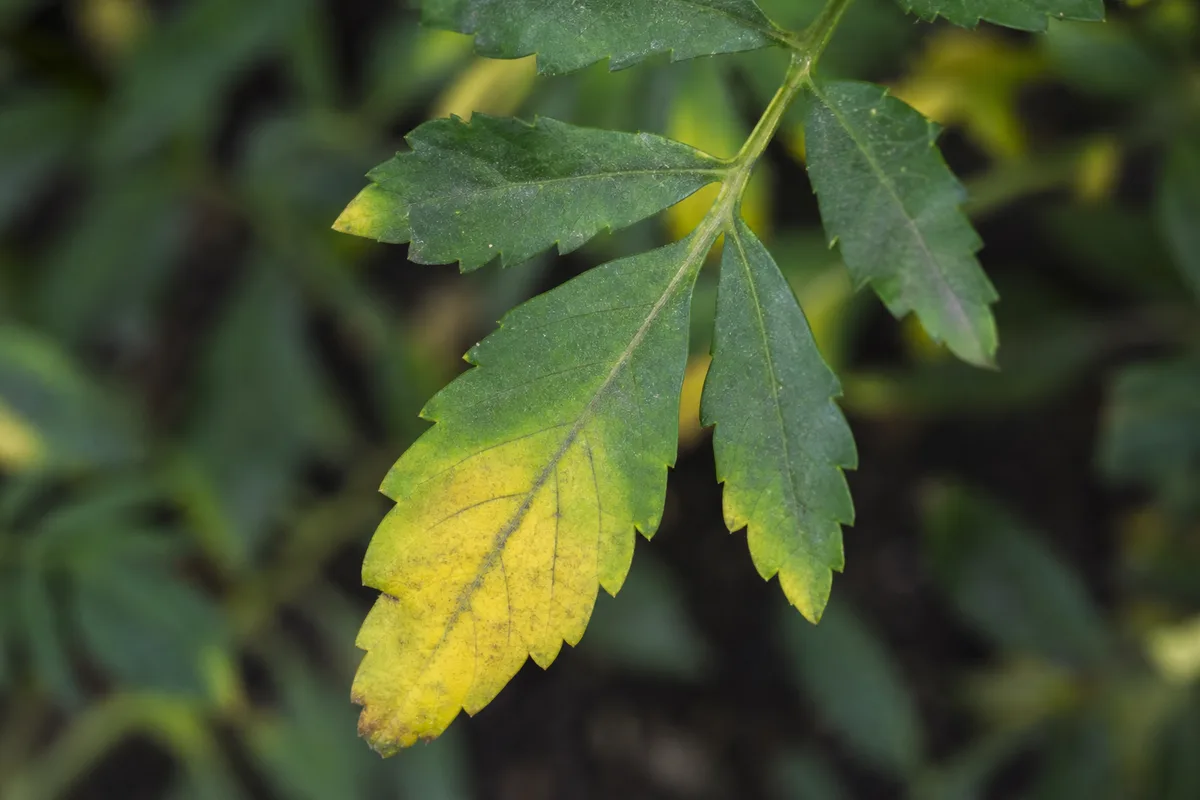
Yellow Leaves symptoms on Marigold - compare with healthy tissue on the same plant.
Wet-soil lower yellowing
Older, lower leaves turn pale chartreuse, then fully yellow, while stem tips may stay green briefly. The plant may wilt midday even though you watered recently - the classic wet-soil paradox. Marigold leaves turn yellow and wilt when roots fail in poorly drained soil. Grey mold on spent flowers sometimes appears when humidity stays high alongside saturated mix.
Dry-soil yellow and crisp edges
Leaf margins brown and crisp while the pot feels light and soil at 3 cm is crumbly dry. Whole-plant limpness in afternoon heat that perks up after a deep drink points here, not toward rot.
Mite stippling and bronzing
Pale stippling on upper leaf surfaces progresses to yellowish or bronze patches. Fine silk on undersides or at tips confirms spider mites during hot, dry spells - soil moisture can be normal while foliage still yellows from feeding damage.
Aphid stress on new growth
Young leaves curl, distort, or stay small while older leaves look relatively normal at first. Sticky honeydew or black sooty mold on stems and leaves often appears on heavily infested tips before whole-plant yellowing spreads.
Nutrient pale yellowing
Uniform pale yellow on lower leaves or across the plant with slow growth and few flowers suggests insufficient nitrogen - distinct from the leggy pale growth of nitrogen excess in deep shade. Marigolds need full sun all day; shaded pots that stay wet while you feed heavily show a different pattern (lush leaves, weak blooms).
Spotted foliar disease
Dark spots surrounded by yellow halos on lower leaves, progressing upward when foliage stays wet, suggest Alternaria or related leaf spots - not root failure alone. Alternaria leaf spot produces purplish spots on marigold leaves and stems.
Normal late-season bottom yellow
A handful of bottom leaves yellowing on an otherwise heavy-blooming plant in late summer is senescence, not crisis - especially when soil moisture is appropriate and new tips stay green.
Editorial example: a balcony T. erecta in partial shade kept on a daily July watering schedule showed lower-leaf chartreuse yellow while mix at 3 cm stayed cool and damp every morning. Moving the pot to full sun and stretching the interval to five dry days produced green new tips within ten days - old yellow leaves did not re-green.
Why Marigold gets yellow leaves
Marigolds are warm-season annuals from Mexico and Central America bred for sun and heat. They use water quickly in July but uptake drops when clouds and cool nights return - the same calendar schedule that worked in midsummer can leave September mix soggy and lower leaves yellow.
Overwatering and root stress
Marigolds tolerate drought better than being overly wet. Saucers holding runoff, cachepots without drainage, and heavy garden soil in pots all keep roots anaerobic. African marigolds in oversized decorative outer pots are especially prone - the inner root ball stays saturated while the surface looks merely damp.
Underwatering in containers
Small pots on hot balconies dry in one missed afternoon. Repeated drought cycles yellow edges and stress roots enough that the plant cannot support full foliage even after you water again.
Pests during heat and drought
Spider mites flare when marigolds cycle between dry stress and quick rewatering. Aphids concentrate on soft new growth and can yellow tips before you notice colonies on undersides.
Nutrient and light mismatch
Low nitrogen yellows the whole plant pale when feed rates are too low or leached from fast-draining containers. Shade slows photosynthesis and dry-down - a shaded marigold on a summer watering schedule often yellows from wet roots while looking like it needs fertilizer.
Foliar disease in humid culture
Overhead evening watering, crowded beds, and spent blooms resting on wet soil promote botrytis on flowers and Alternaria on leaves. Powdery mildew can also yellow or curl leaves when white fungal patches spread across foliage.
African vs French container habits
Tagetes erecta is more drought-tolerant once established but more vulnerable to root rots in cool, wet conditions. French marigolds tolerate moist soils better than African types - yet a French marigold in a 15 cm pot still yellows from underwatering faster than an African type in a large plastic container yellows from the same missed drink.
Lookalike symptoms to rule out
Use this table when multiple pages seem to fit:
| Signal | Wet roots / rot | Underwatering | Spider mites | Nitrogen deficiency | Normal senescence | Botrytis on flowers |
|---|---|---|---|---|---|---|
| Soil at 3 cm | Wet days after watering | Dry, crumbly | Dry to moist | Often moist | Normal | Often wet culture |
| Leaf pattern | Lower yellow first | Crisp edges, wilt | Stippling upper surface | Pale uniform yellow | Few bottom leaves | Starts on spent blooms |
| Stem base | Soft if advanced rot | Firm | Firm | Firm | Firm | Firm early |
| Webbing / pests | No | No | Yes, often | No | No | Grey mold on blooms |
| First fix | Stop water | Deep base water | Rinse undersides | Feed after moisture check | Monitor | Remove blooms; dry culture |
If afternoon wilt appears on both wet and dry pots, recheck at sunrise: dry-soil plants perk after one drink; wet-soil plants do not - see wilting on marigold and drooping leaves on marigold for the moisture fork.
How to confirm the cause
Run these six checks in order:
- Leaf pattern - lower-only vs stippled vs spotted vs whole-plant pale vs few bottom leaves late season.
- Moisture at 3 cm - insert a finger or skewer. Soggy mix with lower yellow strongly implicates wet roots; crumbly dry mix implicates thirst.
- Pot weight - heavy days after watering confirms slow dry-down; light pot with wilt confirms underwatering.
- Wilting pattern - wilt on wet soil suggests root dysfunction; wilt on dry soil that resolves after watering does not.
- Underside inspection - mites, aphids, and honeydew live on young growth and leaf undersides; rot does not.
- Root sample if wet - slide the plant partly out. Firm pale roots support dry-down correction; mushy brown roots escalate to root rot on marigold.
Add light context: shaded marigolds use less water - yellow plus wet soil in low light often means not enough light on marigold combined with overwatering, not nutrient deficiency alone.
First fix for Marigold
Match the first action to the pattern table above - do not default to more water.
For wet-soil lower yellowing with a firm crown: stop watering until the top 3 cm of mix dries, empty saucers, and confirm drain holes are open. That single step prevents further root damage while you decide whether dry-down alone is enough or Marigold repotting guide is needed.
For dry-soil crisp yellow: one deep base watering until excess runs free, then discard runoff - not repeated shallow sprinkles.
For stippling with confirmed mites: isolate and rinse leaf undersides with firm morning spray - not fertilizer.
Do not fertilize a yellowing plant until you know whether roots are wet, dry, or rotting.
Step-by-step recovery by confirmed cause
Wet roots without mushy rot (mild overwatering)
- Pause watering until 3 cm depth is dry; let the pot lighten noticeably.
- Remove yellow lower leaves and spent blooms to reduce mold habitat.
- Water thoroughly once at the base when dry, discard runoff, and wait for dry-down again.
- Move to full sun if the pot sat in shade with a summer watering habit.
Full dry-down protocol and decision thresholds: overwatering on marigold.
Active root rot (sour smell, mushy roots, soft crown)
Unpot, trim decayed roots, repot into fresh airy mix - follow the complete salvage thresholds on root rot on marigold. Do not repeat the full repotting sequence here; that page covers trim limits, pathogen context, and when to discard.
Salvage vs replace: warm-season annuals with soft crowns and more than one-third mushy roots mid-season are often cheaper to replace than to rescue. Firm stems with outer root browning only may still recover after repot.
Spider mites or aphids
Rinse undersides every 2 to 3 days for mites; blast aphids off new growth and inspect neighbors. Pest-specific treatment cycles live on spider mites on marigold and aphids on marigold.
Nitrogen deficiency (dry soil, pale uniform yellow, slow growth)
After confirming roots are firm and soil is not chronically wet, apply a balanced feed at label rate - details in the marigold fertilizer guide. Do not feed a wet-rooted yellow plant.
Alternaria / leaf spot
Remove infected leaves, avoid overhead irrigation, improve spacing for airflow, and apply fungicide only if spots spread despite cultural fixes. Do not compost diseased foliage into beds used for marigolds next year.
Recovery timeline
Lower leaves that have turned fully yellow will not re-green - judge recovery by new growth at stem tips within one to two weeks after the correct fix. Root rot recovery takes longer; severely stripped root systems may not support a full plant through the rest of the season.
Mite and aphid damage stops spreading once populations drop and new leaves open clean. Nutrient correction shows in greener new foliage within two to three weeks in warm weather, not in old yellow tissue.
Causes to rule out
- Underwatering - dry, light pot; wilt that resolves after a deep drink. Route: underwatering on marigold.
- Natural aging - few bottom leaves only on a heavy-blooming plant late season; firm stems and appropriate moisture.
- Nitrogen excess in shade - leggy pale growth with few flowers; often paired with wet soil from slow dry-down in low light.
- Botrytis on flowers - grey mold on spent blooms in humid weather; remove blooms and switch to base watering in morning.
- Powdery mildew - white powdery patches that may yellow or curl leaves; improve airflow and avoid overhead evening wetting.
- Spider mites - stippling and webbing in hot dry weather; not a watering fix.
- Aphids - distorted new growth and honeydew; inspect tips weekly in spring push.
- Alternaria leaf spot - spotted lesions with chlorotic halos on lower leaves; cultural removal first.
- Garden-bed edge yellow - crowded companion plantings slow dry-down at bed edges; edge plants yellow first while center plants stay green.
What not to do
Do not keep watering because leaves look wilted when soil is already wet. Do not fertilize a yellowing, wet-rooted plant. Do not overhead-water in the evening on humid balconies. Avoid repotting into an oversized container “to help it recover.” Do not compost plants with confirmed root rot into beds planned for marigolds next season.
How to prevent yellow leaves next time
Use well-draining mix with perlite and pots with open drainage. Tagetes erecta grows easily in well-drained soils in full sun. Water at the base of the plant, not over flowers and foliage.
Water by pot check, not calendar. Stretch intervals during cool September weeks even if July needed water every one to two days. Empty saucers within 30 minutes. Scout undersides weekly during hot spells for mites and aphids before stippling spreads.
Marigold care cross-check
Yellow leaves often trace to a mismatch between sun, water, and mix. Marigolds in full sun all day dry faster and rarely yellow from drought if you check regularly in summer. The same plant in partial shade with a summer watering schedule stays wet and yellows - fix placement and moisture together via the marigold watering guide and marigold light guide.
When to worry
Treat as urgent when the plant wilts with wet soil, stems blacken at the soil line, yellowing spreads upward within days, or more than one-third of roots are mushy on inspection. Mild lower-leaf yellowing on a firm plant gives you time to dry the mix and improve drainage.
Consult your county extension office when mottling, mosaic-like patterns, or witches-broom distortion appears - aster yellows can yellow marigold leaves and distort flowers and requires professional identification, not home fertilizer fixes.
Related marigold problems
- Overwatering on marigold - wet-soil dry-down before roots fail
- Root rot on marigold - mushy roots, sour soil, repot protocol
- Underwatering on marigold - dry-soil wilt and crisp edges
- Spider mites on marigold - stippling, bronzing, webbing
- Aphids on marigold - curled new growth, honeydew
- Not enough light on marigold - shade plus slow dry-down
- Wilting on marigold - wet-soil vs dry-soil collapse
- Drooping leaves on marigold - early limp foliage fork
- Marigold watering guide - container vs bed rhythm
- Marigold overview - sun, soil, type differences
Conclusion
Yellow marigold leaves start with pattern and moisture, not guesswork. Probe soil at 3 cm, match lower-only vs stippled vs spotted vs pale-uniform yellowing, then apply one first fix - stop water for wet roots, deep drink for dry roots, rinse for mites, blast for aphids, or feed only after roots are healthy. Old yellow tissue will not re-green; judge recovery by clean new tips. Link out to sibling guides for deep dives rather than repeating full repot or pest protocols on this hub page.
When to use this page vs other Marigold guides
- Marigold watering guide - Use for routine moisture checks before assuming yellow leaves is the main issue.
- Marigold problems hub - Browse all 20 common issues on this species.
- Overwatering on Marigold - Different entry point when symptoms overlap with yellow leaves.
- Underwatering on Marigold - Different entry point when symptoms overlap with yellow leaves.
- Not Enough Light on Marigold - Different entry point when symptoms overlap with yellow leaves.