Aphids on Marigold: Causes, Checks & Fixes
Quick answer
Aphids on marigolds cluster on soft new growth and buds, leaving sticky honeydew and curled tips. Blast them off with a strong water stream early in the day and repeat every two to three days; use insecticidal soap if colonies persist.
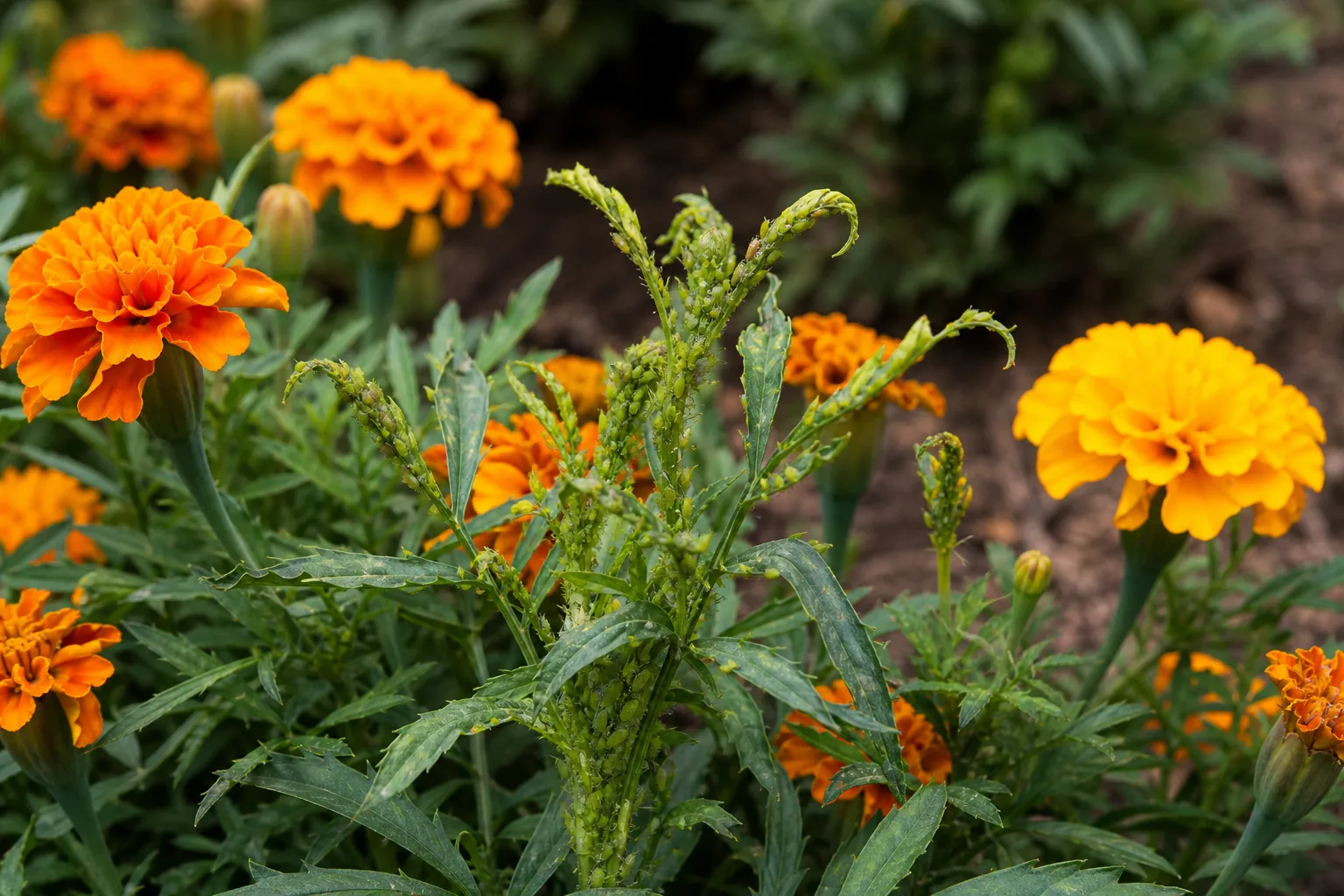
Aphids on Marigold: Causes, Checks & Fixes
This guide covers aphids on Marigold. See also the general Aphids guide, watering, and light pages for this plant.
Aphids on Marigold: Causes, Checks & Fixes
Quick answer
Aphids on marigolds are soft-bodied sucking insects that colonize new growth and buds on Tagetes erecta (African marigold) and Tagetes patula (French marigold) during warm weather. They excrete sticky honeydew and can distort leaves and abort buds before peak bloom. For culture basics and pest overview, see the marigold overview.
First step: spray plants with a firm water stream early in the morning, targeting clusters on stem tips and leaf undersides. Repeat every two to three days before escalating to soap.
What aphids look like on Marigold
On marigolds, aphids are rarely subtle once you inspect the right tissue. Check newest shoots, dome-shaped buds before first open bloom, and stem tips - not old lower foliage unless the infestation has already spread.
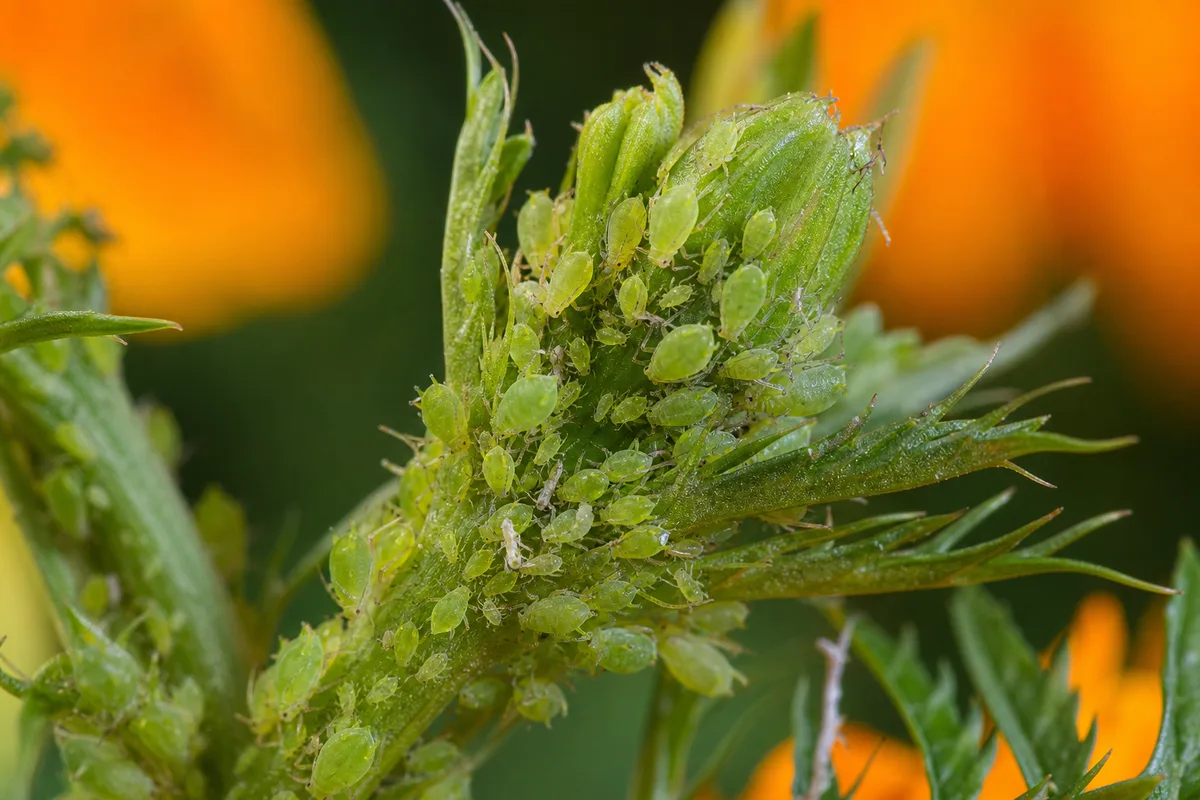
Aphids symptoms on Marigold - compare with healthy tissue on the same plant.
Typical signs include:
- Tiny soft-bodied insects about 1/16 to 1/8 inch long, often green, yellow, brown, or black depending on species
- Dense pear-shaped clusters packed along tender shoots, especially just below opening buds
- Glossy, sticky honeydew on leaves and pot rims; black sooty mold may follow outdoors
- Puckered or curled new leaves and bud abortion on heavily colonized tips
- Ants marching on stems - they feed on honeydew and may protect aphid colonies from predators
The most common species on bedding flowers are the green peach aphid (Myzus persicae) and melon (cotton) aphid (Aphis gossypii). Both feed on many ornamentals and vegetables; management is similar even when species differ. Green peach aphids tend to concentrate around growing points, while melon aphids can spread through more of the plant if lower leaves go uninspected.
Winged adults may appear when colonies crowd. If you see small flying insects leaving a bed-edge container, assume spread risk to adjacent tomatoes, peppers, and other companion crops.
Why Marigold gets aphids
Marigolds are not randomly “unlucky.” Their growth habit and how we grow them create reliable feeding sites.
Bloom-season soft growth
Marigolds produce constant soft new growth during bloom season - ideal aphid food. Aphids prefer soft, new plant growth, and populations surge on tender shoots in mild spring and warm early summer. African marigolds push large bud clusters on tall stems; French marigolds keep dense tip growth lower - both patterns attract colonizers.
Companion-bed bridge risk
Marigolds are planted as companion plants to suppress soil nematodes and attract beneficial insects, but they still host aphids on soft new tissue. Marigolds naturally repel deer and rabbits by scent - not aphids. A nursery six-pack placed beside tomatoes can bridge aphids from the marigold tips onto neighboring vegetables when foliage touches. Scout both crops during the same weekly pass.
Drought stress and nitrogen-soft growth
Drought-stressed plants and heavily fertilized lush growth both increase aphid pressure. Marigolds on uneven watering or excess nitrogen push tender shoots aphids colonize quickly. Align even base watering and moderate fertility before repeating chemical sprays on seasonal annuals.
How to confirm the cause
Work through these checks before spraying anything beyond water:
- Target newest growth first - Aphids cluster on soft tips and buds; nutrient problems usually show on older leaves without insect clusters.
- Magnify undersides - Use a hand lens or phone macro. Pear-shaped bodies with visible legs and antennae confirm aphids; fast-running tan specks suggest thrips instead.
- Feel for stickiness - Honeydew-coated leaves are tacky. Dry, crispy wilt without stickiness points to drought - see underwatering on marigold.
- Look for shed skins and mummies - White cast skins mean active generations; swollen tan or gray aphid mummies mean parasitic wasps are already working - avoid broad sprays that kill helpers.
- Watch ants - Ant trails on marigold stems strongly suggest honeydew-producing sap feeders nearby, often aphids protected from predators.
Confirmed diagnosis requires visible aphids or honeydew on new marigold growth, not yellow leaves alone.
Aphids vs. thrips vs. mites vs. mealybugs
| Problem | Typical pattern on marigold | Key differentiator |
|---|---|---|
| Aphids | Pear-shaped clusters on buds and new tips; sticky honeydew | Soft bodies visible without magnification on heavy colonies |
| Thrips | Silvery scrape patches on petals and young leaves | Slender fast insects; no honeydew stickiness |
| Spider mites | Fine stippling, bronzing, and webbing on undersides in hot dry weather | Microscopic dots; see spider mites on marigold |
| Mealybugs | White cottony wax in leaf axils and stem joints | Stationary wax tufts, not bare soft clusters - see mealybugs on marigold |
First fix for Marigold
Knock aphids off with a strong water spray early in the day, repeating every two to three days. A forceful spray of water dislodges many aphids from sturdy annuals; most will not return to the plant, and honeydew rinses away. Aim at bud clusters, stem tips, and leaf undersides. Morning rinses let foliage dry before evening humidity rises.
Do not jump to soap, oil, and pruning the same afternoon. Water knock-down alone often clears light bed-edge infestations on established marigolds.
Soap escalation and pollinator-safe timing
For persistent colonies after two or three rinses, apply insecticidal soap labeled for ornamentals, coating undersides until runoff. Soaps kill only insects contacted directly and have no residual activity - repeat per label, usually every five to seven days for two to three cycles.
Pollinator caution: marigolds in full bloom attract bees on balcony and bed plantings. Treat in early evening when bee traffic drops, target buds and undersides rather than open petals when possible, and avoid applying when temperatures exceed 90°F. Do not use systemic sprays casually near daily pollinator traffic without reading label restrictions.
Ant control when colonies are protected
Ants protect aphids from natural enemies to harvest honeydew. On container marigolds, disrupt ant trails with water and consider ant bait stations or sticky barriers on stakes - not on young marigold stems where sticky material can damage tissue. In garden beds, trim branches touching the ground or adjacent vegetables so ants lose their highway to bud clusters. Controlling ants lets lady beetles and lacewings reach aphids in outdoor beds.
Bed vs. container logistics
In-ground beds: use a hose with enough pressure to bend stems slightly; work bed edges where nursery introductions often start. Space plants for airflow per the marigold overview spacing notes.
Containers: tilt pots to rinse undersides without flooding the crown. Saucer water left standing after rinsing can re-wet foliage - empty saucers so leaves dry quickly. Balcony marigolds in partial shade may need more frequent scouting because soft growth stays tender longer.
Step-by-step recovery
- Rinse entire plant, especially tips and undersides, early in the day.
- Repeat rinses every two to three days until inspection shows no live aphids.
- Prune heavily infested tip clusters into a bag if colonies hide inside curled tissue soap cannot reach.
- Apply soap if needed - evening application when bees are less active if label allows.
- Control ants on stakes, bed edges, or container rims that protect colonies.
- Remove heavily distorted tip growth once control holds - distorted buds will not reopen.
- Hold high-nitrogen fertilizer until clean new growth appears - see marigold fertilizer guide for when to resume modest feeding.
Recovery example
Bed-edge African marigolds showed tight green aphid colonies on dome buds two weeks before peak July display. Three morning hose blasts over six days, one evening insecticidal soap application on bud clusters and undersides, and ant bait at the container base cleared colonies by day ten. New buds opened clean; puckered tissue on the oldest infested tips was removed rather than expected to flatten.
Recovery timeline
Distorted buds and heavily curled tips do not reopen. Judge success on clean new buds and tips, not old puckered tissue.
- 48–72 hours - Live aphid count should drop after the first thorough rinse; honeydew may still feel sticky until you wipe leaves.
- 7–14 days - With repeated water or soap cycles, new tips should show fewer insects on inspection.
- 2–3 weeks - Fresh bud clusters form if roots, sun, and watering are sound.
Worsening signs: colonies smothering most buds before peak bloom, winged aphids on multiple stems, heavy honeydew with sooty mold, or spread to adjacent vegetables - treat aggressively and widen inspection across the whole bed.
What not to do
Do not fertilize heavily during active aphid bloom - that pushes soft growth aphids prefer. Too much fertilizer already reduces marigold blooms. Do not use broad-spectrum insecticides that kill lady beetles, lacewings, and parasitic wasps when biological control could handle outdoor beds after initial knock-down.
Do not compost heavily infested tips beside vegetable beds. Do not assume marigold scent repels aphids - companion planting helps with nematodes and some pests, not soft-tissue sap feeders.
How to prevent it next time
Even moisture using the top 3 cm dry test - full rhythm in the marigold watering guide. Preserve lady beetles and lacewings by avoiding unnecessary broad sprays. Scout new growth weekly during warm weather. Quarantine new nursery six-packs two weeks before adding them to mixed beds.
Keep marigolds in full sun with good airflow between companion plantings. Moderate fertility produces sturdy growth less attractive than nitrogen-flushed softness - details in the marigold fertilizer guide.
Outdoors, brief aphid presence can feed beneficial insects when colonies stay low. On balcony bloomers you want camera-ready, knock down early rather than waiting for predator buildup.
Marigold care cross-check
| Signal | Likely link | Next read |
|---|---|---|
| Soft lush growth, few blooms | Excess nitrogen | Marigold fertilizer |
| Dry cycles between wilting | Drought stress predisposition | Marigold watering |
| Stippling and webbing, not honeydew | Spider mites | Spider mites on marigold |
| White cottony wax in axils | Mealybugs | Mealybugs on marigold |
| Silvery petal scrapes | Thrips | Slender insects; no pear-shaped clusters |
Aphids on marigolds often coincide with soft lush growth from shade or excess nitrogen. Align full sun, moderate fertility, and steady watering before escalating to repeated chemical sprays on seasonal annuals.
When to worry
Treat aggressively when colonies smother buds two weeks before expected peak African marigold display, when honeydew and ants indicate bed-wide infestation spreading to adjacent vegetables, or when winged aphids appear on multiple stems in a companion planting.
For a single container with a dozen aphids on one pinchable tip, start with morning water blast - urgency scales with bud coverage and neighbor crops, not headcount alone.
Related marigold guides
- Marigold overview - sun, spacing, and pest troubleshooting
- Marigold watering - drought-stress predisposition
- Marigold fertilizer - nitrogen-soft-growth cross-check
- Spider mites on marigold - stippling lookalike
- Mealybugs on marigold - white wax lookalike
Conclusion
Aphids on marigolds yield to repeated morning rinses and targeted soap when water alone is not enough. Confirm pear-shaped clusters on new growth and buds, knock them down early before winged spread, control ants that protect colonies, and judge recovery on clean new buds - not distorted tissue left from heavy infestation. Link soft growth to watering and fertility habits before reaching for broad sprays on a seasonal annual.