Marigold Fertilizer: When, How, and Mistakes to Avoid
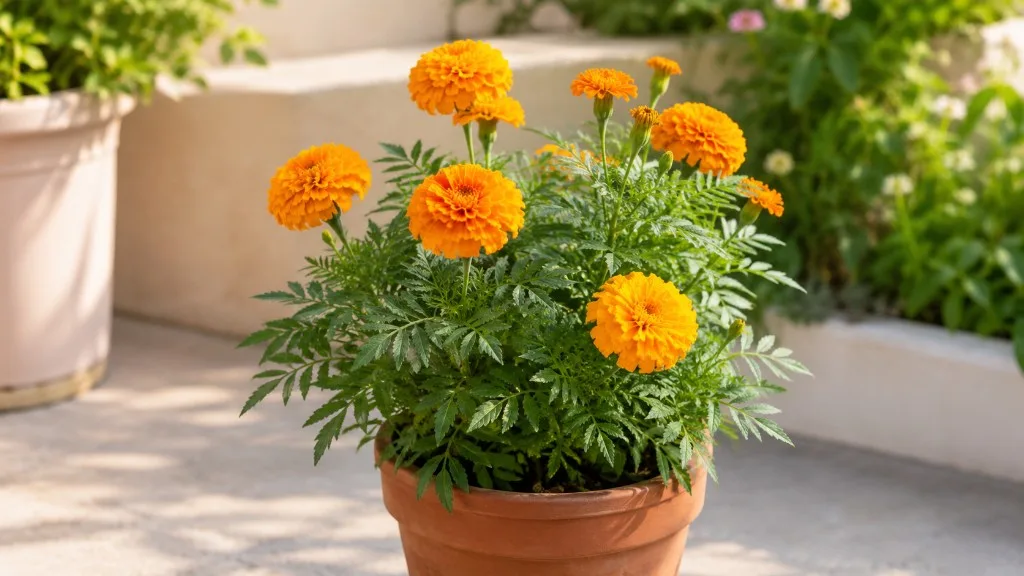
Marigold Fertilizer: When, How, and Mistakes to Avoid
Marigold Fertilizer: When, How, and Mistakes to Avoid
Marigolds (Tagetes spp.) are fast-growing annual flowers bred for bold color, pest-repelling reputation, and long bloom in sun. They are not heavy feeders like hungry vegetables-but they are also not desert plants. In containers, nutrients wash out with every drain; in lean sand, bloom fizzles by midsummer without replenishment. The goal is steady, modest nutrition during active growth without the nitrogen excess that produces leafy plants with few flowers.
Penn State Extension notes marigolds perform well in average garden soil with organic matter-translation for growers: compost at planting plus light supplemental feed in pots beats aggressive weekly full-strength fertilizer.
This guide covers whether marigolds need fertilizer, NPK choices for blooms, schedules for beds vs containers, organic options, seasonal pauses, and over-fertilizing signs. Pair feeding with our watering, light, and soil guides for a complete rhythm.
Quick Answer
Feed marigolds during spring and summer active growth-every two to four weeks with half-strength balanced liquid in containers, or one to two timed feeds in average in-ground beds. Favor balanced to bloom-oriented NPK; avoid heavy nitrogen. Pause in autumn and winter. Never feed drought-stressed or newly transplanted plants until they recover.
Do Marigolds Need Fertilizer?
Marigolds in rich, compost-amended garden soil often bloom abundantly with little extra input. They need fertilizer most when:
- Growing in containers with frequent watering
- Planted in sandy or depleted soil
- Pushed for continuous bloom through summer heat
- Showing pale leaves or reduced flower size mid-season
They need no fertilizer when dormant, frost-killed, drought-wilted, or within two weeks of transplant shock.
Understanding NPK for Marigold Blooms
Nitrogen (N) drives leaf growth. Excess N on Tagetes produces lush foliage and delays or reduces flowering-the opposite of why most people grow marigolds.
Phosphorus (P) supports root and flower development. Moderate P in a balanced or bloom-labeled formula helps maintain flower production.
Potassium (K) aids overall stress tolerance and vigor in heat.
A balanced 10-10-10 or 15-15-15 at half strength suits most container culture. Avoid repeated high-nitrogen lawn or leafy-green formulas on bedding marigolds.
Best Fertilizer Types for Marigold
Liquid soluble: Easy to control, ideal for containers. Dilute to half label strength.
Slow-release granular: Mixed into potting soil at planting or top-dressed once in late spring for in-ground beds-follow product rate for annual flowers.
Compost or compost tea: Excellent in garden beds; gentler for organic growers. Pair with occasional liquid bloom feed in pots where compost alone leaches fast.
Organic bloom formulas: Fish emulsion or seaweed products work when diluted; watch nitrogen content.
Container vs. In-Ground Feeding
Containers lose nutrients every time water drains. Feed every two to four weeks mid-season unless you incorporated slow-release prills at potting.
In-ground plantings in amended soil may need only one application at planting and optionally one midsummer boost. Over-feeding beds wastes product and can burn plants in heat.
Sample Peak-Season Container Feed Calendar
Use this as a template for one 25–30 cm African marigold in full sun on a balcony-adjust for smaller French types (lighter feeds) and in-ground beds (fewer applications).
| Week (approx.) | Action | Notes |
|---|---|---|
| Planting week | No liquid feed | Transplant shock; compost in mix may suffice |
| Week 2 | Optional half-strength 10-10-10 | Only if leaves pale and soil was lean |
| Weeks 3–4 | Feed every 14 days, half strength | After first flush of blooms; deadhead spent flowers |
| Weeks 5–8 (July peak) | Feed every 14 days; flush monthly | Hot weather leaches salts-run plain water through pot once mid-month |
| Weeks 9–10 | Feed every 21 days or pause if heat-stalled | Reduce if bloom pauses in extreme heat per overview |
| Autumn | Stop feed | Frost-tender annuals decline regardless of fertilizer |
Log feed dates on the pot rim with a pencil-easy to over-feed when marigolds bloom heavily and you assume they need “extra help.”
When to Start and Stop Fertilizing
Start when plants are actively growing after last frost and have rooted seven to ten days post-transplant.
Peak season: Spring through summer while buds and flowers keep forming.
Stop when bloom declines in autumn, plants are removed as annuals, or growth slows in cool weather. Marigolds are frost-tender-do not feed dying frost-hit tissue.
How to Apply Fertilizer Safely
- Water soil lightly if bone dry-never feed drought-stressed roots full-strength solution.
- Apply diluted liquid to moist root zone, not dry foliage in hot sun.
- Avoid splashing concentrated product on leaves-can cause burn spots.
- Flush containers with plain water monthly in hot weather to reduce salt buildup.
- Hold feed two weeks after repotting into fresh mix that may already contain fertilizer.
Signs Marigolds Need More Nutrients
- Pale or yellowing lower leaves on otherwise healthy plants (rule out overwatering first)
- Smaller flowers than early season
- Stalled bloom despite adequate sun and water
- Very rapid container watering cycle with washed-out soil color
First fix: Half-strength balanced liquid feed, then reassess in two weeks.
Signs of Over-Fertilizing Marigold
- Brown crispy leaf tips and margins
- White mineral crust on pot rim or soil surface
- Wilting on wet soil-root burn
- Excessive soft leafy growth, few flowers
- Sudden leaf drop after feeding
First fix: Flush pot with water until drain runs clear; pause feed four to six weeks. Too much fertilizer reduces blooms as the plant pushes foliage instead of flowers.
Fertilizer and Watering Interaction
Overfed roots in soggy soil fail faster than in well-drained mix. Pair feeding with watering that allows dry-down between drinks-especially in containers.
Fertilizer and Light
Dim shade produces weak marigolds that cannot use heavy feed. Fix light first-marigolds want full sun for continuous bloom. Fertilizer does not replace photons.
French vs. African Marigold Notes
French marigolds (Tagetes patula) in small pots need lighter, more frequent dilute feeds.
African marigolds (Tagetes erecta) are larger and may deplete containers faster-still avoid full-strength weekly doses.
Organic and Slow-Release Strategies
Work compost into beds at planting per Penn State guidance on organic matter. Top-dress containers with worm castings mid-season. Use slow-release prills labeled for annual flowers at potting time to reduce liquid feed frequency to monthly.
Common Marigold Fertilizer Mistakes
- Full-strength weekly liquid on small pots
- High-nitrogen feed when flowers are the goal
- Feeding immediately after transplant or drought wilt
- Ignoring pre-fertilized potting mix and double-feeding
- Winter feeding on frost-killed annuals
- Feeding without fixing leggy shade growth first
Record-Keeping for Container Feeds
Note each feed date on small baskets-easy to over-feed when marigolds bloom heavily and you assume they need “extra help.” Half-strength on schedule beats reactive full doses when flowers pause in heat.
When to Worry
Salt burn and root damage from repeated over-feeding can stall plants for weeks. Worry when tips brown on moist soil right after feeding, or white crust builds on soil. Flush and pause. If wilting persists on wet soil after flushing, inspect for root rot rather than adding more fertilizer.