Drooping Leaves on Marigold: Causes, Checks & Fixes
Quick answer
Drooping marigold leaves usually mean dry roots in hot sun or oxygen-starved roots in wet soil. Probe the top 3 cm first: dry and light means deep base watering; wet and heavy means pause watering and inspect roots before adding more moisture.
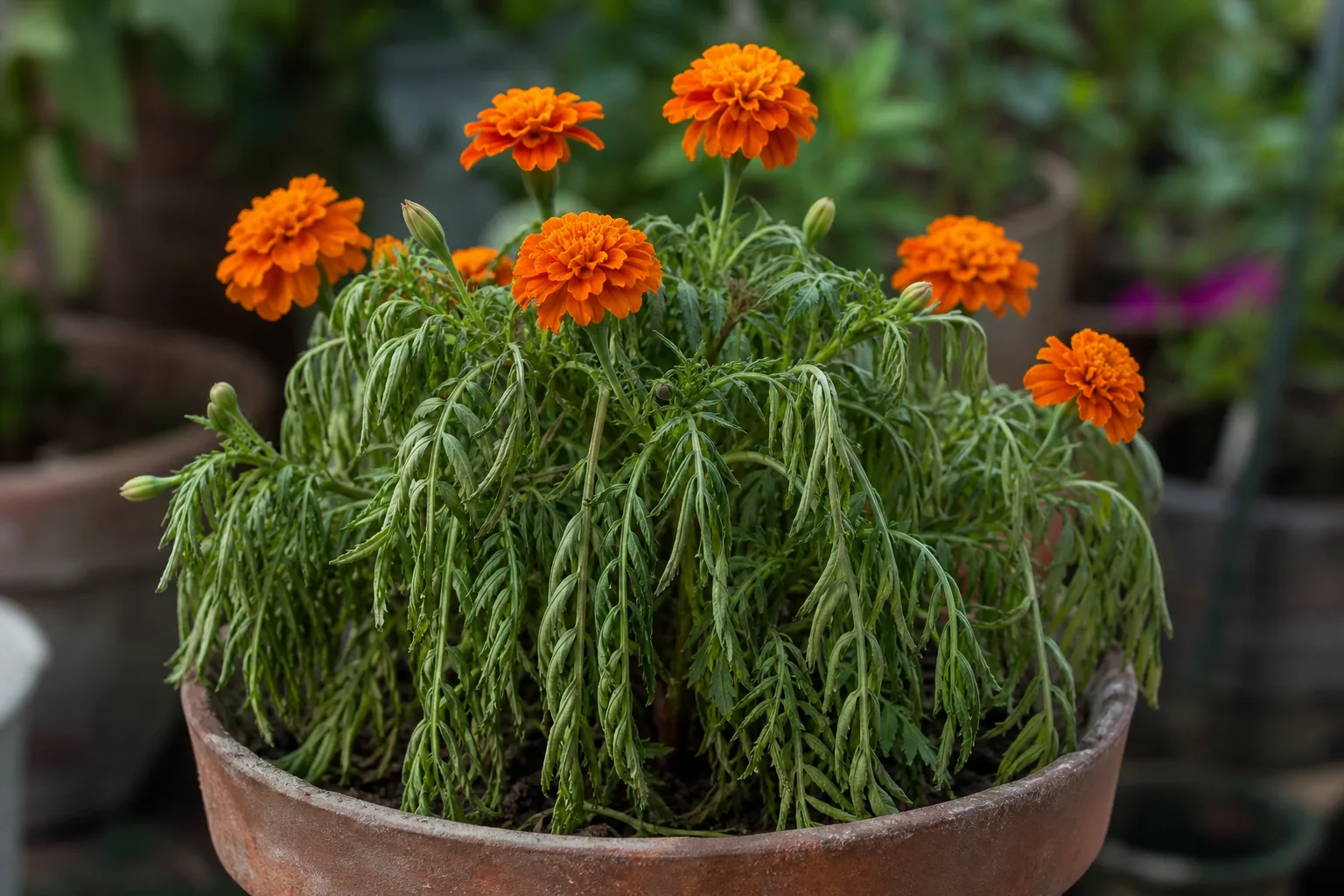
Drooping Leaves on Marigold: Causes, Checks & Fixes
This guide covers drooping leaves on Marigold. See also the general Drooping Leaves guide, watering, and light pages for this plant.
Drooping Leaves on Marigold: Causes, Checks & Fixes
Quick answer
Drooping leaves on marigold are usually a dry-root issue or a wet-root issue-not a mystery that needs five fixes at once. Start by checking the top 3 cm of soil and lifting the pot.
- Dry + light pot: one deep base watering until runoff; empty saucers.
- Wet + heavy pot: stop watering immediately; inspect crown firmness before adding moisture.
Scope on this page: early limp foliage and the moisture fork that prevents the two most common mistakes. If leaves stay collapsed overnight on wet soil with yellowing lower foliage, that is active wilt-use wilting on marigold for the full collapse protocol and root rot on marigold when stems soften at the base.
For culture basics-sun, drainage, and watering rhythm-see the marigold overview. If you already know the pot is chronically heavy, start with overwatering on marigold instead of repeating a drought fix.
What drooping leaves look like on Marigold
On Tagetes erecta (African marigold), large double flower heads and upper leaves often droop first when transpiration outruns root supply in strong sun. Tall cultivars like Crackerjack can lean under bloom weight even when roots are healthy.
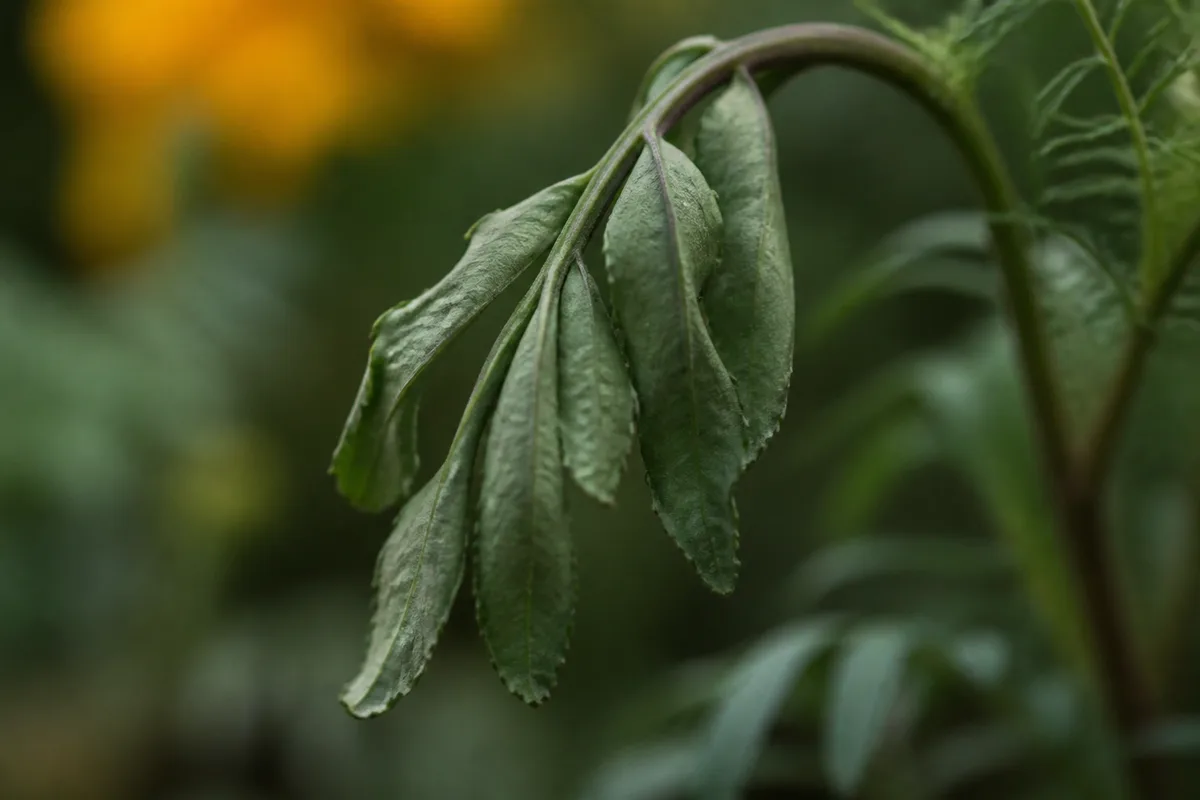
Drooping Leaves symptoms on Marigold - compare with healthy tissue on the same plant.
On Tagetes patula (French marigold), whole compact plants can sag quickly in small hot pots because the root ball dries faster than bedded stock. French types tolerate moist soil better than African types, but both show limp foliage when saturation blocks oxygen uptake.
Common patterns:
- Drought droop: limp leaves, dry mix at 3 cm, light pot, perk-up within hours after base watering.
- Wet-root droop: limp leaves with yellowing lower foliage while soil stays wet.
- Heat droop: afternoon sag with overnight recovery when soil moisture is adequate.
- Mechanical droop: bent stems after wind or rain load with otherwise firm tissue at the crown.
What drooping is not: a single spent bloom nodding on an otherwise firm plant-that is normal senescence, not a root-zone alarm.
Drooping vs wilting on marigold
Growers use both terms, but the split matters for which page to follow:
| Signal | Drooping (this page) | Wilting (wilting guide) |
|---|---|---|
| Timing | Often afternoon-first; may recover same evening on dry soil | Persists overnight or all day despite correction |
| Soil cue | Dry at 3 cm or wet with early yellow lower leaves | Wet, heavy soil with failure to perk after watering |
| Stem base | Usually firm unless rot is advancing | Softening at crown more common in active rot |
| First action | Moisture fork-one deep drink or stop water and inspect | Root rescue, repot, or escalation-not automatic rewatering |
| Recovery marker | Turgor returns within 2–12 hours on dry path | New upright growth over days; many severe cases do not fully recover |
If unsure, run the moisture split once, recheck at sunrise, then route: still limp on wet soil → wilting; chronic heavy pots → overwatering; confirmed dry cycles → underwatering.
Why Marigold leaves droop
Drought in Marigold light guide
Marigolds need full sun all day for best bloom and lose water quickly in heat-especially in containers. Missed watering windows trigger repeated afternoon collapse. Marigolds tolerate drought better than chronic wet soil, so brief dry spells show as droop before full wilt sets in.
Overwatering and low root oxygen
In soggy media, roots cannot take up water efficiently, so leaves droop even when soil feels wet. Extension diagnostics describe yellowing and wilt on poorly drained marigold soil-the classic wet-droopy pattern that mimics thirst.
Root or crown disease in warm, wet conditions
Root rot pathogens favor cool, wet soil with poor drainage. In very warm, humid weather, southern blight (Sclerotium rolfsii) can cause sudden collapse with white mycelium near the soil line and mustard-seed-like sclerotia.
Heat-load droop
Afternoon droop can happen during short heat spikes even when roots are adequately moist, then improve by evening or the next morning. Confirm with the sunrise recheck before watering again.
Wind and flower-head weight
Tall African marigolds can lean and appear droopy after storms. Staking taller varieties is recommended where large blossoms load stems-mechanical droop with firm crowns does not need a moisture fix.
Droop types compared
| Droop type | Speed | Soil at 3 cm | Pot weight | Overnight recovery | First fix |
|---|---|---|---|---|---|
| Drought | Hours (hot afternoon) | Dry | Light | Perks after base water | Deep base watering; empty saucers |
| Wet-root stress | Gradual to sudden | Wet | Heavy | Stays limp | Stop water; inspect roots |
| Heat-only | Afternoon spike | Moist, not soggy | Normal | Yes, by morning | Shade pot from late radiant heat 24 h; no extra water |
| Mechanical lean | After wind/rain | Any | Stable | N/A-stems bent, not limp tissue | Stake; deadhead heavy spent blooms |
| Southern blight | Rapid (warm humid) | Often moist | Variable | No | Remove plant; do not compost infected tissue |
Pick one leading row before stacking treatments.
How to confirm the cause (step-by-step)
Run these checks in order:
- Probe moisture at 3 cm - finger or skewer; dry vs soggy splits the diagnosis.
- Lift the pot - light vs heavy relative to when you last watered.
- Check crown firmness at the soil line - soft tissue on wet soil escalates to rot protocol.
- Smell drainage holes - sour odor supports wet-root failure.
- Look for white fungal mats or sclerotia near the crown if collapse was rapid.
- Recheck at sunrise - heat-only droop recovers; wet-root droop usually does not.
- Note plant type and pot size - French in small pots dry faster; tall African lean under bloom weight.
The first fix to try
Choose one path after the moisture split:
- Dry path: one deep base watering until runoff, then empty saucers. Do not sprinkle the foliage.
- Wet path: stop watering immediately and increase aeration-tilt the pot, clear blocked drain holes, move out of rain.
Avoid stacking repot, fertilizer, and misting before the branch is clear.
Step-by-step recovery
If drought is the driver
- Deep-water at the base until excess drains.
- Protect the pot from extreme late-afternoon radiant heat for 24 hours if on a hot patio.
- Remove only fully collapsed spent blooms-not healthy foliage.
- Resume watering when the top 3 cm dries again; see marigold watering guide for rhythm in heat.
If wet-root stress or rot is the driver
- Pause watering and empty saucers.
- Unpot if mix remains saturated after 24–48 hours.
- Trim black or mushy roots with clean snips.
- Repot into fresh, fast-draining mix; same depth at the crown.
- Water lightly once, then wait for top-layer dry-down.
- Full wet-soil workflow: overwatering on marigold and root rot on marigold.
If mechanical droop is the driver
- Stake tall stems with soft ties-do not pierce thick stems.
- Deadhead heavy spent blooms to reduce drag.
- Confirm crown firmness; if soft on wet soil, mechanical lean is a red herring-switch to wet-root path.
Recovery timeline
- Drought droop: 2–12 hours after proper base watering.
- Heat-only droop: often overnight when temperatures drop.
- Wet-root stress: 3–10 days to stabilize if viable roots remain.
- Active root/crown rot: 1–3 weeks for a clear outcome; some plants will not recover through the season.
Judge success by new upright growth and firm stems, not by old limp leaf tissue straightening in place.
Field case note: patio container, two branches
Editorial composite - typical home-grower pattern, not a single photographed specimen.
A grower reported a 25 cm terracotta pot of ‘Bonanza Flame’ French marigold on a west-facing rail in late June. At 4 p.m. the whole plant sagged; soil at 3 cm was dust-dry and the pot lifted easily. One deep base watering at 5 p.m. produced visible turgor by 8 p.m. The same pot crashed again three days later after a skipped morning check-same dry path, same recovery window.
Two weeks later, after several days of rain with a saucer left attached, afternoon droop returned but soil stayed wet, lower leaves yellowed, and the crown felt slightly soft. Watering stopped; the plant was unpotted on day 2. Outer roots were brown and stringy; roughly one-quarter of the root mass was trimmed and the plant repotted into fresh mix. New upright shoots appeared on day 9; one stem never recovered and was removed on day 14.
Takeaway: identical afternoon sag, opposite first fixes-dry/light recovered in hours; wet/heavy needed root rescue, not another drink.
Causes to rule out
- Transplant shock: short-lived droop 3–7 days after planting with firm roots when checked-usually self-corrects with steady moisture.
- White mold (southern blight): sudden collapse plus white mycelium and small sclerotia near the crown in warm humid weather.
- Stem breakage: physical snap on tall staked African marigolds after storms-broken stem hangs; crown stays firm.
- Normal older-leaf decline: lower leaves aging out while tops and blooms stay upright.
- Aster yellows: deformed blooms and stunted growth-not simple moisture droop; remove affected plants to limit spread.
- Chronic underwatering cycles: repeated crash-drought in small pots mimics heat droop until roots desiccate-see underwatering on marigold.
What not to do
- Do not water a wet drooping plant again “just in case.”
- Do not repot every droopy marigold before a moisture check.
- Do not overhead-water stressed plants late in humid evenings-base watering is preferred and reduces bloom rot in humid weather.
- Do not ignore repeated crash-drought cycles in small containers.
- Do not treat mechanical lean on firm crowns with extra irrigation.
How to prevent it next time
- Grow marigolds in full sun and well-drained soil.
- Water by the top-3-cm dry test, not by calendar alone-details in marigold watering guide.
- Match container size to mature habit: French types in pots under 20 cm need daily checks in heat; tall African types need staking in exposed sites.
- Deadhead spent blooms to lower humidity-related rot pressure on flowers resting against wet soil.
- Empty saucers after every watering.
When to worry
Escalate same day when droop persists overnight in wet soil, stems soften at the crown, or fungal growth appears around the soil line. Midday droop on dry soil in heat is lower urgency if corrected before nightfall-but two consecutive dry crashes in one week signal a pot-size or watering-rhythm problem, not random heat.
Contact your local extension office if wet-soil droop cycles repeat after Marigold repotting guide-drainage, saucer habit, or advancing rot may need hands-on diagnosis.
Related marigold problems
- Wilting on marigold - overnight collapse and wet-soil vascular failure
- Overwatering on marigold - chronic heavy pots and saturation habits
- Underwatering on marigold - repeated dry crashes and root desiccation
- Root rot on marigold - mushy roots, sour soil, crown softness
- Marigold watering guide - top-3-cm rhythm in containers and beds
- Marigold overview - sun, soil, and placement basics
Your next step - decision summary
| What you found | Do this now | If no improvement by… |
|---|---|---|
| Dry 3 cm, light pot, firm crown | Deep base water; empty saucer | 12 hours → check for blocked drainage or pot too small |
| Wet 3 cm, heavy pot, yellow lower leaves | Stop water; smell drain holes | 48 hours wet → unpot and inspect roots |
| Moist soil, afternoon-only sag, firm crown | Wait for sunrise recheck; shade pot from late heat | Next morning still limp → treat as wet path |
| Bent stem after storm, firm crown | Stake; remove snapped portion | N/A - not a root-zone issue |
| White mycelium or sclerotia at crown | Remove plant; isolate area | Do not wait - discard, do not compost |
When to use this page vs other Marigold guides
- Marigold watering guide - Use for routine moisture checks before assuming drooping leaves is the main issue.
- Marigold problems hub - Browse all 20 common issues on this species.
- Underwatering on Marigold - Different entry point when symptoms overlap with drooping leaves.
- Overwatering on Marigold - Different entry point when symptoms overlap with drooping leaves.
- Root Rot on Marigold - Different entry point when symptoms overlap with drooping leaves.