Low Humidity on Marigold: Causes, Checks & Fixes
Quick answer
Marigolds tolerate low humidity well and prefer it to sticky humid conditions that cause grey mold on flowers. If dry air causes spider mites or crisp leaf edges, improve steady base watering rather than misting - and rinse foliage occasionally in hot dry spells.
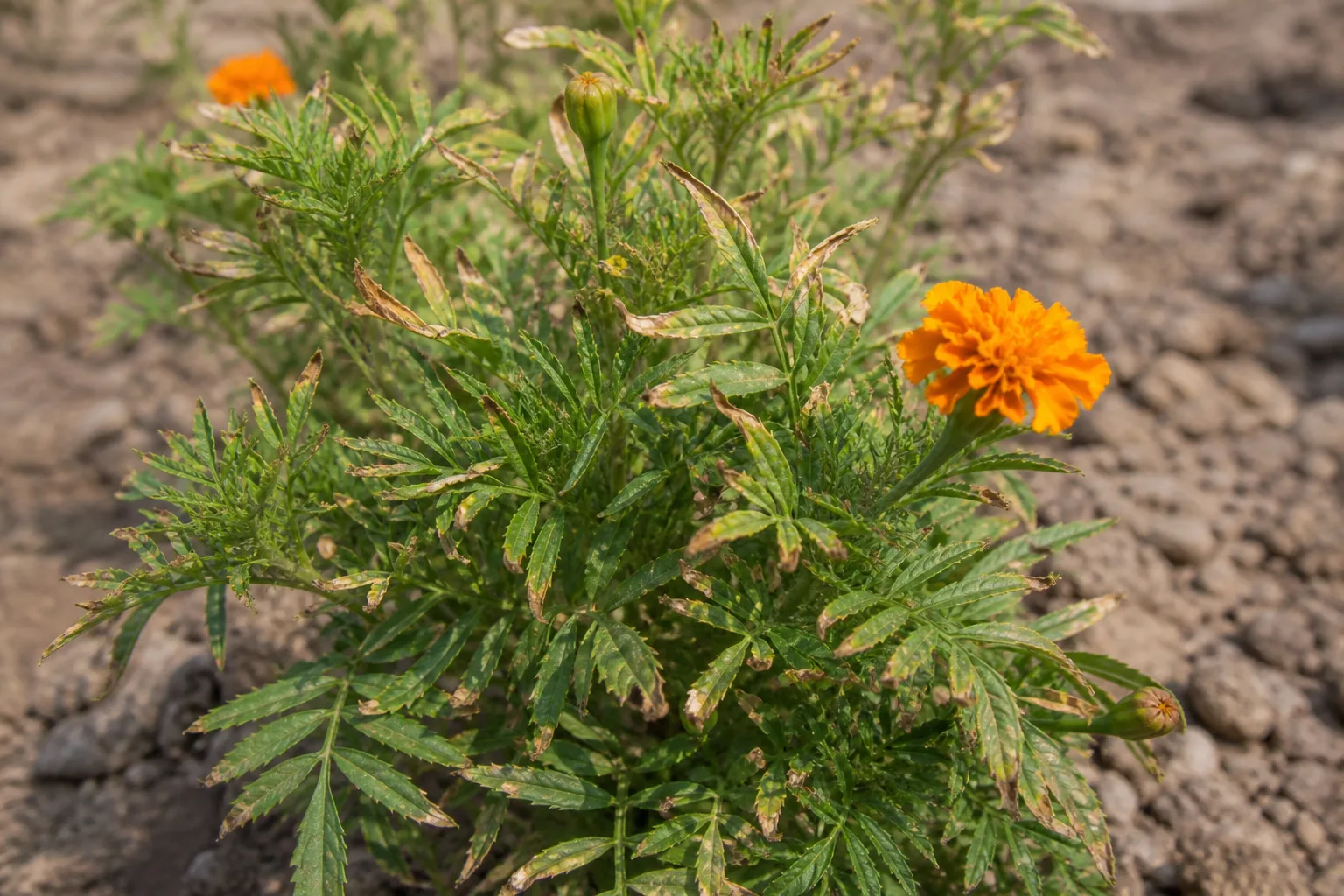
Low Humidity on Marigold: Causes, Checks & Fixes
This guide covers low humidity on Marigold. See also the general Low Humidity guide, watering, and light pages for this plant.
Low Humidity on Marigold: Causes, Checks & Fixes
Quick answer
Use this page when you wonder whether dry air is hurting marigolds. Grey mold on flower petals means excess humidity-the opposite problem-see botrytis notes below.
Low humidity on marigold is rarely the primary problem this sun-loving annual faces - Tagetes erecta tolerates dry air better than humid, flower-wet conditions. First step: if crisp edges or mites appear in hot dry weather, improve steady base watering and occasional morning rinses rather than raising ambient humidity.
What low humidity looks on Marigold
Marigolds in hot dry balconies may show crisp leaf margins, midday wilt, and spider mite stippling when underwatering accompanies dry air. Flower quality generally remains good in dry sun if roots stay adequately moist.
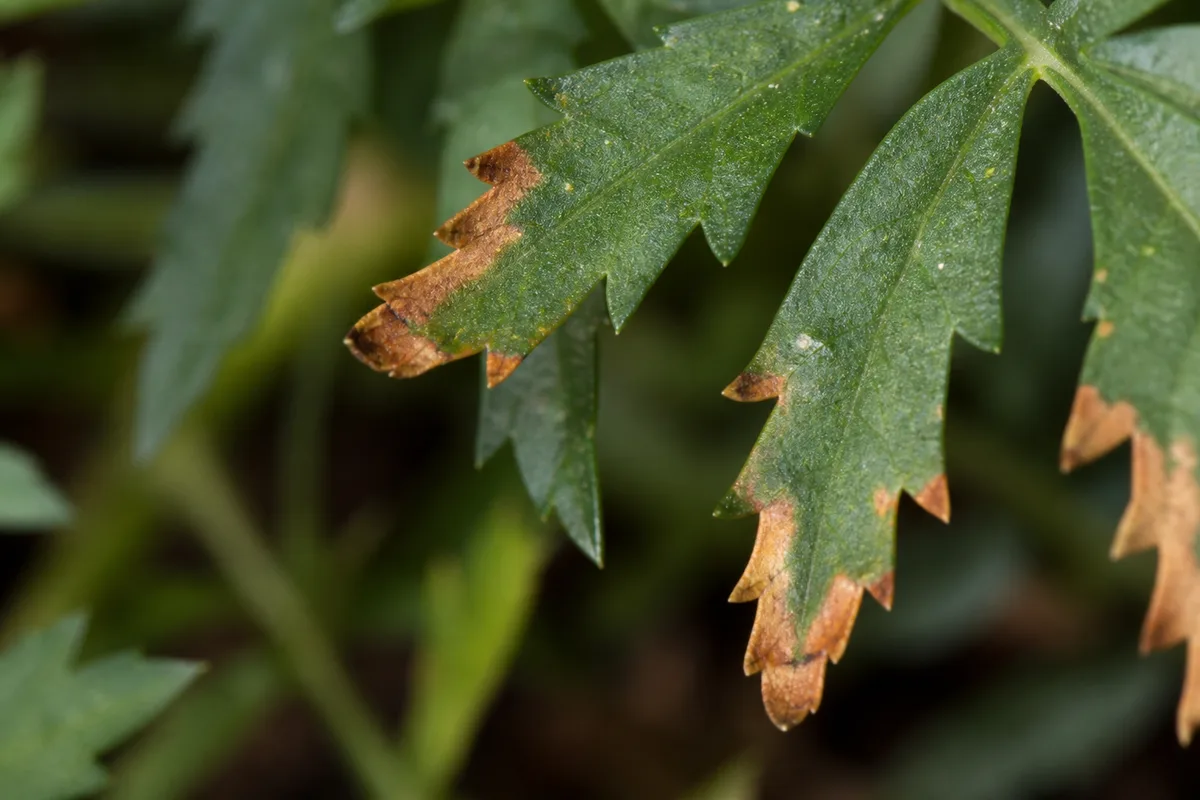
Low Humidity symptoms on Marigold - compare with healthy tissue on the same plant.
This is distinct from high humidity problems - excess humidity causes botrytis grey mould on marigold flowers, the more serious floral issue for this species. Grey mold on wet petals = too much humidity around flowers, not too little air moisture.
Why low humidity matters for Marigold
Marigolds evolved for full sun in well-drained soils - not tropical humid understory. Dry air itself is acceptable; drought stress in dry air is not.
Spider mites surge in hot dry conditions when plants are underwatered. Marigolds in full sun all day transpire heavily - without matching base watering per our watering guide, leaf edges crisp even when humidity is merely “normal” for summer.
French vs. African note: Tagetes patula (French marigold) in moister beds tolerates slightly more soil moisture than tall African types, but neither needs humidifiers. Both prefer dry flower surfaces in full sun-see overview for cultivar differences.
Indoor attempts to grow marigolds in dry heated air fail more from insufficient light per light guide than insufficient humidity.
Lookalike comparison table
| What you see | Likely cause | Soil / humidity cue | First action | Guide |
|---|---|---|---|---|
| Crisp margins, dry soil at 3 cm, light pot | Drought in dry air | Bone dry; midday wilt | Deep base water | Underwatering |
| Stippling + fine webbing on undersides | Spider mites | Often follows drought | Morning rinses; steady water | Spider mites |
| Grey fuzzy mold on wet petals | Botrytis (excess humidity) | Humid porch pocket; wet blooms | Improve airflow; dry flowers | This page |
| Wilting on wet heavy soil | Root rot / overwatering | Sour smell; mushy roots | Stop watering; inspect roots | Overwatering |
| Brown tips only, adequate moisture | Salt burn or heat | Recent heavy feed | Flush pot; pause fertilizer | Fertilizer |
How to confirm the cause
- Moisture check - Dry soil at 3 cm with crisp tips → drought in dry air, not humidity deficit.
- Mite inspection - Stippling and webbing on undersides; see spider mites.
- Flower inspection - Grey mold → excess humidity, not low humidity.
- Light check - Indoor dim sites fail regardless of humidity trays.
- Wilting pattern - Wet wilt → roots, not humidity.
First fix for Marigold
Water deeply at the base when the top 3 cm dries in hot weather. Rinse foliage early in the day during mite-prone dry spells - do not mist flowers in humid evenings.
Do not add pebble trays or humidifiers - water at the base for routine care; marigolds need dry flower surfaces more than moist air.
Step-by-step recovery
- Increase check frequency in hot dry weeks.
- Deep base water when top 3 cm is dry.
- Rinse leaves mornings if mites present; repeat every few days.
- Remove crisp oldest leaves cosmetically once stable.
- Ensure full sun - shaded dry corners still fail to bloom.
Recovery timeline
Turgid leaves return within hours of proper watering. Mite control takes one to two weeks of rinses. Crisp edges on old leaves remain permanently.
What not to do
Do not mist marigold flowers in evening - promotes botrytis on blooms. Do not prioritize humidifiers over full sun placement. Do not confuse low humidity with underwatering - fix water first.
How to prevent it next time
Daily top 3 cm checks in heat on full-sun containers. Occasional morning foliar rinse in dry mite season. Good airflow around flowers without enclosing plants in humid porch pockets.
Marigold care cross-check
Marigolds prefer low to moderate humidity for flower health - the opposite of many houseplants. Align full sun and steady moisture rather than humidifying air.
When to worry
Mite webbing on buds before peak bloom - treat aggressively with rinses and steady water, not humidity trays. Bed-wide mite outbreaks before bloom may need extension IPM guidance if rinses fail after two weeks.
Related Marigold guides
- Overview - watering, pests, botrytis context
- Watering - base watering rhythm
- Spider mites - drought-mite linkage
- Underwatering - dry soil + crisp edges
- Overwatering - wet wilt lookalike
- Brown tips - margin damage overlap