Brown Tips on Marigold: Causes, Checks & Fixes
Quick answer
Match the margin pattern first: crispy oldest-leaf tips on dry soil point to drought; tip burn after feeding with white soil crust points to salt buildup in pots; brown margins with wet soil and yellow lower leaves point to failing roots-not thirst.
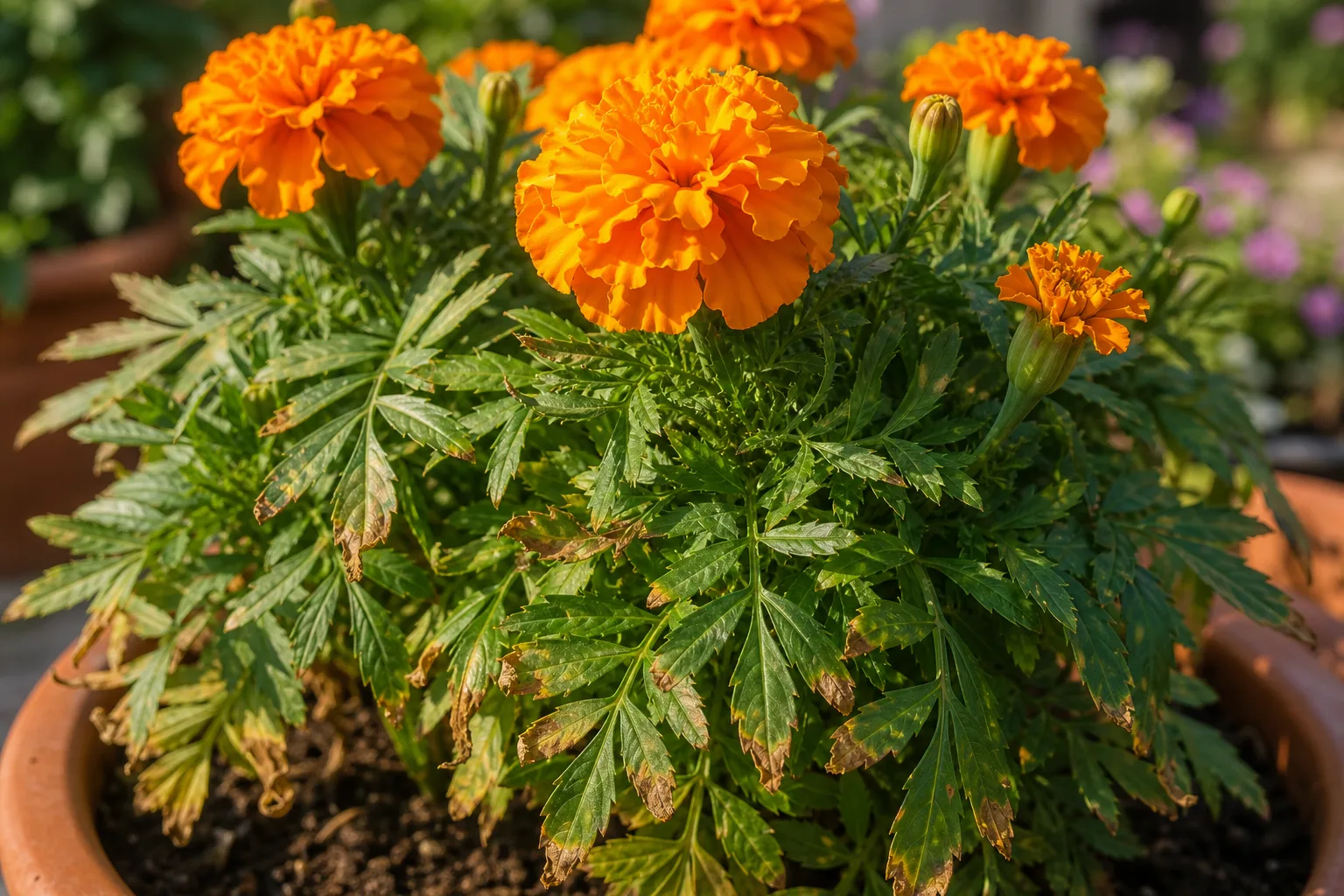
Brown Tips on Marigold: Causes, Checks & Fixes
This guide covers brown tips on Marigold. See also the general Brown Tips guide, watering, and light pages for this plant.
Brown Tips on Marigold: Causes, Checks & Fixes
Quick answer
Brown tips on marigold leaves are not one problem-they are three margin patterns that share a look but need opposite fixes:
- Dry crispy tips on oldest lower leaves with dry soil at 3 cm → drought margins in full sun; deep base watering.
- Brown tips after feeding with white crust on pot soil → salt buildup in containers; flush and pause feed (see marigold fertilizer guide).
- Advancing brown margins with wet soil and yellow lower leaves → failing roots, not thirst; stop watering and inspect (see overwatering on marigold or root rot on marigold).
First step: probe moisture at 3 cm and note whether tips appeared after a dry spell, after fertilizer, or during chronic wet soil. For watering rhythm and pot-vs-bed context, see the marigold watering guide.
What brown tips look like on marigold (by cause)
Drought margins
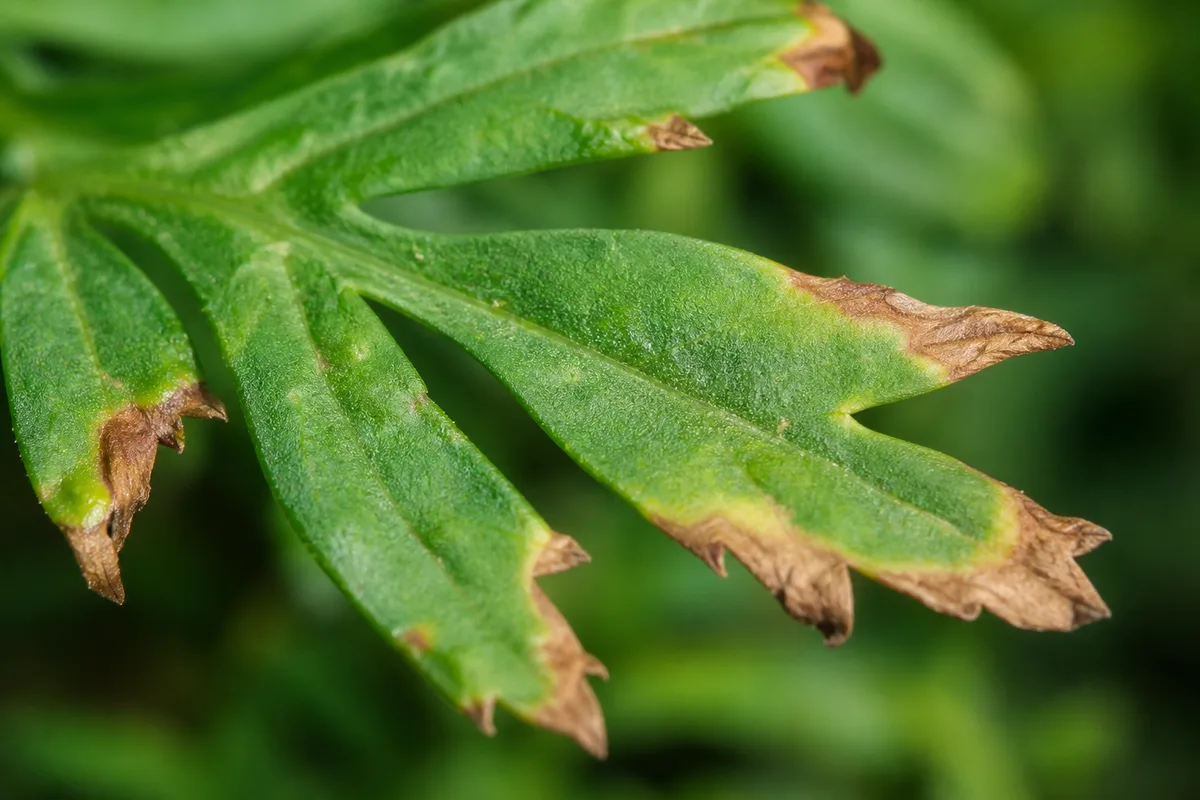
Brown Tips symptoms on Marigold - compare with healthy tissue on the same plant.
Dry brown edges on oldest lower leaves while new growth stays green. The pot feels light, soil pulls slightly from the rim, and plants may wilt midday in heat before tips advance. Broad Tagetes erecta foliage in full sun all day loses water from leaf margins first when root supply lags-a classic margin-burn pattern, not a leaf-spot disease.
Salt and fertilizer burn
Crisp brown tips-sometimes on newer foliage-days after liquid feed, slow-release pellets, or fertilizer spikes in a small pot. A white chalky crust on the soil surface is a strong salt signal. Marigolds are moderate feeders, not heavy feeders; excess salts in a confined root zone pull moisture from leaf edges through transpiration.
Wet-root dysfunction
Brown margins paired with yellow lower leaves while soil stays wet and the pot feels heavy. Roots cannot deliver water evenly, so margins desiccate even though the mix is saturated-mimicking drought from above. Extension diagnostics link yellowing and wilt on poorly drained marigold soil to root stress, not simple underwatering.
Wind scorch and reflected heat
Tall African cultivars on exposed balconies or beside white walls can show dry margin burn without dry soil-transpiration spikes from wind or radiant heat outpace uptake on a single hot afternoon. Confirm with sunrise recheck: if soil is moist and crowns are firm, shade the pot from late-afternoon reflected heat for 24 hours before watering again.
Tip-burn patterns compared
| Pattern | Typical leaves | Soil at 3 cm | Pot weight | Other cues | First fix |
|---|---|---|---|---|---|
| Drought margins | Oldest lower leaves first | Dry | Light | Midday wilt in heat | Deep base water; empty saucers |
| Salt burn | Newer tips after feed | Moist possible | Normal to heavy | White soil crust | Flush; pause feed (fertilizer guide) |
| Wet-root burn | Lower leaves yellow + tips | Wet | Heavy | Sour smell at drains | Stop water; inspect roots |
| Wind / heat scorch | Exposed side of plant | Moist, not soggy | Normal | Firm crown; afternoon-only | Shade from radiant heat; no extra water |
| End-of-season senescence | Few oldest leaves only | Any | Stable | Blooming slowing in autumn | Cosmetic trim only; no rescue needed |
Pick one leading row before stacking treatments.
Why marigold gets brown tips
Full-sun transpiration on broad foliage
Marigolds are warm-season annuals from Mexico and Central America bred for sun and heat. In containers on July balconies, broad Tagetes erecta leaves transpire faster than roots resupply water when checks are missed-margins burn before the whole leaf collapses.
Low-feeder salt sensitivity in pots
In garden beds, salts dilute into surrounding soil. In containers, every fertilizer dose stays in a small volume unless flushed through drain holes. Too much fertilizer reduces blooms while pushing leafy growth-and concentrated salts burn tips on moderate feeders faster than on heavy-feeding vegetables.
Chronic overwatering
Roots in soggy media fail to take up water. Leaves brown at edges while lower foliage yellows-a pattern that sends many growers toward more water. Route to overwatering on marigold when the pot stays heavy 48 hours after you stopped watering.
Container vs in-ground context
Containers concentrate both drought stress (small volume dries in one hot day) and salt stress (no surrounding soil buffer). In-ground beds rarely show fertilizer salt crust but still show drought margins in sandy soil or reflected-heat sites. Bed growers who overhead-irrigate in humid evenings may see bloom rot instead of leaf tips-different problem, different fix.
African vs French marigold habits
Tagetes erecta (African marigold) runs tall with large leaves and large flower heads-more leaf surface to desiccate in heat. Tagetes patula (French marigold) is more compact; Iowa State Extension notes French types tolerate moist soil better than African types, but French marigolds in 15–20 cm pots still dry to tip burn in one missed afternoon. Match pot size to mature habit per the marigold overview.
Lookalike symptoms to rule out
| Symptom | What it is | How it differs from tip burn |
|---|---|---|
| Grey fuzzy mold on spent blooms | Botrytis flower blight | Soft wet decay on petals, not dry papery leaf margins |
| Fine stippling with webbing | Spider mites | Speckled chlorosis across leaf surface, not uniform margin burn |
| Few oldest leaves browning in autumn | Normal senescence | Isolated lower leaves as season ends; no spread up the plant |
| Midday wilt on dry soil | Underwatering (early) | Whole plant limp; tips are one stage-see underwatering on marigold |
How to confirm the cause (5-step inspection)
Run these in order:
- Margin pattern - oldest-leaf dry tips vs post-feed tips vs wet-soil yellow lowers.
- Soil moisture at 3 cm - dry supports drought; soggy supports root dysfunction.
- Pot weight and wilt timing - light pot + midday wilt confirms dry path.
- Feed history - recent liquid feed, spikes, or slow-release pellets in small pots support salt burn; white crust strengthens the call.
- Root and crown check - slide plant out if wet: firm white roots on dry soil vs mushy brown roots on wet soil.
First fix for marigold
Choose one path after the table above:
- Dry path: one deep base watering until runoff; empty saucers within 30 minutes.
- Salt path: flush with plain water until excess runs freely from drain holes-repeat over several days-and hold all fertilizer until new growth is clean. Ongoing feed rates and flush detail live in the marigold fertilizer guide; do not repeat heavy doses here.
- Wet path: stop watering; inspect crown firmness and roots. Escalate to root rot on marigold if stems soften or soil smells sour.
Do not increase fertilizer to “green up” burned tips-that deepens salt stress on stressed roots.
Step-by-step recovery (by confirmed cause)
Drought margins
- Deep base water when top 3 cm is dry.
- Check daily in peak heat for one week-many balcony containers need water every 1–2 days in July.
- Trim unsightly burned edges only after one week of stable moisture.
- Deadhead spent blooms to lower overall stress while roots recover.
Salt burn in containers
- Flush until runoff drains freely; empty saucers after each flush.
- Hold fertilizer four to six weeks per marigold fertilizer guide flush protocol.
- Resume half-strength balanced feed only after new leaves emerge without burn.
- If crust returns within two weeks, repot into fresh well-draining mix rather than flushing indefinitely.
Wet-root tip burn
- Stop watering immediately.
- Improve drainage-clear blocked holes, tilt pot, move out of rain.
- If soil stays wet 48 hours, unpot and trim rotted roots; repot into fresh mix.
- Full wet-soil workflow: overwatering on marigold and root rot on marigold.
Recovery timeline
New leaves without burn typically appear within one to two weeks once the correct moisture or salt correction holds. Old burned margins stay brown permanently-judge recovery on new growth, not old edges.
In peak summer heat, expect daily monitoring for one week on the drought path. In moderate spring weather, the same correction may need checks only every two to three days.
Observed pattern (container, reflected heat): A balcony Tagetes erecta in a 25 cm pot showed advancing dry tips on oldest leaves after three consecutive 32 °C afternoons-soil dry at 3 cm, pot light, new center growth still green. Deep base watering every 1–2 days for one week produced clean new leaves; trimmed margins on lower foliage only after day ten.
What not to do
- Do not feed burned plants to force green tips-salt stress deepens.
- Do not overhead water in evening on humid nights-promotes botrytis bloom rot, not tip recovery.
- Do not add more water when soil is already saturated and lower leaves are yellow.
- Do not assume all brown tips mean underwatering-run the comparison table first.
How to prevent brown tips next time
- Water by the top-3-cm dry test-full rhythm in the marigold watering guide.
- Feed lightly in containers; incorporate compost at planting in beds rather than repeated heavy nitrogen-see marigold fertilizer guide.
- Use well-draining mix with perlite in pots; match pot diameter to mature African vs French habit.
- Stake taller African varieties in windy exposed beds to reduce mechanical and wind-scorch stress.
- Grow in full sun with well-drained soil-marigolds underperform in shade, but sun without steady moisture invites margin burn.
Marigold care cross-check
Tip burn usually signals a mismatch between sun load, watering rhythm, and feed level-not a mysterious leaf disease on Tagetes. African marigolds in hot small pots need the most frequent checks; French types in beds tolerate more soil volume but still burn when pots crash dry.
If tips appeared after a feed spike, salt is the lead suspect. If tips climb stems with wet wilt, roots are failing-cosmetic trimming will not help.
When to worry
Escalate same day when browning spreads up stems with wet wilt and soft crowns, or when rapid tip burn follows a heavy feed and flush does not stop advance within one week-repot may be needed, not another flush alone.
Low urgency for cosmetic tip burn alone on firm plants with clean new growth. Contact your local extension office if wet-soil tip burn cycles repeat after Marigold repotting guide.
Related marigold problems
- Underwatering on marigold - midday wilt and dry-soil crash cycles
- Overwatering on marigold - chronic heavy pots and saturation habits
- Root rot on marigold - mushy roots, sour soil, crown softness
- Wilting on marigold - overnight collapse on wet soil
- Marigold fertilizer guide - flush protocol and feed rates after salt burn
- Marigold watering guide - container vs bed rhythm
- Marigold overview - sun, soil, and type basics
When to use this page vs other Marigold guides
- Marigold watering guide - Use for routine moisture checks before assuming brown tips is the main issue.
- Marigold problems hub - Browse all 20 common issues on this species.
- Low Humidity on Marigold - Different entry point when symptoms overlap with brown tips.
- Underwatering on Marigold - Different entry point when symptoms overlap with brown tips.
- Overwatering on Marigold - Different entry point when symptoms overlap with brown tips.