Slow Growth on Maranta Leuconeura: Causes, Checks & Fixes
Quick answer
Maranta leuconeura is naturally slow-growing, but months without a new herringbone leaf usually mean too little light, humidity below 50–60%, cool temperatures, or winter rest-not always disease. First step: confirm the season, then move to brighter indirect light and keep the room above 60°F before fertilizing or repotting.
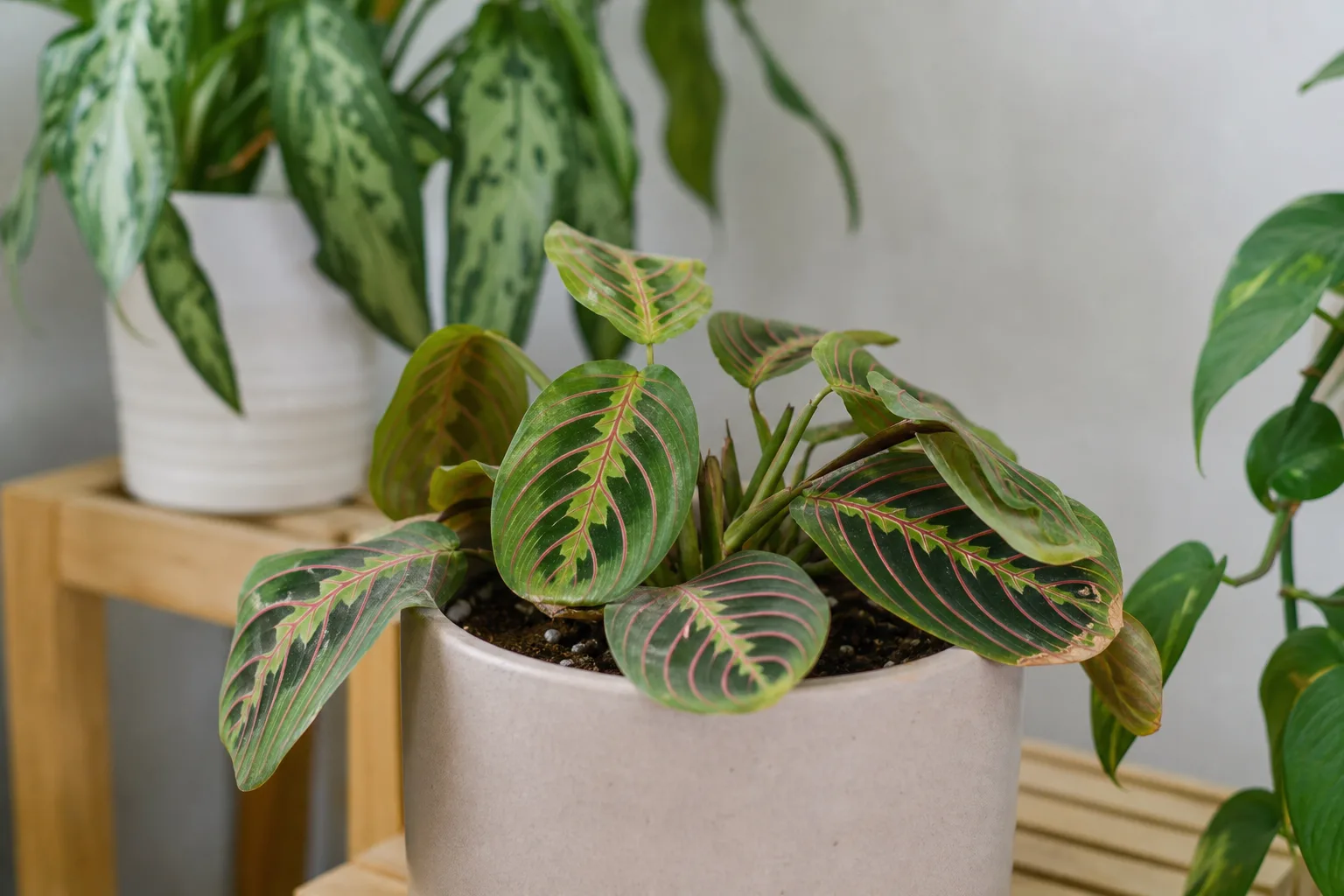
Slow Growth on Maranta Leuconeura: Causes, Checks & Fixes
This guide covers slow growth on Maranta Leuconeura. See also the general Slow Growth guide, watering, and light pages for this plant.
Slow Growth on Maranta Leuconeura: Causes, Checks & Fixes
Quick answer
Maranta leuconeura is a low-growing, rhizomatous perennial that spreads horizontally rather than shooting upward like a pothos-so “slow” is partly normal. In spring and summer, though, a healthy prayer plant in good conditions should still push one new rolled herringbone leaf every three to six weeks. If months pass with no new unfurl while old foliage looks static, the stall is usually fixable culture, not mystery disease.
The four causes to check first are insufficient light, humidity below roughly 50–60%, temperatures dipping below 60°F (15°C), and normal winter rest when soil moisture and fertilizer should be reduced from autumn through late winter. Chronic overwatering on Maranta Leuconeura in a dim corner, root-bound rhizomes, tap-water mineral stress, and post-repot pause are common secondary limits.
First step: note the calendar and room temperature, then move the pot to bright, indirect light within one to three feet of an east window-or add a grow light-while keeping the plant above 60°F. Do not reach for fertilizer or another repot until you have corrected light, warmth, and seasonal expectations.
Is slow growth normal on prayer plant?
Yes-within limits. Prayer plant is naturally slow compared with many houseplants, typically reaching only 12–15 inches tall and as wide indoors while spreading by rhizomes at the soil surface. It invests energy in patterned leaf tissue and nightly nyctinastic movement, not rapid vertical gain.
Normal slow growth looks like this:
- Winter pause (roughly November–February in the Northern Hemisphere): little or no new foliage, older leaves still green, nightly folding may continue on mature leaves while the crown rests
- Steady but unhurried summer pace: one new leaf every three to six weeks in Maranta Leuconeura light guide-not weekly flushes
- Stable clump size with occasional rhizome creep at the pot edge rather than dramatic height gain
Abnormal slow growth means no new rolled leaf through an entire warm growing season, new leaves arriving smaller and paler with faded herringbone veins, or a crown that has stalled for eight or more weeks while humidity, light, and temperature should support active growth. That pattern points to a cultural limit-or root stress-not species temperament alone.
What slow growth looks like on Maranta leuconeura
Slow growth on prayer plant is judged by new leaf output and pattern quality, not whether old leaves stay green.
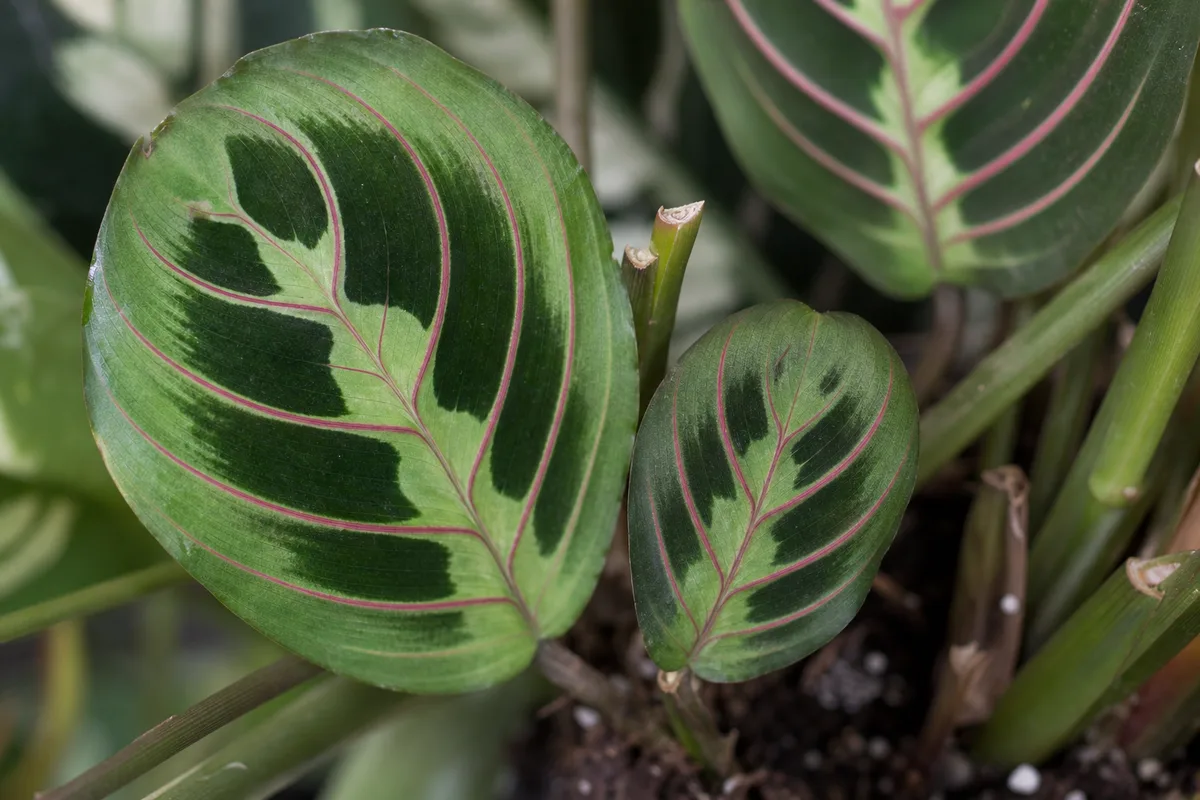
Slow Growth symptoms on Maranta Leuconeura - compare with healthy tissue on the same plant.
Typical stall signs:
- Few or no new rolled tubes unfurling from the crown for weeks or months during spring and summer
- Smaller new leaves that open slowly, with weak or washed-out herringbone red veins compared with older foliage
- Pale purple-grey undersides on new growth instead of rich burgundy
- Night folding continues on old leaves while new tips stay stalled-a distinctive Maranta signature that separates cultural slow growth from sudden collapse
- Static clump with no rhizome spread at the pot rim despite warm weather
- Soil that stays wet ten days or more because transpiration dropped in dim, cool conditions
In winter, reduced watering and feeding are expected. A firm, pest-free plant with no new leaves in January is often resting-not rotting. The same pause in June after you have corrected placement is a problem.
Stunted new leaves vs. healthy unfurls
On this species, pattern intensity on the newest leaf is the best growth signal. A healthy unfurl shows sharp fishbone veins and firm rolled tissue that opens cleanly within days. A stunted leaf stays small, opens partway, or displays muddy variegation before growth stops entirely-often the first warning before yellowing or tip burn appear. Red-veined Erythroneura cultivars show this fade earliest; kerchoveana (rabbit tracks) tolerates brief lapses slightly better but still stalls in dry, dim rooms.
Why prayer plant growth stalls
Low light slows the whole system
Prayer plant tolerates low to medium light but color and growth slow when brightness is weak. Photosynthesis drops, the rhizome invests little in new leaves, and the same Maranta Leuconeura watering guide keeps soil wet longer because the plant transpires less. That dim-corner trap-slow growth plus chronically moist mix-often precedes root stress without obvious yellow leaves. See /plants/maranta-leuconeura/plant-problems/not-enough-light/ for stretch, pattern fade, and the light-first fix.
Low humidity limits unfurling
Maranta is intolerant of low humidity. Dry heated air slows cell expansion in new rolled leaves even before brown tips develop. Growth can stall while older foliage still looks acceptable-a pattern easy to misread as “the plant just needs fertilizer.” NC State recommends a humidified room or pebble tray because rainforest-floor natives expect moisture-rich air. Compare with /plants/maranta-leuconeura/plant-problems/low-humidity/.
Cool temperatures and drafts
Prayer plant prefers temperatures that do not dip below 60°F. Cold windowsills, air-conditioning vents, and winter glass contact stall tropical rhizome activity. Cool nights plus wet soil are especially limiting: metabolism drops, roots use less oxygen, and growth stops without the dramatic wilt other species show.
Winter dormancy
From autumn through late winter, MOBOT advises holding back water and substantially reducing fertilizer. Short days alone can pause new leaves even when temperatures are adequate. Attempting to force growth with feed or extra water in December usually backfires.
Chronic overwatering in dim conditions
Roots need oxygen. Soil that never dries in a low-light spot becomes anaerobic; growth halts while leaves may still look green. This overlaps with /plants/maranta-leuconeura/plant-problems/overwatering/ and /plants/maranta-leuconeura/plant-problems/root-rot/ when rot advances.
Root-bound rhizomes
Prayer plant spreads horizontally. When rhizomes circle a tight pot, new shoots have nowhere to expand and growth slows despite otherwise good care. Division or repot into a shallow wide container in spring-not repeated winter repots-usually restarts spread.
Tap-water mineral and fluoride stress
NC State notes leaves burn with high fluorides and over-fertilization. Hard or fluoridated tap water can slow clean unfurling before obvious tip burn. Filtered or rainwater helps when growth stalls alongside dull new foliage. See /plants/maranta-leuconeura/plant-problems/brown-tips/.
Post-repot or division shock
Marantaceae dislike disturbance. After Maranta Leuconeura repotting guide or division, expect a multi-week pause while roots re-establish-normal, not failure. See /plants/maranta-leuconeura/plant-problems/repotting-stress/.
Pests draining vigor
Spider mites and mealybugs can slow growth before webbing is obvious. Inspect leaf undersides with a hand lens if the stall coincides with stippling or fine dust.
How to confirm the cause
Work through these checks in order before repotting or fertilizing:
- Season and day length - Is it late autumn through winter? If yes, partial rest may be normal if the plant is firm and pest-free.
- Light at the leaf surface - Can you read comfortably near the plant without a lamp? Hold your hand at canopy height at midday: almost no shadow means too dim for active summer growth. Target bright, indirect or diffused sun.
- Temperature - Is the pot above 60°F at night, away from cold glass and AC drafts?
- Humidity near the plant - Below 50% RH in a heated room? Prayer plant needs high humidity for steady unfurling.
- Soil moisture - Press the top 2 cm. Wet for two weeks while growth is stalled points to overwatering in low metabolism conditions-not a nutrient shortage.
- Newest leaf quality - Faded herringbone on the latest unfurl suggests light or humidity stress; firm rich patterning suggests culture is adequate and winter rest may explain the pause.
- Roots and pot fit - Slide the plant out gently: white firm roots in a crowded circle suggest root-bound stall; mushy dark roots suggest rot.
- Recent repot or division - Within the last eight weeks? Pause may be transplant shock.
- Pest check - Stippling, webbing, or cottony clusters on undersides.
If it is a warm growing month, light is dim OR humidity is low OR soil stays chronically wet, you have enough to act-usually on light and watering together, not fertilizer first.
The first fix to try
Match the first fix to the most likely limiter-one correction at a time.
If light is the lead suspect (dim room, faded new veins, wet soil slow to dry)
Move to bright, indirect light within one to three feet of an east-facing window, or add a full-spectrum grow light 12–18 inches above the canopy for 10–12 hours daily. Prayer plant performs well in bright indoor light without strong direct sun. Wait two weeks, then adjust watering to match faster dry-down. Details: /plants/maranta-leuconeura/maranta-leuconeura-light/.
If humidity reads below 50% (stalled unfurls, winter heating on)
Run a humidifier targeting 60% or higher near the plant, or use a pebble tray and grouping-mist alone is temporary. Watch the next rolled leaf for faster, cleaner opening over three to four weeks.
If temperatures dip below 60°F (plant near cold glass or draft)
Move the pot inward from the sill and eliminate drafts. Warmth alone rarely restarts growth without adequate light, but cold actively blocks rhizome activity.
If soil stays wet in a dim spot
Pause watering until the top 2 cm dries, then resume thorough watering with full drainage-do not add fertilizer. Fix light in the same week so the plant can use water normally again. Watering guide: /plants/maranta-leuconeura/maranta-leuconeura-watering/.
If roots circle the pot and care otherwise looks good (spring only)
Repot or divide into a shallow container one size up with airy mix-once, in warm weather-not repeated repots hoping to wake a dormant winter plant.
If it is winter and the plant is otherwise healthy
Reduce water and skip fertilizer per MOBOT seasonal guidance. Judge growth again in March–April when days lengthen.
Do not stack repotting, feeding, and a window move on the same day.
Recovery timeline
Recovery is measured by new crown growth, not old leaves improving.
| Situation | What to expect |
|---|---|
| Light or warmth correction in spring–summer | First new rolled leaf often appears in 3–6 weeks; second leaf with strong herringbone pattern confirms the fix |
| Humidity correction in dry heating season | Cleaner unfurling within 3–4 weeks; full pace may take one full growing cycle |
| Winter rest (healthy firm plant) | Little visible change until late winter–early spring even when care is correct |
| After repot or division | 4–8 weeks before the first new shoot is typical |
| root rot on Maranta Leuconeura after chronic wet soil | 6–12 weeks after drying, possible trim, and repot-if crown tissue stayed firm |
These ranges are editorial estimates for indoor culture, not lab measurements. If no new growth appears after six weeks in improved light during the warm season, reassess brightness at the canopy or inspect roots.
Causes to rule out
| What you see | Likely cause | Why it is not simple slow growth |
|---|---|---|
| Long internodes leaning toward a window | Not enough light | Stems stretch; see /plants/maranta-leuconeura/plant-problems/leggy-growth/ |
| Yellowing with sour wet soil | Overwatering / root rot | Foliage declines, not just static size |
| Crisp brown tips on compact leaves | Low humidity or tap water | Growth may continue slowly; pattern on new leaves still matters |
| Sudden collapse with soft crown | Advanced root rot | Emergency root inspection, not patience |
| Fine webbing on undersides | Spider mites | Stippling and drained vigor |
| Only one old lower leaf yellowing | Natural aging | New growth continues elsewhere |
Slow growth with simultaneous leaf curling often signals humidity crisis, not light deficit alone-raise humidity and recheck unfurl speed before moving the pot again.
What not to do
- Do not repot repeatedly in a dark corner hoping to “wake up” the plant-Marantaceae hate disturbance without a clear root-bound or rot diagnosis.
- Do not over-fertilize stagnant plants; reduce fertilizer in autumn through late winter and feed only during active new growth in spring–summer. Fertilizer guide:
/plants/maranta-leuconeura/maranta-leuconeura-fertilizer/. - Do not increase watering in cold, dim rooms-that invites anaerobic roots without speeding growth.
- Do not judge recovery by old leaves-stunted or pale mature foliage does not revert; only new herringbone leaves count.
- Do not assume winter pause is rot if stems are firm, soil is not sour, and pests are absent.
Maranta leuconeura care cross-check
| Factor | Target for steady growth | Slow-growth warning sign |
|---|---|---|
| Light | Bright indirect at the leaf surface | Months without new leaves in summer; faded veins on newest leaf |
| Humidity | ~60% or higher | Stalled unfurls, especially in heated winter air |
| Temperature | 65–80°F (18–27°C); above 60°F minimum | Cold glass contact, AC drafts |
| Watering | Moist when top 2 cm dries in active growth; drier in winter | Soil wet 10+ days in a dim spot |
| Soil / pot | Shallow, well-draining; room for horizontal rhizomes | Roots circling tightly with no new shoots |
| Fertilizer | Monthly half-strength in active growth only | Feeding dormant or stressed plants |
Make one change at a time so you can read the plant’s response. Light and seasonal expectations come first; humidity and watering follow once metabolism increases.
How to prevent slow growth next time
- Place the pot where bright, indirect light reaches the leaves-not just a bright room across the floor. Overview:
/plants/maranta-leuconeura/. - Maintain humidity near 60% in dry seasons with a humidifier rather than occasional misting.
- Match watering to season and light-keep soil moist during active growth, drier in winter.
- Repot or divide every one to two years in spring when rhizomes crowd the pot-see
/plants/maranta-leuconeura/maranta-leuconeura-repotting/. - Use filtered water if tap minerals slow unfurling.
- Inspect leaf undersides weekly during dry winter heating.
- Prayer plant is non-toxic to cats and dogs; optimize placement for plant health, not just pet access.
When slow growth is normal vs. when to worry
Normal: winter rest with firm stems; one new leaf every three to six weeks in summer; slow horizontal spread consistent with a rhizomatous clump; four to eight weeks of pause after a single spring repot.
Worry and escalate: crown tissue softens; soil smells sour while growth stopped; pests web multiple leaves; no new growth through an entire warm growing season despite corrected bright indirect light, humidity above 60%, and temperatures above 60°F; several stems collapse while the pot stays wet. In those cases inspect roots, address rot if present, and do not wait through another season in the same conditions.
A prayer plant that still folds mature leaves at night but has not produced a new herringbone leaf in months is usually telling you that light, humidity, or season-not patience alone-need attention. Fix those first, then judge the next rolled tube from the crown.
When to use this page vs other Maranta Leuconeura guides
- Maranta Leuconeura watering guide - Use for routine moisture checks before assuming slow growth is the main issue.
- Maranta Leuconeura problems hub - Browse all 40 common issues on this species.
- Not Enough Light on Maranta Leuconeura - Different entry point when symptoms overlap with slow growth.
- Yellow Leaves on Maranta Leuconeura - Different entry point when symptoms overlap with slow growth.