Plant Leaning on Maranta Leuconeura: Causes, Checks & Fixes
Quick answer
Prayer plant leaning often means growth reaching toward a window, uneven light on one side, or limp stems from water stress-not always a crisis. First step: note lean direction and stem firmness-firm stems pointing at the brightest window need brighter indirect light and weekly rotation; limp stems need soil checked at 2 cm before staking.
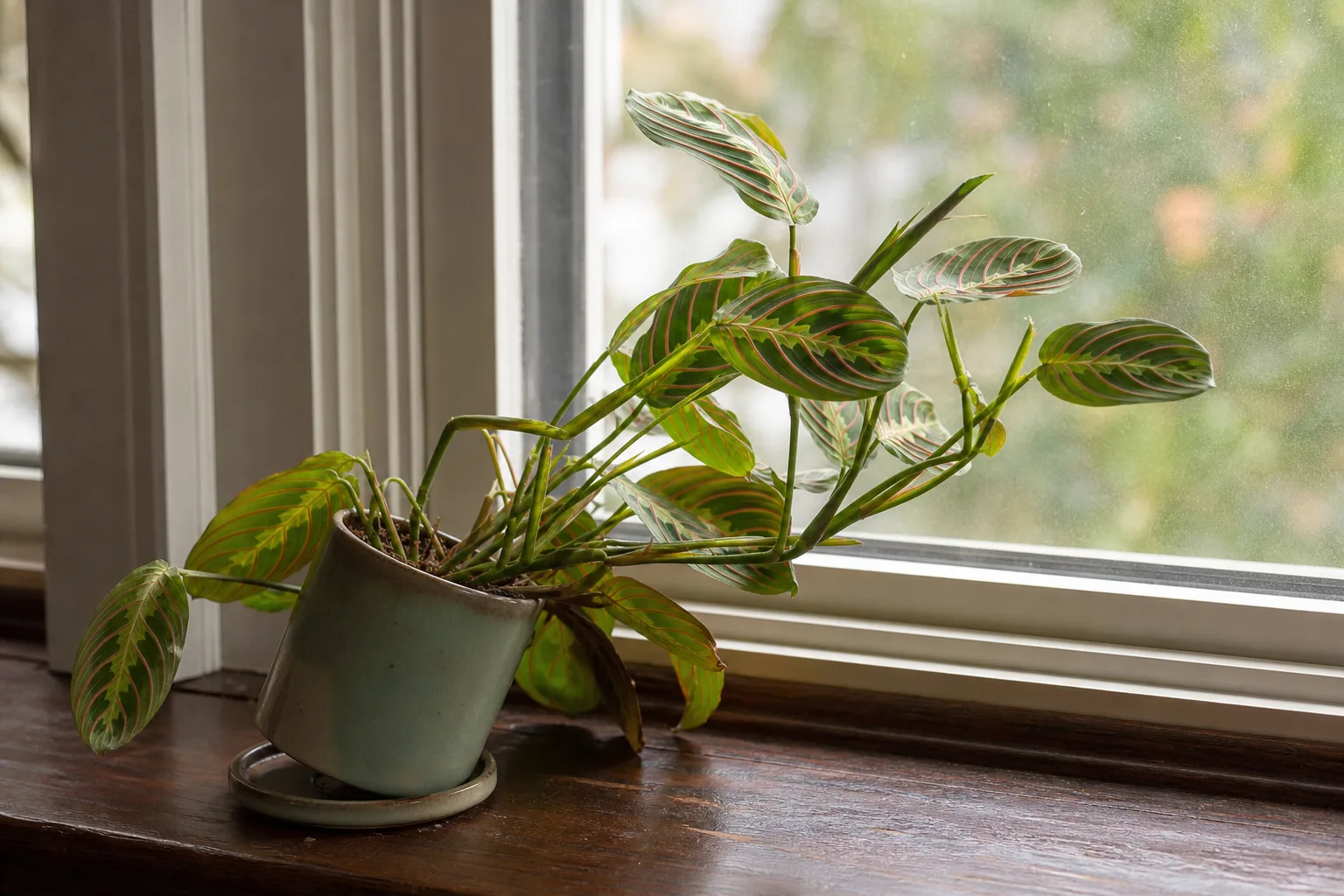
Plant Leaning on Maranta Leuconeura: Causes, Checks & Fixes
This guide covers plant leaning on Maranta Leuconeura. See also the general Plant Leaning guide, watering, and light pages for this plant.
Plant Leaning on Maranta Leuconeura: Causes, Checks & Fixes
Quick answer
Plant leaning on Maranta leuconeura (prayer plant) is often normal spreading habit, growth toward the brightest window, or limp stems from water stress-three different stories that look similar at a glance. Prayer plants are low-growing, rhizomatous perennials that naturally spread across the soil surface rather than building a stiff vertical trunk. A gentle outward lean on healthy firm stems is not the same as a clump collapsing from root failure.
First step: note which direction the plant leans and whether stems feel firm or soft. Firm stems angled toward a window mean the plant is reaching for light-rotate the pot a quarter turn and move it to brighter filtered light. Soft, limp stems that stay flat through the day mean check soil moisture at 2 cm before adding support stakes.
What plant leaning looks like on Maranta Leuconeura
On a healthy prayer plant, stems emerge close to the soil and arch slightly as the clump widens. Leaves hold their herringbone or red-vein patterns and still fold upward at night. A modest tilt toward the window side is common and not alarming by itself.
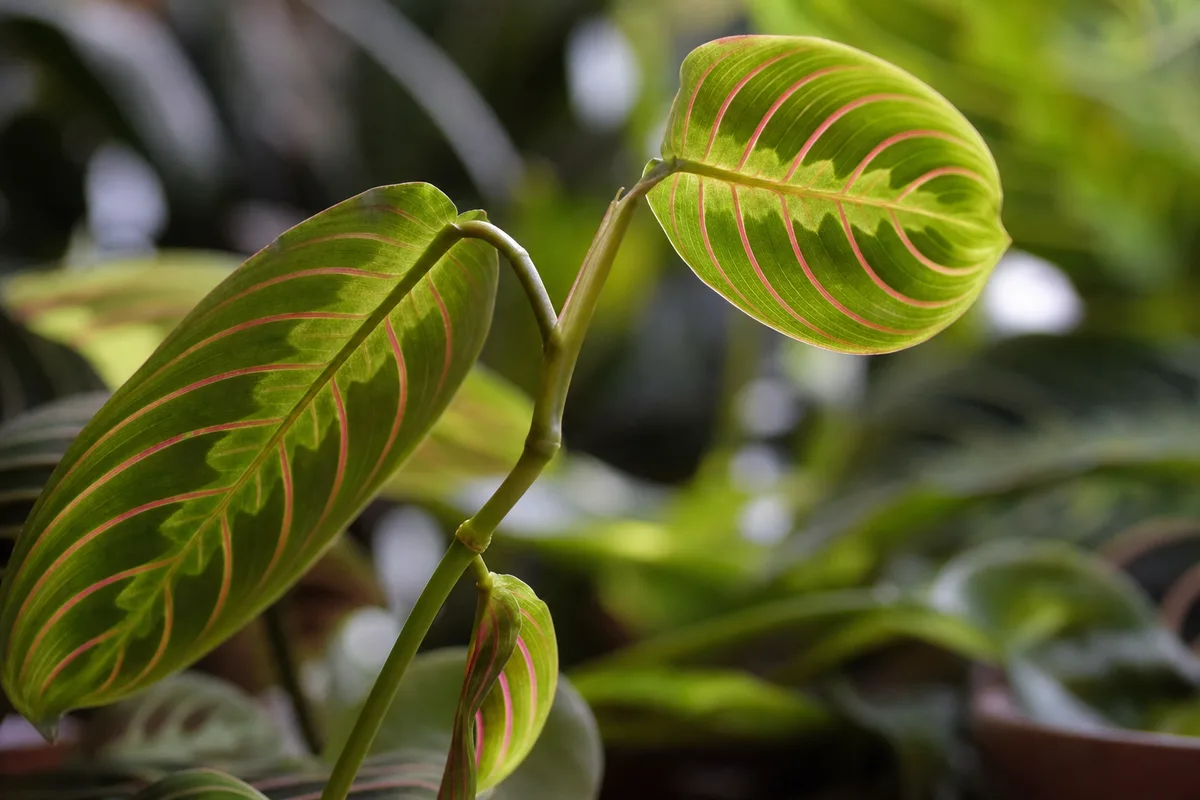
Plant Leaning symptoms on Maranta Leuconeura - compare with healthy tissue on the same plant.
Problem lean patterns include:
- All new growth concentrated on one side of the pot, with long bare stem sections on the shaded side
- The entire clump listing toward a single window while the opposite side looks sparse
- Stems stretching thin and pale before tipping past the pot rim
- Limp shoots that droop horizontally and fail to rise at night
- The pot itself rocking or tipping because growth is heavier on one side
- Sudden collapse after the mix has stayed wet for days, sometimes with yellow lower leaves
Normal vs. abnormal: Prayer plants fold leaves at night and relax them by day-that daily movement is not leaning. Outward spread along the pot surface fits the species’ clump-forming habit. Lean that worsens week after week, pairs with limp tissue, or follows sour wet soil is the kind that needs intervention.
Why Maranta Leuconeura leans
Light direction and insufficient brightness
Indoor light arrives from one window direction. Stems grow toward that source, and when light is too dim, they stretch longer between leaves trying to reach it. Plants kept far from windows or in north-facing rooms across the room often develop a persistent window-side lean with weak pale stems on the shaded side.
Prayer plants tolerate lower light than many tropicals but still need enough brightness to stay compact. In truly dark corners they survive briefly, then show sparse stretched growth that lists under its own weight.
One-sided growth without rotation
Even in adequate light, most houseplants receive sunlight from a single direction. Growth accumulates on the window-facing side until the clump becomes top-heavy on that edge-indoor plants develop a lean when light reaches them from one direction. Without occasional rotation, the pot can tip or the plant looks permanently lopsided even though care is otherwise fine.
Natural spreading habit
Maranta leuconeura is a low, clump-forming perennial-not an upright shrub. Rhizomes send up stems that grow outward along the soil. Mature clumps naturally extend past the pot lip and may rest on the table surface. This can look like “falling over” when it is actually normal architecture, especially on older specimens with long runners.
overwatering on Maranta Leuconeura and root failure
The same species needs moist but well-drained soil yet rots quickly in poorly drained mix when roots sit waterlogged. Damaged roots cannot hydrate stems, so tissue loses rigidity and the plant slumps sideways or forward even though you have been watering. Yellow lower leaves, a heavy wet pot, and sour smell from the drainage hole support this cause-not a light problem.
Underwatering and dry pockets
Prayer plants are not drought-tolerant. When the root ball dries completely-especially in warm dry winter rooms-fine roots lose uptake and stems go limp. The clump may lean or collapse toward the pot edge. Dry soil at 2 cm depth and a light pot weight fit drought stress better than phototropism.
Top-heavy stems and thin growth
Long bare stems from past low-light stretch act like levers. Large patterned leaves at the tips add weight. Without pruning or propagation after light improves, old stretched stems pull the clump off balance even once new compact growth starts at the base.
How to confirm the cause
Work through these checks in order:
- Stem firmness - Firm green stems angled one direction fit light or rotation issues. Soft, darkening stems at the crown fit rot or severe drought.
- Lean direction - Toward the brightest window supports phototropism. Random tilt after repot or a bump supports mechanical instability.
- Night leaf movement - If leaves still fold up at night but the plant lists by day only, light balance or one-sided growth is likely. Flat limp leaves day and night point to water or root problems.
- Soil moisture at 2 cm - Dusty dry supports underwatering. Cool saturated mix with a heavy pot supports overwatering.
- Pot weight and smell - Light and dry versus heavy and sour narrows the water diagnosis quickly.
- Growth pattern - Long gaps between small leaves on window-side stems mean insufficient light contributed. Even compact clumps with only a slight window tilt may need rotation alone.
- Recent changes - Maranta Leuconeura repotting guide, a move, or a heating season shift often explains new lean within two to three weeks.
First fix for Maranta Leuconeura
If stems are firm and growth points toward the brightest window, rotate the pot a quarter turn and move it to brighter filtered indirect light-an east window or a few feet from a filtered south exposure.
This addresses the most common correctable cause: one-sided phototropic growth in light that is bright enough to survive but too dim or too directional to keep the clump balanced. Hold fertilizer until new leaves emerge upright and closer together. Do not jump to direct sun-bright filtered or indirect light suits prayer plants; harsh rays bleach patterns and increase water loss.
If stems are limp rather than firm, skip rotation as the primary fix and check soil moisture at 2 cm first. Water thoroughly only when dry; stop watering and inspect roots if the mix is wet and sour.
Step-by-step recovery
After the initial light-and-rotation fix for firm-stem lean:
- Continue rotating a quarter turn weekly so new growth fills in evenly around the clump.
- Stake only if needed - Use a small bamboo stake and soft ties for heavy runners at risk of snapping; prayer plants rarely need permanent trellises.
- Prune or propagate stretched stems once several weeks of compact new growth appear. Cut above a node; rooted cuttings restore a balanced pot faster than waiting for old bare stems to branch.
- Correct underwatering if soil was dry throughout: water with room-temperature filtered or overnight tap water until a little drains, then empty the saucer.
- Dry down and inspect roots if soil stayed wet: unpot only if stems stay soft after a week of withheld water; trim mushy roots and repot into fresh airy mix.
- Raise humidity if leaf margins crisp while stems lean-dry air increases transpiration and makes limp stems worse during recovery.
- Repot in spring if roots circle the pot and the plant tips from being root-bound top-heavy-choose a container one size larger, not an oversized pot that holds stale moisture.
Do not repot on day one for a simple light lean. Do not pull limp stems upright with tight ties-that hides crown rot rather than fixing it.
Recovery timeline
Firm-stem light lean often shows straighter new growth within two to four weeks after brighter placement and regular rotation. Old angled stems keep their bend until pruned.
Limp stems from underwatering may firm within hours to a day after a thorough drink if roots are intact. Overwatering recovery takes several weeks to months depending on root damage; some crowns do not recover if tissue has turned black and mushy.
Lookalike symptoms
- Leggy growth - Long internodes and pale stretch without pot tipping; fix light before worrying about balance.
- Drooping leaves - Often normal daytime relaxation if leaves rise at night; abnormal droop stays limp 24 hours.
- Wilting - Acute limpness from drought or root failure; leaning describes posture over days, wilting hits faster.
- Normal nyctinasty - Night folding is not collapse; check posture in late morning instead.
Mistakes to avoid
- Staking limp stems without checking wet versus dry soil first
- Moving suddenly into direct sun to “fix” lean-bleaches foliage
- Repotting into a much larger pot hoping for stability-raises rot risk
- Over-fertilizing in low light to force upright growth
- Ignoring natural outward spread and treating every arch as disease
- Watering on a calendar when the real issue is one-sided light
How to prevent leaning next time
Keep prayer plants within a few feet of bright filtered windows. Rotate pots weekly. Water when the top 2 cm feels dry-not on a fixed schedule-using filtered water to protect leaf margins. Maintain humidity around 60% or higher during dry heating seasons. Prune or propagate long runners after each growing season so mass stays centered over the pot. Repot every one to two years in spring before roots circle tightly and make the clump top-heavy.
When to worry
Seek a more aggressive root inspection if stems soften at the soil line, the mix smells rotten, lower leaves yellow while the pot stays heavy, or the plant keeps collapsing after one careful correction to light and moisture. Prayer plants with blackened crown tissue rarely recover fully even with pruning.
When to use this page vs other Maranta Leuconeura guides
- Maranta Leuconeura watering guide - Use for routine moisture checks before assuming plant leaning is the main issue.
- Maranta Leuconeura problems hub - Browse all 40 common issues on this species.