Exposed Roots on Maranta Leuconeura: Causes, Checks & Fixes
Quick answer
Exposed roots on prayer plant usually mean shallow rhizomes, settled mix, or a root-bound clump-not instant rot. First, inspect whether threads are firm and pale; if healthy, refresh the top layer or repot one size up in spring instead of burying wet crowns deeper.
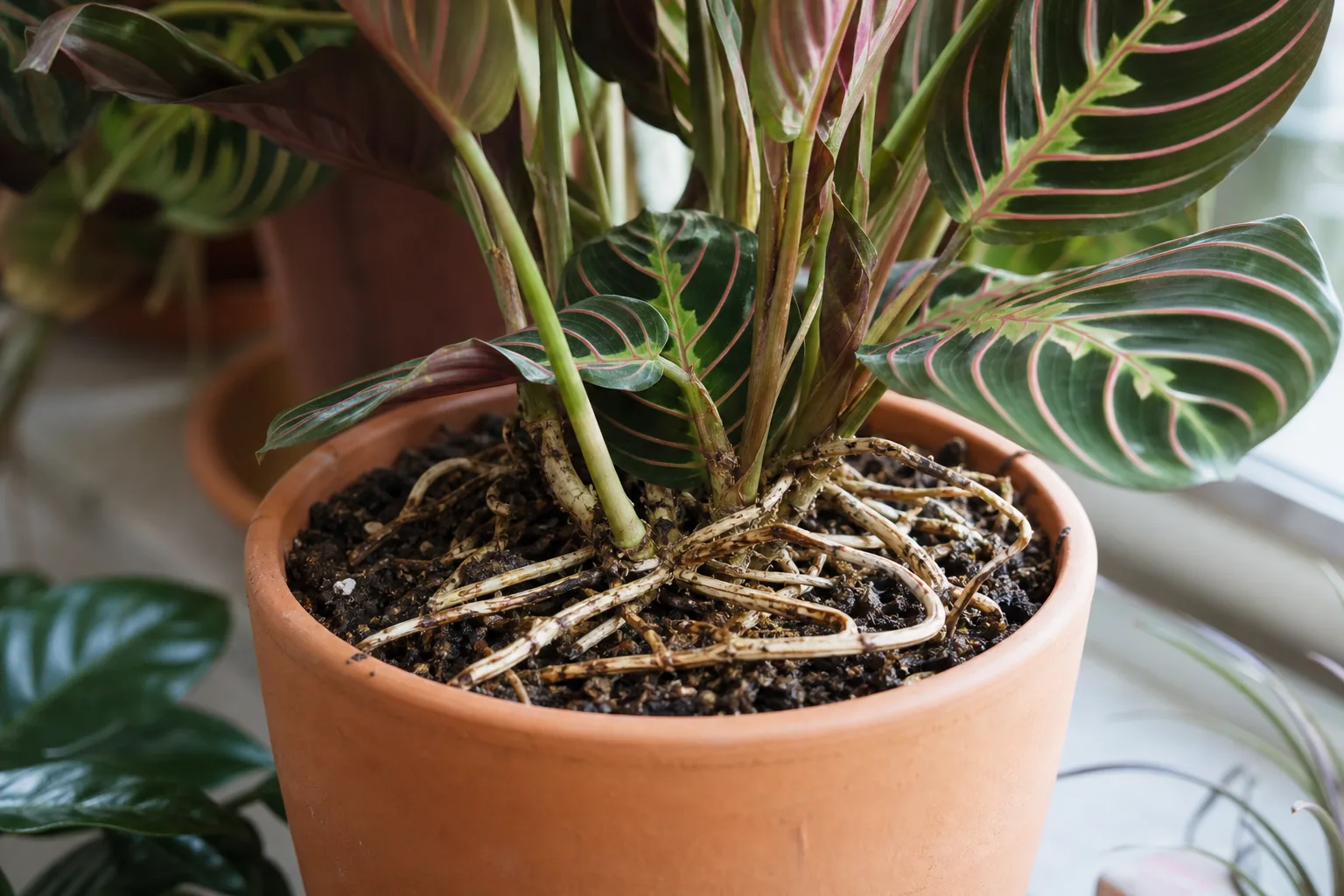
Exposed Roots on Maranta Leuconeura: Causes, Checks & Fixes
This guide covers exposed roots on Maranta Leuconeura. See also the general Exposed Roots guide, watering, and light pages for this plant.
Exposed Roots on Maranta Leuconeura: Causes, Checks & Fixes
Quick answer
Exposed roots on Maranta leuconeura are often normal shallow rhizome habit or settled potting mix, not a death sentence. Prayer plants are low-growing, rhizomatous clumpers whose feeder roots sit near the surface-so white threads at the rim can appear after the top layer compacts or erodes. Your first step is to inspect exposed tissue for firmness and smell: if roots are pale and springy with no sour odor, refresh mix or repot; if they are mushy or the crown feels soft, treat as rot instead of simply covering them.
What exposed roots look like on Maranta Leuconeura
Surface feeder roots: fine white or tan threads creeping over the mix or along the inside of the pot wall while leaves still fold upward at night. The crown stays firm and patterned foliage looks normal.
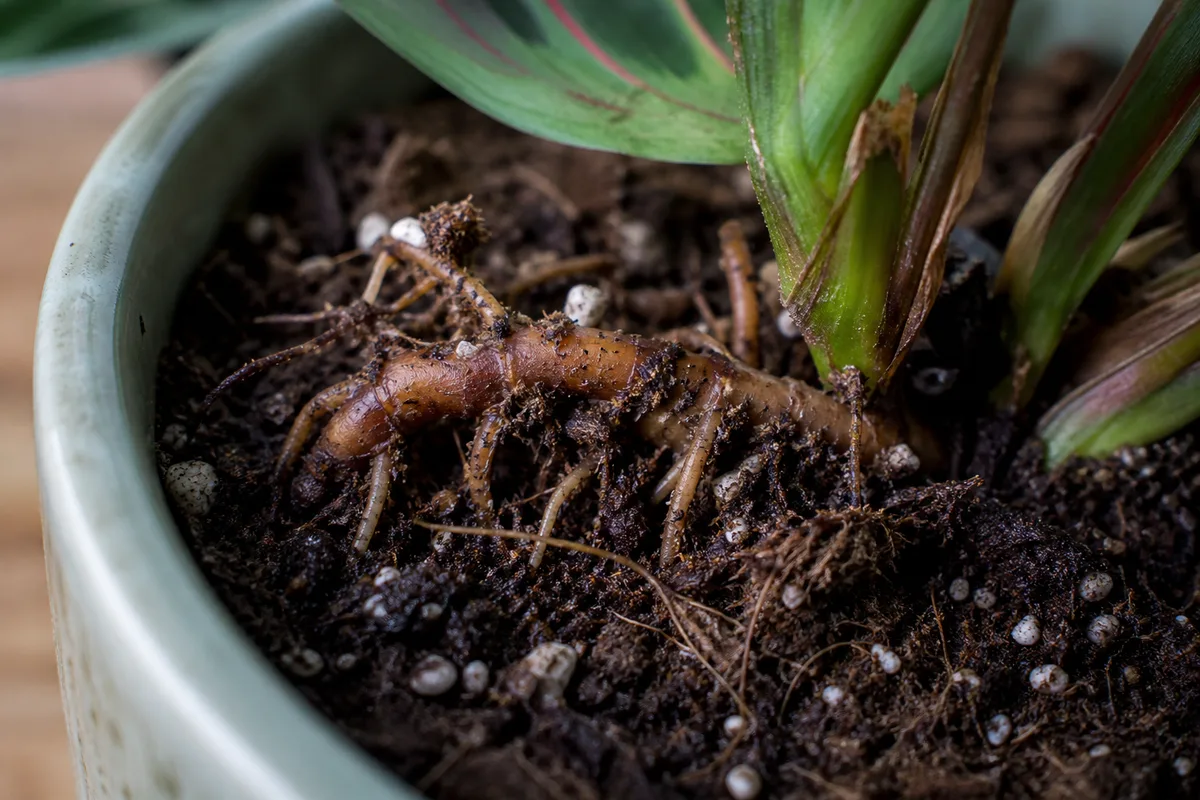
Exposed Roots symptoms on Maranta Leuconeura - compare with healthy tissue on the same plant.
Rhizome segments above soil: thick, horizontal stems with scale-like cataphylls sitting partly exposed on mature clumps. This is common on spreading prayer plants and differs from a sudden crown lift after Maranta Leuconeura repotting guide.
Root-bound exposure: dense white mat visible when you tilt the pot, roots protruding from drainage holes, or water running straight through a light pot despite your usual schedule. New leaves may be smaller and growth slows.
Shallow planting after repot: the whole root ball sits high immediately after a recent move, with bare mix below and roots drying at the rim.
Not the same as root rot on Maranta Leuconeura: rotting tissue is brown, translucent, or slimy with a swampy smell. Leaves yellow and wilt even when mix feels wet. Healthy exposed threads stay firm when pinched.
Why prayer plant gets exposed roots
Maranta leuconeura grows as a rhizomatous, low-clumping tropical perennial whose roots spread horizontally rather than deep into the pot. That architecture means feeder roots naturally concentrate in the upper few inches of mix-especially in wide, shallow containers suited to Maranta Leuconeura overview.
Several care patterns push those roots into view:
Mix settlement and erosion. Prayer plants want consistently moist soil but not saturation. Repeated top-watering or brushing debris off the surface can wash away the upper layer and reveal threads that were always there.
Mild to severe root binding. Marantas tolerate slight confinement, but a dense circling mat eventually lifts the crown and forces roots out of drain holes. Bound plants dry unevenly and stall new leaf rolls.
Wrong pot shape or depth. A tall narrow pot leaves the upper half empty while rhizomes spread at the rim. An oversized pot can also leave the plant sitting high in fresh mix after repotting.
Natural clump spread. As rhizomes creep outward each season, older sections ride above the soil line unless you refresh mix or divide the clump.
Recent repotting at the wrong depth. Planting too shallow exposes roots immediately; burying wet crowns too deep invites stem rot-a trade-off unique to this genus.
How to confirm the cause
Work through this order before adding soil or upsizing the pot:
- Pinch one exposed thread. Firm and pale suggests healthy surface roots. Mushy or hollow tissue means rot.
- Smell the drain hole. Sour or swampy odor points to anaerobic mix, not simple exposure.
- Check crown firmness. Wobble at the soil line with soft stem bases is urgent; a stable crown with dry surface threads is routine.
- Slide the plant partly out. Circling white roots with little fresh mix mean repot soon. Loose mix with scattered surface feeders may only need top-dressing.
- Review timing. Exposure that appeared overnight after repotting suggests depth error; gradual rim creep over months suggests settlement or binding.
- Compare leaf signals. Firm roots with normal nightly folding differ from yellow, limp leaves on wet mix-that pattern belongs to root dysfunction, not cosmetic exposure.
First fix for Maranta Leuconeura
Inspect exposed roots, then choose cover-or-repot based on what you find-do not automatically dump dry mix on the crown.
If threads are firm and the pot is not severely bound, top-dress with one to two centimetres of fresh mix matching your usual blend (60% potting compost, 20% perlite, 20% coco coir). Water lightly so the new layer settles, keeping leaves and stem bases above the added soil. Empty the saucer after watering.
If roots circle densely, protrude from holes, or the crown sits more than a centimetre above settled mix, schedule a repot instead of repeated top-dressing. Wait for spring if the plant is otherwise stable; handle urgent rot separately.
Step-by-step recovery
For healthy surface exposure (top-dress path):
- Remove loose debris and any completely dry, hollow root scraps.
- Add fresh airy mix around the rim, not piled against wet stem bases.
- Water until a little drains, then discard saucer water.
- Hold fertilizer for two weeks while roots settle into the new layer.
- Watch the next two new leaves-clean rolling at night confirms stability.
For root-bound clumps (repot path):
- Water lightly the day before so the root ball holds together.
- Choose a pot only 2–5 cm wider, wide and shallow rather than deep.
- Tease circling outer roots gently; trim only mushy sections with sterile scissors.
- Set the crown at the same depth as before-rhizomes may sit slightly high, but do not bury soft stem tissue.
- Fill with fresh mix, water once lightly, and keep in bright indoor light without strong direct sun while recovering.
- Divide oversized clumps at repotting if the pot is crowded; each section needs firm roots and at least one healthy shoot.
Recovery timeline
Top-dressing on a stable plant: new surface roots often anchor within one to two weeks at warm room temperatures above 18 °C. Expect one or two older leaves to look unchanged-damaged edges do not revert.
Repotting a bound clump: mild wilt or paused folding for 7–14 days is normal. New upright leaves that roll cleanly at night within three to four weeks mean roots have re-established. Severe crown softness may not recover; take stem cuttings below healthy nodes instead.
Lookalike symptoms
| What you see | Likely cause | Key difference |
|---|---|---|
| White threads at rim | Shallow roots + settled mix | Firm tissue; gradual appearance |
| Rhizome knobs above soil | Natural spread on mature clump | Crown firm; no sour smell |
| Roots from drain hole | Root bound | Dense mat inside; fast dry-through |
| Crown high after repot | Planted too shallow | Sudden change same week |
| Slimy brown threads, sour smell | Root or crown rot | Yellow leaves on wet mix |
What not to do
Do not cover mushy roots with dry mix hoping they heal. Do not repot into a much larger deep pot to hide exposure-excess wet mix around fine roots invites rot in poorly drained conditions. Do not allow water to stand on crowns when top-dressing or watering. Do not fertilize a plant still wilting after repot. Do not confuse cosmetic rim threads with an emergency and disturb a stable plant repeatedly in one month.
How to prevent exposed roots next time
Repot every one to two years in spring before active growth. Use wide, shallow pots with open drainage and refresh mix before the crown rides up on a dense mat. When watering, soak until a little drains, then empty the saucer-avoid scrubbing the surface layer away each time. Keep Maranta Leuconeura light guide and 60%+ humidity so new rhizome growth stays balanced rather than leggy and top-heavy. Divide crowded clumps during repotting so each section fits its pot without circling within a single season.
Conclusion
Exposed roots on prayer plant usually reflect shallow rhizome growth, eroded mix, or a root-bound clump-not automatic failure. Confirm root texture and crown firmness first, top-dress healthy surface feeders, and repot bound or mis-planted clumps at the correct depth. Cover firm roots; do not bury wet crowns.
When to use this page vs other Maranta Leuconeura guides
- Maranta Leuconeura watering guide - Use for routine moisture checks before assuming exposed roots is the main issue.
- Maranta Leuconeura problems hub - Browse all 40 common issues on this species.