Distorted Leaves on Maranta Leuconeura: Causes, Checks &
Quick answer
Distorted leaves on Maranta Leuconeura usually mean sap-sucking pests on new growth or cucumber mosaic virus-not normal nightly folding. First step: inspect the newest unfolding leaves and undersides with a hand lens before changing water or fertilizer.
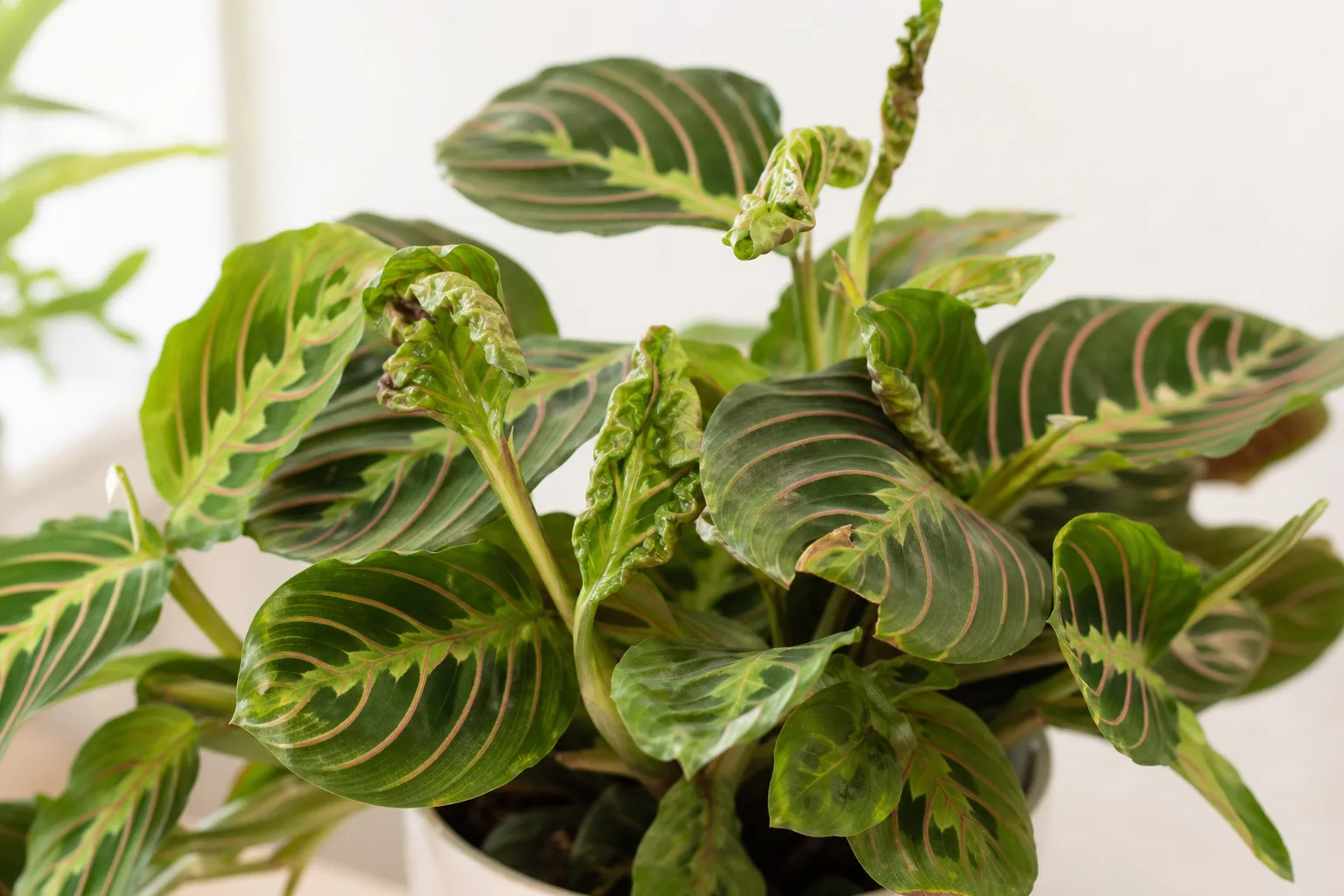
Distorted Leaves on Maranta Leuconeura: Causes, Checks & Fixes
This guide covers distorted leaves on Maranta Leuconeura. See also the general Distorted Leaves guide, watering, and light pages for this plant.
Distorted Leaves on Maranta Leuconeura: Causes, Checks & Fixes
Quick answer
Distorted leaves on Maranta leuconeura-the prayer plant-mean new foliage is opening twisted, puckered, wrinkled, or smaller than normal, not just folding upward at night. On Maranta Leuconeura overview, the pattern almost always starts on the newest shoots because sap-sucking pests and some viruses attack tissue while leaves are still soft. Environmental curl from dry air or drafts can wrinkle margins, but true distortion with silver scarring, stickiness, or mosaic yellow lines points to insects or disease.
First step: inspect the newest unfolding leaves and their undersides with a hand lens before you change watering, repot, or fertilize. If you see live insects, honeydew, silver streaks, or black thrips specks, isolate the plant immediately. Only after you confirm no pest or virus pattern should you shift humidity, light, or water rhythm.
What distorted leaves look like on Maranta Leuconeura
Prayer plants push leaves from short rhizomes near the soil. Damage on still-unfurling leaves is the hallmark of distortion-not the healthy nightly fold that makes Maranta famous.
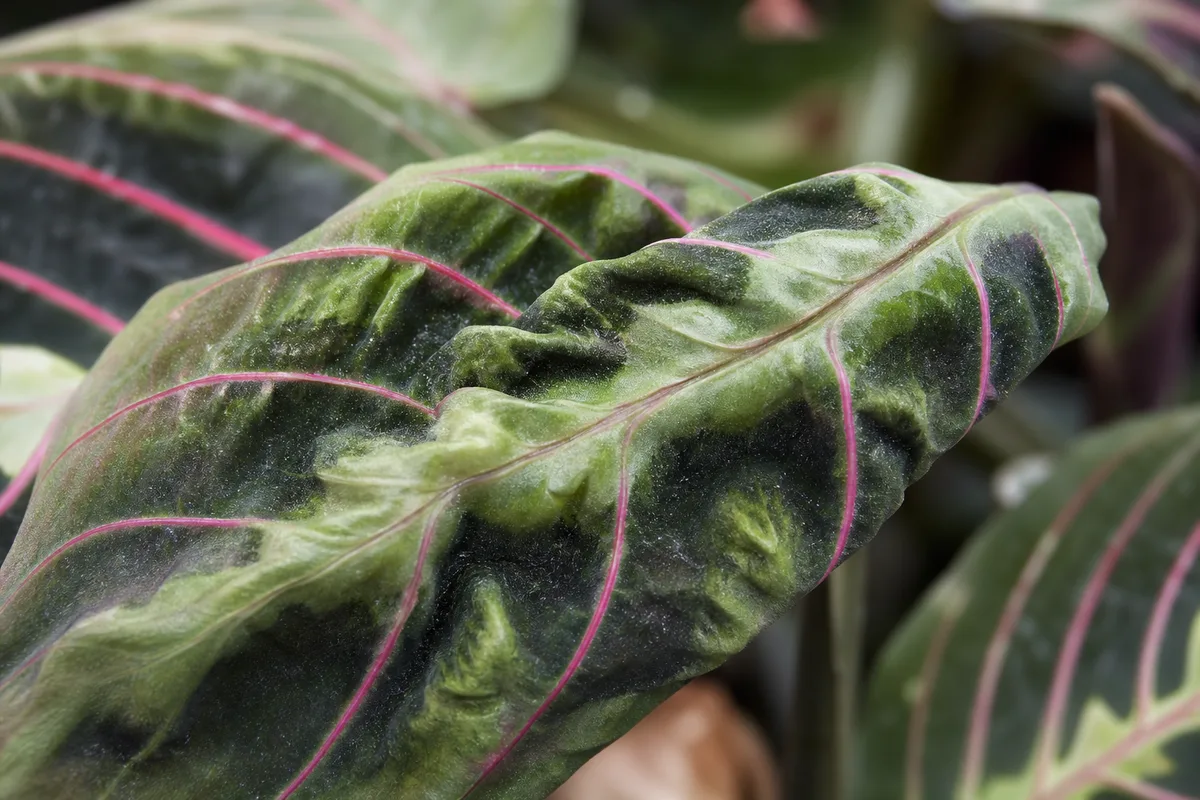
Distorted Leaves symptoms on Maranta Leuconeura - compare with healthy tissue on the same plant.
Watch for:
- Twisted or corkscrew tips on shoots that have not fully opened
- Puckered, wrinkled, or cupped blades that stay misshapen during the day
- Smaller-than-normal new leaves with uneven patterning
- Silver-gray scars or stippling where tissue was rasped, often with tiny black specks
- Sticky honeydew on upper leaf surfaces or the pot rim
- Bright yellow jagged line patterns alternating with normal green on new leaves-a virus warning sign
Healthy nyctinasty is different: clean leaves fold smoothly upward after dark and lie flat by morning without stickiness, insects, or permanent puckering. If older hardened leaves look fine but every new leaf arrives twisted, suspect pests or virus on tender growth-not your watering calendar alone.
Why Maranta Leuconeura gets distorted leaves
Prayer plants produce soft new tissue regularly when light and moisture are right. That growth habit attracts problems that show up as distortion.
Aphids on unfolding leaves. Small, soft-bodied insects pierce soft, new plant growth as leaves open, causing curl, stunting, and honeydew. They cluster on the newest shoots and undersides where rinses miss them.
Thrips rasping tender tissue. UF IFAS notes that on Maranta, thrips feeding makes leaves curled or distorted, with silver-gray scars where mouthparts scraped the surface. Thrips hide in leaf folds and reproduce quickly in warm indoor culture.
Cucumber mosaic virus (CMV). Penn State Extension lists CMV on Maranta with small distorted leaves and bright yellow line patterns. Aphids transmit the virus; infected plants cannot be cured and should be destroyed to protect the collection.
Low humidity during unfurling. Dry winter air can wrinkle margins or slow clean opening, especially near heating vents. This usually adds brown crisp edges rather than insect-like puckering, but overlapping stress makes diagnosis harder.
Draft or repot shock. Sudden cold below about 60°F or recent Maranta Leuconeura repotting guide can temporarily twist new leaves while roots re-establish. Distortion here lacks honeydew, silver scarring, or mosaic lines.
Heavy fertilizer on stressed plants. Excess nitrogen pushes soft shoots that both aphids prefer and open unevenly when roots are already struggling.
How to confirm the cause
Work through these checks in order:
- Age of affected leaves - Distortion on newest growth only strongly suggests pests or CMV. Uniform damage on old and new leaves points to environment or watering.
- Underside inspection - Use a hand lens. Aphids look pear-shaped in clusters. Thrips are slender; look for silver streaks and black fecal dots.
- Sticky test - Honeydew feels tacky and may grow sooty mold. Normal prayer plant leaves are not sticky.
- Silver scarring - Rasping damage with gray scars confirms thrips-type feeding, not simple underwatering.
- Mosaic pattern - Bright yellow jagged lines on small twisted leaves match CMV on Maranta per Penn State; isolate even if insects are gone.
- Night fold check - Clean leaves still fold at night; pest-hit new leaves stay distorted and often tacky by day.
- Neighbor scan - Inspect Calathea, Stromanthe, and other shelf mates. Pests and virus risk spread to soft growth on related plants.
- Soil and crown - Sour smell, mushy rhizomes, or water standing on the crown suggest rot overlapping distortion-not the primary cause of twisted new tips.
If you find no insects, no stickiness, no silver scars, and no mosaic lines, reassess humidity, drafts, and whether the plant was recently repotted before treating for pests.
First fix for Maranta Leuconeura
Inspect the newest leaves and undersides with a hand lens, and isolate the plant if you find aphids, thrips, honeydew, or mosaic yellow lines.
Move the Maranta away from other houseplants. In good light, flip the top two or three newest leaves and confirm whether live insects or virus patterns are present. If aphids or thrips are confirmed, rinse leaf undersides and new shoots with lukewarm water in a sink-tip the pot so water runs away from the crown, because Illinois Extension warns that water standing on prayer plant stems can trigger rot.
Do not repot, fertilize, or spray insecticide on day one if inspection shows only dry-air wrinkling without pests. Do not trim every distorted leaf before you identify the cause-you may remove the best clues on the newest tissue.
Step-by-step recovery
After the initial inspection and isolation:
- If aphids or thrips are present - Rinse undersides every two to three days until two weekly checks find no live insects. Apply insecticidal soap labeled for houseplants only if rinsing fails; coat tops and undersides and repeat weekly because contact sprays have no residual activity.
- If CMV is suspected - Keep the plant isolated. Penn State recommends destroying affected Maranta and propagating only from symptom-free stock. Do not compost virus-suspect plants near outdoor vegetables.
- If dry air caused wrinkling - Run a humidifier targeting 55–60% RH near the pot and move away from heating vents before increasing watering.
- If repot shock - Hold care steady: Maranta Leuconeura light guide, evenly moist but not soggy mix, no fertilizer for four to six weeks while new leaves test clean opening.
- Trim damaged leaves - Remove only fully collapsed or pest-harboring leaves after the cause is controlled. Partial puckering on old leaves is cosmetic once new growth is clean.
- Inspect neighbors - Quarantine shelf mates two weeks before mixing the collection again.
Because Maranta leuconeura is non-toxic to cats and dogs per ASPCA, rinsing and labeled soap treatments are practical in pet homes-still keep pets away until sprays dry.
Recovery timeline
Light pest distortion often stabilizes within one to two weeks once rinsing removes colonies and new leaves open cleanly. Soap cycles may take two to three weeks with weekly repeats to catch nymphs hidden in curled tissue.
Environmental wrinkling from dry air improves within 7–14 days after humidity rises and new leaves show smooth margins.
CMV does not recover-judge success by healthy new leaves on replacement or symptom-free divisions, not by old mosaic tissue greening up.
Worsening signs: distortion spreading to every new shoot despite rinses, mosaic lines on successive leaves, crown softening with sour soil, or stunted rhizome growth with persistent honeydew and ants.
Lookalike symptoms to rule out
Normal nightly folding - Smooth upward fold after dark without daytime puckering, stickiness, or insects.
Curling from underwatering - Inward curl with light pot weight and dry soil at 2 cm depth; leaves often feel thin, not rasped or sticky.
Low humidity crisping - Brown dry edges and papery tips without silver scars or honeydew.
Spider mites - Fine stippling and webbing in dry heated rooms; distortion is less common than uniform speckling.
overwatering on Maranta Leuconeura yellowing - Lower leaves yellow with wet soil and limp stems; new tips may curl but lack insect clusters or mosaic lines.
Mealybugs - White cottony clusters in axils; honeydew possible but woolly insects, not thrips scarring.
Mistakes to avoid
Do not increase watering because leaves look twisted-soggy rhizomes add crown rot without fixing pest distortion.
Do not fertilize a stressed or pest-hit plant hoping new leaves will “fill out” faster; soft nitrogen-rich shoots invite aphids.
Do not spray oil or soap before a hand-lens inspection-you may burn delicate patterned foliage without hitting the real cause.
Do not return an isolated plant after one clean day; hold it two weeks with weekly checks.
Do not keep a CMV-suspect Maranta in a mixed collection hoping it will outgrow mosaic patterns.
Do not drench the crown when rinsing-water standing on prayer plant stems triggers rot.
Maranta Leuconeura care cross-check
While correcting distortion, keep baseline care steady so you do not stack stressors.
- Light: Bright indirect light; too much direct sun bleaches patterned leaves and adds scorch that mimics damage.
- Water: Keep mix evenly moist at about 2 cm depth; allow slight drying in winter but avoid bone-dry pots mid-recovery.
- Humidity: Target 60% or higher for clean leaf opening; steady humidity supports recovery without the dry air that favors spider mites.
- Temperature: Keep above 60°F; cold drafts twist new growth and slow healing.
- Crowns: When rinsing, tip the pot so water drains away from the stem base.
Fix the distortion cause first-pests, virus, or environment-before tweaking every care variable at once.
How to prevent distorted leaves next time
Scout newest leaf undersides weekly, especially when spring growth accelerates. Quarantine new Marantas and cuttings two weeks before placing them near other tropicals.
After summer outdoors, rinse and inspect before the plant re-enters your home.
Use balanced fertilizer at half strength monthly in active growth-not heavy nitrogen that pushes soft aphid-friendly shoots.
Maintain aphid control on prayer plants to reduce CMV spread; Penn State links maintain good aphid control to preventing mosaic on Maranta.
Preserve beneficial insects by avoiding broad-spectrum sprays unless necessary, and manage ants that protect honeydew producers.
Wash hands and tools after handling infested plants to avoid carrying aphids to clean shelves.
When to worry
Escalate when bright yellow mosaic lines appear on successive new leaves, when thrips or aphids cover every unfurling shoot despite a week of rinsing, or when the crown softens while soil smells sour.
CMV-suspect plants should stay isolated and usually be discarded rather than propagated. A few aphids on one new leaf is manageable with isolation and rinsing; virus patterns on multiple new leaves are not.
Conclusion
Distorted leaves on Maranta leuconeura signal that something interfered while new foliage was still soft-most often aphids, thrips, or cucumber mosaic virus, not the plant’s normal nightly fold. Inspect the newest leaves first, isolate when insects or mosaic lines appear, rinse before you spray, and judge recovery by clean new growth rolling normally at night. Steady humidity, crown-dry rinsing, and weekly scouting keep small colonies from twisting every new prayer plant leaf on your shelf.
When to use this page vs other Maranta Leuconeura guides
- Maranta Leuconeura watering guide - Use for routine moisture checks before assuming distorted leaves is the main issue.
- Maranta Leuconeura problems hub - Browse all 40 common issues on this species.