Transparent Leaves on Manjula Pothos: Causes, Checks & Fixes
Quick answer
Transparent, water-soaked patches on Manjula Pothos leaves usually mean edema from overwatering in dim light-not normal white variegation. First step: probe soil moisture at 4-5 cm depth and move the plant to brighter indirect light before watering again.
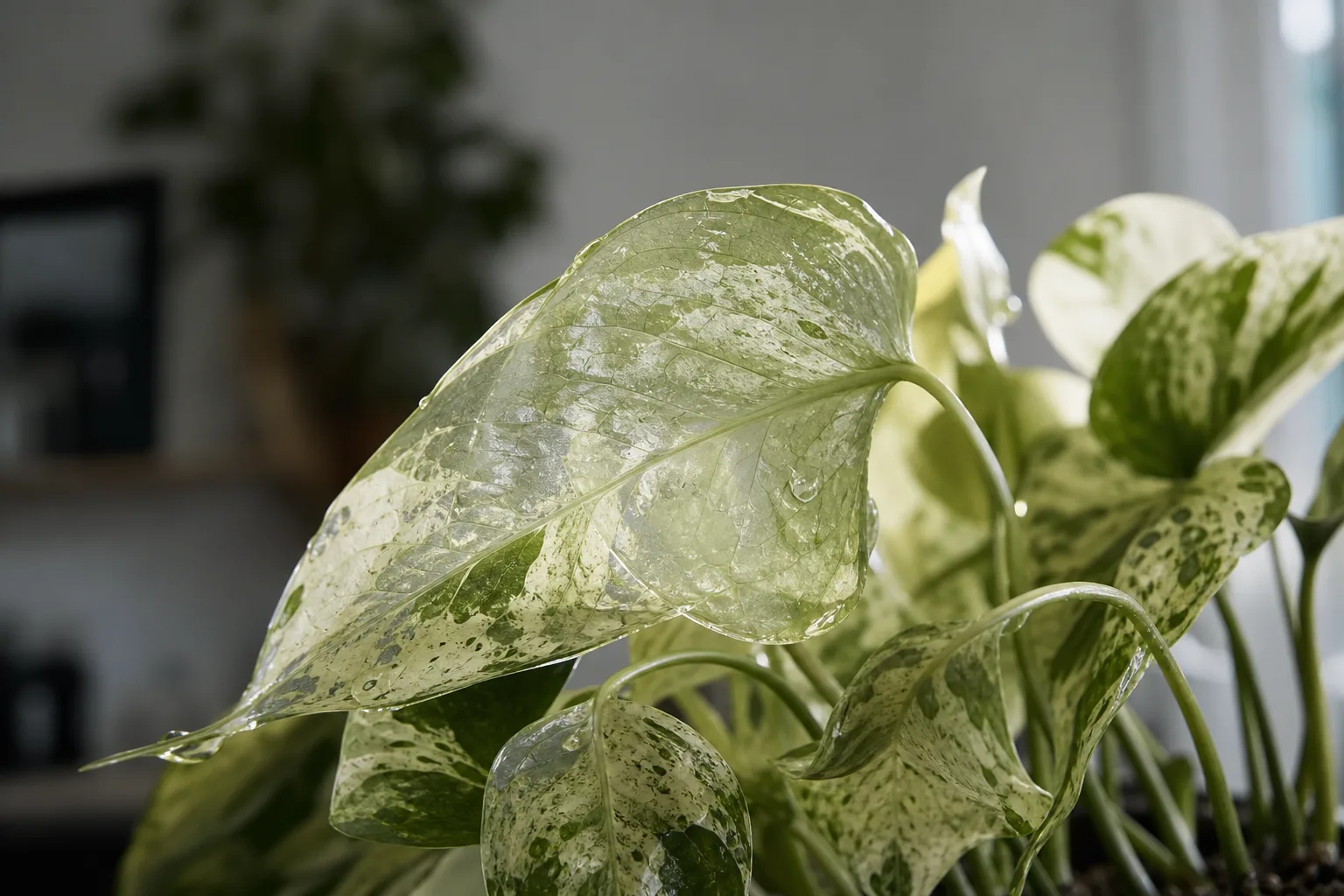
Transparent Leaves on Manjula Pothos: Causes, Checks & Fixes
This guide covers transparent leaves on Manjula Pothos. See also the general Transparent Leaves guide, watering, and light pages for this plant.
Transparent Leaves on Manjula Pothos: Causes, Checks & Fixes
Quick answer
Use this page when Manjula leaves show water-soaked, glassy patches-not normal opaque cream variegation. For broad yellowing on wet soil, see overwatering. For full vine collapse with soft stems, see root rot.
Transparent, water-soaked patches on Manjula Pothos leaves usually point to edema-a physiological stress response when roots take up water faster than leaves can release it through transpiration. On this heavily variegated cultivar, the problem shows up most often when soil stays wet in low light, because white and cream tissue transpires less efficiently than green tissue.
First step: probe moisture at 4-5 cm depth per watering guide. If the mix is damp, stop watering, move the plant to brighter indirect light, and empty any saucer water before you change anything else.
What transparent leaves look like on Manjula Pothos
Manjula Pothos (Epipremnum aureum ‘Manjula’) has heart-shaped leaves with painterly swirls of green, silver-green, cream, and white. Normal variegation looks opaque and slightly waxy. Edema looks different: thin, glassy, or water-soaked patches that may start on leaf undersides, along margins, or between variegated zones.
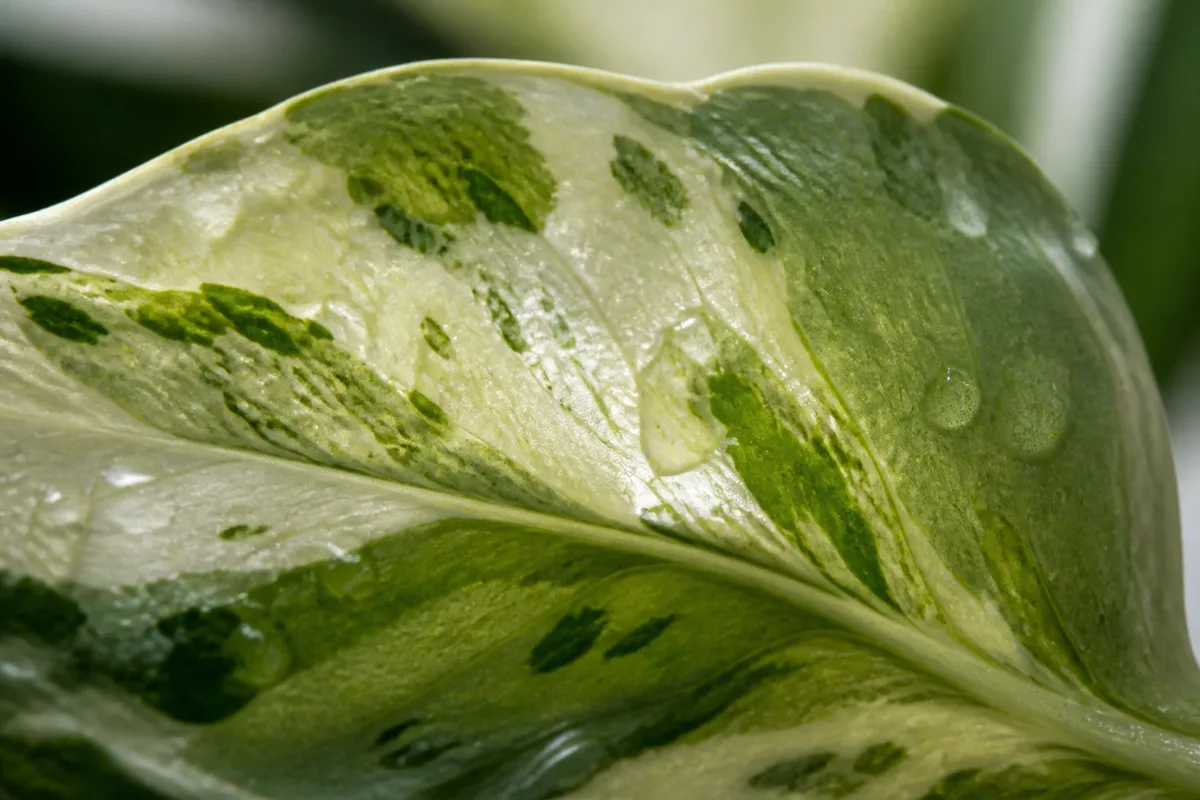
Transparent Leaves symptoms on Manjula Pothos - compare with healthy tissue on the same plant.
Early edema can appear as:
- Small translucent blisters or raised bumps, especially under leaves
- Patchy areas that look wet even when the leaf surface is dry to the touch
- Corky, tan, or brown spots where ruptured cells have scarred over
The symptom often clusters on newer leaves or on the palest sections of a leaf, because those cells have less chlorophyll and less transpiration pull. Older lower leaves may show corky bumps while upper growth still looks glassy if watering has not been corrected.
Do not confuse this with healthy backlighting. When you hold a Manjula leaf toward a window, white zones naturally glow. Edema patches look locally soaked, sometimes blistered, and they do not match the plant’s usual swirl pattern. See faded leaves when variegation washes out without glassy blisters.
Why Manjula Pothos gets transparent leaves
The most common trigger is overwatering combined with insufficient light. Pothos prefer soil that dries between waterings and bright, indirect light. When mix stays saturated while the plant sits in a dim corner, roots keep absorbing water but stomata open less, so pressure builds inside leaf cells until they rupture-producing the translucent patches edema is known for.
Manjula is more vulnerable than all-green golden pothos for two reasons tied to this cultivar:
- Heavy variegation - Large cream and white areas carry less chlorophyll, which reduces the plant’s ability to move water out through leaves.
- Slower water use in low light - Variegated pothos need brighter light than all-green forms to maintain variegation; in weak light the pot dries slowly while growers keep to a calendar schedule. See not enough light when new leaves go all-green without glassy patches.
Other contributors include:
- High humidity with poor airflow - Reduces transpiration when soil is already wet; see low humidity for dry-air issues, not edema.
- Cool temperatures or cold drafts - Epipremnum prefers warm room temperatures; cold slows metabolism and can worsen cell rupture after a wet period. See cold damage when transparency follows a chill event.
- Boom–bust watering - A deep soak after long drought can flood roots before leaves catch up, triggering edema on the next flush of growth.
- Dense, slow-draining mix - Peat-heavy soil in an oversized pot stays wet longer than Manjula roots can tolerate. See compacted soil when mix never dries despite corrected watering.
Pests are a less common but real look-alike. Thrips or mechanical damage can leave silvery or translucent streaks; confirm by inspecting leaf undersides and new unfurling leaves before assuming edema alone.
Lookalike comparison table
| What you see | Likely cause | Soil / light cue | First action | Guide |
|---|---|---|---|---|
| Glassy blisters on pale sections | Edema | Wet mix; dim shelf | Stop water; brighter light | This page |
| Even white glow when backlit | Normal variegation | Normal moisture | None needed | - |
| Brown crispy patches on white zones | Sun scorch | Dry soil; direct sun | Move out of direct sun | Light |
| Silvery streaks + distorted new leaves | Thrips | Varies | Inspect undersides | Thrips |
| Yellow lower leaves, wet mix | Overwatering / root issue | Sour smell; soft stems | Dry-down; inspect roots | Overwatering |
| Corky bumps after one heavy drink | Mild edema | Recently soaked | Dry 4-5 cm; improve airflow | This page |
How to confirm the cause
Work through these checks in order:
- Soil moisture at 4-5 cm - Wet or cool, clumping mix with glassy new leaves strongly suggests edema. Bone-dry mix with limp vines points toward underwatering first; transparency after the next heavy watering still fits edema.
- Light level - Long bare stems, small new leaves, or fading variegation mean the plant is not getting enough light to use water efficiently.
- Pattern on the leaf - Random water-soaked blisters = edema. Uniform pale zones across the whole leaf in good light may be normal variegation or light stress, not edema.
- Temperature - Leaves near AC vents, winter window sills, or below about 10°C (50°F) may show transparency from cold compounding wet roots.
- Pest scan - Look for thrips, spider mites, or stippling on undersides. No insects and wet soil in dim light keeps edema as the leading diagnosis.
If several vines develop transparency within days while soil smells sour or stems soften, unpot and inspect roots for rot caused by overwatering before treating only as edema.
First fix for Manjula Pothos
Make one correction first:
If soil is wet or soggy: Stop watering until the top 4-5 cm is dry. Move the plant to brighter indirect light per light guide-enough that variegation stays crisp on new leaves. Improve airflow around trailing vines with a small fan or by spacing pots away from walls. Empty saucers after every watering.
Do not mist heavily, do not fertilize, and do not repot on day one unless roots are clearly rotting. Edema is corrected by balancing water uptake and loss, not by adding nutrients.
If soil is dry and vines are limp: Water thoroughly once, drain fully, then resume checking dryness at 4-5 cm-not a fixed calendar. Watch the next one or two new leaves; if they unfurl with glassy patches, the prior drought-to-flood cycle likely triggered edema, and you should lengthen the dry window before the next soak.
Step-by-step recovery
After the first fix:
- Wait for dry-down - Let the top 4-5 cm dry every cycle. Manjula typically needs water every 7-10 days in summer and 10-14 days in winter in bright light; dim rooms take longer.
- Judge new growth - The next two or three leaves are your scorecard. Clean unfurling with stable variegation means the balance is improving.
- Trim only if needed - Leaves that are mostly corky, collapsed, or more than half transparent can be removed once the plant is stable. Partial scarring on older leaves can stay; it will not spread if conditions are fixed.
- Repot only when drainage is the problem - If mix stays wet for two weeks despite corrected watering and light, repot into airy potting mix with 20-30% perlite per soil guide and a pot only slightly larger than the root ball.
Recovery timeline
Minor edema from one overwatering often stops appearing on new leaves within two to four weeks once soil dries properly and light improves. Leaves showing symptoms of oedema will not recover, but corky scars on affected leaves remain permanent. Severe cases tied to chronic wet feet or root damage may need a full growing season before vines look full again.
Signs you are winning: new Manjula leaves unfurl without blisters, variegation returns on tips, and soil dries predictably between waterings.
Signs the problem is worsening: transparency spreads to every new leaf, stems soften at nodes, lower leaves yellow while soil stays wet, or pests appear on multiple vines.
Mistakes to avoid
Do not water on schedule while soil is still damp-that keeps edema cycling on variegated leaves. Do not move Manjula into direct afternoon sun to “dry it out”; scorch on white tissue is harder to recover from than edema. Do not remove every affected leaf the same day you fix watering; wait until new growth looks clean. Do not assume transparency means the plant needs more water when the pot is already heavy.
Manjula Pothos care cross-check
Transparent leaves often mean your baseline care is slightly off for a variegated pothos:
- Light: Bright indirect-close enough that new leaves keep cream and white swirls without stretching.
- Water: Top 4-5 cm dry before each soak; never let the pot sit in drainage water.
- Mix: Well-draining with perlite; avoid oversized pots that hold moisture Manjula cannot use.
- Humidity: 40-60% is fine; high humidity without airflow plus wet soil invites edema.
How to prevent transparent leaves next time
Water based on soil dryness and pot weight, not leaf appearance alone. Keep Manjula where it gets enough light to dry the mix within about a week in summer. After travel or neglect, reintroduce water gradually rather than flooding a dry root ball. During winter, reduce frequency and keep plants away from cold glass and heating vents that create uneven temperature swings.
When to worry
Escalate if transparency hits most new growth within a week, stems collapse, or soil smells sour despite dry surface crust-inspect roots for root rot. A few corky bumps on one or two leaves after a single overwatering is common and usually reversible through better light and watering discipline.
Related Manjula Pothos guides
- Manjula Pothos overview - cultivar context and full care map
- Watering guide - dry-check rhythm at 4-5 cm
- Light guide - placement for variegated transpiration
- Overwatering - wet-soil lookalike before rot
- Root rot - sour smell and soft stems escalation
- Not enough light - all-green reversion without glassy patches
- Faded leaves - variegation washout vs. edema blisters
- Underwatering - drought before flood cycle
- Cold damage - chill after wet roots
- Thrips - silvery streak lookalike
- Soil guide - perlite mix when drainage fails
- Compacted soil - mix that never dries
Related tool
Use the Plant Problem Diagnosis Tool to narrow causes for transparent leaves on this plant before changing multiple variables at once.