Compacted Soil on Manjula Pothos: Causes, Checks & Fixes
Quick answer
Compacted soil on Manjula Pothos chokes roots and traps moisture. First step: slide the plant out and confirm dense, depleted mix-then repot one size up in fresh perlite-rich airy soil during spring growth, not on the same day you change light or fertilizer.
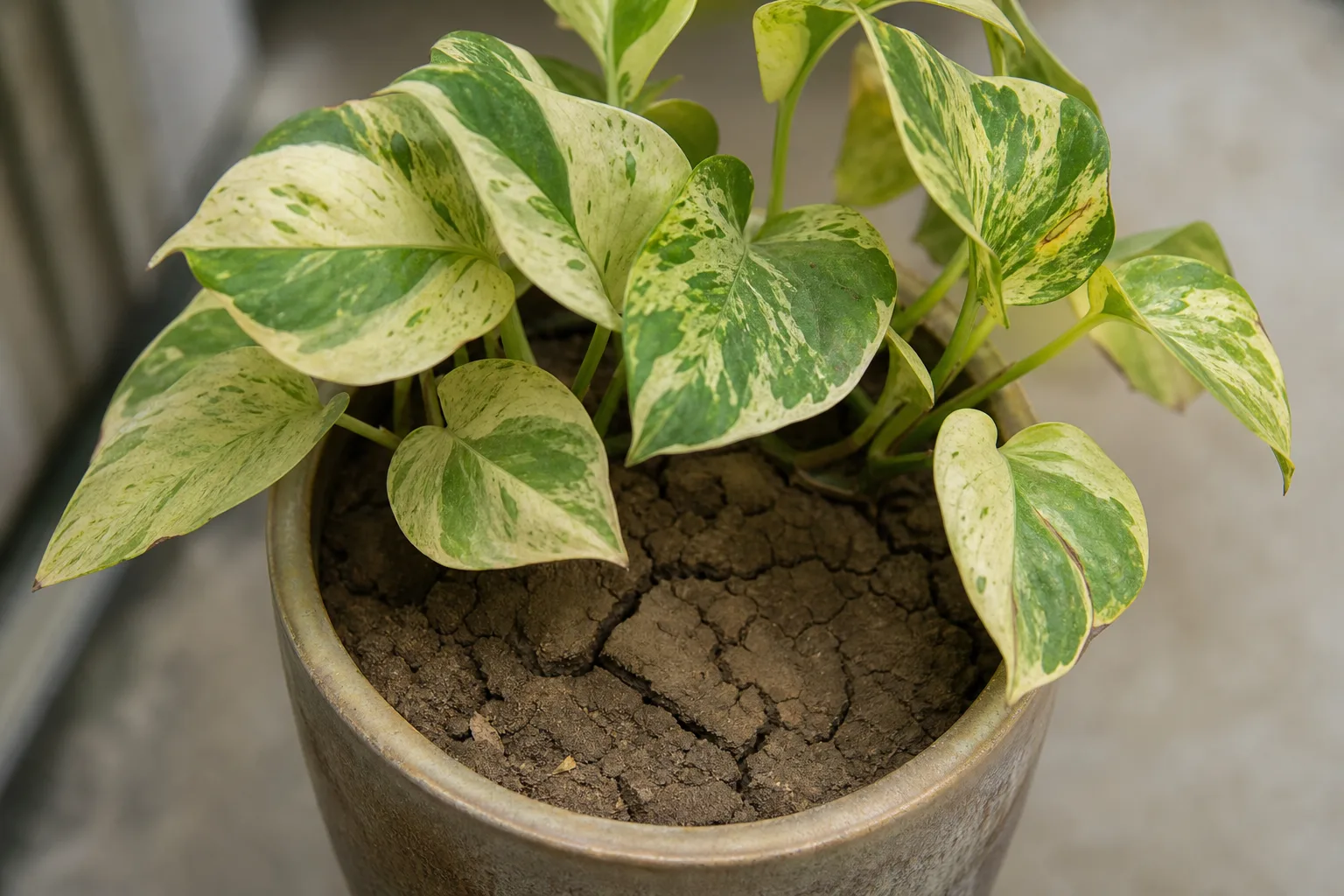
Compacted Soil on Manjula Pothos: Causes, Checks & Fixes
This guide covers compacted soil on Manjula Pothos. See also the general Compacted Soil guide, watering, and light pages for this plant.
Compacted Soil on Manjula Pothos: Causes, Checks & Fixes
Quick answer
Compacted soil on Manjula Pothos (Epipremnum aureum ‘Manjula’) means the potting mix has lost the air pockets roots need-often after years without repotting, heavy peat breakdown, or salt buildup from tap water and fertilizer. Because Manjula is a slower-growing pothos cultivar than golden or neon types, a collapsed root zone can hide for months while vines still look merely “quiet” at the tips.
First step: gently unpot and press the root ball between your fingers. If the mix is dense, wet, and crumbles into clumps rather than loose particles, compaction is confirmed. Repot one size up in fresh perlite-rich airy mix during active spring growth-not on the same day you also change light, fertilizer, and pruning. Avoid winter repotting unless rot or a broken pot forces your hand; slow growth and wet cold mix raise failure risk on this moderate grower.
What compacted soil looks like on Manjula Pothos
Above the rim, compaction rarely announces itself as a soil problem. Owners often see wilting, yellow lower leaves, or stalled vines and blame watering or light first. On Manjula, the pattern is subtle because heavy cream-and-white variegation already grows more slowly than all-green pothos-so root-zone failure can lag behind what you see on golden pothos in the same room.
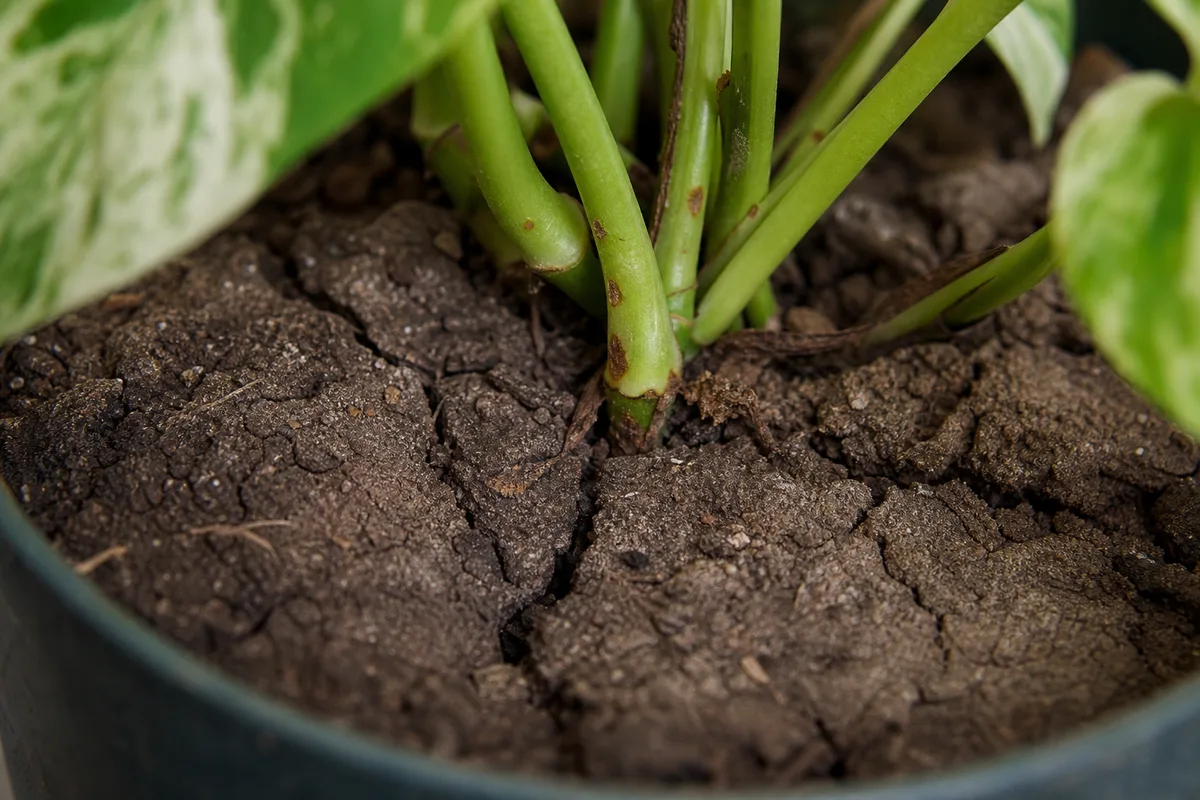
Compacted Soil symptoms on Manjula Pothos - compare with healthy tissue on the same plant.
Common above-soil signs include:
- Water behavior - liquid pools on the surface, or pours through the drain hole in seconds without the mix absorbing it (hydrophobic crust or root-mat channeling)
- Slow dry-down - the pot stays heavy and wet for a week or more after one watering, even in bright indirect light
- Stalled variegation - new leaves unfurl smaller, with weaker cream-and-white marbling, because roots cannot access oxygen or nutrients reliably; white sectors often show stress before solid-green tissue on the same leaf
- Yellowing pattern - lower leaves yellow while the mix feels oddly soggy throughout, not just at the bottom
- Surface crust - white or tan mineral film on soil or pot rim from repeated fertilizer and hard water
- Musty smell - sour odor when you probe the top few centimeters, especially after watering
Manjula’s wavy, heavily variegated leaves need steady resources from an open root zone. When the mix collapses, the plant cannot hold moisture evenly-so you get alternating wilt and sogginess that mimics overwatering even when your calendar looks conservative.
Why Manjula Pothos gets compacted soil
Like other Epipremnum aureum cultivars, Manjula is an aroid that depends on airy, well-draining mix-not dense garden soil. Pothos benefits from periodic repotting in spring into slightly larger containers with quality soilless mix. Manjula’s moderate growth means owners often skip that schedule, letting peat-heavy nursery mix break down until structure fails.
Typical causes on this plant:
- Aging peat mix - organic components decompose over one to two years, collapsing air spaces roots need for respiration
- Never repotting the nursery container - decorative cache pots hide the same depleted mix for multiple seasons; lift the inner pot annually and check the root ball, not just trailing vines
- Salt and mineral buildup - tap water and fertilizer leave crust that binds soil particles and burns fine roots
- Wrong mix from the start - all-peat blends without perlite, or garden soil added “for nutrients,” compacts and drains poorly indoors
- Over-packing at repot - pressing mix firmly around roots reduces porosity and traps water, robbing roots of oxygen
- Oversized pots with excess soil - extra mix holds moisture the root ball cannot use, accelerating breakdown in the unused zone
Compound stress on a slow variegated cultivar
Compaction rarely acts alone on Manjula. Dim-corner placement, a collapsed peat plug, and a watering rhythm written for faster golden pothos stack into the same stalled marbled leaves. White-sector variegation needs more light and steady root oxygen than all-green tissue; when mix compacts, those pale sections often stall first while older green patches still look acceptable-delaying diagnosis until several vines stop unfurling. Cross-check light placement and dry-down before assuming fresh mix alone will restart growth.
Manjula tolerates a slightly snug pot when mix is fresh, but compaction is different from healthy binding: the entire root zone becomes a dense plug with little usable soil. See root-bound when circling roots-not collapsed peat-are the main issue.
How to confirm the cause
Do not repot on leaf symptoms alone. Confirm in this order:
- Water test - Slowly pour a small amount onto dry soil. If it beads and rolls off, the surface is hydrophobic. If it runs straight out the drain hole in seconds, the root mat may have replaced most mix.
- Moisture probe - Stick a finger or skewer 5–8 cm (about 2–3 inches) deep. Compacted mix often feels uniformly wet and dense, not the normal dry-top / slightly moist-below pattern Manjula prefers.
- Pot weight - A mature plant in a small pot that stays heavy for many days after watering suggests poor drainage and collapsed structure, not healthy moisture retention.
- Unpot inspection - Water lightly the day before, then slide the plant out. Healthy mix crumbles loosely around white roots. Compacted mix forms a solid brick; you may see little perlite and a dense root mat.
- Smell and root texture - Musty sour odor or brown mushy roots point to root rot from oxygen-deprived wet mix-compaction plus overwatering-not compaction alone.
- Light cross-check - Leggy, mostly green new growth in a dim corner mimics stall, but the root ball may still be loose with visible perlite. Fix light first if placement was clearly inadequate.
Underwatering in an oversized pot shows the opposite: a heavy pot with dry pockets only at the edges and firm white roots surrounded by empty, non-compacted mix.
Compaction vs. sibling problems
| Pattern | Water behavior | Root ball / mix | Dry-down speed | First move |
|---|---|---|---|---|
| Compaction | Beads on surface or channels through; center stays wet | Brick-like dense plug; little perlite visible | Slow-pot heavy many days | Repot with fresh airy mix |
| Root bound | Runs through in seconds | Dense white root mat; mix still crumbles when teased | Fast-1–2 days | Repot one size up; tease circling roots |
| Root rot | Constantly wet; sour smell | Brown mushy roots | Slow with wilt | Trim rot, fresh mix, fix watering-see root rot |
| Overwatering on fresh mix | Soggy throughout | Loose airy soil; firm roots turning soft | Slow | Pause watering; check drainage-not compaction |
| Low light stall | Normal for your rhythm | Loose root ball; perlite visible | Normal | Brighten indirect light first |
First fix for Manjula Pothos
Unpot to confirm dense depleted mix, then repot one size up in fresh perlite-enhanced soil during spring or early summer.
Water the day before so the root ball holds together. Tilt the pot and support the base; tap plastic sides or run a knife around terra-cotta edges. Once out, gently break up the outer compacted layer with your fingers-do not bare-root the entire ball unless rot requires it.
Choose a clean pot only 2–5 cm (1–2 inches) wider than the current one with open drainage. Clemson HGIC recommends airy, well-draining mix for pothos; for Manjula follow our soil guide chunky aroid blend rather than repeating ratios here. Firm the mix gently-it should not be so compacted that water and air cannot move through the pot.
If white salt crust covers only the surface and roots below are firm, you may scrape the top 2–3 cm and bottom-water once before committing to full repot. When the center is a hard wet plug, surface fixes fail-replace mix entirely per our repotting guide.
Set the plant at the same depth, backfill lightly, and water until a small amount drains. Empty saucers completely. Keep bright indirect light-not direct sun-and hold fertilizer for at least a month while roots settle into open mix.
Step-by-step recovery by severity
Mild - surface crust only
- Scrape the top 2–3 cm of crusted mix; do not pack replacement soil down.
- Bottom-water 20–30 minutes so moisture wicks into the core without flooding the crown.
- Reassess in two weeks: if dry-down normalizes and new marbled leaves appear, defer full repot until next spring.
- If water still beads or the probe hits a hard plug, escalate to moderate treatment.
Moderate - brick-like outer root zone
- Water lightly the day before repotting.
- Unpot and confirm depleted structure; trim only dead or mushy roots with sterilized scissors.
- Loosen the outer compacted crust; leave the center intact if roots are healthy.
- Repot one size up with fresh perlite-enhanced mix per soil guide; do not pack soil down hard.
- Water once lightly, then wait until the top 3–5 cm (1–2 inches) dries before the next drink.
- Skip fertilizer until new leaves unfurl cleanly-Manjula leaves typically open over one to two weeks.
Severe - sour smell or rot throughout
- Unpot immediately; rinse away mushy tissue and cut back to firm white roots only.
- Repot into fresh mix in a clean pot only one size larger-or the same size if rot was extensive.
- Hold fertilizer six weeks; keep temperatures above 18°C (65°F) and bright indirect light.
- Propagate backup stem cuttings with nodes if the root mass is mostly gone.
- Follow root rot recovery if wilting persists beyond three weeks.
Trim yellow lower leaves after two weeks if the root zone stays stable and dry-down normalizes.
Recovery timeline
Mild compaction corrected in spring often shows the first new marbled leaf within three to five weeks-roughly one to two weeks slower than faster golden pothos cultivars in the same conditions. Temporary wilt or a brief pause in unfurling for one to two weeks after repot is normal transplant stress-not compaction returning.
Judge recovery by new growth, not old leaves. Yellow or small existing foliage will not revert; fresh leaves should regain wavy shape and stronger variegation if light is adequate. Full root re-establishment in refreshed mix typically takes four to six weeks in warm bright conditions.
If wilting persists beyond three weeks with sour soil smell, unpot again and inspect for rot from overwatering in the new mix.
Lookalike symptoms
- Root bound - Water runs through fast, pot dries in one to two days, dense white root mat with little soil but mix still crumbly when teased apart
- Root rot - Mushy brown roots, sour smell, wilting with constantly wet mix regardless of structure
- Overwatering on fresh mix - Soggy pot with loose airy soil and firm roots turning soft at tips
- Low light stall - Leggy vines, faded variegation, but loose root ball with perlite still visible
- Underwatering - Light pot, crispy leaf edges, dry mix throughout with firm white roots
Causes to rule out
Before blaming compaction, rule out a watering calendar that no longer matches how the pot dries, a container without drainage holes, or recent dim placement. Manjula’s white variegation needs bright indirect light to fuel new tissue; a light-limited plant in fresh mix will still stall.
Chronic overwatering can compact mix indirectly by breaking down structure and killing fine roots-fix the watering rhythm after repotting, not just the soil recipe.
Mistakes to avoid
Do not respond to surface dryness by pouring water daily when the core of the pot stays wet-that worsens oxygen loss. Do not jump two pot sizes “so you never repot again.” Do not add garden soil or heavy top-dressing to “refresh” the surface. Do not fertilize immediately after repotting to “boost” a stressed plant. Do not pack mix firmly with your palms-roots need air channels. Wear gloves when handling cut tissue-Manjula Pothos is toxic to cats and dogs via insoluble calcium oxalates. If a pet may have ingested leaves or stems, contact your veterinarian or the ASPCA Animal Poison Control Center promptly rather than waiting for symptoms.
How to prevent compacted soil next time
Schedule a spring soil check annually even if vines look long and healthy. Refresh mix or repot when water behavior changes, crust builds up, or the root ball feels dense when you lift the plant out. Use the chunky aroid blend from our soil guide and pots with drainage. Flush the pot occasionally by watering deeply until excess runs from holes if you use tap water and fertilizer regularly. Avoid keeping the same nursery mix for multiple growing seasons just because trailing vines mask slow root-zone decline.
Pair prevention with realistic repot timing: Manjula often needs the longer end of a 12–24 month refresh cycle, but do not wait for widespread yellowing if water already beads on a crusted surface.
When to worry - rot escalation
Escalate if soil smells sour, roots are mostly brown and mushy, several vines collapse daily despite corrected repotting, or repotting reveals rot throughout the root ball. Early compaction with firm white roots is a routine spring refresh. Take stem cuttings before repotting if the root mass is mostly gone or stems soften at nodes-then follow root rot escalation steps.
Related Manjula guides
For overlapping root-zone symptoms, use these pages together:
- Manjula Pothos overview - full care map and cultivar context
- Soil guide - mix recipes, pH targets, and refresh triggers; this page owns compaction diagnosis
- Repotting guide - timing, pot sizing, and transplant shock on slow variegated cultivars
- Root-bound - circling roots and fast dry-down when mix still crumbles
- Root rot - mushy roots and sour mix after compaction plus overwatering
- Not enough light - leggy stall with loose root ball
- Overwatering - soggy rhythm on otherwise airy mix
Related tool
Use the Plant Problem Diagnosis Tool to narrow causes for compacted soil on this plant before changing multiple variables at once.