Thrips on Manjula Pothos: Causes, Checks & Fixes
Quick answer
Thrips on Manjula Pothos leave silvery streaks and black specks on wavy variegated leaves, often distorting slow-unfurling new growth at vine tips. First step: isolate the plant and rinse every leaf surface thoroughly before applying insecticidal soap on repeat intervals.
Thrips on Manjula Pothos: Causes, Checks & Fixes
This guide covers thrips on Manjula Pothos. See also the general Thrips guide, watering, and light pages for this plant.
Thrips on Manjula Pothos: Causes, Checks & Fixes
Quick answer
Thrips on Manjula Pothos leave silvery streaks and black specks on wavy variegated leaves, often distorting slow-unfurling new growth at vine tips. First step: isolate the plant and rinse every leaf surface thoroughly before applying insecticidal soap on repeat intervals.
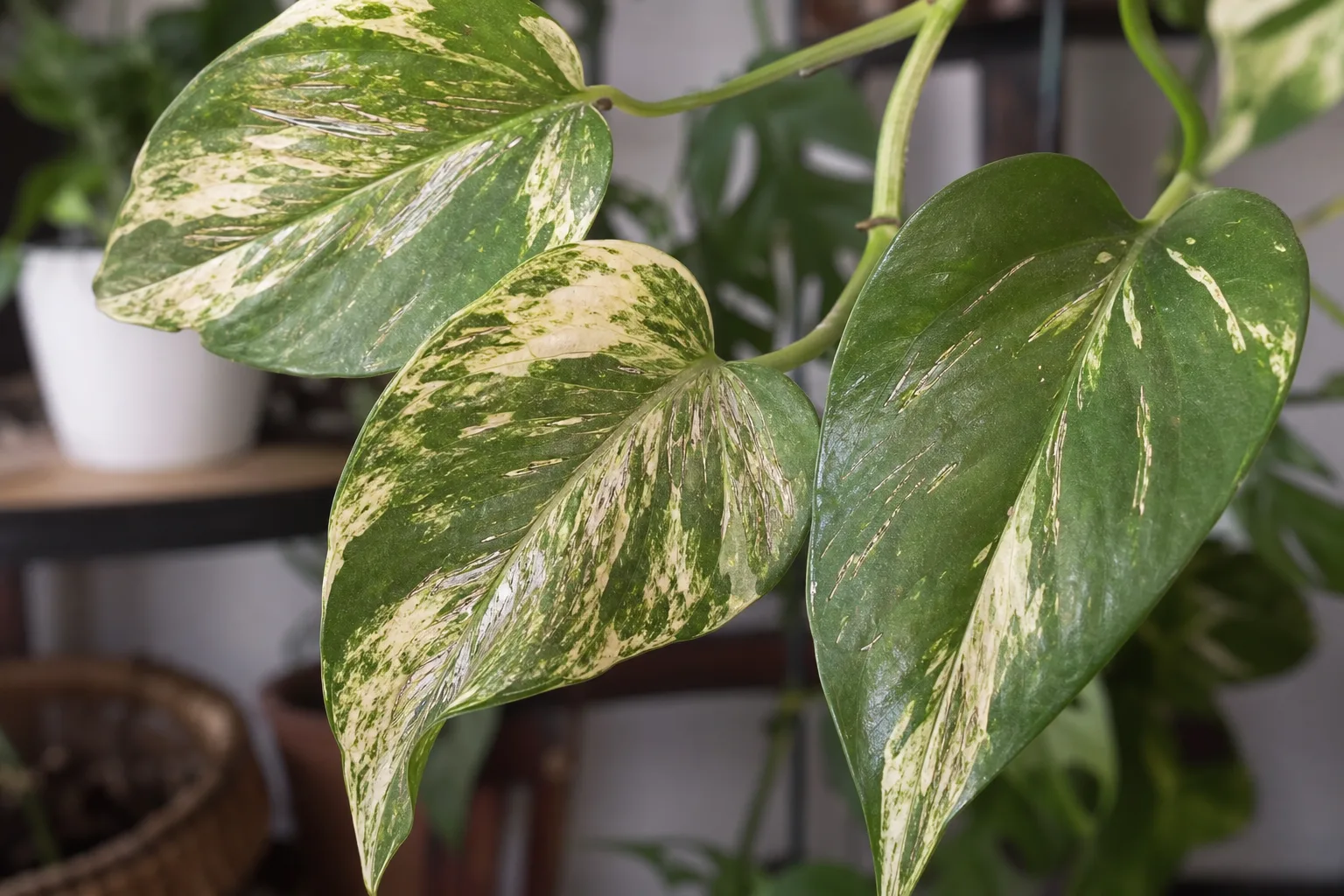
Epipremnum aureum ‘Manjula’ is a patented, slower-growing pothos cultivar with broad heart-shaped leaves swirled in cream, white, and green. Those trailing blades give thrips plenty of tender tissue to rasp, and the cultivar’s one-to-two-week leaf unfurling window means pests can scar new growth before you notice movement. Silvery thrips scarring on pale variegation is easy to mistake for normal color until you find black frass or insects running under a magnifier.
Why Manjula Pothos gets thrips
Thrips are not caused by a single care mistake-they arrive on new plants, open windows, cuttings, or flowers brought indoors, then feed on any host with soft tissue. Clemson Extension describes thrips as tiny, slender insects typically found on leaves and between petals, scraping surface cells to suck plant sap. Manjula’s broad wavy leaves and dense trailing nodes offer many feeding sites along each vine.
New introductions are the top indoor entry route. Skipping quarantine on a nursery pothos, philodendron, or flowering plant lets winged adults reach your Manjula within days. University of Minnesota Extension recommends sticky traps and regular washing to detect flying pests like thrips before populations explode across a collection.
Stressed vines show damage faster. Manjula kept in dim light with pale all-green reversion, or one with roots sitting in soggy mix, already pushes weaker new leaves. Thrips are opportunists-they feed by rasping leaves with mouthparts and then sucking released fluids-so tender half-unfurled Manjula leaves at vine tips are prime targets.
Dry, warm indoor air does not create thrips, but it can accelerate their life cycle and keep populations active year-round on houseplants. Grouped trailing plants with poor airflow let adults hop between pots before you spot silvery patches on the Manjula hanging at the edge of the shelf.
What thrips look like on Manjula Pothos
Early damage hides in plain sight on variegated foliage. Watch for these patterns together:
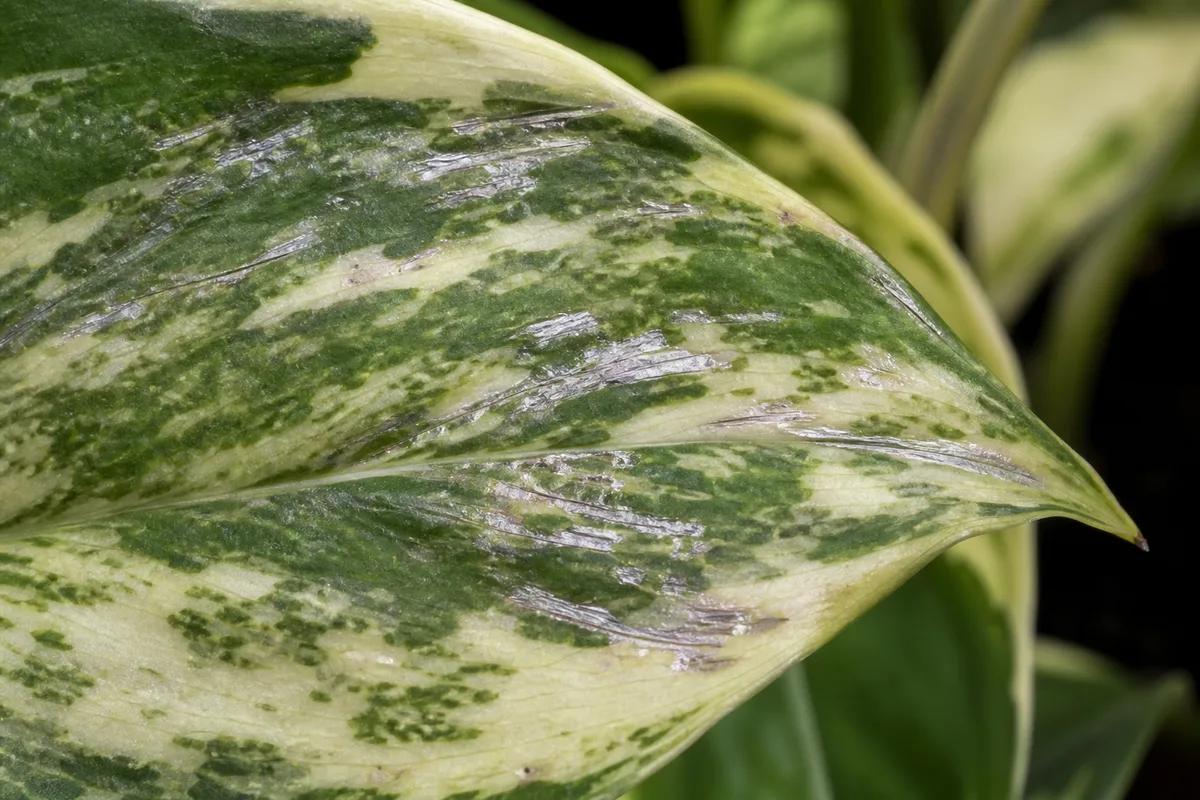
Thrips symptoms on Manjula Pothos - compare with healthy tissue on the same plant.
- Irregular silvery streaks or splotches on upper leaf surfaces-often most obvious on cream-white sections where green tissue still shows through the scarring
- Tiny black or dark specks on leaves-thrips frass that does not brush off like dust
- New leaves unfurling twisted, scarred, or smaller than earlier blades on the same vine
- Small shiny drops of excrement where feeding is heavy along midribs and petiole joints
- Older leaves looking dull or papery in patches while pot weight and root firmness stay normal
- Adults or nymphs visible as slender insects about 1/16 inch long that run quickly when disturbed-yellowish to brownish to black
On Manjula, do not confuse natural wavy variegation with thrips damage. Healthy leaves show smooth color transitions, firm petioles, and no black frass. Thrips scarring looks like someone scraped the surface with fine sandpaper-random silvery trails that interrupt the plant’s normal cream-and-green swirls.
Lookalike symptoms to rule out
Spider mites cause fine stippling and webbing at petiole joints, not tar-like frass droplets. Hard water residue wipes off with a damp cloth; thrips silvery scarring does not. Low humidity alone browns Manjula tips without streaked upper surfaces or distorted unfurling leaves. Overwatering causes limp vines and yellow lower leaves with wet soil-no slender insects on shaken paper.
How to confirm the cause
Do not spray from a single silvery patch on variegated tissue. Use this inspection order:
- Newest leaves at vine tips - Check half-unfurled blades first. Thrips scar tissue while leaves are still opening-a strong signal on slow Manjula growth.
- White-paper shake test - Hold white paper under a suspect leaf and tap or blow lightly on the blade. Clemson Extension notes that blowing into blooms and leaves causes thrips to move quickly, making them easier to see. Dark moving specks confirm thrips; static dust does not run.
- Frass check - Look for black varnish-like droplets on silvery areas. Frass plus silvery scarring is a reliable thrips pairing.
- Magnifier scan - Use a phone macro lens on leaf undersides and petiole crevices along trailing nodes. Adults are difficult to see without magnification.
- Sticky trap review - Place yellow sticky cards near the Manjula for a few days. Captured slender insects support the diagnosis.
- Neighbor plants - Inspect every plant within arm’s reach and any recent purchases. Thrips spread before every host shows full scarring.
If silvery marks wipe off, roots are firm, and no insects appear on repeated shake tests, reconsider hard water spotting or old mechanical damage-not an active thrips infestation.
First fix for Manjula Pothos
Isolate the plant and rinse every leaf surface thoroughly with lukewarm water.
Move Manjula away from your collection the same day you confirm thrips. Winged adults fly to other pothos, philodendrons, and flowering houseplants nearby if you wait.
Once isolated:
- Rinse the entire vine in lukewarm water, directing the stream at both upper and lower leaf surfaces, petiole joints, and stem nodes. Minnesota Extension recommends spraying small plants in a sink and large plants in a shower to physically remove insects.
- Wrap the pot in a plastic bag so soil stays in place during rinsing.
- After rinsing, apply insecticidal soap labeled for houseplants, covering all leaf surfaces until runoff. Clemson HGIC notes insecticidal soaps are contact products effective against thrips when they touch the pest directly.
- Repeat rinsing and treatment every five to seven days for at least three to four weeks. Minnesota Extension states repeat applications are usually necessary because thrips hide in crevices and new nymphs hatch on a rolling schedule.
- Add yellow sticky traps near the plant to monitor adult activity-not as a cure, but to track whether counts drop between treatments.
Make one correction at a time. Do not fertilize, repot, and spray pesticide on the same day.
Step-by-step recovery
After the initial rinse and spray:
- Keep Manjula in Manjula Pothos light guide with good airflow-not direct sun, which can scorch rinsed variegated leaves.
- Re-treat every five to seven days without skipping weeks; missing a cycle often restarts the population.
- Remove only leaves that are more than half distorted if they block inspection-otherwise leave partial damage until new growth is clean.
- Watch trailing vine tips for new leaves opening without silvery scars or frass over the next four to six weeks.
- Replace sticky traps weekly so you can compare thrips catch rates across treatment rounds.
If fresh silvery streaks appear on new growth within three days of treatment, increase rinse coverage on wavy leaf folds, inspect hidden node crevices, and confirm soap reaches undersides-not only the glossy upper surface.
Recovery timeline
Light scarring on a few mature leaves often stabilizes within two to three weekly cycles once rinsing and soap contact are consistent. Moderate infestations across several trailing vines may need six to eight weeks before you trust new growth-Manjula’s slower habit means the plant cannot quickly replace damaged blades like golden pothos can. Severe cases with every new leaf twisted may not fully recover cosmetically; honest progress means no fresh silvery streaks on unfurling leaves and falling thrips counts on sticky traps after three diligent treatment rounds.
Old scarred or distorted leaves will not regain their original variegation pattern. Use clean new leaves and absence of new frass as your markers-not cosmetic repair of damaged tissue.
What not to do
- Do not assume silvery cream sections are normal variegation-confirm with frass and a shake test first.
- Do not treat once and stop; thrips eggs and hidden nymphs hatch across multiple weeks indoors.
- Do not rely on sticky traps alone-they catch adults but do not control nymphs on leaves.
- Do not fertilize a thrips-stressed vine; soft new tissue attracts more rasping damage.
- Do not return the plant to your collection until you see no new damage for at least two weeks after the final treatment.
- Do not handle damaged tissue without gloves; Manjula Pothos is toxic to cats and dogs via calcium oxalate crystals, and sap loss from thrips wounds increases exposure.
How to prevent thrips next time
Quarantine new plants and cuttings for two weeks before placing them beside your Manjula. Clemson Extension lists thrips among pests that can affect pothos even though the species is generally easy to grow-prevention is mostly about blocking introduction.
Inspect leaf surfaces and vine tips weekly during warm months when thrips stay active indoors. Rinse trailing Manjula vines occasionally in the sink or shower as part of routine care-Minnesota Extension notes washing removes insects and keeps foliage clean enough to spot new damage early.
Keep the plant in bright indirect light with the top 3–5 cm of soil drying between waterings so new growth is strong, not already stressed when pests arrive. Use yellow sticky traps as early-warning monitors near hanging baskets. Avoid letting dead leaves pile up on soil surface-debris gives thrips hiding places at the base of trailing stems.
When to worry
Treat thrips as medium severity on Manjula because slow growth and variegated tissue make cosmetic damage obvious long before the plant dies. Escalate immediately if:
- Every new leaf at the trailing tip opens twisted or scarred for two treatment cycles despite rinsing
- Black frass and silvery streaks spread to multiple vines within a week
- Thrips appear on neighboring plants after you treated only one pot
- The vine stalls with no clean new growth for more than four weeks in warm conditions
- Shake tests still show running insects after three diligent weekly cycles
If treatment fails after three to four weekly cycles, consider discarding a heavily distorted plant to protect the rest of your collection-severe indoor thrips infestations can be harder to break than mites when every new leaf is damaged at unfurl.
Conclusion
Thrips on Manjula Pothos are a rasping sap-feeder problem on a trailing variegated cultivar-not a mystery watering issue. Confirm with silvery streaks that do not wipe off, black frass, and quick-running insects on shake tests; act by isolating, rinsing thoroughly, treating with insecticidal soap every five to seven days, and monitoring with sticky traps until new growth stays clean. Prevent them with quarantine, regular washing, and weekly checks on vine tips where slow-unfurling leaves are most vulnerable. Judge success by undamaged new variegated growth-not by old leaves returning to perfect color.
When to use this page vs other Manjula Pothos guides
- Manjula Pothos watering guide - Use for routine moisture checks before assuming thrips is the main issue.
- Manjula Pothos problems hub - Browse all 40 common issues on this species.
- Curling Leaves on Manjula Pothos - Different entry point when symptoms overlap with thrips.
- Brown Tips on Manjula Pothos - Different entry point when symptoms overlap with thrips.
- Yellow Leaves on Manjula Pothos - Different entry point when symptoms overlap with thrips.