Faded Leaves on Java Fern: Causes, Checks & Fixes
Quick answer
Faded submerged Java Fern fronds usually mean too little usable light, depleted tank nutrients, or acclimation melt-not low room humidity. Compare newest vs. oldest frond color, confirm the rhizome is exposed, then improve water changes and photoperiod before judging recovery on the next frond.
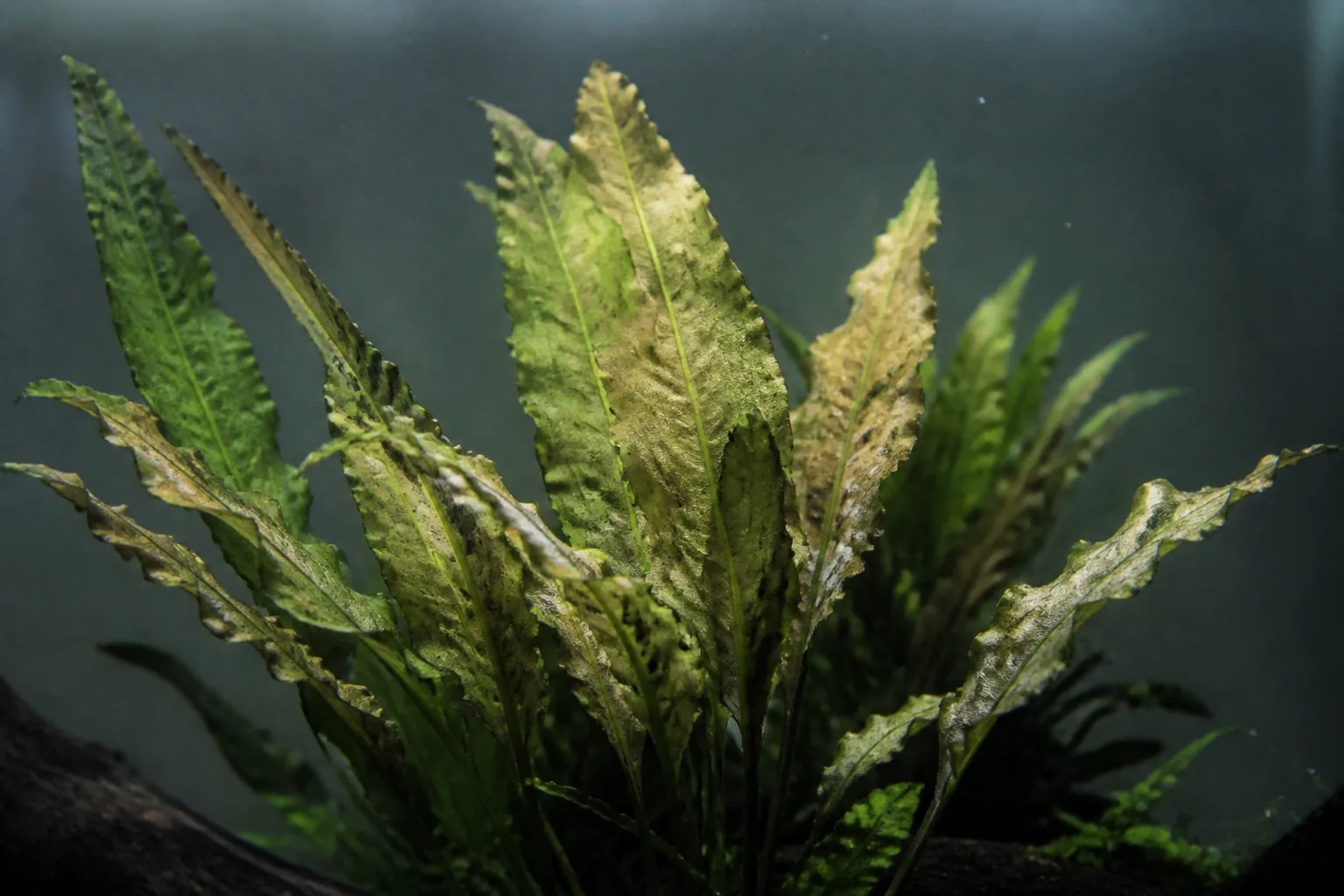
Faded Leaves on Java Fern: Causes, Checks & Fixes
This guide covers faded leaves on Java Fern. See also the general Faded Leaves guide, watering, and light pages for this plant.
Faded Leaves on Java Fern: Causes, Checks & Fixes
Quick answer
Faded Java Fern fronds lose the deep green that makes the plant pop in a tank-they look washed-out, lime-green, or dull gray-green compared to healthy stock. In submerged culture, fading almost always traces to insufficient usable light, nutrient-poor water, or acclimation melt-not air humidity. Microsorum pteropus is a slow-growing epiphyte that absorbs nutrients from the water column, not buried gravel.
First fix: increase weekly partial water changes to 25–30% before stacking fertilizer and light changes. Confirm the rhizome stays exposed on hardscape, then judge recovery by the next frond-not the one already faded.
For species baseline, mounting, and PAR targets, see the Java Fern overview. This page covers washed-out color loss; for uniform pale yellow-green chlorosis, see pale-leaves. For glassy tissue before holes appear, see transparent-leaves.
Faded vs. pale vs. transparent on Java Fern
Hobbyists use these words interchangeably, but on submerged M. pteropus they point to different branches:
| Symptom | Color pattern | Tissue texture | Frond age pattern | Read next |
|---|---|---|---|---|
| Faded (this page) | Washed-out light or gray-green; loss of rich emerald tone | Firm, leathery | Often newest fronds in dim tanks; oldest fronds when nitrogen runs low | This page |
| Pale | Very light green or yellow-green chlorosis | Firm | Uniform pale new growth in lean water; pinholes on older leaves may signal potassium | pale-leaves |
| Transparent | Glassy, see-through patches before melt | Softening at edges | Whole fronds after purchase, rescape, or shock | transparent-leaves |
| PAR bleach | Washed tips; midrib may stay greener | Firm | Leaves closest to fixture after LED upgrade | not-enough-light (shade fix) |
Faded sits between healthy dark green and obvious yellow: chlorophyll density drops enough that fronds look tired underwater, but tissue stays firm and attached. When every symptom is uniform pale yellow on new tips, start on pale-leaves instead.
Windelov and narrow-leaf cultivars show the same fade mechanics-lacey or thin fronds just make color loss easier to spot against dark hardscape.
Why Java Fern leaves fade
Too little usable light. Java Fern tolerates low light, but deep shade stalls chlorophyll production. New fronds emerge pale and stay faded; older leaves may look normal while tips wash out. In a low-tech tank this often means the rhizome sits in the bottom third of a tall aquarium where Easy-plant light barely reaches-not that the species needs high PAR.
Nutrient depletion. In heavily planted tanks with zero nitrate readings, nitrogen is mobile-older fronds dull first while the rhizome stays firm. Iron shortage can bleach new growth between veins. Java Fern responds slowly; fade builds over weeks, not hours. See nitrogen-deficiency when older leaves lead the pattern and iron-deficiency when only newest tips wash out.
Acclimation melt. After purchase or rescape, fronds turn translucent and lose color before dissolving. This looks like fading but is temporary stress if the rhizome stays firm-common when emersed-grown stock transitions underwater.
Excess light without balance. A sudden LED upgrade can bleach tips while the midrib stays green-more scorch than dim-light fade. Hobbyists describe it as washed-out color on fronds directly under the fixture. Shade the plant or shorten photoperiod before fertilizing; details overlap with pale-leaves and the light guide.
Because Java Fern is a slow grower, fade signals in the same tank often lag behind fast stem plants-by the time the fern looks washed-out, column nutrients or usable PAR may have been marginal for weeks.
What faded leaves look like on Java Fern
Light fade vs. nutrient fade vs. melt fade patterns
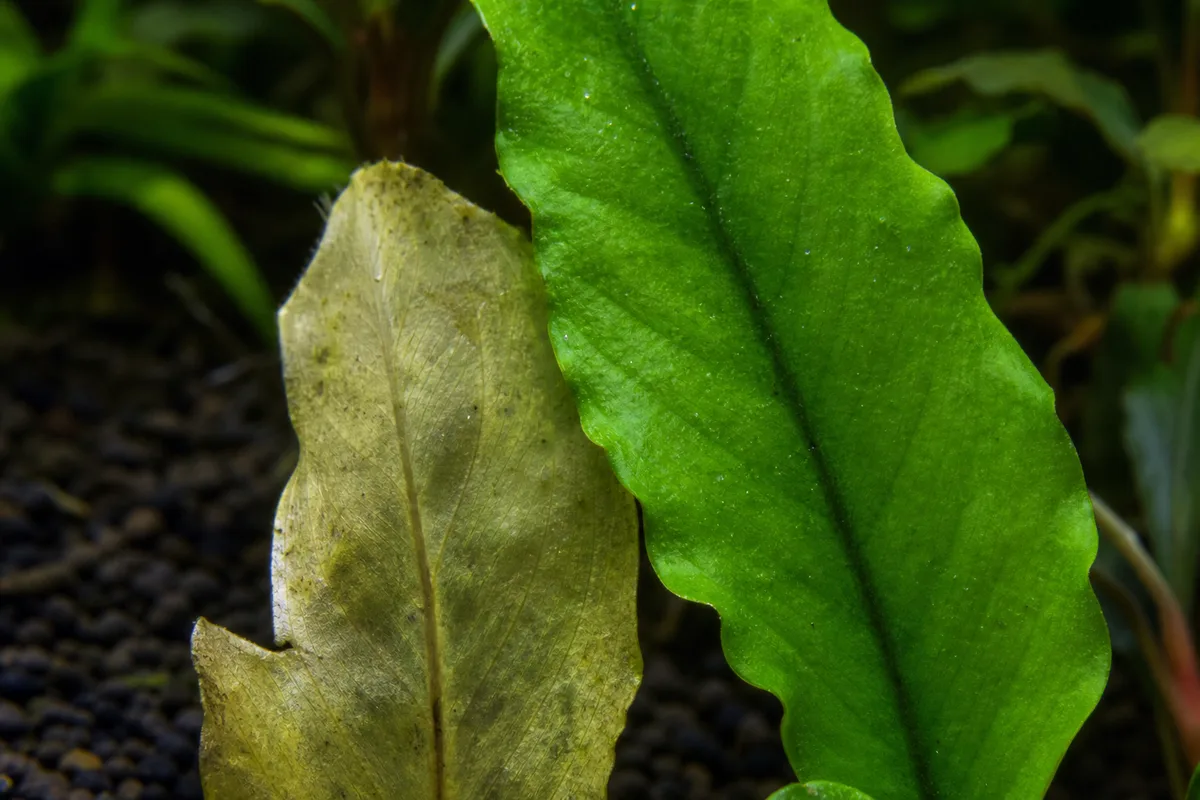
Faded Leaves symptoms on Java Fern - compare with healthy tissue on the same plant.
| Pattern | First fronds affected | Nitrate trend | Rhizome | Timing clue |
|---|---|---|---|---|
| Light fade | Evenly pale new fronds; thin blade texture | Often 5–20 ppm in stocked tank | Firm | Gradual over months in dim corner |
| Nutrient fade | Older fronds dull first; small new tips | Zero for weeks in planted tank | Firm | No recent tank move |
| Melt fade | Glassy patches spreading on random fronds | Variable | Firm | Days after purchase or rescape |
| PAR bleach | Tips on uppermost fronds under LED | Variable | Firm | Within two weeks of lighting change |
Light fade: evenly pale new fronds, thin blade texture, slow elongation toward the surface.
Nutrient fade: older leaves dull first; new tips may stay small or washed-out depending on which element is limiting.
Melt fade: glassy patches that spread before tissue holes appear-firm rhizome is the key reassurance.
Healthy contrast: dark green mature blades with sporangia dots on undersides of firm leaves-that is normal reproduction, not fading.
How to confirm the cause
Work through these checks in order:
- Rhizome feel - Firm woody tissue supports environmental fade. Soft black base with foul smell means burial rot-read
root-rot, not this page. - Frond age map - Newest-only wash-out in a dim zone points to light; oldest-first dulling with zero nitrate points to nitrogen-see
nitrogen-deficiency. - Photoperiod and PAR - Easy plants target roughly 0.25–0.5 W/L with six to eight hours daily. Did you recently raise LED output? Bleaching after an upgrade is excess PAR, not deficiency.
- Nitrate test - Sustained zero in a stocked planted tank suggests depletion. Intentionally low nitrate in a dosed high-tech tank is a different story.
- Timing - Fade within days of a move points to melt; gradual fade over months points to light or nutrients.
- Sporangia check - Symmetrical dark bumps on firm undersides are normal; do not trim them thinking they are rot spots.
Confirmed environmental fade: firm rhizome, pattern that matches one row in the table above, and a change you can name (skipped water changes, dim placement, recent rescape). Suspected iron limitation on new tips only: confirm on iron-deficiency before mega-dosing iron alone.
First fix for Java Fern
Increase weekly partial water changes to 25–30%-one clear first action before stacking other fixes:
- Match replacement water to tank temperature and dechlorinate as usual.
- Extend photoperiod gradually from six hours toward eight only if fronds sit in deep shade-do not jump to high PAR overnight.
- After two stable weeks with improved maintenance, add a diluted all-in-one liquid aquarium fertilizer at half label strength if new fronds stay pale and nitrate reads under 5 ppm.
Secondary steps only after the first partial change:
- Trim fully transparent melting leaves at the rhizome so the plant stops feeding dead tissue.
- Move the mount out of direct fixture glare if bleaching followed a lighting change.
- In shrimp-only nano tanks, dose conservatively-many complete fertilizers include copper trace elements; use products labeled shrimp-safe and never exceed half label on a stressed plant. See the fertilizer guide for dosing rhythm.
Do not bury the rhizome to “feed” the plant; that causes rot and worsens fade. Do not raise room humidity for submerged plants-it does not reach underwater leaves.
Recovery timeline
Nutrient and light corrections show on the next frond, not the current faded one. Expect three to six weeks for visible improvement in low-tech tanks because growth is slow by nature. Melt fade may continue two to four weeks after stabilizing conditions. Keep water in the 22–28°C range/27914) for steady recovery.
| Severity | Signs | Expected recovery |
|---|---|---|
| Mild | Pale new tips; firm rhizome | First darker new frond in 3–4 weeks after light or water fix |
| Moderate | Washed-out new growth; zero nitrate for weeks | 4–5 weeks to greener replacement frond at stable temperature |
| Melt after rescape | Glassy fading; firm rhizome | New green frond in 2–4 weeks; old faded tissue may not re-green |
Example recovery path: A Java Fern on driftwood in a 20-gallon community tank faded and turned glassy over two weeks after a rescape and lighting shuffle. Nitrate read 12 ppm; the rhizome stayed firm. The keeper trimmed only fully transparent fronds, held photoperiod at seven hours, resumed 30% weekly changes, and saw a solid dark-green new frond at week five-older washed-out blades were trimmed once the replacement leaf stayed opaque.
Older faded fronds rarely darken fully. Judge success by new growth color and rhizome firmness, not by rehabilitating every pale blade.
What not to do
Do not raise room humidity for submerged plants-it does not reach underwater leaves. Do not blast CO₂ and high light simultaneously on a faded, melting plant. Do not bury the rhizome to “feed” the plant; buried rhizomes rot. Do not confuse healthy sporangia on firm leaf undersides with blackened rot when trimming faded tissue. Do not add root tabs under substrate for a mounted epiphyte.
Causes to rule out
Acclimation melt after shipping or rescape can look faded before turning brown-temporary if the rhizome stays firm. Potassium deficiency more often shows pinholes in older leaves than uniform wash-out-see potassium-deficiency. CO₂ crash in high-tech tanks can pale many species at once-less common on Java fern in low-tech setups. Bacterial film on leaves mimics dull color but wipes off; nutrient fade does not. Normal old-frond turnover dulls only the oldest blades while new tips stay deep green-not an emergency. Rhizome rot from burial softens the stem first-escalate to root-rot when touch test fails.
Juvenile submerged fronds often emerge slightly translucent before darkening-that is normal development, not the progressive glassy melt of acclimation stress.
How to prevent faded leaves next time
Mount on hardscape with rhizome exposed per the overview mounting section. Balance low light demand with enough duration for photosynthesis-see the light guide for PAR and photoperiod targets. Maintain regular partial water changes in planted aquaria. Dose liquid fertilizer in small steps through the fertilizer guide rather than waiting for severe wash-out or pouring a full bottle after months of zero nitrate.
When to use this page vs other Java Fern guides
- Java Fern watering guide - Use for routine moisture checks before assuming faded leaves is the main issue.
- Java Fern problems hub - Browse all 28 common issues on this species.