Poor Root Growth on Jade Plant: Causes, Checks & Fixes
Quick answer
Poor root growth on jade means roots are not extending-few white tips, a woody stub mass, or circling without outward growth. First step: unpot gently, check whether roots are firm and white versus mushy, and compare root mass to pot size before changing anything else.
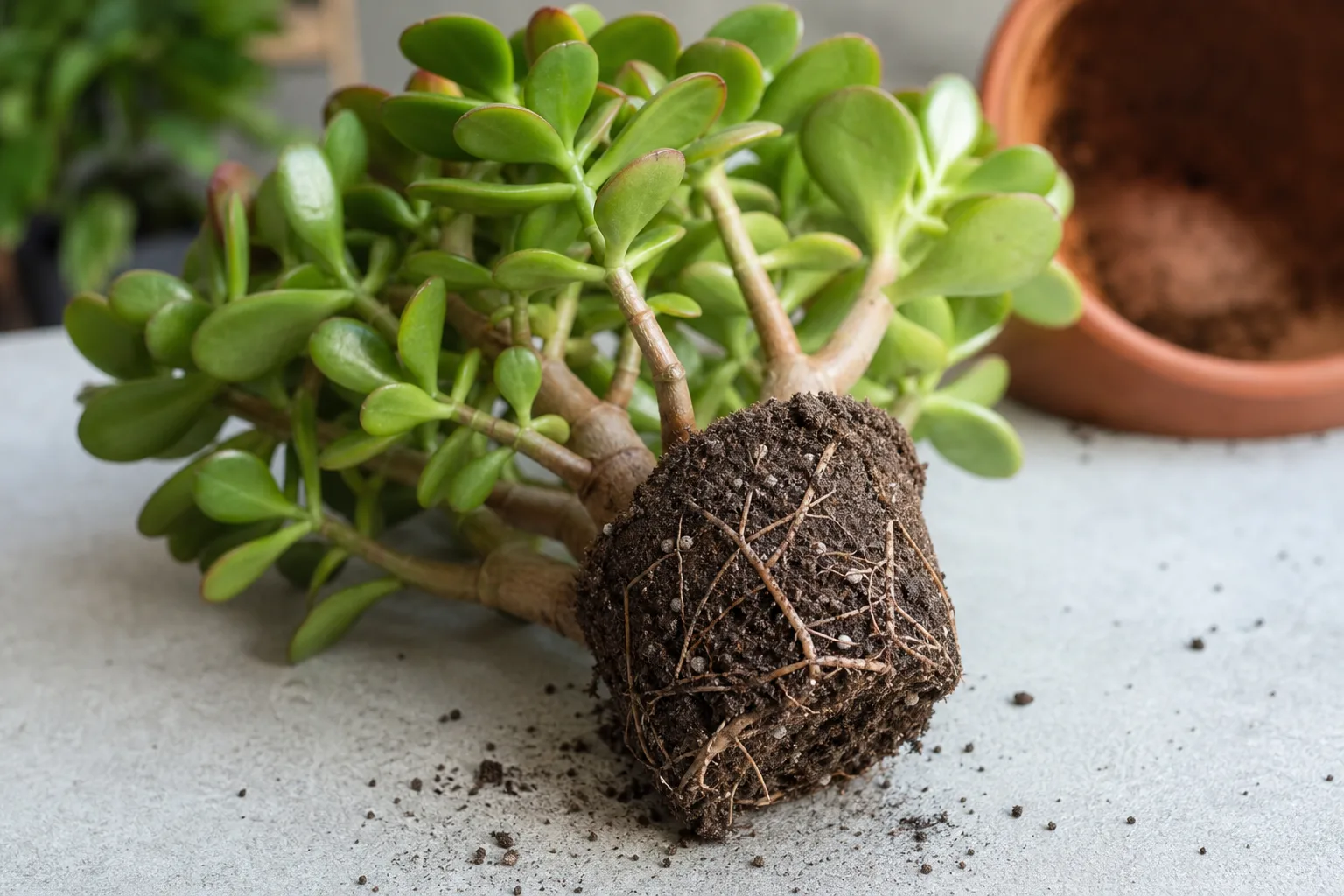
Poor Root Growth on Jade Plant: Causes, Checks & Fixes
This guide covers poor root growth on Jade Plant. See also the general Poor Root Growth guide, watering, and light pages for this plant.
Poor Root Growth on Jade Plant: Causes, Checks & Fixes
Quick answer
Poor root growth on jade (Crassula ovata) means the root system is not extending-sparse or absent white tips, a woody stub mass after past damage, or dense circling without outward growth into fresh mix. The plant may look stable above soil while roots fail quietly below.
First step: unpot gently and inspect root tips. Firm white or cream tips at the root perimeter signal healthy extension; mushy brown tissue, sour smell, or a root ball floating in wet unused soil each point to a different fix. Do not fertilize or upsize the pot before you know which pattern you have.
Jade is a slow-growing South African succulent with shallow fibrous roots evolved for rocky, fast-draining slopes. Indoors, poor root extension is almost always environmental-oversized wet pots, compacted mix, hidden rot, chronic low light, or repotting at the wrong season-not a mysterious disease. For rot-specific salvage, see root rot; for top-growth stall without root inspection, see slow growth.
What poor root growth looks like on Jade Plant
Poor root extension is a below-soil problem. Above-ground signs are indirect and easy to misread:
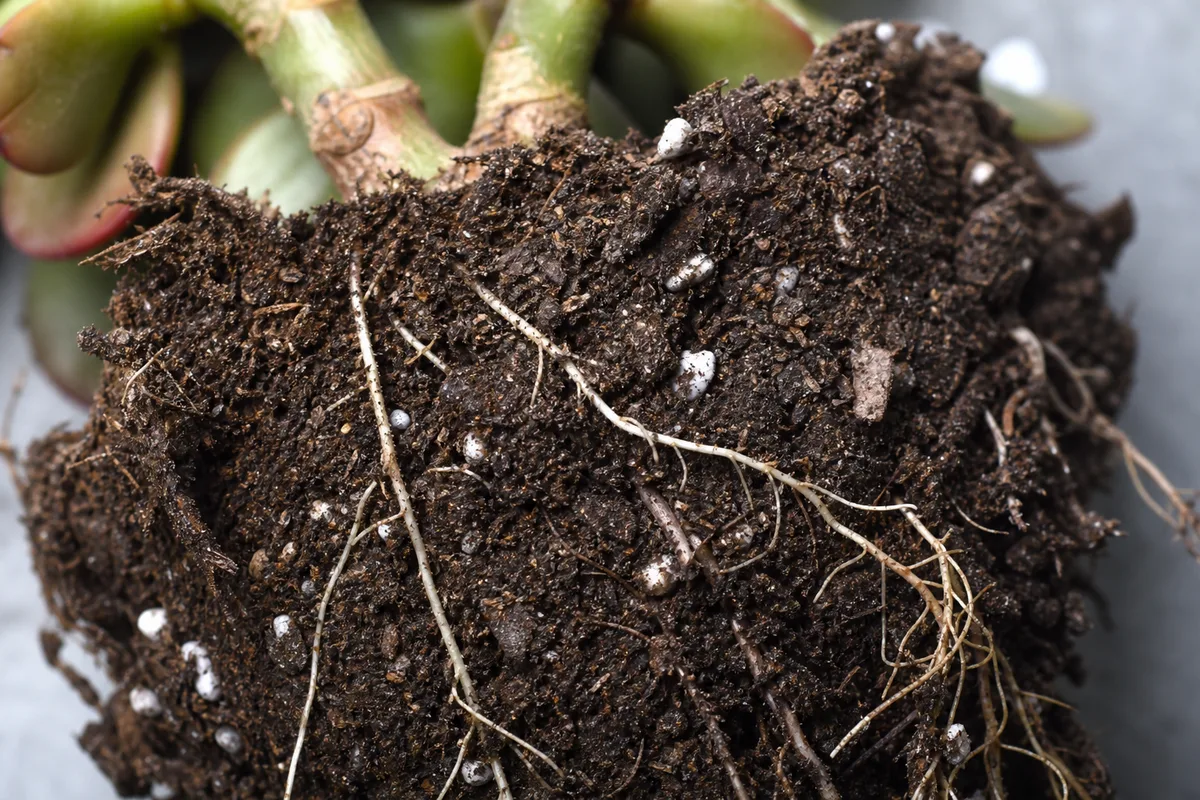
Poor Root Growth symptoms on Jade Plant - compare with healthy tissue on the same plant.
- No new white root tips visible at the pot edge or drainage holes after spring growth resumes
- Root ball much smaller than pot volume-loose wet mix falls away on unpot while roots stay clustered in the center
- Dense circling roots with no fresh tips pushing outward into mix (different from tolerated slight crowding)
- Woody stub root mass with few fine feeder roots-often follows past overwatering or rot that killed tips while the main stem stayed firm
- Soil stays damp for weeks in the outer ring while you water sparingly-roots never colonize that wet zone
- Stalled new leaf pairs through a full warm season despite adequate light-not the normal winter pause
- Water runs through quickly yet leaves wrinkle within days-channeling around a dense mat without hydrating the center (root-bound overlap)
- Pale stretched stems with slow top growth-low light slows root metabolism as well as leaf production
Healthy jade roots on unpot: firm, pale white to cream, with active white tips at the outer edge. The root mass should roughly match pot size-neither swimming in empty wet mix nor forming a solid impenetrable mat.
Not poor root growth alone: A firm jade with no new leaves from November through February on dry soil is winter dormancy-normal seasonal rest, not failed root extension.
Why Jade Plant gets poor root growth
Oversized pot and chronic wet outer mix
Jade roots spread slowly indoors. When the container is much wider than the root ball, the outer compost stays wet long after the center would have dried in a right-sized pot. Roots avoid that saturated zone, so new white tips never appear at the pot perimeter. This is the most common stall after a well-meaning dramatic upsize. Full downsizing workflow lives in pot too large.
Compacted or peaty mix limiting oxygen
Jade needs very well-drained soil mix to prevent root rot. Dense peat-heavy potting soil compacts over time, reducing air pockets fine roots need to extend. Water sits in the root zone longer than jade tolerates-even if you water correctly-so tips die back and extension stops.
Hidden rot pruning active fine roots
Overwatering is the primary cause of jade root and stem rot. Early rot kills fine feeder roots first while woody stems stay firm briefly. What remains is a stub mass with few white tips-not true dormancy. Yellowing leaves on wet soil, sour smell, or soft stem bases mean rot overlap; switch to the root rot protocol.
Root-bound circling without outward extension
Jade tolerates snug pots for years, but severe binding replaces soil with a dense root mat. Water channels through without soaking the center; new tips stop pushing into depleted mix. Circling alone without fresh white tips at the edge signals the root zone needs refresh-see root bound.
Insufficient light slowing root metabolism
Jade needs four or more hours of direct sun daily for compact growth. Low light slows photosynthesis and water use, so mix stays wet longer and root extension stalls. Pale stretched stems with wet soil and no new tips often combine light limitation with root-zone stress-see not enough light.
Winter dormancy and mistimed repotting
From fall through late winter, jade growth slows intentionally. Water sparingly during semi-dormancy and expect minimal new root activity. Repotting into fresh mix in December rarely produces immediate white tips-roots establish when new growth starts in spring. Do not confuse seasonal pause with pathology unless poor extension persists through a full warm season.
Poor root growth vs root rot vs root-bound vs slow top growth
| Pattern | Poor root extension | More likely cause |
|---|---|---|
| Root texture on unpot | Firm pale stubs or sparse tips; no mush | Root rot - brown mushy tissue, sour smell |
| Pot vs root mass | Root ball tiny in large wet pot | Pot too large - same mechanism, oversize focus |
| Circling roots | Dense mat, no new white tips outward | Root bound - water channels through in seconds |
| Stem base | Firm and woody | Rot - soft blackened base on wet soil |
| Season | Persists through warm spring | Slow growth / dormancy - winter pause or light stall only |
| Top growth | Stalled leaves and no root tips | Stunted growth - broader above-soil stall pattern |
The white-tip check is the tell. Healthy extension shows fresh white tips at the root perimeter after spring warmth. Absent tips with firm stems point to pot/mix/light stall; absent tips with mushy tissue point to rot.
How to confirm the cause
Work through this unpot inspection before repotting, downsizing, or fertilizing:
- Choose timing - Inspect in spring when new growth normally resumes, not mid-winter unless stems soften or soil smells sour.
- Gentle unpot - Support the main stem; tap the pot rim. Never yank branches. Note whether loose wet mix falls away from a small root ball (oversize) or roots hold the pot shape (binding).
- White tip assessment - Look at the outer root edge. Fresh white or cream tips mean active extension; only brown woody stubs mean past damage or stall.
- Root mass vs pot volume - If roots occupy less than half the container and outer mix is damp, oversizing is confirmed. If roots form a solid circling mat with no tips, binding or compacted mix is likely.
- Firmness and smell - Firm pale roots smell neutral. Mushy brown tissue or sour odor confirms rot-trim protocol before upsizing.
- Moisture probe - Press mix at the outer edge versus center. Chronic wet outer ring with dry center in a large pot supports poor colonization stall.
- Light and season cross-check - Fewer than four hours direct sun plus wet mix supports light correction. Firm plant on dry soil in January supports dormancy watch, not emergency repot.
If roots are firm with sparse tips in an oversized wet pot, downsize. If circling densely without tips, refresh mix and tease roots one size up in spring. If mushy, rot salvage first.
First fix for Jade Plant (by likely cause)
Match one correction to what unpot inspection showed-do not stack repot, prune, fertilizer, and pesticide on the same day.
| Confirmed cause | First fix |
|---|---|
| Oversized wet pot | Stop watering; repot into a container only 1–2 in. wider than the root ball with fresh gritty mix; wait 5–7 days before first water |
| Compacted peaty mix | Repot into fast-draining succulent mix with perlite; same size or one size up only |
| Hidden rot (firm stem, some mushy roots) | Trim mushy roots, air-dry 24–48 hours, repot dry into smaller terracotta-see root rot |
| Root-bound circling, no new tips | Spring repot one size up; tease outer circling roots-see root bound |
| Low light stall | Move to brightest window (4+ hours direct sun); adjust watering after dry-down improves |
| Winter dormancy | Hold water; resume inspection in March-do not force spring repot in December |
For step-by-step mix ratios and aftercare, follow the repotting guide.
Recovery timeline
After correct pot sizing or mix refresh in spring: New white root tips often appear within three to six weeks in bright light. Jade grows slowly-weeks between visible progress is normal.
After oversize correction: One to two full dry-down cycles before the plant drinks predictably from the smaller root zone. Old wrinkled leaves from chronic wet stress rarely plump again.
After rot trim and dry repot: Four to eight weeks minimum before judging success. Firm new leaf pairs at branch tips matter more than old yellow foliage.
Winter repot or inspection: Extension may not resume until temperatures and day length increase. A firm dormant jade on dry soil needs patience, not repeated upsizing.
Judge recovery by new white root tips and firm new leaves-not by reversing old damaged tissue.
What not to do
- Do not upsize to a large decorative pot hoping to stimulate roots-excess wet soil worsens stall on jade.
- Do not fertilize a root-stalled plant before fixing pot, mix, light, or rot-the stressed root zone cannot use feed safely.
- Do not water on a calendar when outer mix stays wet for weeks-probe depth and pot weight instead.
- Do not confuse winter dormancy with failed roots and repot in December unless rot is confirmed.
- Do not bare-root wash healthy jade unless rescuing rot-stripping fine roots sets extension back further.
- Wear gloves when handling cut tissue-jade is toxic to cats and dogs if ingested.
How to prevent poor root growth next time
Schedule a spring root check every two to three years for actively growing jade, or longer for slow mature specimens. Size up only 1–2 in. when roots circle or exit holes-not when the canopy simply looks large.
Use terracotta or unglazed pots with open drainage. Match mix to succulent needs: gritty, fast-draining, refreshed before it compacts. Give bright light during active growth so the plant uses water quickly and roots stay aerobic.
When repotting, time it as new growth starts and wait several days before the first water so disturbed tips can callous. After any repot, watch for white tips at the drainage holes within a month in warm bright conditions-that is your extension success marker.
When to worry
Poor root extension alone is medium urgency when stems stay firm and roots are pale-not mushy. Escalate immediately when:
- Stem bases soften or soil smells sour-active rot, not simple stall
- Mushy roots spread on unpot regardless of season
- Yellow leaves accelerate while soil stays wet after a recent dramatic upsize
- No white tips appear through an entire warm season after a spring repot into appropriate size and light
A jade with sparse tips in an oversized pot is uncomfortable, not dying-correct pot size and mix before rot develops in the wet outer ring.
Practical checks
Urgency check
Low urgency: Firm stems, seasonal winter pause, neutral smell, pale firm roots-monitor until spring.
Medium urgency: No white tips through a full warm season, chronic wet outer mix, or circling without extension-repot or downsize in the next spring window.
High urgency: Soft stem bases, sour smell, mushy roots, or rapid leaf drop on wet soil-rot protocol within days.
Best inspection order
Pot weight → outer-edge moisture probe → gentle unpot → white tip check → root firmness and smell → compare root mass to pot width → light hours and season.
Jade care cross-check
Also sold as money tree or lucky plant, jade should be judged by firm new growth and active root tips-not by how fast tropical houseplants grow. If the pot stays heavy for weeks while stems stay firm, compare root mass to container size before the next drink. Cross-check watering rhythm and overview baseline care.
Related jade plant guides
- Jade plant overview - baseline care and root-zone diagnostics
- Jade repotting - timing, mix, and aftercare for stimulating new roots
- Root rot - when mushy roots or sour soil appear
- Root bound - circling roots and water channeling
- Pot too large - wet unused soil stall
- Slow growth - top-growth stall and light limits
- Stunted growth - broader growth stall patterns
- Overwatering - chronic wet mix that kills fine roots
- Jade watering - dry-down rhythm after root correction