Stunted Growth on Jade Plant: Causes, Checks & Fixes
Quick answer
Stunted growth on jade means abnormally small or sparse new leaf pairs with long gaps between them-not the plant's normal slow woody pace. First step: count direct sun hours at the pot and lift the root ball to check whether stems are firm and roots white; move to brighter light or address wet sour mix before repotting or fertilizing.
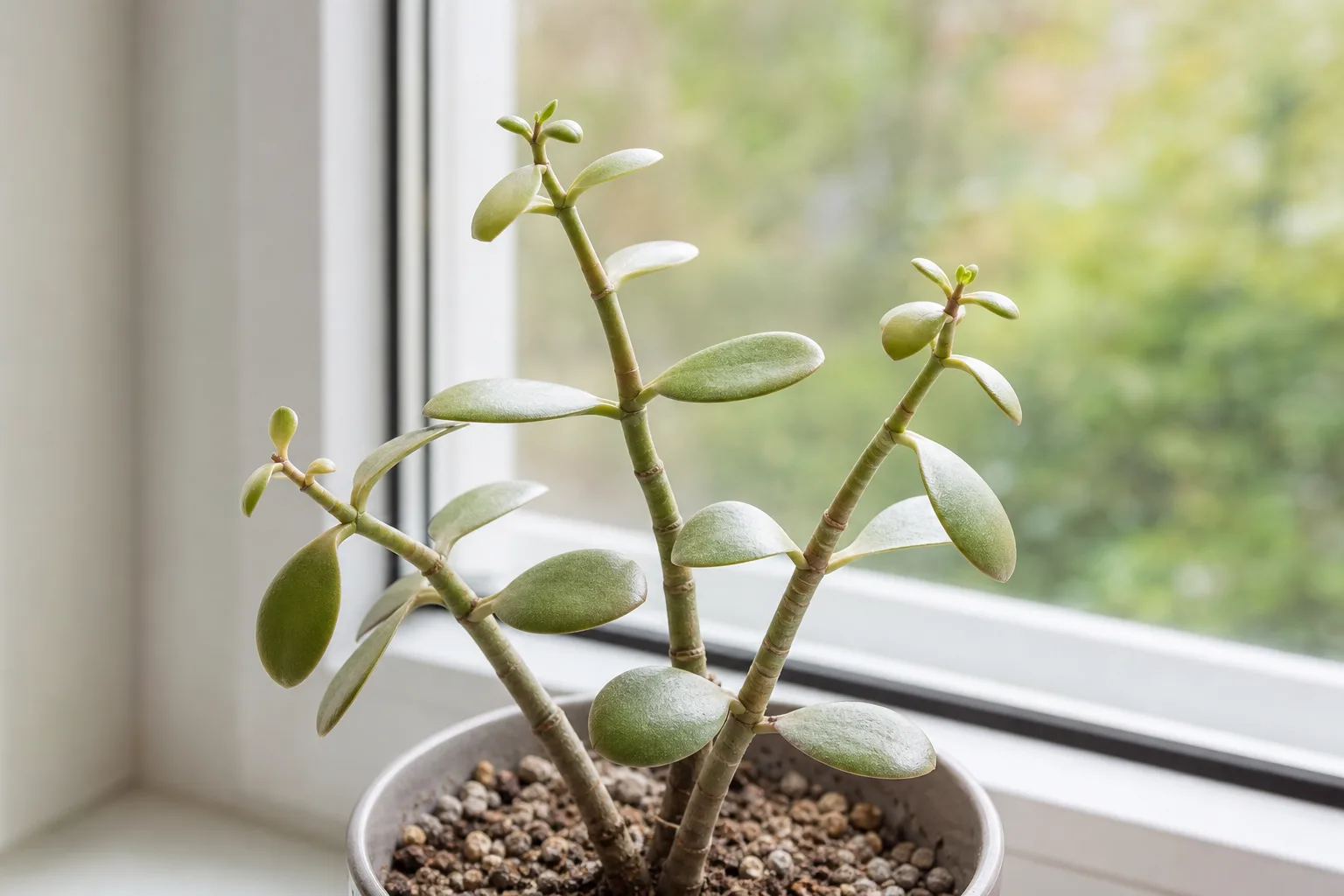
Stunted Growth on Jade Plant: Causes, Checks & Fixes
This guide covers stunted growth on Jade Plant. See also the general Stunted Growth guide, watering, and light pages for this plant.
Stunted Growth on Jade Plant: Causes, Checks & Fixes
Quick answer
Stunted growth on jade (Crassula ovata) is not the same as healthy slow growth. A mature jade naturally thickens woody stems over years and may add only a few new leaf pairs each month in summer-that is normal. Stunting means new leaves stay abnormally small, pale, or sparse, with long gaps between leaf pairs on branch tips, or stems stop thickening for months despite warm weather and adequate watering rhythm.
The five causes that explain most genuine stunting indoors are insufficient light, root-bound or depleted mix, hidden root rot from chronic wet soil, oversized pot with stagnant wet center, and post-repot or pest stress draining energy from new tips. Less often, cold drafts or winter dormancy mimic stunting until you compare season and stem firmness.
First step: stand where the pot sits and count direct sun hours on the leaves, then lift the plant and check stem firmness at the base. If light is below four hours and new pairs are tiny, move to a brighter window before changing anything else. If stems soften or soil smells sour, inspect roots before repotting or fertilizing.
For baseline pace and winter rest, see slow growth on jade. For zero new tips through an entire warm season, see no new growth.
What stunted growth looks like on Jade Plant
Stunting on jade shows up at branch tips and internode spacing, not as one random damaged leaf.
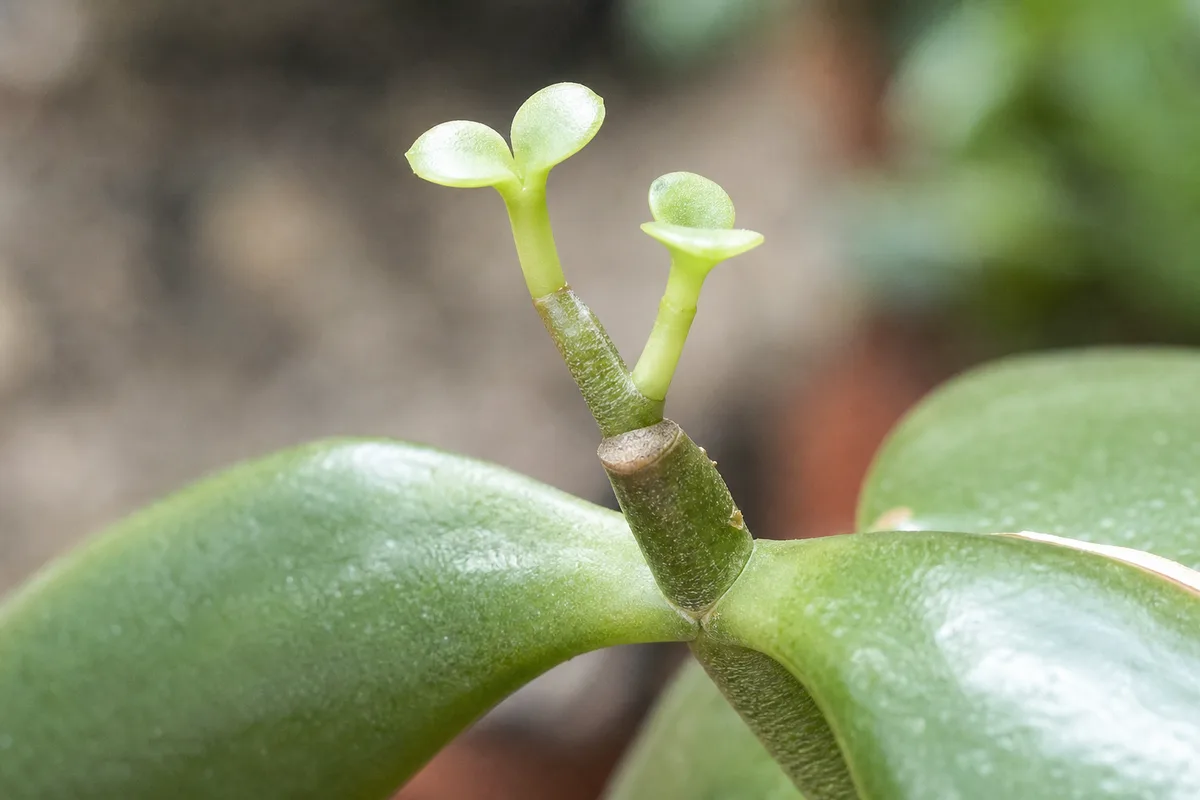
Stunted Growth symptoms on Jade Plant - compare with healthy tissue on the same plant.
Above the soil, watch for:
- Abnormally small new leaf pairs at tips compared with older pairs lower on the same branch
- Long gaps between recent leaf pairs-more than you expect even for a slow jade-sometimes paired with pale or washed-out color
- Stems that stop thickening while the plant looks otherwise alive; the trunk does not gain girth through a full growing season
- Compressed or sparse tip growth without the red margins or firm gloss that strong light produces
- Months without visible new pairs through spring and summer-not the quiet pause of winter dormancy on a firm woody plant
Below the soil line, clues differ by cause:
- Dim light stunting: mix stays damp 10–14 days after watering; stems may stretch or lean before tips shrink
- Root-bound stunting: water runs through in seconds; lower leaves may wrinkle briefly after a soak then thin again within days
- Rot-related stunting: sour smell, soft discolored tissue at the stem base, wet mix despite reduced watering
What is not stunting: a firm jade with no new leaves from November through February in a cool room-that is normal winter rest. A plant that adds leaf pairs slowly but steadily each month in summer with firm stems is slow-growing, not stunted.
Normal slow pace vs. true stunting
| Signal | Normal slow jade | True stunting |
|---|---|---|
| New leaf pairs in summer | A few per month on branch tips; pairs similar size to slightly smaller than older ones | Tiny pale pairs; months between pairs despite warmth |
| Stem character | Firm, slowly woody; trunk thickens year over year | Tips stall; internodes stay long; base may soften if rot is involved |
| Season pattern | Quiet in short cool days; resumes in spring | No improvement through a full warm season |
| Leaf color | Glossy green; red margins possible in strong light | Flat pale green; loss of compact “mini tree” shape |
| Pot behavior | Dries on a predictable rhythm in your light | Stays wet weeks in dim corners, or channels through in seconds when root-bound |
Why Jade Plant growth stalls or stunts
Jade evolved on dry rocky slopes in southern Africa with intense sun and seasonal dry periods. Indoors, it puts energy into thickening woody stems and storing water in leaves-a slow growth habit by design. Stunting happens when environmental stress blocks that normal pace.
Insufficient light is the most common indoor cause. Jade needs four or more hours of direct sun daily for compact growth; inadequate light produces deep green drooping stems rather than normal habit. In shade, photosynthesis slows, water use drops, and the same watering schedule leaves soil wet too long-stalling tips while raising rot risk. Full etiolation patterns are covered in not enough light.
Root-bound or depleted mix stalls growth when circling roots replace soil volume. Jade tolerates snug pots for years, but when water channels through without soaking the center, the plant cannot hydrate between your normal drinks. See root bound for circling-root signs.
Chronic overwatering and hidden rot stop new growth while mix stays wet. Jade stores water in leaves and stems; overwatering is the biggest indoor killer, especially in winter when growth slows. Soft stem bases and sour soil mean roots are failing-not a light problem alone.
Oversized pots leave a wet unused soil zone that slows root function. Jumping to a huge container hoping for faster growth often stalls jade further; repot only one size up when binding is confirmed.
Post-repot shock causes a normal two-to-four-week pause after disturbance. Water sparingly until established in a new container; do not fertilize for at least a month after repotting per extension guidance.
Pest load-mealybugs or scale on stem joints-drains energy from new tips. Inspect leaf axils and undersides if light and watering look correct but tips stay tiny.
Stunted growth vs. slow growth vs. no new growth
These three jade problem pages overlap in search but answer different questions:
- Slow growth - Is my jade’s pace normal for the species and season? Covers winter rest, natural woody slowness, and when sluggishness is environmental.
- Stunted growth (this page) - New growth is present but abnormally small, pale, or sparse; internodes stay long; stems fail to thicken through summer.
- No new growth - Zero new leaf pairs for an extended period; total stall rather than undersized tips.
Start here when you see tiny tips on an otherwise alive plant. Start with slow growth if the question is “is jade supposed to be this slow?” Start with no new growth if nothing emerges at branch ends through a warm season.
How to confirm the cause
Work through these checks in order-one variable at a time:
- Season context - Is it short cool days with firm stems? Winter rest can pause growth without stunting. Compare to last spring on the same plant.
- Direct sun hours - On a clear day, watch whether sun hits leaves for at least four hours. Fewer hours indoors usually explains pale compressed tips.
- Internode spacing on newest branch - Measure the gap between the two most recent leaf pairs. Abnormally long gaps with small upper pairs point to light stress or chronic stress-not normal slowness.
- Pot weight and dry-down - After watering, note days until the top inch is dry. Wet for weeks in a dim spot suggests light plus watering mismatch. Very fast dry-down with wrinkling leaves suggests root-bound or underwatering stress.
- Stem firmness at soil line - Firm wood-colored base with only tip stunting often means light or binding. Soft mushy collar with sour smell means inspect roots before any other fix.
- Unpot inspection - Slide the root ball out. White firm roots with some circling and fast drain-through confirm binding. Brown mushy roots confirm rot.
- Pest scan - Cottony mealybugs or scale bumps on stems can stall tips even when light looks adequate.
Diagnostic table
| Likely cause | Key signs on jade | First fix |
|---|---|---|
| Insufficient light | Tiny pale tip pairs, long internodes, lean toward window, mix stays damp | Move to brightest window; acclimate over 7–14 days (light guide) |
| Root-bound / depleted mix | Water runs through in seconds; roots circle pot; wrinkled leaves return after soak | Repot one size up in spring with gritty mix; wait 5–7 days before first water (repotting) |
| Hidden root rot / overwatering | Soft stem base, sour soil, wet mix despite reduced watering | Stop watering; unpot, trim mushy roots, repot dry gritty mix (root rot) |
| Oversized wet pot | Huge pot vs. root mass; center stays wet; growth stalled after upsize | Downsize or repot into appropriate volume with fast drainage (soil guide) |
| Post-repot shock | Recent repot; firm stems; no new tips for 2–4 weeks | Hold water and fertilizer; bright indirect light until new pairs appear |
| Pest drain | Sticky residue, cottony clusters, distorted tiny new leaves | Isolate; treat pests before fertilizing or heavy pruning |
| Normal winter rest | Firm stems; no tips Nov–Feb; resumes in spring | Reduce watering; do not fertilize until active growth returns |
First fix for Jade Plant (by likely cause)
Lead with one action-not repot, prune, fertilize, and pesticide on the same day.
If light is the limiting factor (most common): Move the pot to your brightest location and acclimate over one to two weeks. Do not repot or fertilize on day one. In stronger light the mix will dry faster-check moisture before every drink per the watering guide.
If root-bound signs dominate: Unpot to confirm circling roots and fast drain-through. Schedule repot one size up in early spring with succulent mix. Wait five to seven days after repotting before the first thorough soak.
If soft stems and sour soil point to rot: Stop watering immediately. Unpot, remove brown mushy roots, and repot into dry fast-draining mix. Recovery takes weeks; judge progress by firm new tissue, not old damaged leaves.
If the plant was repotted within the last month: Hold changes. Provide bright indirect light and sparse water until new pairs appear-post-repot pause is normal.
If pests are visible: Isolate and treat mealybugs or scale on stems before any fertilizer. Stressed jade does not need feeding until tips firm up.
Hold fertilizer until active growth resumes for two weeks after the environmental fix-not during winter rest or on wet roots.
Recovery timeline
Light correction: New leaf pairs often enlarge within two to four weeks after stable brighter placement during active growth season. Existing elongated stem sections do not shrink; judge recovery by new tip size and spacing.
Root-bound repot: Expect a two-to-four-week pause, then new pairs at normal size. Full canopy fill takes a full growing season.
Rot recovery: Several weeks to months depending on root loss. Old blemished leaves may never look perfect; recovery markers are firm new leaves and stable roots, not re-greening damaged tissue.
Winter rest: Growth resumes when days lengthen and temperatures rise-often slowly at first in March or April. Do not force growth with fertilizer in dormancy.
What not to do
Do not fertilize a stalled jade to “push” growth-especially on wet soil or during winter rest. Do not upsize to a huge pot hoping for speed; wet excess soil stalls jade further. Do not keep watering because leaves look tired when the pot is already heavy and mix smells off. Do not stack repotting, heavy pruning, and pesticide on the same day; change one variable and watch new tips for two weeks.
Wear gloves when handling cut tissue-jade is toxic to cats and dogs. Keep pruned material away from pets.
How to prevent stunted growth next time
Place jade within a few feet of a south or west window for year-round bright light, or use a grow light in dark months per the light guide. Water only when the top inch of mix is dry-slower in winter dormancy. Use terracotta or breathable pots with gritty succulent mix from the soil guide. Repot every two to three years before roots block drainage entirely. Inspect stem bases weekly during routine care so soft rot is caught before tips stall completely.
Practical checks
Urgency check
Treat as urgent today if stem bases soften, soil smells sour, or pests spread across multiple branches-jade rots fast once roots fail. Schedule this week if new pairs stay tiny through May despite a warm bright window, or water channels through in seconds with wrinkling leaves. Monitor through winter if firm stems simply rest in short days-that is not stunting.
Best inspection order
Newest leaf pair size and spacing → stem firmness at soil line → direct sun hours at pot → pot weight and dry-down speed → unpot only if wet/soft or binding suspected → leaf axils for pests.
Jade care cross-check
Also sold as money tree or lucky plant, jade should be judged by firm new growth at tips, not by comparing it to fast tropical houseplants. If the pot stays wet for weeks in a dim corner, improve light before the next drink-dim light plus damp mix is how hardy jade stalls and then rots.
When to worry
Stunting with soft stems, declining lower leaves, and sour wet mix is not cosmetic-it is likely root rot layered on environmental stress. Stunting with firm stems and zero sun on leaves is usually fixable with light alone. If every correction fails and stems collapse, salvage firm cuttings for propagation rather than forcing a failing root system.
Related Jade Plant guides
- Jade plant overview - baseline care and troubleshooting hub
- Slow growth - normal pace vs. environmental sluggishness
- No new growth - total stall with zero new tips
- Not enough light - etiolation and dim-light rot risk
- Root bound - circling roots and repot timing
- Root rot - wet soil and stem-base failure
- Light requirements - sun hours and window placement
- Fertilizer timing - spring feed only when actively growing