No New Growth on Jade Plant: Causes, Checks & Fixes
Quick answer
No new growth on jade is often normal winter rest-not a crisis. If stems stay firm and the mix stays dry through cool short days, wait for spring. When no new leaf pairs appear through a full warm season, check light first, then root-bound pots and hidden rot.
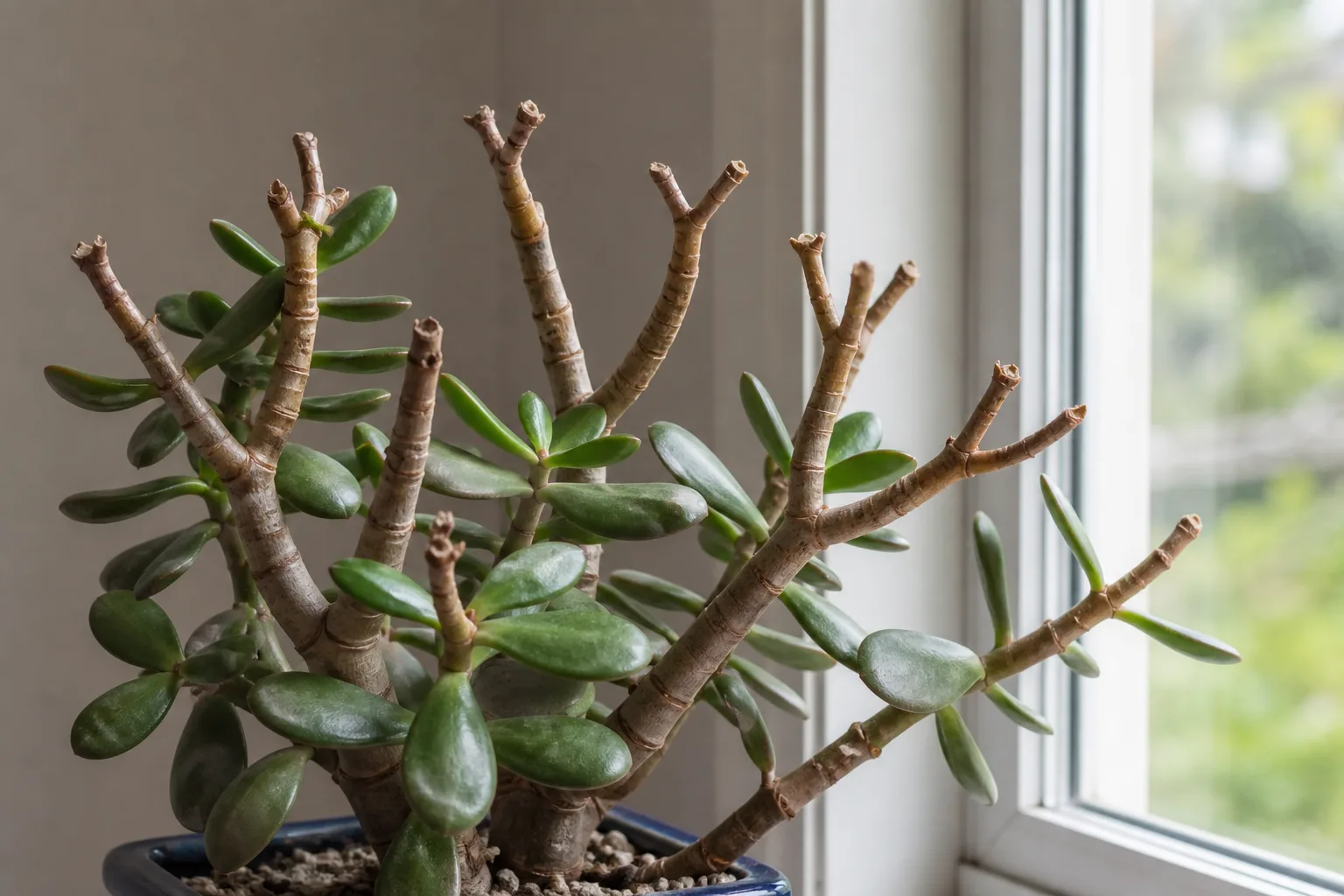
No New Growth on Jade Plant: Causes, Checks & Fixes
This guide covers no new growth on Jade Plant. See also the general No New Growth guide, watering, and light pages for this plant.
No New Growth on Jade Plant: Causes, Checks & Fixes
Quick answer
No new growth on Jade Plant (Crassula ovata) is often normal winter rest, not a crisis. From late fall through early spring, jade slows metabolic activity when daylight shortens and room temperatures drop. During this semi-dormant period, you may see no new leaf pairs at branch tips for months while stems stay firm, leaves stay plump, and soil dries slowly between infrequent waterings. That pause is the plant conserving energy-not a problem to force with fertilizer or extra water.
A true growth stall looks different: zero new tips through an entire warm season (roughly April through August indoors) despite adequate care, or stalled growth paired with pale stretched stems, sour wet soil, or a soft stem base. Those patterns point to insufficient light, root-bound crowding, hidden root rot, recent repot shock, or pest drain-not dormancy.
First step: check the calendar and stem firmness before changing anything. If it is cool short-day season and the plant looks otherwise healthy, reduce watering and wait. If warm weather has returned and stems are firm but still no tips, move the pot to your brightest window and count direct sun hours before repotting or feeding.
What no new growth looks like on Jade Plant
On jade, growth shows up as opposite pairs of thick oval leaves clustered at branch tips. Healthy summer growth adds a new pair every few weeks under strong light. When growth stops entirely, the tell is at the tip, not old lower leaves.
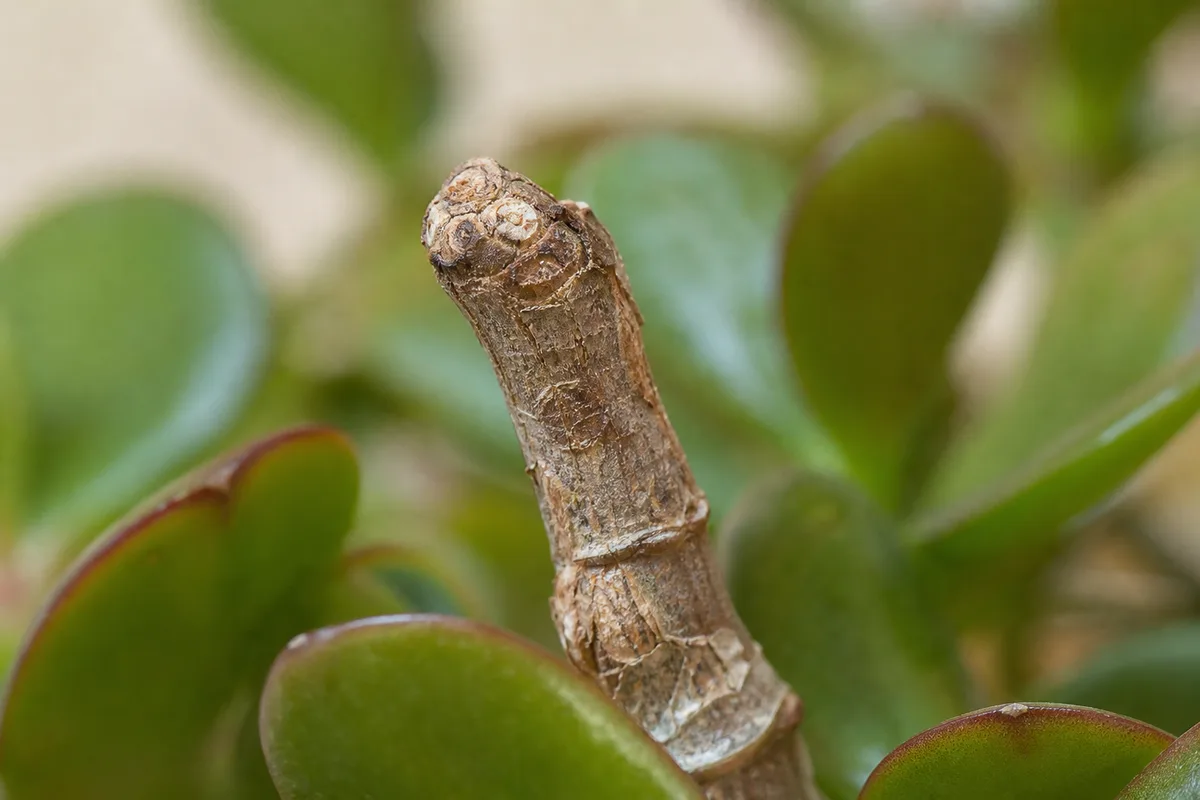
No New Growth symptoms on Jade Plant - compare with healthy tissue on the same plant.
Normal zero-growth appearance (winter dormancy):
- Branch tips look unchanged for weeks or months-no tiny green buds
- Stems and trunk feel firm and woody, not soft
- Leaves stay plump and hold their color (may redden at margins in bright windows)
- Soil stays dry for two to four weeks between winter waterings
- No progressive yellowing, leaf drop, or sour smell from the mix
Problem zero-growth appearance (true stall):
- No new leaf pairs through a full warm spring and summer despite regular watering
- Long empty gaps on stems where new pairs should have formed-often with lean toward the brightest window
- Soil stays damp 10–14 days after watering in a dim corner (slow photosynthesis, slow water use)
- Water runs straight through the pot in seconds when roots have displaced mix (root-bound pattern)
- Soft, discolored tissue at the stem base with sour-smelling wet mix (root rot layered on stalled growth)
- White cottony patches or sticky residue on new tips where mealybugs drain energy
- Two to four weeks of pause after a recent repot with otherwise firm stems (transplant shock)
Old leaves at the bottom may drop naturally as jade ages-that is not the same as a growth stall at the tips. Judge the problem by whether new tissue appears at branch ends, not whether every leaf on the plant looks perfect.
Dormancy pause vs. true growth stall
| Signal | Winter dormancy (normal) | True stall (needs action) |
|---|---|---|
| Season | Cool short days, roughly October–March | Warm long days, April–August |
| Stem base | Firm, woody, dry to touch | Firm in light stall; soft in rot |
| Leaf spacing | Compact on existing growth | Long gaps on new sections; etiolation |
| Soil dry-down | Slow; water monthly or less | Stays wet weeks in dim light, or channels through when root-bound |
| New tips | None for months-expected | None through entire warm season |
| First response | Wait; reduce water | Fix light, roots, or rot |
If you are unsure, run the season test: note today’s month. No tips from November through February with firm stems is rest. No tips from May through August with pale stretch or wet soil is a stall worth diagnosing.
Why Jade Plant stops producing new growth
Jade evolved on dry rocky hillsides in South Africa, where cool dry winters and intense summer sun set a seasonal rhythm. Indoors, the same biology explains most zero-growth cases.
Winter semi-dormancy
When daylight drops and temperatures cool, jade shifts from active growth to conservation mode. Wisconsin Horticulture Extension notes that in winter jade is semi-dormant and watering should be restricted so soil stays on the dry side. Root enzyme activity slows in cool conditions-no amount of fertilizer forces new leaves until warmth and longer days return. This is genetically programmed rest, not neglect.
Insufficient light
Jade needs four or more hours of direct sun daily for compact growth. In dim placement, photosynthesis idles, internodes stretch, and the plant may produce no new pairs for months even in summer. Dim light also slows transpiration, so the same watering schedule leaves soil wet longer-a setup for rot that further stalls growth. Full etiolation patterns are covered in not enough light on jade plant.
Root-bound crowding
Jade is relatively slow growing and can live happily root-bound for years-but when circling roots replace most soil volume, water behavior breaks. The pot feels light days after watering, mix repels moisture, and new tips stall despite your calendar. See root bound on jade plant for the unpot confirmation check.
Hidden root rot and chronic overwatering
Overwatering during dormancy or in low light is one of the fastest routes to root failure on jade. Clemson Extension notes that root rot results from soil that does not drain quickly or from watering too frequently. Damaged roots cannot support new tissue, so growth stops while lower leaves may yellow or drop. Soft stem bases and sour soil distinguish rot from simple rest.
Post-repot or transplant pause
Fresh disturbance-new mix, trimmed roots, or a larger pot-often triggers a two-to-four-week growth pause while jade re-establishes. Firm stems and dry-down watering during this window are normal. Growth that does not resume after a month in warm bright conditions may mean rot started during repot or the pot was oversized.
Pest load on new tips
Mealybugs and scale cluster on tender new growth and leaf axils, draining energy before tips expand. Inspect with a loupe if growth stalls while stems otherwise look healthy and light is adequate.
No new growth vs. slow growth vs. not enough light
These jade problem pages overlap but answer different questions:
- Slow growth - the plant adds tips, just sluggishly; often light or pot size
- No new growth (this page) - zero new leaf pairs for a season or confusing winter pause vs. stall
- Not enough light - stretch, lean, and damp soil from chronic under-lighting
A jade that produces one pair every two months in bright summer sun may simply be naturally slow-that is slow growth, not zero growth. This page applies when tips stay bare through the window when growth should be obvious.
How to confirm the cause
Work through these checks in order-one variable at a time:
- Season and temperature - Is it late fall through early spring with cool nights (50–60°F / 10–15°C)? Dormancy is the default explanation if stems are firm.
- Direct sun hours - On a clear day, do leaves receive at least four hours of direct sun? Count at the pot, not room brightness. Fewer hours through a warm season points to light stall.
- Internode spacing on the last growth flush - Measure the gap between the two newest leaf pairs. More than one to two inches on a young branch suggests past etiolation even if growth has now stopped.
- Pot weight and dry-down - After watering, how many days until the top inch is fully dry? Wet mix at day 10 in a dim spot means light and water both need adjustment.
- Stem firmness at the soil line - Press the woody base gently. Firm wood-colored tissue supports dormancy or light stress alone. Soft, mushy, or discolored base with wet sour mix means inspect roots for rot before assuming rest.
- Unpot inspection - Slide the plant out. Circling white roots with little loose mix confirm binding. Brown mushy roots confirm rot. Healthy firm pale roots in gritty dry mix with no tips in winter confirm dormancy.
- Recent disturbance - Repotted within the last month? Expect a short pause. Repotted into an oversized wet pot? Suspect rot overlap.
- Pest scan - Check leaf axils and new tip buds for mealybugs, scale, or sticky honeydew.
Confirmation decision guide
| If you find… | Likely cause | First fix direction |
|---|---|---|
| Firm stems, dry mix, cool short days | Winter dormancy | Wait; water monthly or less |
| Pale stretch, lean, damp mix in warm months | Insufficient light | Move to brightest window; acclimate gradually |
| Water channels through; circling root mat | Root-bound | Repot one size up in spring; wait 5–7 days to water |
| Soft stem base, sour wet soil | Root rot | Stop water; unpot and trim mushy roots |
| Firm stems, recent repot, dry mix | Transplant pause | Boring care two to four weeks |
| Pests on tips | Mealybugs or scale | Isolate; alcohol wipe or targeted treatment |
First fix for Jade Plant (by likely cause)
Do not stack repotting, pruning, fertilizer, and pesticide on the same day-one targeted correction first.
If it is winter and stems are firm: Reduce watering so soil stays dry between drinks. Clemson Extension recommends letting soil dry between waterings during winter. Skip fertilizer entirely until you see new green tips in spring.
If warm season has arrived and light is the limiter: Move the pot to your brightest location-within two feet of a south or west window where leaves get direct sun. Acclimate over 7–14 days if coming from deep shade to prevent scorch. Do not repot or fertilize until new compact tips appear. Placement details live in the jade light guide.
If roots circle the pot and water runs through: Schedule repot for early spring when new growth starts. Move one pot size up with gritty succulent mix. Wait five to seven days before the first soak. Full protocol: jade repotting guide.
If stem base is soft and soil smells sour: Stop watering immediately. Unpot, trim all brown mushy roots, air-dry cuts 24–48 hours, and repot into dry fast-draining mix. See root rot on jade plant.
If pests cluster on stalled tips: Isolate the plant. Wipe visible mealybugs with alcohol on a cotton swab. Re-check weekly before any spray-jade succulent leaves can be phytotoxic to some insecticides.
Recovery timeline
Winter dormancy: No visible progress for months is normal. When daylight lengthens in late winter or early spring, watch for tiny bright green buds at branch ends-that is your signal to resume regular dry-down watering.
After light improvement: New leaf pairs often appear within two to four weeks once the plant receives adequate direct sun through a warm season. Stretched stem sections never shorten; judge recovery by new tight spacing at tips.
After root-bound repot: Expect two to four weeks before new tips show. Severe binding with dehydrated leaves may take six weeks.
After root rot surgery: Recovery depends on how much firm stem remains. Partial root loss with a solid trunk can push new tips in four to eight weeks under bright dry conditions. Collapsed main stems rarely recover.
After repot shock: Most jade resume growth within two to four weeks with firm stems, bright light, and conservative watering.
Old blemished leaves rarely re-green. Recovery means firm new growth at tips and stable firm roots-not perfect older foliage.
What not to do
- Do not fertilize to force growth during winter dormancy or while soil is wet and stems are soft. Inactive roots cannot use nutrients; salts can burn tender root tissue.
- Do not water more because growth stopped in cool months-overwatering dormant jade is a primary rot trigger.
- Do not assume zero growth always means rot. Firm stems and dry mix in winter are rest, not emergency.
- Do not repot into a huge pot hoping to jump-start growth. Excess wet soil around slow jade roots stalls the plant further.
- Do not prune heavily to “stimulate” growth before fixing light or root problems-you remove stored energy the plant needs to recover.
- Wear gloves when handling cut jade tissue-sap can irritate skin, and the plant is toxic to cats and dogs.
How to prevent growth stalls next time
Match care to jade’s seasonal rhythm from the jade plant overview:
- Bright light year-round - four to six hours of direct sun or supplemental grow light in winter
- Dry-down watering - water when the top inch is dry in summer; restrict sharply in winter rest
- Gritty fast-draining mix in terracotta with drainage holes - see jade soil guide
- Repot every two to three years before roots displace mix volume - not only when the plant tips over
- Spring-only fertilizer when active tips appear - jade fertilizer guide
- Weekly stem-base check during routine care - firm wood and neutral soil smell catch rot early
Practical checks
Urgency check
Treat as urgent when stem bases soften, soil smells sour, pests spread across multiple branches, or leaves yellow and drop while mix stays wet. Those patterns suggest advancing root failure-not dormancy.
Medium urgency: No tips through a full warm season with pale stretch-fix light within the week.
Low urgency: No tips November through February with firm stems-wait for spring.
Best inspection order
Season and room temperature → direct sun hours at the pot → newest tip buds → stem firmness at soil line → pot weight and dry-down speed → unpot if wet or stalled through summer → leaf axils for pests.
Jade care cross-check
Also sold as money tree or lucky plant, jade should be judged by firm new growth at branch tips, not by how fast tropical houseplants grow. If the pot stays wet for weeks in a dim corner, improve light and watering rhythm before the next drink-not more fertilizer.
When to worry - wet mix with soft stem base
A jade that has not grown since October with firm stems and dry soil is resting. A jade with no tips since spring, sour wet mix, and a soft stem base is declining-likely root rot compounded by slow water use in dim light or winter overwatering. Unpot within 48 hours, trim rot, and repot dry. If the main trunk collapses, salvage firm branch cuttings for propagation per the jade propagation guide.
Related Jade Plant guides
- Jade plant care overview - baseline light, water, and seasonal rhythm
- Slow growth on jade plant - sluggish but present tips
- Not enough light on jade plant - etiolation and damp-soil rot risk
- Root bound on jade plant - circling roots and fast drain-through
- Root rot on jade plant - soft stems and sour soil
- Jade plant light requirements
- Jade plant fertilizer timing
Related tool
Use the Plant Problem Diagnosis Tool to narrow causes for no new growth on this plant before changing multiple variables at once.